

Review · COLOGNE
e-Scavenger hunt Cologne: Explore the city at your own pace
Cologne’s best-known sights become clues in this self-guided city game, beginning at the Domplatte and looping through the cathedral, Old Town, Roman remains, museums, and riverfront landmarks. You solve questions on your phone instead of following a guide, so your group sets the pace.
I like the private format, which keeps the price at $36.67 for up to six people, and I like the freedom to start any time within the stated operating hours. The main catch is content quality: a 3.9 rating from 10 reviews, along with complaints about thin explanations, spelling mistakes, and a misplaced question, suggests you should book this for light entertainment rather than serious sightseeing instruction.
Key points to know before you book
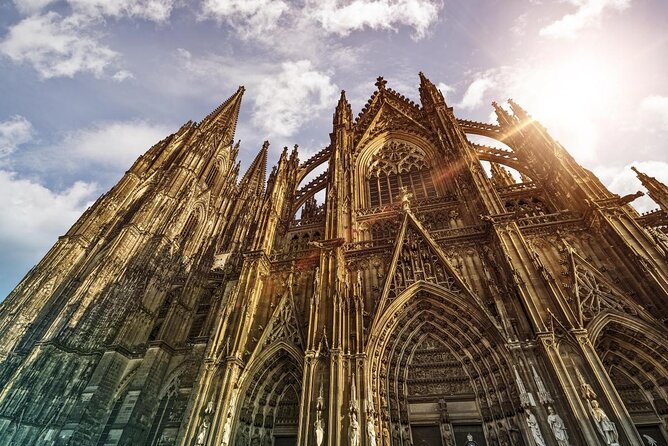
- Begin at the Domplatte: The cathedral forecourt is both the meeting point and the finish, making it easy to find and simple to reach by public transport.
- Cover Cologne in 2 to 4 hours: The route includes major landmarks, Roman remains, old churches, museums, squares, and a restored harbor area.
- Pay one group price: The $36.67 rate covers up to six people, which is good value for a family or small group.
- Use your own smartphone and data: The online game is included, but the phone and mobile data are not.
- Expect English prompts, not a live guide: You get a private activity for your group, with no guide names or live commentary provided.
- Treat the history as a prompt: The route points you toward important places, but you may want extra reading if detailed context matters to you.
Starting beneath Cologne Cathedral
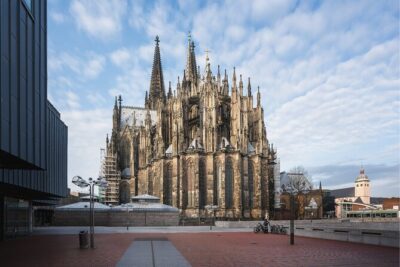
The game starts at Domplatte, the broad square beside Cologne Cathedral. This is the right place to begin because the cathedral is the city’s clearest landmark and an easy meeting point for a group arriving by public transport.
Cologne Cathedral survived the heavy bombing of both world wars with surprisingly little damage. Its Gothic design, huge scale, and twin towers make it the city’s main visual marker. UNESCO added it to the World Heritage list in 1996, and the game uses the cathedral as one of its central sights.
I would allow a little extra time here before pressing ahead. The activity is designed to keep you moving, so it may not provide the detail you would get from a cathedral tour or museum visit. Use the opening questions to look closely at the building, then decide if you want to pause for your own visit.
The Three Kings relics add another layer to the cathedral stop. These are said to be the remains of the Magi from the East, kept in a reliquary here since 1164. The story is important to Cologne’s religious identity, and it gives the cathedral more meaning than simply being a grand photo stop.
More Scavenger Hunts in Germany
- Hamburg: Scavenger Hunt Self-Guided Tour for Children
★ 4.5 · 319 reviews - Dresden: Old Town Self-Guided Scavenger Hunt Tour
★ 4.5 · 151 reviews - Berlin: Self-Guided Family and School Class Scavenger Hunt
★ 4.6 · 128 reviews
Narrow lanes and Cologne’s old center
From the cathedral, the route takes you into Cologne’s Old Town. Here, narrow lanes and traditional old houses give the area its strongest sense of place. The streets are compact, so this part works well as a walking game, with plenty of corners and façades to inspect.
The Old Town is also where the activity may feel most casual. You are not following a historian through a carefully explained sequence. Instead, the phone directs you from one point to another and asks you to notice something at each stop.
That format suits families, friends, and groups who enjoy solving clues together. It is less satisfying for anyone hoping for a polished account of Cologne’s past. One published complaint pointed to bland text, grammar errors, and questions that did not always match the location well. Keep that limitation in mind as you set expectations.
Hohenzollern Bridge and the Rhine setting
The Hohenzollern Bridge was built from 1907 to 1911. Its original design used three adjacent truss arch bridges, each with three arches. The bridge is one of Cologne’s most recognizable river crossings and gives the route a change of pace after the tight Old Town streets.
This stop is valuable because it connects the city center with Cologne’s wider river setting. You are not only checking off another old building. You are looking at a major piece of city infrastructure that has helped shape the view across the Rhine.
The provided details do not promise a dedicated bridge crossing or a long river walk, so do not assume the game turns into a full waterfront tour. The bridge is one part of a larger city route, not the entire experience.
Heumarkt, Alter Markt, and the city’s public life
Heumarkt is one of central Cologne’s best-known squares. Its name means Haymarket, and it remains a major gathering place in the center. The route also includes Alter Markt, the former market square, now known for cafés and Cologne carnival activity.
These squares help you see how Cologne works as a lived-in city rather than a collection of monuments. Heumarkt is broad and central, while Alter Markt has a more historic market-place identity. Both are useful stops for a group that wants to pause, sit down, or grab something to eat during the game.
Pay close attention to the wording of the questions here. A published complaint said one statue question identified Neumarkt when the statue was actually at Heumarkt. That sort of error can waste time, especially if you are trying to solve the game without second-guessing the directions.
Same place, a different puzzle:
- Hamburg: Treasure Hunt Game through HafenCity
★ 4.7 · 364 reviews - Treasure Hunt through Hamburg’s Hafencity
★ 5.0 · 234 reviews - Escape Room Adventure in Berlin Solve the Mystery
★ 5.0 · 222 reviews - Escaping and spying on the Berlin Wall Scavenger hunt
★ 4.5 · 128 reviews
Roman Cologne beneath the modern streets
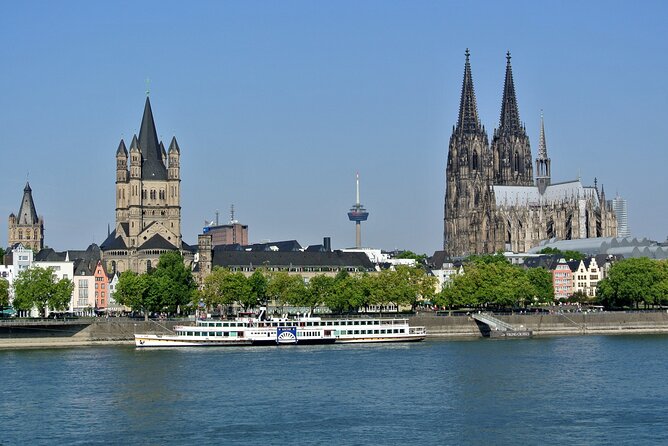
Cologne was an important Roman city, and this activity includes several stops that bring that earlier period into the route. The Römisch-Germanisches Museum, beside the cathedral, was opened in 1946 and sits above the remains of a third-century Roman city villa.
The Praetorium marks the official residence of the Imperial Governor of Cologne, when the city was the capital of the Roman province of Lower Germania. Even a short stop here helps explain why Cologne has such a deep urban footprint. The modern streets sit above layers of political, military, and domestic life.
The game also visits the Romanesque churches of Great Saint Martin, Saint Gereon, and Saint Ursula. Great Saint Martin is one of the twelve major Romanesque churches in central Cologne. Saint Gereon, a basilica in the northwest Old Town, is associated with the tomb of the martyr Gereon and is described as the city’s oldest church.
Saint Ursula is built over the remains of a Roman cemetery. That pairing of Roman ground and later Christian buildings is one of the most interesting threads in the route. You get glimpses of how the city changed across centuries, even if the phone text does not provide a full historical lesson.
The Roman museum’s inclusion is particularly useful for anyone who wants more than pretty streets. The activity only points you toward it, and the museum may require its own entrance or visit time. The supplied information does not state that admission is included, so treat the museum as an exterior or route stop unless your booking details say otherwise.
4711 and Cologne’s famous scent
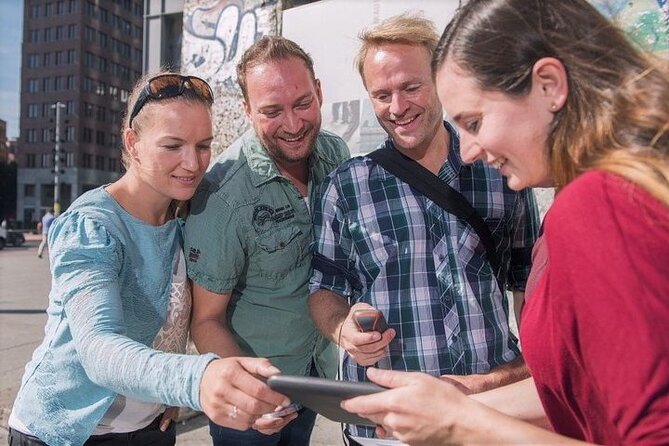
The 4711 stop shifts from architecture to local commercial history. 4711 is the famous eau de cologne brand associated with Mühlens GmbH and Cologne. The product helped make the word Cologne familiar far beyond Germany.
This is a smart inclusion because it gives the walk a local detail that is easy to miss when you focus only on churches and bridges. You see that Cologne’s identity is tied not just to medieval buildings, but also to a product sold under the city’s name.
The supplied information does not promise a tasting, demonstration, or guided visit. Think of 4711 as a clue-based stop and a chance to connect the city with the fragrance that carries its name around the world.
Museums and the city’s art story
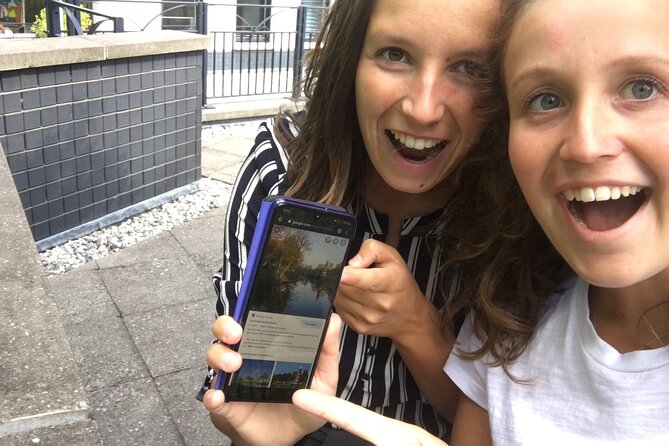
The route includes the Wallraf-Richartz-Museum, one of Germany’s major art museums. Its collection covers European visual art from the 13th century to the beginning of the 20th century, displayed across about 3,500 square meters.
The nearby Museum Ludwig focuses on 20th-century art, although the listed route specifically names the Wallraf-Richartz-Museum. That contrast helps place Cologne’s art institutions in context. One museum looks back across older European art, while the other is associated with modern work.
Again, the activity does not say museum admission is included. You should not plan the hunt and a full museum visit as if they were one package. If art is a priority, allow separate time and check opening details before you go.
Garden gnomes and a lighter pause
One stop features an ornate 19th-century fountain and sculptures tied to a local legend about garden gnomes. This is the sort of small, playful detail that can make a city walk more memorable.
It also breaks up the sequence of cathedrals, museums, and Roman remains. A good scavenger hunt needs a few easygoing moments, and this stop gives your group something unusual to spot and discuss.
The published material does not identify the exact square or provide the full legend. You will get the most from it by treating the fountain as a visual clue rather than expecting a long explanation of the story.
The restored harbor and newer Cologne
The final part of the route reaches a restored old harbor area, where older buildings sit beside renovated shops and modern structures. This gives you a look at Cologne’s changing urban face.
That mix is useful because the city is not preserved as one fixed historic scene. Old industrial or harbor spaces can take on new roles, and this stop lets you compare older masonry with newer development. It is also a welcome contrast after the dense historic core.
The exact harbor name is not supplied, so I would not book this activity specifically for a particular waterfront attraction. See it as the route’s modern closing note, then return to the Domplatte, where the activity ends.
What the phone format means in practice
This is not a walking tour with a person leading you. It is an online game and city walk used on your phone. The booking provides a mobile ticket and English content, while you supply the smartphone and data connection.
That arrangement gives you control. You can begin at any time listed for the experience, from Monday through Sunday, 12:00 AM to 11:59 PM. A 2 to 4 hour estimate leaves room to stop for food, take photos, or spend extra time at the cathedral and squares.
The private setup is the strongest practical feature. Only your group participates, and the price covers up to six people. At $36.67 for the group, six people would pay about $6.11 each. Even a smaller group may find it reasonable if you value privacy and flexibility.
The tradeoff is that there is no live person to clarify a confusing question or add local stories. You also need enough phone battery and mobile data for the whole route. Data use is not included, so check your phone plan before starting.
The activity is described as suitable for most people, close to public transport, and friendly for people with hearing impairments. Service animals are allowed. These details make it easier to fit into a mixed group, though the information does not provide a full accessibility assessment of every street or stop.
Content quality and the published rating
The experience has a 3.9 rating from 10 reviews, and 90 percent of participants recommend it. One especially positive Dutch-language response described it as a very enjoyable group outing for five friends, while also pointing out that a statue question placed the statue at Neumarkt instead of Heumarkt.
The sharpest criticism focused on value and accuracy. One person felt the activity offered too little content for roughly 34 euros, with bland text, spelling problems, weak questions, and a stop at a Dunkin’ Donuts that felt like product placement. The response from Qula thanked the person for the detailed feedback but also suggested, with a joking tone, that the writer might be a competitor.
That exchange matters because it shows the main risk clearly. You may enjoy the format and the freedom, but you should not expect every clue to feel carefully researched or every stop to be equally strong. The price is fair for a private phone game shared among several people. It is less convincing if you judge it as a full historical tour.
Who should book this Cologne hunt?
I would choose this for a family, couple, or group of friends who want a structured way to walk through Cologne without committing to a guide’s schedule. It is especially useful on a first visit when you want to connect the cathedral, Old Town, bridges, churches, squares, and Roman sites in one outing.
It also suits people who enjoy small challenges and shared decisions. The private format lets you stop when you want, and the 2 to 4 hour window fits well around meals or other plans.
I would be cautious if you want precise historical commentary, polished writing, or a carefully tested route. The reported errors and thin descriptions may frustrate you. In that case, a live guide or a museum visit will likely give you more substance.
Qula allows free cancellation up to 24 hours before the start time for a full refund. Inside the 24-hour window, cancellations and changes are not accepted for a refund.
Should you book it?
Book this activity if you want an affordable, private phone game that gets your group walking through Cologne’s main sights. The group price is its strongest value, especially for four to six people, and the cathedral, Roman sites, Old Town, squares, bridge, and harbor create a useful route through the city.
Skip it if you expect a polished cultural tour with detailed explanations at every stop. The best way to approach it is as a flexible orientation walk with quizzes, not as your only source of information about Cologne.
FAQ
Where does the e-Scavenger hunt start?
It starts at Domplatte, 50667 Köln, Germany, beside Cologne Cathedral.
Where does the activity end?
The activity ends back at the meeting point at the Domplatte.
How long does the hunt take?
The estimated duration is 2 to 4 hours.
How many people can join?
The private activity is for your group, with up to six people included in the group price.
Is a smartphone included?
No. The online game is included, but you must provide your own smartphone and mobile data.
Can I cancel for a full refund?
Yes. You can cancel at least 24 hours before the start time for a full refund. Cancellations or changes made less than 24 hours before the start time are not accepted for a refund.
Just added around Germany
- Stuttgart Self Guided Sherlock Holmes Murder Mystery Game★ 5.0 · 4 reviews
- Stuttgart Scavenger Hunt and Highlights Self Guided Audio Tour★ 5.0 · 2 reviews
- Private: Outdoor Escape Game Schluchsee: The Lost Village★ 4.5 · 11 reviews
- Rothenburg Scavenger Hunt and Sights Self-Guided Tour★ 4.5 · 11 reviews
- Schwerin Self Guided Sherlock Holmes Murder Mystery Game★ 3.0 · 3 reviews
- e-Scavenger hunt Paderborn: Explore the city at your own pace★ 5.0 · 4 reviews
- Digital scavenger hunt around Wittringen Castle in Gladbeck★ 4.0 · 9 reviews
- Private scavenger hunt around the Ruhrfestspielhaus Recklinghausen★ 4.5 · 3 reviews
Cologne Escape Games, compared.

Cologne Scavenger Hunt and Highlights Self Guided Audio Tour
Read our review →
Aachen Scavenger Hunt and Highlights Self Guided Audio Tour
Read our review →
Aachen Scavenger Hunt and Sights Self-Guided Tour
Read our review →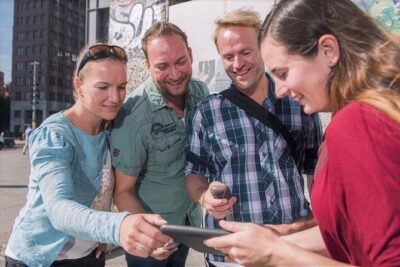
e-Scavenger hunt Aachen: Explore the city at your own pace
Read our review →
Browse the lists this tour appears in