
Review · BELGIUM
e-Scavenger hunt Turnhout: Explore the city at your own pace
Turnhout’s best surprise is how much character fits into a walkable Belgian city. This phone-based scavenger hunt takes you from the 14th-century beguinage to the world of playing cards, with churches, museums, cafés, and cultural buildings along the way.
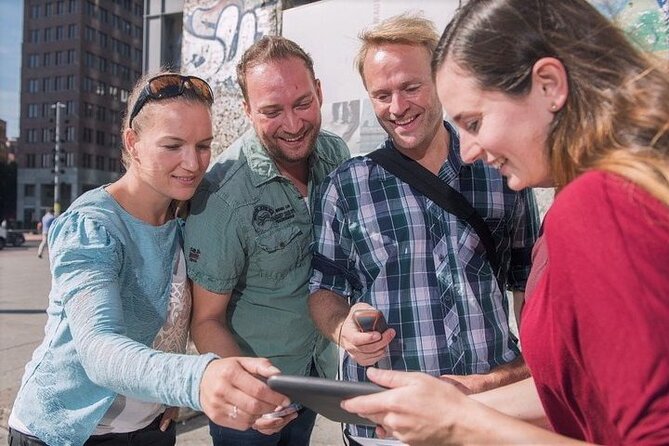
I like the freedom to stop for lunch, shelter from hot weather, or let the children lead the way. I also like the price: $37.33 per group of up to six, which makes it a sensible choice for families and friend groups. The main drawback is navigation. The app works well for many people, but some participants have found the directions too spare and the route longer than expected.
Key points
- A UNESCO-listed beginning: Start with Turnhout’s beautiful beguinage and its quiet Begijnhof square.
- A city game with local detail: Questions and photo prompts turn ordinary sightseeing into a shared challenge.
- Playing-card history: Discover how Philip Jacobus Brepols helped make Turnhout a major playing-card center.
- Flexible timing: The game has no strict time limit, so you can pause for food, drinks, or shade.
- A private group format: Your party of up to six plays together without being joined by strangers.
- A low-cost city orientation: The route gives you a useful first look at central Turnhout without paying per person.
Start at Stationstraat 38 and let the app set the pace

The experience begins at Stationstraat 38, close to public transportation. You receive confirmation when you book, then use your own smartphone and mobile data to run the game. The app is included, but the phone and data are not, so check your battery and connection before setting out.
This is not a guided walk with a person leading the way. You and your group follow prompts, answer questions, and move between locations. That makes the experience private and flexible, but it also means you are responsible for reading the instructions and finding each point.
The advertised duration is about two to four hours. In practice, your pace matters. You can move briskly and finish near the shorter end, or stop for food, photos, and drinks. One group turned the activity into a six-hour walk covering about 12 kilometers after spending extra time finding the way. That is useful to know if you are planning a tight schedule.
The route ends back at the meeting point. Since the activity is available every day from noon until midnight, you have plenty of choice about when to begin. Still, treat those hours as the operating window rather than a promise that every stop will be open late.
More Scavenger Hunts in Belgium
- e-Scavenger hunt Antwerp: Explore the city at your own pace
★ 4.5 · 67 reviews - e-Scavenger hunt Bruges: Explore the city at your own pace
★ 4.5 · 58 reviews - Bruges Scavenger Hunt and Highlights Self Guided Audio Tour
★ 4.0 · 54 reviews
The beguinage gives the hunt its strongest opening
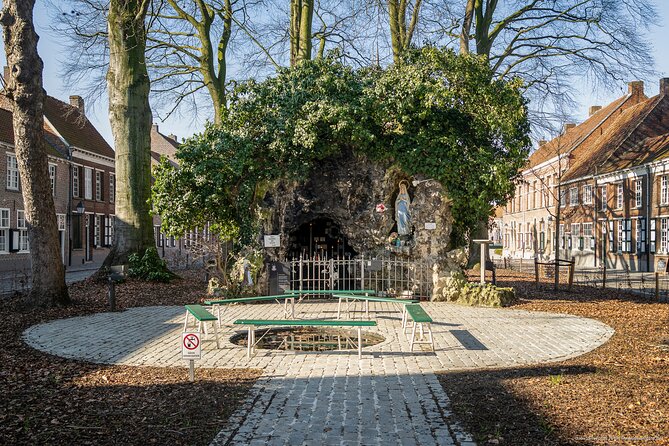
The first major stop is Turnhout’s beguinage, a 14th-century complex recognized as a UNESCO World Heritage Site in 1998. Pass through the gate and you reach the Begijnhof, a handsome square with a calmer feel than the surrounding streets.
This is an excellent place to begin because it rewards slow looking. The buildings and layout offer a clear sense of the city’s older religious and social life without requiring a long museum visit. The app gives you questions to answer, so you are not simply walking past the architecture while checking a map.
I would allow extra time here. The beguinage is one of the places that can make the whole activity feel worthwhile, especially if you arrived in Turnhout unsure how much there would be to see. The route uses the site as more than a photo stop, encouraging you to notice details.
The tradeoff is that a game can pull your attention toward the next question. Put the phone down now and then. Look around before you search for the answer.
St. Peter’s Church rewards a look inside
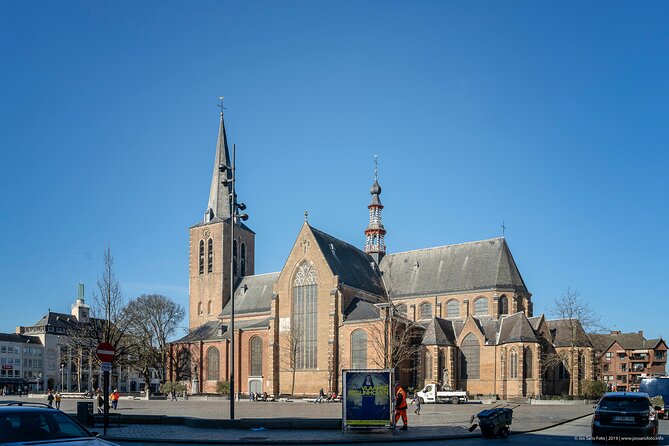
St. Peter’s Church may appear restrained from the outside, but the interior is a different experience. Its plain exterior does not prepare you for the scale and decoration within, making it one of the route’s more effective surprises.
The church works well in a scavenger hunt because it asks you to compare first impressions with what you find inside. You may be looking for a visual clue or an answer, but you also get a reason to cross the threshold and inspect the interior rather than admiring the building only from the street.
Opening access can affect what you see at a particular time, and the supplied details do not give a church schedule. If the doors are open, take a moment before moving on. If not, the stop still helps you understand Turnhout’s central architecture, but it may feel less rewarding than the beguinage.
Turnhout’s playing-card story is the city’s unusual hook
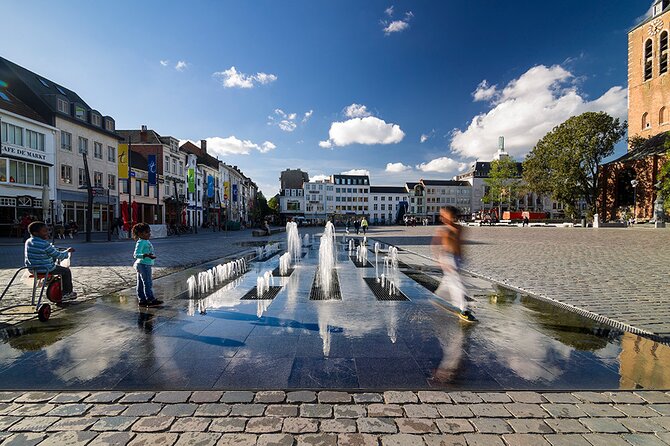
Turnhout is known as the City of the Playing Card, and the game explains why. In 1826, Philip Jacobus Brepols pressed the first playing cards in the city. That act helped set off a major local industry and placed Turnhout on the world map of card production.
This is the kind of fact that makes a city walk stick in your memory. You are not just collecting names of buildings. You are learning how one trade shaped the identity of the place. The playing-card theme also gives the questions a clear thread, so the activity feels more connected than a random list of landmarks.
If you have children in the group, this may be one of the easiest stories to turn into a conversation. Playing cards are familiar, and the link between a simple product and a city’s economic life is easy to grasp. Adults who already know Turnhout may still pick up new details.
The route does not appear to include a separate admission-based playing-card museum visit, so think of this as a street-level introduction to the city’s industry rather than a full museum tour.
Same place, a different puzzle:
- Escape Hunt Brussels, Escape Game
★ 5.0 · 103 reviews - e-Scavenger hunt Ghent: Explore the city at your own pace
★ 4.5 · 41 reviews - Beer Tasting and Scavenger Hunt in Brussels – About 3 Hours
★ 4.5 · 35 reviews - e-Scavenger hunt Mechelen: Explore the city at your own pace
★ 4.0 · 34 reviews
Taxandria Museum adds a local history stop
The Taxandria Museum occupies House Metten Thoren, a 16th-century museum building devoted to Turnhout’s past. Its setting matters. The building itself is part of the story, giving you a glimpse of the city’s older fabric before you consider the objects and exhibits inside.
The scavenger hunt uses the museum as a point of orientation and a prompt to think about local history. If you want a fuller understanding of Turnhout, this is a good place to add time beyond the basic game. The activity’s two to four hours may not leave enough room for a long museum visit, a meal, and every question at a relaxed pace.
Admission details are not provided for the game, so check separately if you plan to enter. The route can still take you to the building without requiring that you make a museum visit part of the activity.
Printing history connects paper, cards, and the town
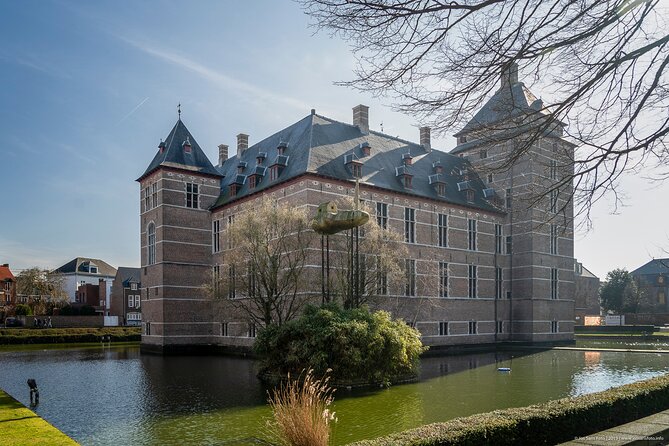
The Historical Printing Company continues the paper and printing theme. Its extensive paper collection has been digitized and can also be viewed online, with different sub-collections brought together in one place.
This stop helps explain why Turnhout’s playing-card story did not happen in isolation. Paper, printing, design, and production belong to the same local story. The game gives you a compact introduction, while the collection offers a path for anyone who wants to spend more time with the subject.
The name suggests a specialist attraction, and that can be a strength or a limitation. If you enjoy print, paper, and industrial history, you may want to give it extra attention. If your group mainly wants an easy outdoor walk, treat it as a short stop and keep moving.
Café De Penge supplies a useful pause
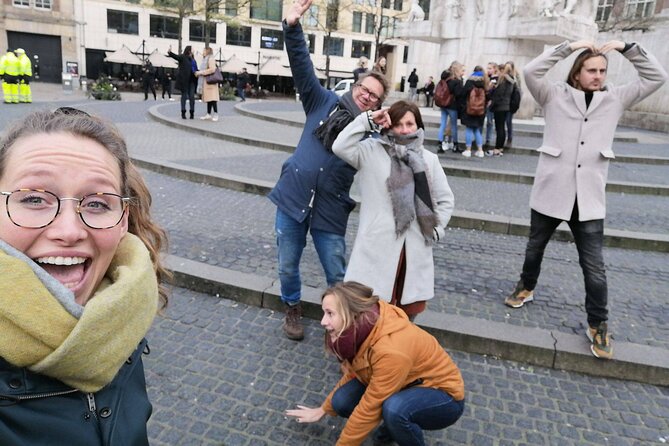
At 129 years old, De Penge is described as the oldest café in Turnhout. It is in the city known as the capital of the Kempen and the City of the Playing Card, so the café fits neatly into the route’s focus on local identity.
This is where the flexible format pays off. You can pause for a drink or food instead of racing from question to question. Several participants have used the walk as a reason to stop on a terrace along the way, and that is exactly how this activity works best.
Do not assume every group will spend the same amount of time here. The café is a suggested point of interest, not a meal included in the price. You pay for anything you order, and opening hours are not supplied.
De Warande shows Turnhout’s modern cultural side
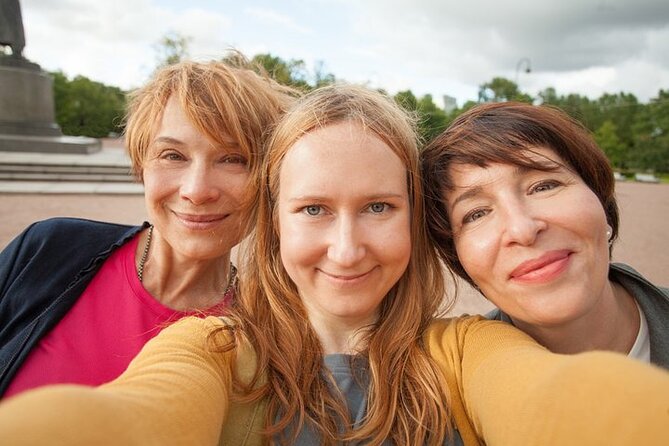
De Warande is a provincial cultural center and one of the first cultural centers in Flanders. It includes a theater and concert hall, adding a modern public-building stop to a route otherwise shaped by religious, historic, and printing landmarks.
That mix gives the walk a better rhythm. You move from the old beguinage and church to museums, a long-running café, and a living cultural venue. Turnhout comes across as more than a place of preserved buildings. It is also a working city with arts programming and public gathering spaces.
The experience does not include a theater performance or concert. You are seeing the center as part of the city route, so check the venue’s own schedule if you want to attend something afterward.
The questions make a familiar city feel new
The game is built around questions, pictures, and location-based tasks. That format is especially useful if someone in your group already knows Turnhout. A local can show the family around, but the prompts still give everyone a reason to look closely and search for details.
Children can take responsibility for finding the next clue or deciding which answer fits. This turns a standard walk into a shared activity without requiring a guide to keep the group entertained. It also gives quieter participants a clear role.
The difficulty is uneven. Some questions are simple, while others can be surprisingly hard. That is part of the fun for competitive groups, but it may frustrate anyone who wants a straightforward sightseeing route.
The app and Google Maps can work together, yet the directions are not always as clear as a fully signed walking route. You may need to spend time locating the next point. For that reason, download what you need in advance if possible, keep your phone charged, and do not plan a fixed appointment immediately after the advertised end time.
Group size and price make the value easy to judge
The price is $37.33 for a private group of up to six. That means the per-person cost drops sharply when you bring a full group. At six people, it works out to roughly $6.22 each, before any food, drinks, transport, or museum admission.
That is good value if you want a city orientation with an activity attached. You are paying for the app and the prepared route, not a live guide or entry tickets. A couple will pay more per person than a full family or group of friends, so the format makes the most financial sense for several people playing together.
I also like that the activity does not punish you for taking a break. There is no strict time limit, which matters in hot weather or when children need food and rest. One practical tip is to plan the route as a half-day rather than assuming you must finish in two hours.
The private format is a strong point. Your group can move at its own speed, and you do not have to match the pace or interests of another party. On the other hand, you will not have a local guide available to explain a difficult question or add context on the spot.
Who will enjoy this Turnhout walk most
I would choose this activity for families, friend groups, and team-building outings. It gives everyone something to do, and the private format makes it easy to pause for a meal or split the walk into sections.
It also suits repeat visitors and people who grew up nearby. The questions can reveal details you have passed many times without noticing. If you are new to Turnhout, the route gives you a practical first look at the central sights and helps you decide where to return later.
You may want another option if you prefer a guide-led tour, a tightly timed route, or detailed historical commentary at every stop. This is a self-guided game, so much depends on your group’s ability to navigate and stay engaged.
The activity is offered in English. It is described as user-friendly for people with hearing impairments, and service animals are allowed. Most people can participate, but the walk involves moving between stops, so consider your group’s needs before booking.
Booking, cancellation, and practical details
You receive instant confirmation at booking. Free cancellation is available up to 24 hours before the local start time. Cancellations or changes made inside that window are not accepted for a refund.
Bring a smartphone with mobile data. The phone and data are not included. Wear comfortable shoes, especially if you plan to pause often or extend the route beyond the suggested duration.
Because the route can take longer than expected when navigation becomes tricky, leave room in your day. A lunch stop, café break, or museum visit can turn the two-hour version into a relaxed half-day outing.
Should you book the Turnhout scavenger hunt?
Book it if you want an affordable, private way to get your bearings while learning about Turnhout’s beguinage, church, museums, printing trade, cafés, and playing-card industry. The strongest features are the freedom to pause, the group price, and the way the questions involve children and adults alike.
Skip it if you want a professional guide, polished step-by-step directions, or a fixed two-hour finish. For most groups, I would plan three to four hours, keep Google Maps ready, and treat the route as a flexible introduction rather than a race. That approach lets Turnhout’s quieter details do their work.
FAQ
Where does the Turnhout scavenger hunt start?
It starts at Stationstraat 38, 2300 Turnhout, Belgium.
Where does the activity finish?
The activity ends back at the meeting point.
How long does the scavenger hunt take?
The expected duration is about two to four hours, but you can take longer because there is no strict time limit.
How many people can join one group?
The private game is designed for a team of up to six people.
Is a smartphone included?
No. The online app is included, but you must provide your own smartphone and mobile data.
What language is the game offered in?
The activity is offered in English.
Can I cancel for a full refund?
Yes. You can cancel at least 24 hours before the local start time for a full refund. Cancellations and changes made less than 24 hours before the start are not accepted for a refund.
Just added around Belgium
- Discover Mechelen while playing! Escape game – The Walter case★ 3.5 · 2 reviews
- Discover the secrets of Mechelen while playing! Escape room★ 4.0 · 6 reviews
- Discover Mechelen while playing! Escape game – The alchemist★ 4.5 · 6 reviews
- Discover Mechelen while escaping the zombies! Escape room★ 4.0 · 3 reviews
- Discover Namur while playing! Escape game – The Walter case★ 4.5 · 2 reviews
- e-Scavenger hunt Namur: Explore the city at your own pace★ 3.5 · 5 reviews
- Discover Liège while playing! Escape game – The Walter case★ 4.5 · 5 reviews
- Namur: Escape Game in the city – The Alchemist★ 4.0 · 5 reviews
Belgium Escape Games, compared.


e-Scavenger hunt Antwerp: Explore the city at your own pace
Read our review →
e-Scavenger hunt Bruges: Explore the city at your own pace
Read our review →
Bruges Scavenger Hunt and Highlights Self Guided Audio Tour
Read our review →
Beer Tasting and Scavenger Hunt in Brussels – About 3 Hours
Read our review →
e-Scavenger hunt Mechelen: Explore the city at your own pace
Read our review →
Romantic Bruges: Love Between the Canals Exploration Game
Read our review →Browse the lists this tour appears in