

Review · LISBON
Queer Lisbon – A Treasure Hunt in LGBT History
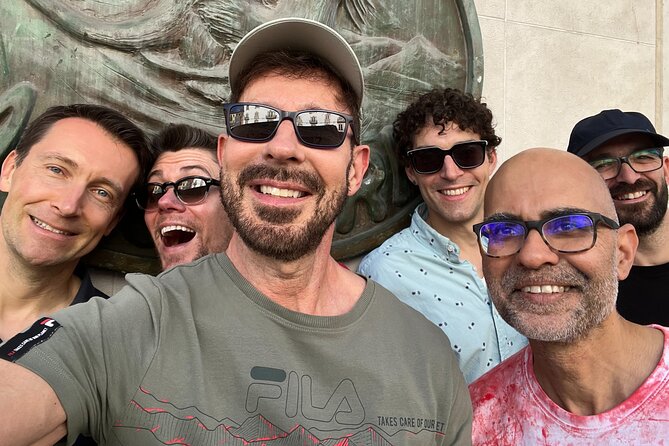
Lisbon’s queer story comes alive on this walking tour, which moves from a homophobia memorial and Pride history to drag clubs, lesbian bars, bear culture, censorship, and old scandals. Alex leads the route with warmth and plenty of detail, then finishes at Late Birds Hotel with a quiz and time for a drink.
I especially like the small group of no more than 15 and the PDF guide to LGBTQ Lisbon, normally worth 15 euros on its own. The main caution is simple: this is a long, active walk. You may cover the route in about three and a half hours, but some outings run closer to four, and there are many stops.
Key points to know
- Lisbon’s queer past gets equal billing with its present, from the Portuguese Inquisition to modern constitutional rights.
- Alex tells personal, political, and often funny stories, including tales of Josephine Baker, early drag, lesbian bars, and the Two Fernandes.
- The route includes 24 short stops, so expect frequent pauses rather than long visits inside attractions.
- The ending at Late Birds Hotel matters, with a lounge, bar, garden, pool area, pub quiz, and prizes.
- The tour is useful for planning later nights out, since it points out clubs, bars, saunas, health services, and community spaces.
- You need moderate fitness and comfortable shoes, with no private transportation included.
A different way to read Lisbon
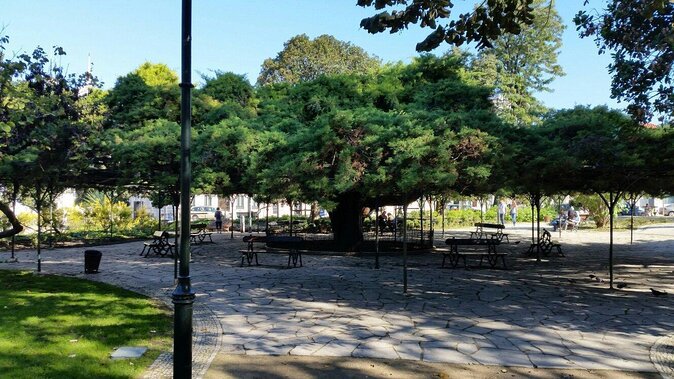
Many Lisbon walks focus on tiled churches, grand viewpoints, and the Age of Discoveries. This one asks a different question: where did queer people meet, hide, organize, perform, love, protest, and survive?
That change in focus gives familiar streets new meaning. A square becomes the starting point for Pride. A church opens a window onto court records and stories from the Inquisition. A nightclub becomes part of a social history that reaches back decades.
The tour is not only for LGBTQ visitors. An ally, a history fan, or anyone curious about how Portugal changed from dictatorship-era social control to constitutional protection can get a lot from it. You hear about nightlife, but also health care, politics, literature, censorship, and public memory.
The price is $60.34 per person. That is not a bargain basement walking tour, but the experience lasts roughly three and a half hours, includes a maximum group size of 15, and comes with Alex’s long guide to LGBTQ Lisbon. If you plan to spend evenings in Lisbon’s queer scene, the guide and practical orientation add real value.
More Treasure Hunts in Lisbon:
- Hamburg: Treasure Hunt Game through HafenCity
★ 4.7 · 364 reviews - St. Augustine: Treasure Hunt Cruise with Onboard Show
★ 4.4 · 315 reviews - Málaga: Private Sightseeing Treasure Hunt
★ 4.8 · 297 reviews
Meeting Alex at Principe Real
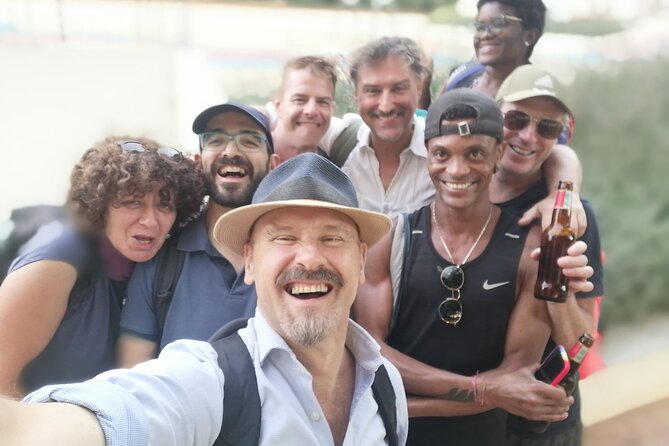
The tour begins at 10 a.m. by the Principe Real Playground. The first garden stops are free, and introductions set the tone before the group begins moving through the city.
The opening visit to the monument for victims of homophobia is a sober moment. It keeps the tour from treating queer history as only a string of amusing scandals and party stories. You get a reminder that progress came after real harm, fear, and loss.
In nearby Praça do Príncipe Real, Alex explains Lisbon Pride and the city’s connection to EuroPride. This is a useful early stop because it connects the local scene to larger European LGBTQ movements. You learn why the square matters and how Pride has its own character in Lisbon.
The pace appears designed for conversation rather than a forced march. One person described Alex stopping for rests and questions, which matters on a route this long. Still, do not mistake the relaxed mood for a short stroll. Wear shoes you can trust on Lisbon’s slopes and pavement.
Health, nightlife, and the city’s modern queer map
The next group of stops shows how community life works today. At GAT Checkpoint LX, the discussion turns to HIV and Lisbon’s response to the pandemic. You also receive health-service information relevant to queer men and women.
This is one of the tour’s practical strengths. You are not simply shown bars and clubs. You also learn about the institutions and services that support the community.
At Construction Lisbon Club, Alex explains the club’s long place in Lisbon nightlife and discusses neighboring lesbian venues. At the Botanical Garden, the tone shifts back toward the past, with stories of cruising in the 1950s, police efforts to enforce public morality, and the ways men avoided arrest.
The stop at Trumps introduces Lisbon’s largest queer nightclub, open since 1980, with two floors and different atmospheres. The tour does not ask you to go clubbing during the morning. Instead, it gives you context and a few names to consider later.
At Rua de Gustavo de Matos Sequeira, you hear about O Gato Verde, Lisbon’s first lesbian bar. This is an important correction to the usual nightlife story, which can focus too heavily on gay male spaces. The route keeps returning to lesbian history, drag, bisexuality, and trans stories.
Drag, bears, and the social side of Lisbon
The story of early drag begins at Praça das Flores. The tour connects the liberation felt after the 1974 revolution with the later restrictions that followed. That rise and fall gives you a more honest picture than a simple story of steady progress.
At Bar 106, you can leave a message for friends, then continue to Shelter Bar for the first look at Lisbon’s bear scene. The route later returns to bears at Bar TR3S, where the discussion includes Bear Pride, beach clubs, party nights, a sauna, and sports sponsorship.
These stops help you see queer Lisbon as several overlapping communities, not one single nightlife district. The route touches clubs, bars, health services, saunas, sports, and social groups. You may not remember every name, but you will leave with a better sense of where different parts of the scene fit.
Finally Club brings another drag chapter. Alex explains the different shows and times, so you can decide if it fits your evening plans. This kind of detail is more useful than a generic recommendation to visit a famous club. Opening hours and show schedules matter, especially when your time in Lisbon is limited.
More Heritage Tours in Lisbon:
- Historical Outdoor Escape Game in Lisbon “The Cryptex of Pombal”
★ 5.0 · 13 reviews - The Anatomist – Award Winning Historical Escape Room Experience
★ 5.0 · 151 reviews - Private city discovery tour – A Historical Treasure Hunt
★ 5.0 · 146 reviews - Fort Worth Stockyards History, Food, and Puzzle Tour
★ 5.0 · 38 reviews
From dictatorship to constitutional protection
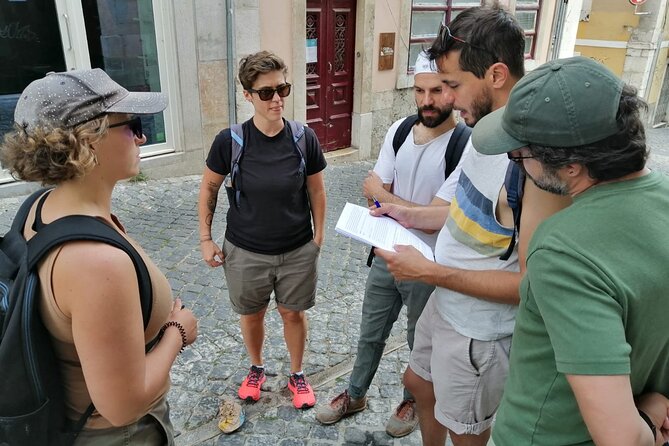
At the Constitutional Court, the tour shifts from nightlife to law. Alex traces Portugal’s long movement away from dictatorship-era values and toward constitutional protection for LGBTQ rights.
That transition is one of the most important parts of the walk. It explains why modern Lisbon feels open in some ways, while also showing that legal change and social change have a history behind them.
At Rua Luz Soriano, the focus turns to an early homosexual manifesto and the people who tried to speak publicly before their efforts were suppressed. The story eventually reaches a more successful phase of LGBTQ organizing.
The route is strongest when these political stories are placed beside ordinary streets and nightlife venues. You are not reading a timeline in a museum. You are standing in the city where people argued, organized, published, performed, and took personal risks.
Scandal, secrecy, and old Lisbon stories

Rua do Trombeta brings one of the tour’s more theatrical episodes: the story of the Two Fernandes, linked to nineteenth-century scandal, love nests, luxury apartments, and later sauna culture.
At Purex, the focus returns to a dance floor run by women, along with the playful detail of vagina jewelry. The stop at Maria Caxuxa introduces an impressive woman who challenged convention in the 1940s and brushed aside intrusive journalists.
Then comes the story of the Marquis of Valada at Travessa da Espera. A powerful man, a common soldier, political blackmail, public disgrace, and survival all enter the picture. These tales give the walk a lively rhythm, but they also show how sexuality and power have long been tied together.
The stories are often funny, but the humor does not erase the risks involved. Public exposure could mean legal trouble, social ruin, or political manipulation. That balance is important, and Alex appears comfortable moving between a laugh and a more serious point.
Josephine Baker, queer writing, and the church
At Teatro da Trindade, you hear about Josephine Baker, the bisexual jazz icon who performed in Lisbon while avoiding secret police attention and spying during wartime. Her story is a highlight because it links queer identity, performance, international travel, and political secrecy.
At Rua da Misericórdia, the focus moves to women in love with women, queer fiction, censorship, and compromised censors. This is another reminder that LGBTQ history is not only found in clubs. It also lives in books, coded language, publishing decisions, and the private act of reading.
I would allow extra attention at Igreja de São Roque. The Portuguese Inquisition provides the setting for stories from the sixteenth, seventeenth, and eighteenth centuries, including lesbian nuns, a demonic penis, sex in church, and a trans love story.
The church stop lasts about 15 minutes, longer than most of the others. That makes sense because the material is dense and the setting carries its own weight. You are not visiting for a standard art-history lecture. You are using the church as a doorway into records of desire, punishment, resistance, and survival.
Pessoa and the final stop at Late Birds Hotel
Near Hospital St. Louis, the tour turns to Fernando Pessoa. Alex discusses a side of the celebrated writer that has been reclaimed through later attention to his gay writing and identity.
For visitors who know Pessoa mainly as a major Portuguese literary figure, this adds another layer. It also shows how queer readings of famous writers can change the way a city’s cultural past is understood.
The final stop is Late Birds Hotel on Travessa André Valente. The group ends in the lounge, bar, garden, or pool area of what is described as Lisbon’s largest gay hotel. If the weather is good, you can bring a swimming costume, though swimming is not the main point of the tour.
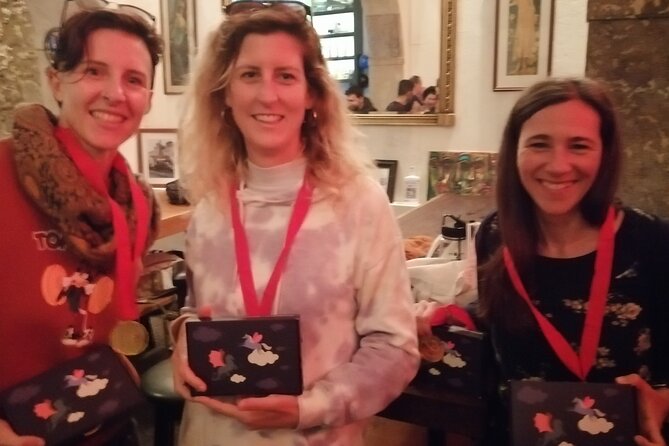
A pub quiz and prizes provide an easy way to finish. You can have a drink, meet people from the group, and ask Alex about places to visit later. This ending is a real advantage over tours that simply leave you at a street corner with a quick goodbye.
What the 24-stop route feels like
The itinerary lists 24 stops, most lasting about six minutes. That means the tour is built around short bursts of storytelling rather than long museum visits or formal indoor talks.
You will pass through Principe Real, areas around the Botanical Garden and Trumps, then continue toward central Lisbon and the Late Birds Hotel. Exact walking distances are not provided, but the large number of stops and the physical-fitness guidance make the practical message clear: prepare to walk.
The short-stop format keeps the route moving and allows Alex to cover a lot of ground. It can also feel packed. If you want a slow architectural walk with time for photographs at every corner, this may not be your ideal choice.
Ask questions as you go. Alex’s strength, according to the supplied experience, is adapting stories to the interests of the group. One couple found that he always had a backstory ready for the subjects they cared about most.
The PDF guide and practical value
The included PDF, called Alex’s Long List, is normally priced at 15 euros. It is one of the best reasons to keep this tour in your plans early in a Lisbon visit.
You can use the walk to learn what interests you, then use the guide to shape later evenings. It points you toward bars, clubs, free activities, and less obvious places. One person used it to find spots they would not have found through ordinary sightseeing research.
That makes the $60.34 price easier to justify. You are paying for about three and a half hours of live interpretation, a small group, a route built around a clear subject, and a take-home planning tool. The value is strongest if you want to continue exploring queer Lisbon after the tour.
Who should book this walk?
I would recommend it to LGBTQ visitors who want more than a list of bars. It suits anyone interested in civil rights, urban history, literature, performance, nightlife, or the personal stories that official city tours often leave out.
It also works well for allies. The tone is welcoming, and the material gives you a better understanding of both present-day Lisbon and the struggles that shaped it.
You should think twice if you dislike walking, need a highly accessible route, or prefer a short sightseeing tour with only a few major stops. Service animals are allowed, public transportation is nearby, and a moderate fitness level is required. The minimum booking age is 16, while the legal drinking age is 18.
The tour is offered in English and uses a maximum group size of 15. Free cancellation is available up to 24 hours before the start time. If you cancel later, the payment is not refunded, and the experience may be rescheduled or refunded if the minimum number of participants is not reached.
Should you book Queer Lisbon?
Book it if you want Lisbon explained through queer lives, not just monuments. Alex’s route covers Pride, health care, legal rights, drag, lesbian history, bear culture, literature, scandal, and nightlife without pretending the past was always easy.
The strongest reasons to go are the unusual subject, the personal storytelling, the small group, and the finish at Late Birds Hotel. Bring comfortable shoes, leave room in your schedule, and expect the tour to feel closer to four hours if the conversation is lively.
Skip it if you want a conventional overview of Lisbon or dislike a walking tour with frequent historical stories. For everyone else, this is a thoughtful way to see the city, meet people, and leave with practical ideas for the rest of your stay.
FAQ
Where does the tour begin?
It begins at Principe Real Playground, Praça do Príncipe Real, 1250-184 Lisboa, Portugal.
What time does the tour start?
The tour starts at 10 a.m.
Where does the tour end?
It ends at Late Birds Hotel, at Tv. André Valente 25, 1200-236 Lisboa, Portugal.
How long does the tour last?
The stated duration is approximately three hours and 30 minutes. Some outings may last closer to four hours.
What language is the tour offered in?
The tour is offered in English.
How many people can join the group?
The maximum group size is 15 travelers.
What age must you be to book?
You must be at least 16 years old to book the experience.
Is transportation included?
Private transportation is not included. The experience is a walking tour, and public transportation is available near the route.
What fitness level is needed?
A moderate level of physical fitness is recommended because the tour involves walking between many stops.
Is a guide included?
Yes. Alex leads the tour and provides stories about Lisbon’s queer history, current LGBTQ life, nightlife, health services, and legal changes.
What is included after the tour?
The experience finishes at Late Birds Hotel, where you can use the lounge, bar, garden, or pool area. It also includes a PDF guide to LGBTQ Lisbon, normally valued at 15 euros, plus a pub quiz and prizes.
Can I cancel for a full refund?
Yes, if you cancel at least 24 hours before the local start time. Cancellations made less than 24 hours in advance are not refunded.
Just added around Lisbon
- e-Scavenger hunt Lisbon: Explore the city at your own pace★ 5.0 · 2 reviews
- Lisbon Old Town: Exploration Game and Tour★ 3.5 · 2 reviews
- Lisbon Highlights Self guided scavenger hunt and Walking Tour★ 3.0 · 2 reviews
- Óbidos Scavenger Hunt and Sights Self-Guided Tour★ 5.0 · 7 reviews
- Lisbon Secrets of the Freemasons: Exploration Game and Tour★ 5.0 · 9 reviews
- Historical Outdoor Escape Game in Lisbon “The Cryptex of Pombal”★ 5.0 · 13 reviews
- Mysteries of Alfama: Lisbon Exploration Game and Tour★ 4.0 · 12 reviews
- Lisbon (Belém) Scavenger Hunt and Sights Self-Guided Tour★ 5.0 · 8 reviews
Lisbon Escape Games, compared.

Lisbon (Chiado-Baixa) Scavenger Hunt and Sights Self-Guided Tour
Read our review →
Historical Outdoor Escape Game in Lisbon “The Cryptex of Pombal”
Read our review →
Mysteries of Alfama: Lisbon Exploration Game and Tour
Read our review →
Lisbon Secrets of the Freemasons: Exploration Game and Tour
Read our review →Browse the lists this tour appears in