

Review · ROME
Rome: Hidden Treasures of Trastevere Self-Guided Puzzle Quest
Trastevere becomes your game board in this self-guided puzzle walk, where each clue sends you to another corner of Rome’s old riverside neighborhood. You begin at Ponte Fabricio and finish at Piazza Trilussa, passing ancient remains, quiet lanes, church squares, and bits of local legend along the way.
I like the flexible start time, since you can fit the walk around lunch, a museum visit, or a late morning in the city. I also like the low price, $8.09 per person, and the way the puzzles can give children a reason to look up from their phones and notice Rome around them.
The tradeoff is simple: this is an app experience, not a guided tour. One poor rating describes a failed connection and difficulty reaching support, so you should download the app, check your access code, and make sure your phone is ready before setting off.
Key points at a glance
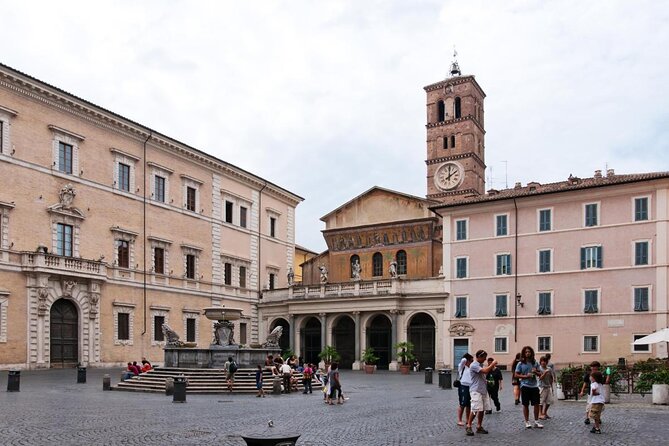
- Ponte Fabricio starts the story: Your first clue begins the route on one of Rome’s historic river crossings.
- Fifteen real-world puzzles: The challenges connect personal memories, Trastevere legends, and nearby sights.
- Twelve listed locations: You move from Isola Tiberina through lanes and church squares to Piazza Trilussa.
- About 75 to 105 minutes: The stated time allows for solving, walking, photos, and pauses.
- Private and flexible: Play alone or with your own group, with no fixed time slot.
- Good for families: The puzzle format offers children a more active way to notice Rome’s old streets and monuments.
A phone-led introduction to Trastevere
This experience gives you a small story to follow rather than a long spoken explanation. The plot centers on Luisa’s mystery, mixed with local legends and personal memories tied to the places you visit. At every stage, your phone provides a challenge and directions to the next scene.
That format matters in Trastevere. The neighborhood is full of narrow passages, small squares, old walls, and sights that can be easy to pass without noticing. A clue can make you examine a doorway, search above street level, or pause beside a monument instead of simply walking from one major attraction to another.
You do not need an entrance ticket for the route itself. The listed stops are public places, and the experience is designed to be completed outdoors and around the sights. If a church, archaeological site, or other attraction has an interior opening, any separate admission would not be part of this activity.
The walk is private, meaning only your own group participates. That is useful for families and friends who want to solve at their own speed. It also means there is no guide to keep the pace moving or explain a clue if your group gets stuck.
More City Exploration Games in Italy
- Rome: City Exploration in a Retro Fiat 500 With Photo Stops
★ 5.0 · 3 reviews - Siena Medieval Power Quest: Self-Guided Family Feud Game
★ 4.5 · 38 reviews - Florence Inferno: Dante’s Haunted Exploration Game and Tour
★ 4.5 · 33 reviews
Ponte Fabricio and the first clue
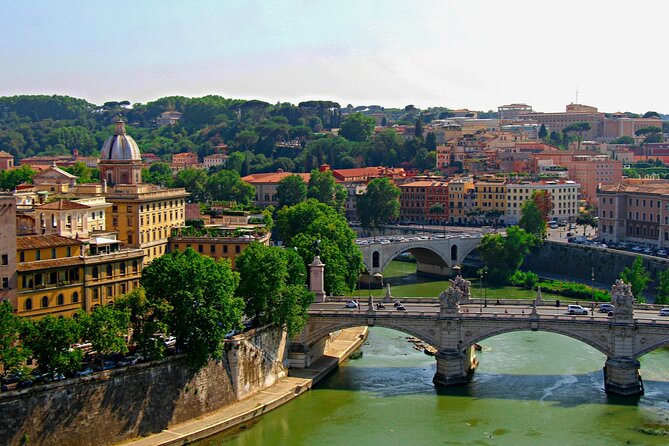
The route begins at Ponte Fabricio, the first of Rome’s historic points on the river. The opening challenge sets the tone: you read the clue, solve the task, and receive the next direction through the app.
The bridge is a practical starting place because it connects naturally with the route toward Trastevere and the nearby island area. Allow a few minutes to get your bearings before you begin. You will want your phone charged, your mobile connection working, and the access code ready.
The official timing gives this stop about five minutes, but your group can take longer. The walk is not a race. If your children need time to understand the game, use the first clue as a practice round rather than rushing.
Piazza in Piscinula and Trastevere’s smaller scale
From the bridge, the story moves to Piazza in Piscinula, a smaller and more intimate setting than Rome’s grand ceremonial squares. Here, another clue continues the mystery and points you onward.
This is one of the useful features of the route. It does not focus only on famous monuments. You are sent into the texture of the neighborhood, where a little square or side street can carry as much character for the game as a major basilica.
The five-minute estimate is brief, so you should treat it as a guide rather than a strict schedule. Solving may take longer, especially with several people offering answers. A group can make this more fun, but too many competing ideas may slow things down.
Vicolo dell’Atleta and the pleasure of looking closely
At Vicolo dell’Atleta, the challenge asks you to study your surroundings and work out the next step. The appeal here is the scale. You are not simply checking off a famous address. You are using a lane as part of the puzzle.
That makes this stop particularly useful for children. They have a clear job to do, and the job depends on paying attention to the place itself. Adults may appreciate the same prompt for a different reason: it encourages you to notice details that a standard point-to-point walk can leave behind.
Keep the app open, but do not let the screen dominate the visit. Read the clue, look up, and compare the prompt with the street around you. The experience works best when the phone sends you into Rome rather than replacing Rome.
More Puzzle Walks in Italy
- Self-Guided mystery walk outside the Pantheon, Rome
★ 4.0 · 5 reviews - Milan Da Vinci Mystery: Self-Guided Puzzle Quest
★ 4.0 · 19 reviews - The Magic of Navigli: Self-Guided Puzzle Quest in Milan
★ 5.0 · 7 reviews - Brescia Hidden Legends: Self-Guided Puzzle Quest
★ 4.5 · 6 reviews
Piazza di Santa Cecilia and the church setting
The route then reaches Piazza di Santa Cecilia, where the next challenge advances the story. The square provides a change of pace after the narrower lane, with a setting connected to the Basilica of Santa Cecilia nearby.
You can spend more than the suggested five minutes here if you want to take in the surroundings. The game does not require you to buy an entry ticket, and the route can be completed without entering attractions. That keeps the price low, but it also means you should not expect a guided church visit or detailed interior commentary.
For families, this stop offers a natural pause. You can solve the clue, look around, and continue when everyone is ready. The flexible design is more forgiving than a scheduled group tour, where falling behind can feel awkward.
Vicolo del Buco, 60 and the value of the street clue
At Vicolo del Buco, 60, you are told to look up the next clue and find the correct direction. This small instruction hints at the kind of attention the activity expects. The answer may depend on what surrounds you, not simply on reading a paragraph on your phone.
It is worth slowing down here. Side streets can be confusing, and the difference between a pleasant puzzle and a frustrating one may be taking a moment to confirm your location before moving on.
The route description gives this stop five minutes. Still, the total walk is estimated at up to one hour and 45 minutes, so the designers clearly allow room for walking between points, pauses, photos, and a few wrong turns.
Excubitorium della VII Coorte and ancient Rome
The stop at Excubitorium della VII Coorte adds an archaeological note to the walk. The name refers to an ancient Roman watch station, giving the story a direct link to the city’s earlier layers.
This is the kind of stop that benefits from a puzzle format. An ancient site can be easy to overlook when you are surrounded by modern streets. A challenge gives you a reason to stop and connect the location with the broader story of Rome.
You are specifically free to pause here and continue at your own pace. That matters if one member of your group wants to read more, take photographs, or simply rest. The app sets the next task, but it does not force an immediate departure.
In Trastevere House and the middle of the mystery
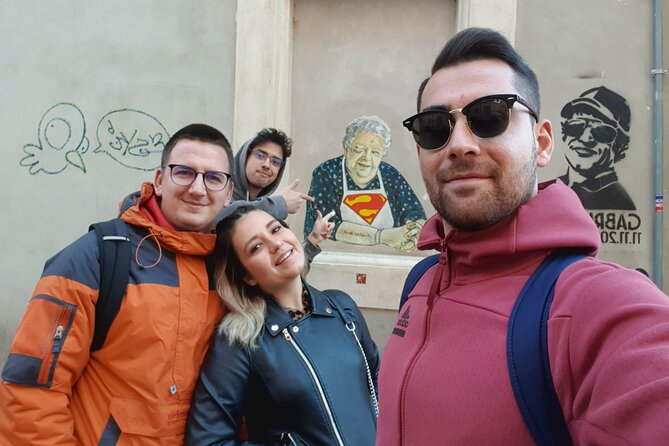
The route continues to In Trastevere House, where you receive another clue. The supplied details do not promise a guided visit inside a house or a separate attraction admission, so think of this as a location in the outdoor puzzle route rather than a ticketed stop.
By this point, the structure should feel familiar. Read the prompt, solve the challenge, follow the directions, and use the surroundings to check that you are going the right way. This rhythm can be satisfying for a group that likes games, though less appealing if you want uninterrupted sightseeing.
The private format helps here. Your group can discuss an answer without worrying about holding up strangers. If nobody wants to solve a particular clue, the lack of a guide may become a drawback, since there is no person beside you to provide an explanation.
Vicolo di Santa Maria in Trastevere
At Vicolo di Santa Maria in Trastevere, the game gives you another chance to pause and look around. The instructions emphasize enjoying the view and continuing at your own pace, which makes this a natural point for photographs or a short rest.
The route is designed around short stops, but Trastevere is best appreciated when you allow some breathing room. You might finish in the stated 75 minutes if you move briskly and solve quickly. With children, a slower group, or frequent pauses, plan closer to the upper estimate of 105 minutes.
There is no need to force every stop into exactly five minutes. Those numbers are useful for planning, but the experience’s main strength is the ability to stretch or shorten the pauses.
Basilica of Santa Maria in Trastevere
The walk then brings you to the Basilica of Santa Maria in Trastevere, one of the route’s most important visual landmarks. The activity invites you to admire the basilica around you while continuing the puzzle.
This is a good example of the experience’s balance. You get a clear task, but the location remains the main event. If you are visiting Rome for the first time, you may want to pause here longer than the suggested five minutes, even if it means extending the total time.
No entry ticket is required to complete the puzzle route. The information provided does not promise a guided explanation of the basilica, so you should choose this activity for its combination of exploration and game play, not as a replacement for a specialist church tour.
Porta Settimiana and a change of scenery
At Porta Settimiana, the next clue sends the story onward. This gate gives the route a more structural landmark, adding another kind of Roman setting after the lanes and church square.
The stop also helps break up the walk. You move through different types of spaces rather than repeating the same street scene. That variety is useful for children, who may lose interest if every challenge feels alike.
The app’s directions should be followed carefully. A phone-based walk depends on staying oriented, and the one serious practical warning attached to this activity concerns connection problems. Before leaving the start, confirm that your app access works. If possible, keep the booking confirmation and access details easy to find.
Via di Santa Dorotea and the final approach
The next location is Via di Santa Dorotea, where another clue provides fresh directions. By this stage, you are close to the end of Luisa’s mystery, so the stop functions as part of the final stretch rather than a major sightseeing break.
The route can suit adults who want a light introduction to Trastevere without committing to a long walking tour. It can also work as a family activity between larger Rome visits. You get movement, a story, and small tasks, but you are not tied to a guide’s timetable.
The downside remains the same: the quality of the experience depends on the app and your group’s willingness to play along. If you prefer a historian explaining each place in depth, this will feel thin. If you like solving clues and discovering streets at your own pace, the format has more appeal.
Piazza Trilussa brings the story to a close
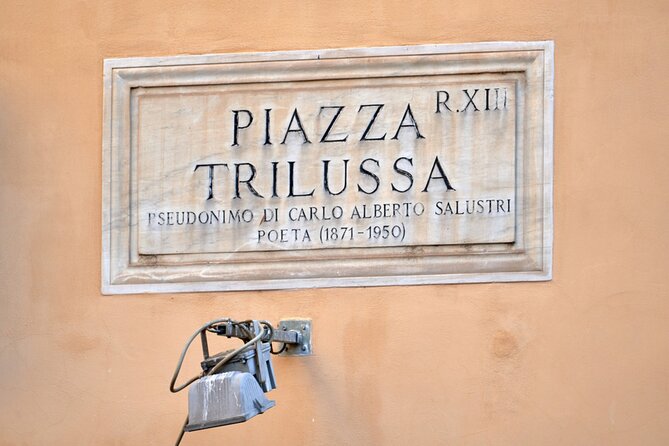
The final stop is Piazza Trilussa, where both the story and the city game end. This is a practical finish because it gives you a clear endpoint rather than leaving you somewhere without a final scene.
You can use the square as a place to decide what comes next, but no onward plans are included in the activity. The walk is best seen as a compact Trastevere outing, not a full-day tour.
The published operating window is broad, from midnight to 11:30 p.m. daily during the stated availability period. That supports the flexible format, though common sense matters: choose a time when your group can see the clues and feel comfortable walking between stops.
Is $8.09 good value?
At $8.09 per person, this is inexpensive by Rome tour standards. You are paying for mobile access, the storyline, and 15 real-world challenges, not for a guide or attraction admissions.
The value is strongest if you are traveling with children, enjoy puzzle games, or want a simple way to explore Trastevere without booking a fixed-time tour. A private group can share one experience while each person contributes to the answers.
The value is weaker if you want deep historical commentary, personal recommendations from a local guide, or guaranteed technical help. One out of five recorded ratings describes an inability to connect and an unsuccessful attempt to reach assistance. The provider responded by asking the customer to contact [email protected], but you should still take basic precautions before starting.
Android and iPhone access is supported, and the activity comes in several languages, including English. Group discounts are available, though the exact discount amount is not provided, so check the final price before paying.
Who should choose this Trastevere puzzle walk?
I would point this activity toward families with school-age children, couples who enjoy light challenges, and friends who want to explore without joining a public group. It also suits repeat visitors who have seen Rome’s largest monuments and now want a more playful route through Trastevere.
You should choose something else if your priority is expert commentary, detailed archaeology, or a carefully narrated tour. There is no guide, and the app cannot respond to questions in the way a local person can.
The route is near public transportation, service animals are allowed, and most people can participate. Still, the provided information does not give detailed accessibility specifications, so you should contact the provider if your group has particular mobility needs.
Should you book it?
Book this Trastevere quest if you want a low-cost, flexible walk with a story, 15 puzzles, and plenty of chances to pause. The route links Ponte Fabricio, Santa Cecilia, ancient Roman remains, the basilica, and Piazza Trilussa in a compact outing.
Skip it if you want a guide beside you or if an unreliable phone connection would spoil the day. For the best chance of a smooth start, confirm your mobile access before leaving, charge your phone, and treat the stated 75 to 105 minutes as a flexible range rather than a deadline.
FAQ
How long does the Trastevere puzzle quest take?
The experience takes approximately 1 hour and 15 minutes to 1 hour and 45 minutes. You can pause and continue at your own pace.
Where does the activity begin?
The route begins at Ponte Fabricio in Rome. The starting area is listed as 00186 Rome, Metropolitan City of Rome Capital, Italy.
Where does the activity finish?
The activity finishes at Piazza Trilussa, 42, 00153 Roma RM, Italy.
Is there a fixed starting time?
No. The experience has a flexible start time rather than a required time slot. Its listed operating hours run from 12:00 a.m. to 11:30 p.m., Monday through Sunday, during the stated availability period.
Do I need a guide?
No. This is a self-guided activity completed through an app on your phone. A tour guide is not included.
Can I complete the quest on my own?
Yes. You can complete it solo or with your own group. It is a private activity, so only your group participates.
Which phones and languages are supported?
The activity is available on Android and iPhone devices. It comes in multiple languages, including English.
Are entrance tickets included?
The public route does not require entry tickets, and no attraction admission is included. You can complete the experience without buying attraction tickets.
Can I cancel for a full refund?
Yes, if you cancel at least 24 hours before the local start time. Cancellations made within 24 hours are not refunded, and changes within that period are not accepted.
More City Exploration Games in Rome
- Undercover City Games: Gdansk
★ 5.0 · 198 reviews - Private Car: 8 Hour Highly Customized Taipei City Exploration!
★ 5.0 · 164 reviews - Half Day Bangkok Old Town City Quest – GOLDEN MOUTAIN’S ECLIPSE
★ 5.0 · 118 reviews - Malaga city game: Operation Mindfall
★ 5.0 · 111 reviews
More Puzzle Walks in Rome
- Fun, Flexible Treasure Hunt Around Manchester with Cryptic Clues & Hidden Gems
★ 5.0 · 253 reviews - Fun, Flexible Treasure Hunt Around York with Cryptic Clues & Hidden Gems
★ 5.0 · 248 reviews - Fun, Flexible Treasure Hunt Around Bath with Cryptic Clues & Hidden Gems
★ 5.0 · 208 reviews - Fun, Flexible Treasure Hunt Around Oxford with Cryptic Clues & Hidden Gems
★ 5.0 · 202 reviews
Just added around Rome
- Villa Borghese escape game★ 3.0 · 3 reviews
- Rome Treasure Hunt With Leonardo da Vinci★ 4.0 · 3 reviews
- Trevi Pantheon and Spanish Steps Treasure Hunt for Kids & Families in Rome★ 5.0 · 2 reviews
- Vatican Treasure Hunt with Guided Tour for Families with Kids★ 5.0 · 2 reviews
- Self-Guided mystery walk outside the Pantheon, Rome★ 4.0 · 5 reviews
- Treasure hunt in Rome, Ghetto and Trastevere★ 5.0 · 8 reviews
- Treasures of Rome Scavenger Hunt for Friends Team Building & Company Incentive★ 4.5 · 2 reviews
- Rome Scavenger Hunt and Highlights Self-Guided Tour★ 5.0 · 2 reviews
Rome Escape Games, compared.
Dark Heart of Rome – Facts, Legend & Mystery Walking Tour
Read our review →

Angels & Demons Rome Scavenger Hunt: The Illuminati Escape Game
Read our review →

Private Family Scavenger Hunt & Art Lab Tour – Rome Landmarks
Read our review →

Browse the lists this tour appears in