
Review · SPAIN
San Sebastián escape game, mystery of Santo Tomás and Santa Clara
The fun here is not a locked room. It is a walking mystery through San Sebastián, beginning at Cristina Enea Park and moving toward the city center. You solve clues, follow a story tied to Santo Tomás and Santa Clara, and discover the route as the game unfolds.
I like two things right away: the activity gives sightseeing a clear purpose, and the 90-minute format fits neatly into an afternoon or early evening. Guides such as Maddi, Saioa, and Iratxe have earned warm praise for being friendly and adaptable.
The main caution is difficulty. Several people found the tests easy, and one person felt the organizers gave away too much of the route. This is best for a social city walk, not for serious escape-game experts seeking fiendish puzzles.
Key points to know before booking
- A city walk with a mystery theme: You move through Donostia rather than staying inside one escape room.
- Cristina Enea Park start: Meet at Mandasko Dukearen Pasealekua 66 at 6 pm.
- About 90 minutes: The length works well for an afternoon activity before dinner.
- English offered: The experience is listed as available in English.
- Guides can shape the mood: Maddi, Saioa, and Iratxe are named as particularly engaging facilitators.
- Easygoing puzzle level: Good for groups and younger participants, but possibly too simple for dedicated puzzle fans.
A mystery that gets you walking
San Sebastián is easy to admire passively. You can stroll along the waterfront, admire the old streets, and stop for food. This game asks you to pay closer attention. The story of Santo Tomás and Santa Clara gives your walk a reason, while the clues turn ordinary city details into parts of a larger puzzle.
That makes this different from a standard guided tour. You are not simply being led from landmark to landmark while listening to a speech. You are expected to work together, make choices, and keep the mystery moving.
At the same time, this is not presented as a hard-core escape challenge. The supplied experience is a team activity in the open city, with its own objects and challenges. You should expect a light puzzle walk, not a tense race against a clock inside a decorated room.
That distinction matters. If you enjoy laughing with friends, solving simple tests, and seeing San Sebastián on foot, the format should suit you. If you want complicated codes and a high failure rate, you may find the game gentle.
A few more escape games around Spain worth a look
- Málaga: Private Sightseeing Treasure Hunt
★ 4.8 · 297 reviews - Málaga: Private Sightseeing Treasure Hunt
★ 5.0 · 144 reviews - Malaga city game: Operation Mindfall
★ 5.0 · 111 reviews
Starting at Cristina Enea Park at 6 pm
The meeting point is Cristina Enea Park, at Mandasko Dukearen Pasealekua 66, 20012 Donostia, Gipuzkoa. The scheduled start is 6 pm. You will need to make your own way there, since private transportation is not included.
The location gives the experience a clear beginning away from the unknown final point. You know where to go at the start, but not where the route will finish. That surprise is part of the design, so do not plan a tight connection immediately afterward.
The start time is useful for a city break. You can spend the earlier part of the day sightseeing, then meet the group for an active change of pace. The stated duration is about an hour and a half, although I would leave extra time after the game because the endpoint is deliberately not disclosed.
Public transportation is nearby, which helps if you are not staying close to the park. The meeting point is also practical for anyone who prefers not to arrange a taxi or private transfer. Still, check your route before setting out, especially if your group includes children or anyone who needs extra time to reach the meeting point.
How the route works
The precise stops are kept secret. That is not a missing detail to overlook. The mystery depends on not knowing the next location or the final destination.
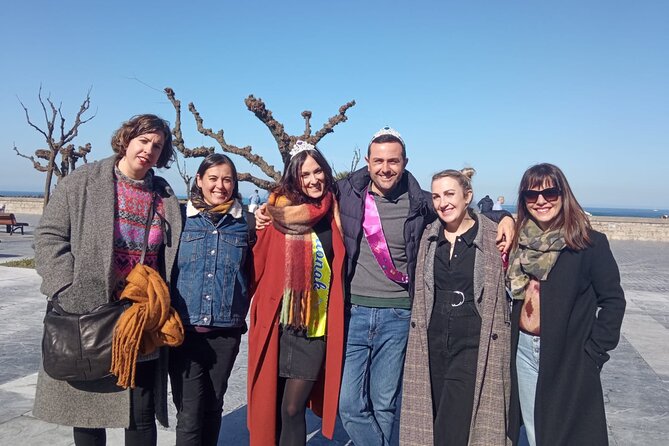
What is clear is that the activity takes you through San Sebastián, with the central part of Donostia featuring in the experience. One account describes walking through some of the city’s most attractive places, while another describes touring the center as part of a team-building outing. You should therefore think of the route as a moving city game rather than a single fixed attraction.
At each stage, the group works with the supplied objects and the game’s tests. The goal is to connect clues and keep progressing. Since the precise questions and locations are not revealed, I cannot tell you which streets or sights you will use on a particular date.
That uncertainty is a benefit for some people. You can enjoy the feeling of discovery instead of following a published checklist. It is also a drawback if you want to prepare for a very specific route or guarantee a particular viewpoint.
The route may feel more like a guided walk with puzzles than a pure escape game. That description is important because the difficulty appears to vary by group. Some people found the tests entertaining and just right for a relaxed outing. Others found them too simple and felt the guide directed the group too quickly.
What the guides add
The guide can make or break a social game. The named facilitators include Maddi, Saioa, and Iratxe, and the feedback gives each a strong personal presence. Maddi is described as kind and approachable, while Iratxe is noted for adapting to the group. Maddi and Saioa are also praised together for making an afternoon with friends entertaining.
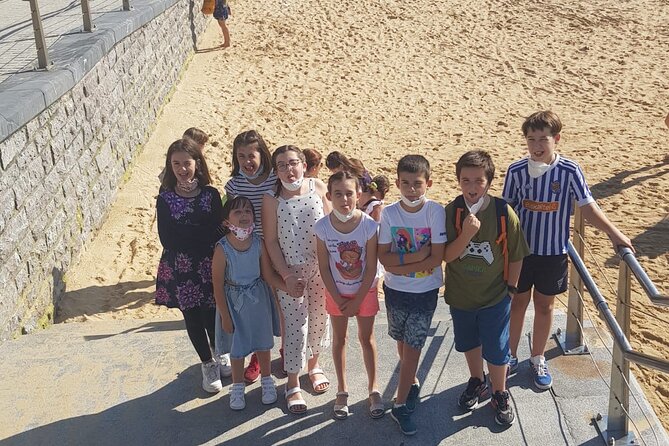
You should expect the guide to explain the tests, keep the group moving, and offer help when needed. That is especially useful for a mixed-age group. One outing included young people between 14 and 17, who had a good time. A large group also used the activity for team building, with the monitors explaining the tasks in a simple way and engaging with the participants.
This suggests the experience is designed to be accessible rather than intimidating. You do not need to arrive as an expert in riddles. A group can take part even if some members are more interested in socializing than solving every clue.
There is a tradeoff. A helpful guide may prevent your group from getting stuck, but too much assistance can reduce the satisfaction of solving the mystery yourself. One complaint specifically focused on organizers telling the group where to go and making the challenges feel too easy.
When you book, it is worth telling the guide if your group wants a little time to work independently. The available information does not confirm that difficulty can be adjusted, so treat this as a request, not a promised feature.
Same place, a different puzzle:
- Cala Millor: Escape Room “The millionaire’s villa”, fun game
★ 4.6 · 78 reviews - Cala Millor: real treasure hunt in natural reserve, fun walk
★ 3.8 · 39 reviews - Escape game Madrid, chase the killer
★ 4.5 · 37 reviews - Malaga: Bachelorette Party Treasure Hunt
★ 4.7 · 35 reviews
Is the puzzle level right for you?
The most consistent concern is that the tests may be easy. That is not necessarily bad. Simple puzzles keep a group moving, reduce arguments, and make the activity workable for people with different ages and abilities.
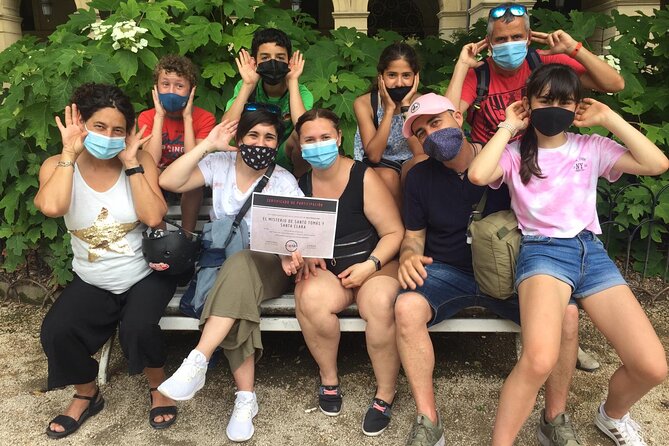
For a family group, a birthday outing, or a first escape game, the accessible level may be exactly right. You can enjoy the route without spending long stretches staring at one clue. The fact that groups of teenagers and large team-building parties have used it supports this relaxed appeal.
For experienced escape-game fans, expectations need more care. You may want layered clues, misleading paths, and puzzles that require sustained concentration. This activity may instead give you a gentle challenge alongside a city walk.
The reviews include one especially sharp complaint about an unclear question and tests that did not require much thought. That does not prove every session will feel the same, but it does show a real risk. I would choose this experience for company and place, with puzzles as the framework, rather than for advanced game design.
A good fit for groups and team building
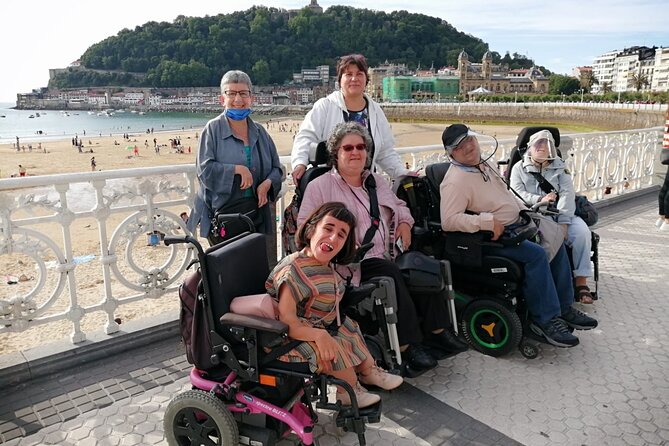
The format works best when the group dynamic matters. Friends can split up ideas, tease one another over wrong answers, and enjoy the walk even when a clue is simple. A team-building group can use the activity to encourage communication without committing to a long formal workshop.
The maximum group size is 20. That is large enough for a company outing or extended family, but it also means the experience may feel less intimate than a small escape room. A group of 20 may need to listen carefully when instructions are given and make sure quieter members are included.
The guide’s role becomes more important as the group grows. With a big party, some people may focus on the puzzle while others fall into conversation. The available feedback indicates that monitors have worked with large groups and kept them engaged, but your own group should still agree to stay together and share clues.
For a small group, the activity may feel more personal. You have fewer opinions to coordinate, and everyone can take part in each test. The stated maximum is 20, but no minimum group size is provided, so you should confirm the booking details for your party.
Why the 90-minute length works

An hour and a half is long enough to create a proper outing without taking over your day. You get time to walk, solve, and settle into the story, but you are not signing up for a half-day commitment.
I like this timing for San Sebastián because food is such a major part of the city experience. A 6 pm start places the game before or around your evening plans, though you should avoid booking a restaurant reservation immediately after it. The endpoint is secret, and the listed duration is approximate.
The walk also gives you a change from indoor sightseeing. If you have spent the day in museums or shops, a puzzle route gets you outside and active. One account describes laughing, walking through attractive parts of the city, and using a little mental effort for the hour and a half. That is the right way to picture the outing.
Do not expect the entire city in 90 minutes. The route gives you a selected portion of Donostia, and the exact path is not disclosed. Its value comes from combining movement, clues, and company, not from covering every major sight.
Price and what your $24.03 buys
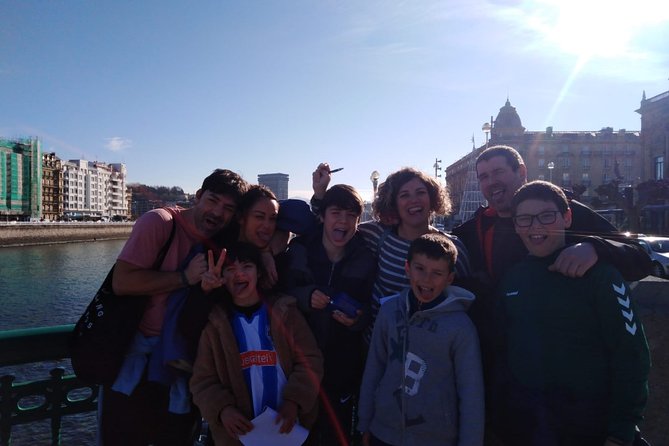
At $24.03 per person, the price is reasonable if you value a structured group activity. You are paying for the game design, the facilitator, the supplied objects, and a guided route lasting about 90 minutes.
The value is strongest when you have several people who would otherwise spend the afternoon deciding what to do. The activity supplies a shared goal and a clear meeting time. You do not need to arrange private transportation, and public transportation is nearby.
The price is harder to justify if you want a standard sightseeing tour with detailed historical commentary. The experience is built around solving a mystery, not receiving a full explanation of San Sebastián’s past. It is also less attractive if your main interest is difficult puzzles and the group finishes the tests quickly.
I would compare it with the cost of another organized activity, not with a free walk through the city. A free walk gives you more freedom, while this experience gives you a game, a facilitator, and a reason to look around. For friends or a team, that added structure can be worth the charge.
Weather, support, and practical limits
The activity requires good weather. If poor conditions force a cancellation, you are offered another date or a full refund. This is important because the experience takes place outdoors and the route is central to its appeal.
The booking confirmation is sent within 48 hours, subject to availability. Do not assume your place is final until you receive that confirmation.
Service animals are allowed, and the activity is near public transportation. Most people can participate, but the experience involves walking around the city for roughly 90 minutes. The supplied information does not give a specific distance or detailed accessibility assessment, so ask the provider if anyone in your group has mobility needs.
Free cancellation is available up to 24 hours before the start time for a full refund. Cancellations or changes made less than 24 hours ahead are not accepted for a refund. The cutoff follows local San Sebastián time.
There was also one serious service problem when a monitor became ill and the activity was moved online as a last resort. The digital version reportedly had app and clue problems. The provider said the money was refunded in that case. This appears to have been an exceptional backup arrangement, but it is a useful reminder to confirm any major change before setting out.
Who should book this San Sebastián game?
I would choose it for:
- Friends wanting a shared afternoon activity
- Families and groups with teenagers
- Company outings and informal team building
- People who like light puzzles more than difficult escape-room mechanics
- You who want to see part of Donostia while doing something active
I would hesitate if:
- You need a fully revealed route
- You want a serious historical tour
- You dislike outdoor walking games
- Your group expects hard puzzles
- You have a fixed appointment right after the 6 pm start
The English-language option helps international groups, though the supplied information does not list other languages. The guide’s friendliness appears to be a strong part of the experience, but the exact guide on your date is not guaranteed.
Should you book it?
Book this if you want a light, social mystery walk with a friendly facilitator and a surprise finish. The best reason to choose it is the combination of city sights, teamwork, and a fixed 90-minute plan.
Skip it if your idea of an escape game means complex puzzles and strict independence. The activity can feel more like an entertaining walk through Donostia than a demanding escape challenge, especially if your guide gives frequent directions.
For most groups, I would set expectations clearly: come for the city, the company, and the story first, then enjoy the puzzles as an added layer. At $24.03, that is a fair deal for an organized outing, provided the easy difficulty suits your group.
FAQ
Where does the experience start?
It starts at Cristina Enea Park, at Mandasko Dukearen Pasealekua 66, 20012 Donostia, Gipuzkoa, Spain.
What time does the activity begin?
The scheduled start time is 6 pm.
How long does the experience last?
The activity lasts approximately one hour and 30 minutes.
Where does the experience end?
The final location is kept secret as part of the mystery, so the endpoint is not provided in advance.
Is the activity offered in English?
Yes. The experience is offered in English.
How much does it cost?
The listed price is $24.03 per person.
Is private transportation included?
No. Private transportation is not included, although the meeting point is near public transportation.
How many people can join?
The maximum group size is 20 people.
Are service animals allowed?
Yes. Service animals are allowed.
Can I cancel for a full refund?
Yes, if you cancel at least 24 hours before the local start time. Cancellations or changes made less than 24 hours before the activity are not accepted for a refund.
Just added around Spain
- Escape game Valencia, will you survive the failures?★ 4.5 · 11 reviews
- Valencia Monumental Scavenger Hunt★ 5.0 · 7 reviews
- e-Scavenger hunt Valencia: Explore the city at your own pace★ 4.5 · 6 reviews
- Valencia Iconic Sights Scavenger Hunt★ 4.5 · 10 reviews
- Valencia City Tour: A Treasure Hunt Experience★ 5.0 · 15 reviews
- Toledo Scavenger Hunt and Highlights Self-Guided Tour★ 4.5 · 3 reviews
- Tenerife Scavenger Hunt and Highlights Self Guided Audio Tour★ 3.5 · 3 reviews
- Tarragona Scavenger Hunt and Highlights Self Guided Audio Tour★ 4.5 · 15 reviews
Spain Escape Games, compared.

Cala Millor: Escape Room “The millionaire’s villa”, fun game
Read our review →
Cala Millor: real treasure hunt in natural reserve, fun walk
Read our review →
The Gothic Trail – Ghosts of Barcelona Exploration Game
Read our review →Browse the lists this tour appears in