
Review · USA
Treasure Hunter Escape Room
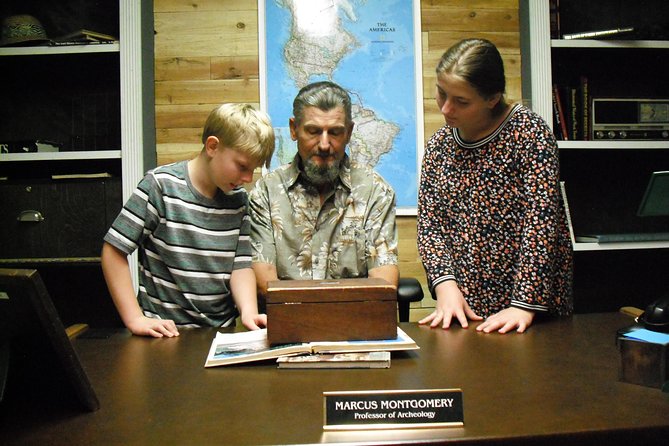
The real hook here is the story: you enter the office of Professor Marcus Montgomery in 1976, investigate his untimely death, uncover a conspiracy, and steal an ancient golden artifact before the clock reaches zero. I like the clear mission and the fact that the room is rated easy to medium, which makes it a sensible first escape game. I also like the small group size, capped at eight, so everyone has a useful role.
The main point to consider is that the advertised Sedona experience actually begins in Cottonwood at 551 S Main St. Also, unless you reserve the entire room, other players may join your group, so this is private only when you book the full room.
Key things to know before you book
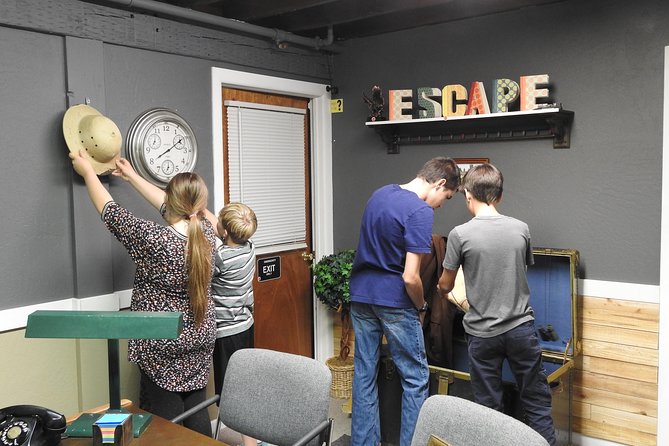
- The story begins in a 1976 professor’s office: Your task is tied to a suspicious death, a conspiracy, and an ancient golden artifact.
- The game itself lasts 60 minutes: Allow about 90 minutes total, including check-in, preparation, debriefing, and photographs.
- The room holds up to eight players: A full booking keeps the group together, but open bookings may include other people.
- The difficulty is easy to medium: It suits first-timers, families with older children, and groups that want puzzles without an extreme challenge.
- You need teamwork and speed: The hour moves quickly, and you will need to share clues rather than let one person do all the work.
- Parking is simple: Free parking is available behind the building and in the connecting area around State Farm Insurance.
A 1976 mystery with a very specific mission
Many escape rooms give you a broad theme and leave the rest to the puzzles. Treasure Hunter gives you a job from the start: investigate Professor Marcus Montgomery’s death, expose the conspiracy behind it, and take an ancient golden artifact.
That clear goal matters. You are not just opening locks at random. Each clue should feel tied to the professor, his office, or the larger mystery. The setting also gives the hour a firm sense of place. You are not in a generic modern room. You are working inside a story set in 1976, with the clock pushing you to think quickly.
The experience is built around a 60-minute game. You will need to collect clues, connect them, and make decisions under pressure. The final objective adds a little more drama than simply escaping. You are trying to complete a theft as part of the mission, which gives the room an extra twist.
The description does not list every puzzle or prop, so I would not arrive expecting a precise sequence of challenges. Instead, expect a story-led puzzle session in which the details of the office and the professor’s case guide your work.
More Escape Rooms in the USA
- Bank Heist Escape Room Game for Private Group
★ 5.0 · 519 reviews - Titanic Escape Room Game for Private Group
★ 5.0 · 464 reviews - Vampire’s Lair Escape Room Game for Private Group
★ 5.0 · 324 reviews
What happens during the 90-minute visit
Plan on about an hour and a half at the venue, though only 60 minutes are spent solving the room.
You should arrive 15 minutes before your start time. This gives you time to check in, show your mobile voucher, and prepare for the game. That early arrival is worth taking seriously. Showing up just as the clock starts can cost you useful preparation time and may make it harder to settle into the story.
The main section lasts 60 minutes. Once you enter the game, the mission is to investigate the professor’s death, find the clues, solve the puzzles, and complete the artifact theft. The pace is intended to feel urgent. You may think you have plenty of time at the beginning, then discover that several clues require careful teamwork.
After the game, allow another 15 minutes for a short debrief and photographs of your group. That final portion is useful for first-time players because you can talk through what you noticed, what you missed, and how the puzzle chain worked. It also gives you a record of the outing, especially if your group does not quite escape.
Why the easy to medium rating helps first-timers
Treasure Hunter is listed as easy to medium, which makes it a practical starting point if you have never tried an escape room. You still need quick thinking and determination, but the experience is not presented as an expert-only challenge.
One first-time group found the room complex and enjoyable, even though they did not escape. That is an important distinction. Escape rooms are timed games, so success is not guaranteed. You can still have a worthwhile hour if the group works together, spots several clues, and enjoys the pressure.
Another first-time group felt awkward at the beginning, then got moving after receiving some help. That tells you something useful about the format: you do not need to arrive with special puzzle skills. The staff can help you get started if you are stuck or unsure how the room works.
I would encourage you to speak up early. If you find a clue, share it at once. If you think two objects connect, say so. The room is much easier when the group communicates openly instead of waiting for one person to solve every piece.
The difficulty also makes this a good choice for mixed groups. An experienced player can help with strategy, while a beginner may notice a detail that someone else overlooks. The best escape rooms reward several kinds of thinking, not just speed.
The group size and the question of privacy
The room allows a maximum of eight players. That is large enough for a family, a group of friends, or a small work outing, but not so large that the room should become chaotic.
The important booking detail is that the experience is not automatically private. If you do not reserve the entire room, other players may be added. You could end up solving the case with people you did not arrive with.
That arrangement can work well if you like meeting new people and sharing a challenge. It can also bring extra energy to the room, since more people mean more eyes searching for clues. On the other hand, a mixed group may have different puzzle styles and different levels of experience.
If you want the game to be only for your family or friends, check the booking options and reserve all available places. That is the only way to be sure your group has the room to itself. The experience is described as personalized for your group, but that applies most clearly when you book the whole room.
For a family group, the eight-person maximum is useful. You can divide into pairs or small teams, then bring discoveries back to the full group. Just be careful not to split up so much that everyone misses the larger story.
Same place, a different puzzle:
- Branson Murder Mystery- Branson’s Original #1 Murder Mystery
★ 5.0 · 1,513 reviews - The Escape Game Orlando: Epic 60-Minute Adventures on I-Drive
★ 5.0 · 730 reviews - The Escape Game Pigeon Forge: 60-Minute Adventures on The Island
★ 5.0 · 646 reviews - The Escape Game Nashville Berry Hill
★ 5.0 · 546 reviews
Who should play, and who may want another activity
The venue recommends the game for ages 10 and up. Younger children are allowed, but some puzzles may be too difficult for them. That makes Treasure Hunter a better fit for older children who can read clues, follow a story, and take part in group problem-solving.
Anyone age 15 or younger must have an adult remain on site. Participants under 18 also need an adult-signed waiver before playing. These rules affect family planning, so do not assume that older children can arrive and play without an adult present.
The room should suit:
- Families with children around age 10 and older
- Friends trying an escape room for the first time
- Couples who enjoy solving puzzles together
- Small corporate or team groups
- People who like mystery stories and timed challenges
It may not suit you if you dislike countdowns, group problem-solving, or situations where the answer is not obvious. The game depends on urgency, so a relaxed sightseeing mood is not the right expectation.
The room also may not be ideal for very young children. They can be present, but the puzzles and 1976 story are aimed more at participants who can follow a mystery and contribute to the task.
The staff, clues, and getting unstuck
The experience depends on teamwork, but you are not expected to know how escape rooms work before you arrive. A first-time group needed a little help before finding its rhythm, then had a good time.
That is a useful tip for beginners: do not feel foolish if the first few minutes seem confusing. Look at everything carefully, communicate what you see, and ask for help when the group has made no progress. A hint can get the game moving again without taking away the satisfaction of solving the rest.
The staff received strong praise for being helpful, and the setup was described as carefully planned. Since the available information does not name individual guides, you should not expect a particular host by name. What you can expect is staff support around the game and a short process before and after play.
A good group divides the work without losing contact. One person may track the plot, another may search for physical clues, and another may test combinations or connections. Keep the whole group informed, because a clue that seems useless to one person may explain something another person has found.
You should also expect not every group to escape. The hour can pass quickly, especially during a first attempt. Completing the artifact mission is the target, but the puzzle-solving itself is the main activity.
Price, timing, and practical value
The price is $30 per person, with taxes, fees, and handling charges included. Transportation, food, and drinks are not included.
For the price, you receive a structured 60-minute activity rather than a short attraction that you simply walk through. Add the 15-minute preparation period and 15-minute post-game time, and you should plan for roughly 90 minutes at the venue.
I see the value here in the shared nature of the experience. One ticket gives you a reason to work together, laugh at missed clues, and compare how each person approaches a problem. That can be worthwhile for a family or small group looking for something different from another meal or shopping stop.
The price is less attractive if you are unsure that your whole group enjoys puzzles or timed games. Since the booking is non-refundable and cannot be changed for any reason, make sure your group is committed before paying.
The experience is booked about 10 days ahead on average. That does not guarantee that every date fills early, but it is a sensible reason to reserve ahead if your Sedona-area schedule is fixed.
Getting to the Cottonwood meeting point
The meeting point is 551 S Main St, Cottonwood, Arizona 86326. Although the activity is presented in connection with Sedona, the actual start and end point is in Cottonwood, so check your driving time before selecting a start slot.
Free parking is available in the lot behind the building. You can also park in the connecting parking area around State Farm Insurance.
The game ends back at the same meeting point. Since transportation to and from the attraction is not included, you will need to arrange your own ride or drive yourself. Food and drinks are also not part of the activity, so plan those separately rather than expecting refreshments at the venue.
Bring your mobile ticket or Viator voucher as proof of purchase. Arrive early enough to check in 15 minutes before the game, especially if your group has children or anyone unfamiliar with escape rooms.
Service animals are allowed, and most people can participate. The available information does not give further room-specific accessibility details, so contact the operator before booking if you need particular accommodations.
How to make the most of your hour
Start by searching carefully, but do not treat every object as important. Escape rooms often include items that help create the setting, while other details are meant to move the puzzle forward. Since the theme is a professor’s office, pay attention to the story and the objects connected to his work.
Share discoveries out loud. A group that keeps clues private wastes time and can create duplicate work. You may also want one person to remember combinations, notes, and partial answers while everyone else keeps searching.
Do not spend too long on one puzzle. If your group is stuck, ask for a hint or move to another clue. The first-time group that needed help is a good reminder that support is part of learning the format, not a sign that you have failed.
Finally, enjoy the debrief. If you do not complete the mission, you can still learn how the final steps fit together and take group photographs afterward. The extra 15 minutes makes the visit feel like a complete activity rather than an abrupt stop when the timer ends.
Should you book Treasure Hunter Escape Room?
Book it if you want a 60-minute mystery with a clear mission, a small group limit, and a beginner-friendly level. The 1976 professor’s office, suspicious death, conspiracy, and golden artifact give the game a stronger story than a room built around locks alone.
It is especially suited to families with older children, first-time players, and small groups looking for a hands-on activity near Sedona. The $30 price is reasonable for a 90-minute venue visit, but remember that the booking cannot be refunded or changed.
Think twice if your group dislikes timed puzzles, if you need a fully private room without reserving all places, or if you are staying far from Cottonwood and assumed the activity began in Sedona itself. For the right group, though, this is a lively way to spend an hour, even if your crew does not quite manage the escape.
FAQ
Where does Treasure Hunter Escape Room take place?
The activity begins and ends at 551 S Main St, Cottonwood, AZ 86326, USA. Although it is associated with Sedona, the stated meeting point is in Cottonwood.
How long does the experience last?
Plan on approximately 90 minutes total. The game lasts 60 minutes, with about 15 minutes before the game and 15 minutes afterward for preparation, debriefing, and photographs.
How much does it cost?
The price is $30 per person. Taxes, fees, and handling charges are included.
How many people can play?
Treasure Hunter allows a maximum of eight players.
Will my group have the room to ourselves?
Only if you book the entire room. Otherwise, you may be joined by other players.
What ages are recommended?
The experience is recommended for ages 10 and up. Younger children are allowed, but some puzzles may be too difficult for them.
Does an adult need to be present for children?
An adult age 18 or older must remain on site with anyone age 15 or younger. Participants under 18 also need an adult-signed waiver.
Is parking available?
Yes. Free parking is available in the lot behind the building or in the connecting parking area around State Farm Insurance.
Can I cancel or change my booking?
No. The experience is non-refundable and cannot be changed for any reason.
Just added around the USA
- Ventura Scavenger Hunt Walking Tour and Game★ 4.0 · 4 reviews
- Vail Venture Scavenger Hunt★ 3.5 · 8 reviews
- Save the Mountain Escape Room Adventure★ 5.0 · 4 reviews
- Tybee Island, Georgia Scavenger Hunt★ 4.0 · 7 reviews
- A Spectacular Scavenger Hunt: Center of the Universe★ 4.0 · 4 reviews
- Amazing Scavenger Hunt: Desert Oasis★ 3.5 · 3 reviews
- Tucson Scavenger Hunt by Wacky Walks★ 4.5 · 2 reviews
- Thrilling Traverse City Scavenger Hunt★ 4.0 · 7 reviews
USA Escape Games, compared.

Branson Murder Mystery- Branson’s Original #1 Murder Mystery
Read our review →
The Escape Game Orlando: Epic 60-Minute Adventures on I-Drive
Read our review →
The Escape Game Pigeon Forge: 60-Minute Adventures on The Island
Read our review →
The Escape Game Cincinnati: 60-Minute Adventures at The Banks
Read our review →


The Escape Game Honolulu: 60-Minute Adventures at Ala Moana
Read our review →Browse the lists this tour appears in