
Review · ITALY
Mostra Leonardo Da Vinci: Rome Treasure Hunt Game
Rome becomes a giant puzzle on this three-hour treasure hunt, with a tablet pointing you toward clues, questions, photos, and landmarks. You can choose your own route through places such as the Pantheon, Piazza Navona, the Spanish Steps, Campo de’ Fiori, the Forum, or the Colosseum, then return to the Leonardo da Vinci Museum for the final challenge.
I like the freedom to choose your stops instead of following a fixed walking line. I also like the way the game gives children a reason to look closely at statues and streets, rather than simply being dragged from one monument to the next.
The main drawback is that the tablet can take a little getting used to, and three hours may feel short if you want to visit every point. The outdoor portion also involves plenty of walking, even though you can skip questions and locations.
Key points to know before you go
- Your family chooses the route: The game can lead you toward the Pantheon, Piazza Navona, Campo de’ Fiori, the Spanish Steps, the Forum, and the Colosseum, but you decide which stops interest you most.
- The museum is both start and finish: You collect the tablet at Mostra Leonardo Da Vinci, explore Rome, then return to solve a final riddle inside the exhibition.
- One tablet is supplied per family: This keeps the price more reasonable for a family, but everyone needs to gather around one screen.
- The clues reward careful looking: Earn points at different stages, then use the clues to answer the final puzzle.
- It works especially well with children and teenagers: The game turns a long city walk into a shared task, with photos and challenges along the way.
- The $53 price includes the museum and equipment: It does not cover entry to the Colosseum, Pantheon, Forum, or other paid attractions.
Starting at the Leonardo da Vinci Museum
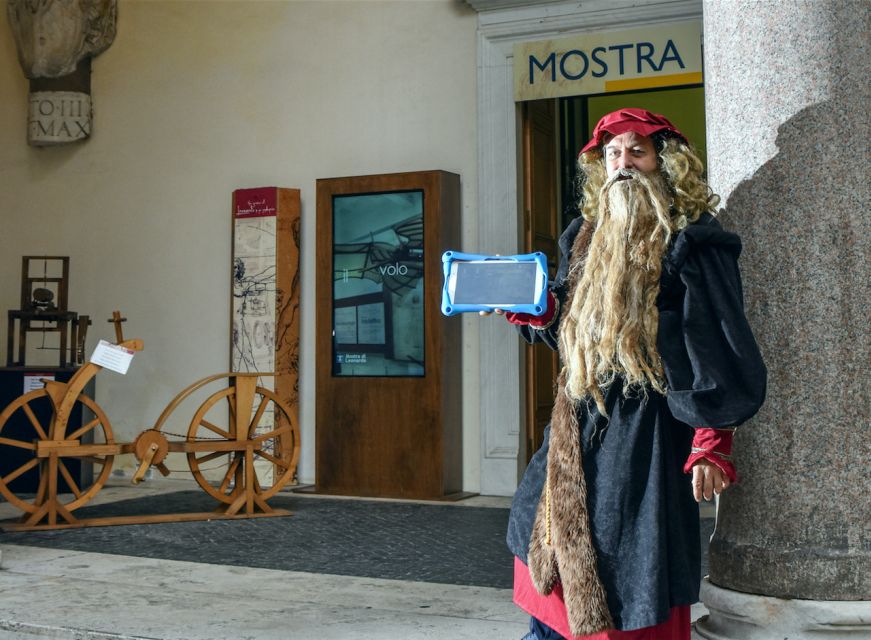
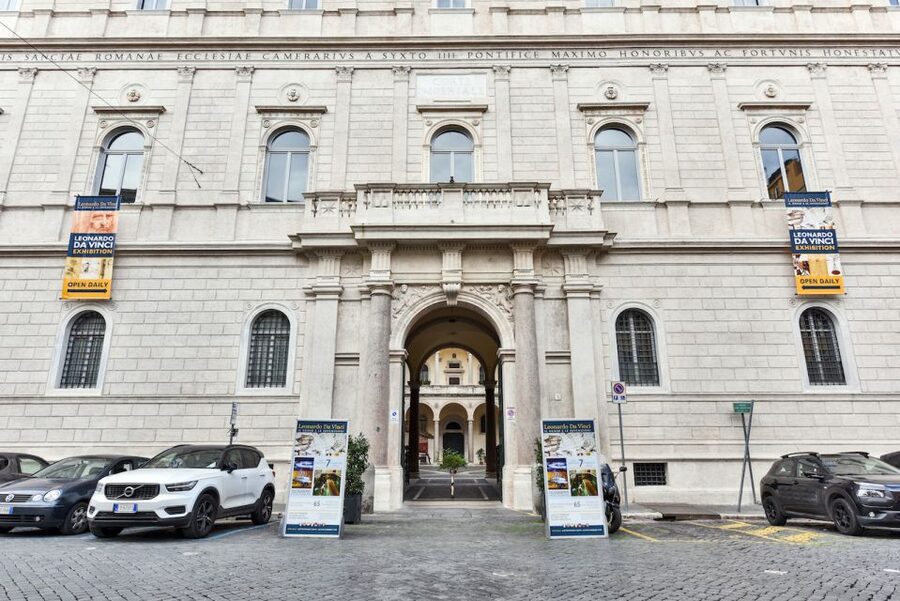
You begin at Mostra Leonardo Da Vinci at Piazza della Cancelleria 1, close to Campo de’ Fiori and Piazza Navona. Go to the ticket counter, show your voucher, and collect the treasure hunt materials.
The museum entry is included, along with a tablet and interactive city map. The tablet is your guide for the outdoor section, so you do not need a human guide walking beside you. Staff members speak Italian, English, German, French, Spanish, and Russian, and the experience is offered as a private group.
The museum itself is not just a place to collect equipment. It is also part of the activity, with Leonardo’s inventions and experiments providing the theme for the hunt. One family described the museum as the best part, while another found that children were especially interested in trying out the inventions.
Allow a few minutes at the start to learn the tablet controls. This matters. The map, location markers, photo tasks, and answer screens are not always instantly clear. Before leaving, make sure you know how to see your position on the map, how to enter an answer, and how to save a photo so the game registers it.
One useful tip: check that the tablet sits properly in its case. A family found that the case partly covered their photos, which was frustrating after spending time completing the tasks.
More Treasure Hunts in Italy
- Florence Self-Guided Treasure Hunt & Medici Mystery Walking Tour
★ 5.0 · 69 reviews - Best of Florence Treasure Hunt Tour for Kids & Families
★ 5.0 · 44 reviews - Naples: The Path of the Immortals Treasure Hunt Walking Tour
★ 4.1 · 42 reviews
Turning Rome into a three-hour game
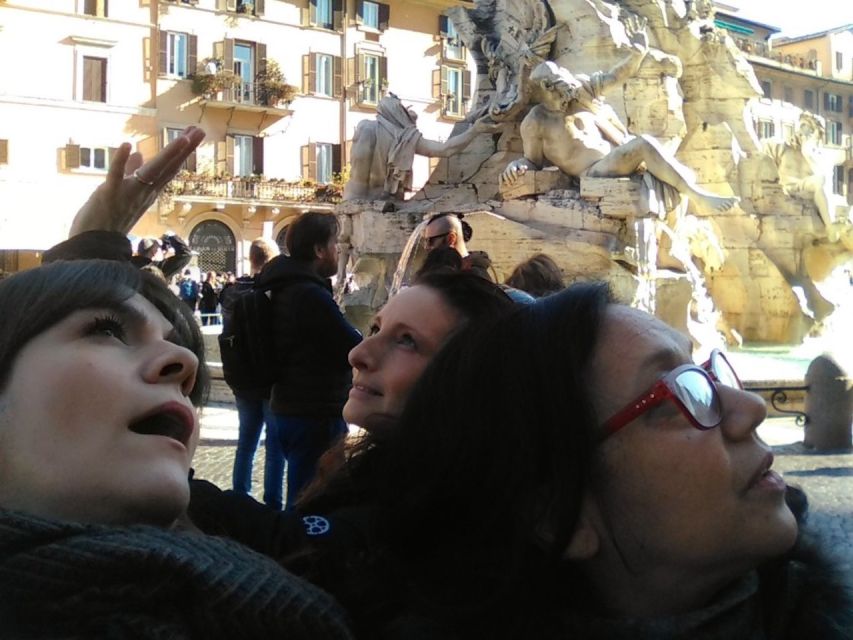
Once you leave the museum, the activity becomes a self-guided walk through central Rome. The tablet presents questions and clues at different points, and you earn points as you complete them.
This format changes the pace of sightseeing. Instead of trying to absorb every detail from a guide, you stop, look, read, take a photograph, and discuss the answer with your group. The game asks you to pay attention to things you might otherwise walk past.
The route is not a single compulsory trail. You can choose the stops that sound most interesting, and you do not have to complete every question. That flexibility is useful if you have already visited the main sights, if the children are getting tired, or if you want to spend more time at the museum.
It also means you need to make your own decisions. The tablet may show several possibilities, and the most ambitious route could cover a large part of the center. If you try to visit every location, three hours will feel tight. If you choose a smaller set of nearby points, the pace is easier.
The activity is best treated as a playful introduction to central Rome, not a replacement for detailed visits inside every monument. You can admire the Colosseum, Pantheon, Forum, or Spanish Steps from the route, but admission to those attractions is not included.
What the landmarks add to the experience
The locations give the game its value. Rome already offers an extraordinary walking tour, but children may not care about that until there is a question to answer or a photo to take.
At Piazza Navona, you might find yourself studying a fountain or statue for a clue instead of simply crossing the square. The setting gives the group an easy place to stop and compare observations.
Near Campo de’ Fiori, the walk can feel more spontaneous. One family happened upon an Italian market while following the game, a reminder that the best part of a self-guided route is sometimes the unplanned stop between official points.
The Pantheon and nearby streets offer the sort of visual details that work well in a photo-based hunt. You are encouraged to look at buildings and sculptures from a different angle, not just take the standard postcard picture.
The Spanish Steps and Colosseum are bigger targets. If you include them, plan for more walking and less time at each clue. You may prefer to choose one major sight and several closer stops rather than attempt the whole center in one sweep.
The game also asks you to make your own living sculptures beside original sculptures. This is a playful photo task, particularly good for families with younger children. It gives them something active to do at places where the usual instruction is simply to look and listen.
Why the clues work well for families
The strongest part of the experience is the way it gives children a job. They are not only following adults around Rome. They are searching, choosing, photographing, and trying to work out answers.
Families with children around 10 to 13 found the format particularly successful, and it also suits teenagers who might resist a standard guided walk. A seven-year-old can take part, though younger children may need help reading the questions and using the tablet.
The English wording may be difficult for some eight to ten-year-olds. You should expect to read clues aloud or explain them in simpler language. That is not a major problem, but it means the activity is not completely independent for young children.
Adults can enjoy the puzzles too. One parent booked it for a seven-year-old and found that the adults became just as interested in solving the clues. That shared competition is useful because it keeps the group involved instead of leaving one person to manage the technology.
The points system adds a little pressure, but you do not need a perfect score to enjoy the day. Staff will provide the prize at the end, and the point total mainly helps you collect clues for the final riddle.
Same place, a different puzzle:
- Dark Heart of Rome – Facts, Legend & Mystery Walking Tour
★ 4.5 · 329 reviews - Open Air Escape Game in Villa Borghese !
★ 4.5 · 145 reviews - Angels & Demons Rome Scavenger Hunt: The Illuminati Escape Game
★ 4.5 · 103 reviews - Open Air Escape Game – TRASTEVERE REVOLUTION
★ 4.5 · 89 reviews
Returning to the museum for Leonardo’s final puzzle
The route ends back at Mostra Leonardo Da Vinci. This return is important because the museum is not just a starting desk. You use the clues collected outside to solve the final riddle during the exhibition.
The museum gives the experience a clear finish. After walking through Rome, you return to Leonardo’s world of machines, designs, and inventions. Children who might have found a standard museum slow now have a task to complete indoors.
The final section uses a new tablet for the museum portion, according to the activity instructions and family feedback. Ask the staff to explain the process before you begin if anything is unclear.
Do not rush through this part. Several families found the exhibition especially engaging, and one family cut the outdoor game short because the children wanted more time with the inventions. If your group is fascinated by Leonardo, you may want to leave extra energy for the museum rather than trying to cover every outdoor point.
The $53 price and what you actually receive
At $53 per person, this is not the cheapest way to walk around Rome. Its value depends on how many people are in your group and how much you value a structured family activity.
The price includes entry to the Leonardo da Vinci exhibition, the tablet rental with one tablet per family, and the interactive city map. For a family, one shared tablet can make the cost easier to justify than several individual tickets for a standard guided activity.
You are also paying for a ready-made way to organize a Rome walk. Without it, you would need to choose sights, plan a route, find information, and invent activities for children yourself. Here, the questions and clues provide that structure.
The price does not include food, drinks, hotel transport, or admission to other attractions. If your plan includes going inside the Colosseum, Forum, or another paid site, buy those tickets separately and allow enough time for them. The hunt itself is an outdoor city game, not an admission pass for Rome’s major monuments.
For two adults who already know Rome well, the value is less obvious. You may still enjoy the unusual route and puzzles, but the experience is clearly aimed at families and groups who want to see the city through a game.
Walking, timing, and practical limits
The advertised duration is three and a half hours, with about three hours devoted to the self-guided city portion. The start and finish are both at the museum, so you do not need to arrange transport between two different meeting points.
You can do more or less of the hunt. One family completed about three hours and then chose to spend more time inside the museum. Another family felt that a full day would have been better because there were so many places to visit.
That flexibility is helpful, but do not confuse it with a short, easy stroll. If you want to answer many questions, you will walk a good distance through central Rome. Comfortable shoes matter, and you should plan around your children’s energy.
The experience operates rain or shine. Bring suitable clothing and remember that the tablet is central to the activity, so wet weather may make the outdoor section less pleasant. The route is wheelchair accessible, but the exact ease of each chosen street or stop can depend on your route and the conditions that day.
Bring a passport or ID card. The activity is private to your group, and free cancellation is available up to 24 hours before the start. You can also reserve now and pay later, which helps if your Rome schedule is still changing.
Who should book this Rome treasure hunt?
I would choose this for a family with school-age children or teenagers, especially if you want a first look at central Rome without committing to a formal guide. It is also a good fit after you have already visited the major sights and want a new reason to walk through familiar streets.
It suits children who enjoy puzzles, photos, and small challenges. It is less suitable for anyone who wants a slow historical lecture, a tightly scripted route, or guaranteed entry into Rome’s major monuments.
You should also consider your group’s language level. The staff can assist in six languages, but the English clues may require explanation for younger children. Adults will need to stay involved with the tablet, map, and answers.
If the weather is poor, if your group dislikes walking, or if you have only a short window in Rome, the activity may feel rushed. If you have half a day and want children to take an active role, it offers a useful balance of sightseeing, learning, and play.
Should you book it?
Book this Rome treasure hunt if you want to turn sightseeing into a shared family challenge. The best features are the freedom to choose your route, the chance to notice details around famous squares and monuments, and the Leonardo museum finale.
Skip it if you want a traditional guided tour or plan to spend most of the day inside major attractions. For families, the $53 price can be fair because it includes the museum, tablet, and a ready-to-use activity. Just learn the tablet controls at the start, choose a realistic route, and leave enough time for the museum.
FAQ
Where does the Leonardo da Vinci treasure hunt start?
It starts at the ticket counter of Mostra Leonardo Da Vinci at Piazza della Cancelleria 1, near Campo de’ Fiori and Piazza Navona.
How long does the experience last?
The listed duration is three and a half hours. About three hours are set aside for the self-guided walk through Rome.
What is included in the price?
The price includes entry to Mostra Leonardo Da Vinci, tablet rental with one tablet per family, and an interactive city map.
Does the price include entry to the Colosseum or Pantheon?
No. Entry to other attractions is not included. The game may take you to sights such as the Colosseum, Pantheon, Forum, Spanish Steps, Piazza Navona, and Campo de’ Fiori, but separate admission may be required.
Can I choose which sights to visit?
Yes. The game lets you choose the route and decide which locations seem most interesting. You do not have to complete every question or stop.
Is the activity suitable for children?
Yes. It is especially suited to families with children and teenagers. Younger children may need help reading the English clues and operating the tablet.
What languages are available?
The host or greeter languages are Italian, English, German, French, Spanish, and Russian.
What happens if it rains?
The activity takes place rain or shine. Bring clothing suitable for the weather, since the treasure hunt includes an outdoor walk through Rome.
Just added around Italy
- Verona Scavenger Hunt and Highlights Self Guided Tour★ 4.0 · 17 reviews
- Verona Scavenger Hunt and Highlights Self Guided Audio Tour★ 4.5 · 7 reviews
- Venice Highlights Self Guided Scavenger Hunt and Walking Tour★ 4.0 · 6 reviews
- CITY QUEST VENICE: reveal the mysteries of this city!★ 3.5 · 4 reviews
- Venice Cannaregio Scavenger Hunt and Sights Self-Guided Tour★ 3.5 · 3 reviews
- Venice: Casanova Charm Carnival Treasure Hunt★ 4.5 · 9 reviews
- Carnival Treasure Hunt & Mask Painting Workshop★ 4.5 · 7 reviews
- Turin Scavenger Hunt and Sights Self-Guided Tour★ 5.0 · 2 reviews
Italy Escape Games, compared.
Dark Heart of Rome – Facts, Legend & Mystery Walking Tour
Read our review →
Angels & Demons Rome Scavenger Hunt: The Illuminati Escape Game
Read our review →

Florence Self-Guided Treasure Hunt & Medici Mystery Walking Tour
Read our review →
Private Venice Family Tour with Saint Mark’s & Doge’s Palace
Read our review →
Best of Florence Treasure Hunt Tour for Kids & Families
Read our review →Browse the lists this tour appears in