
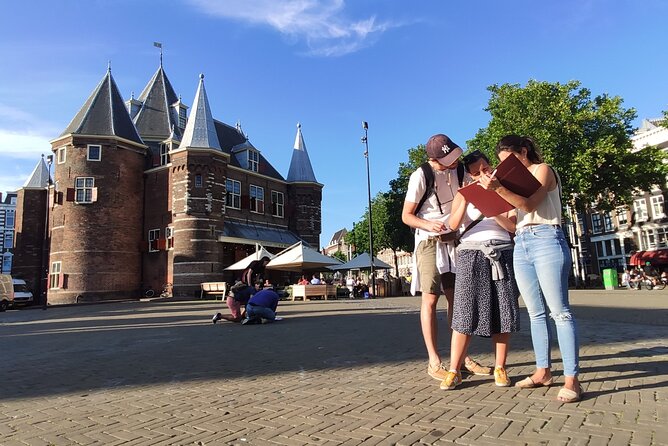
Review · AMSTERDAM
Amsterdam Treasure Hunt: The Mystery of a Secret Sender
Amsterdam’s canals and grand old buildings become your game board in this self-guided mystery walk. You follow the trail of the secretive Order of the Rosy Cross, solving clues tied to Golden Age architecture and searching for the identity of a historic member known only as A Secret Sender.
I like the flexible pace, since you can pause for a snack, examine a building, or let younger players catch up. I also like the route’s mix of major sights and small details that are easy to miss on a normal city walk. The main drawback is the amount of walking: about 3 kilometers over roughly two hours, with some clues likely harder for a large group to manage.
- A 3 km mystery route connects five central Amsterdam stops, from the Oude Kerk to the Amsterdam Museum.
- Self-guided play lets your private group choose its rhythm instead of following a fixed guide.
- History is part of the puzzle, with true stories and architectural clues built into the walk.
- Teenagers and families get a reason to look up, read closely, and work together.
- Six languages are available: English, Dutch, French, German, Spanish, and Italian.
- Friendly staff, including host Ben, help set the right tone at the starting point.
A Rosy Cross mystery in the heart of Amsterdam
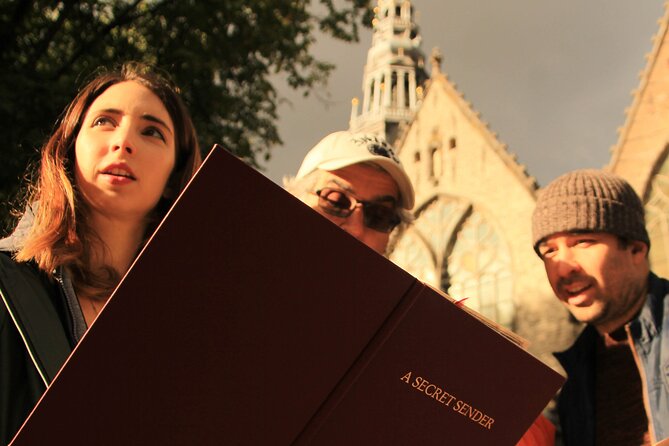
This experience gives you a clear mission from the start. The Order of the Rosy Cross is seeking new members, and your group must prove its worth by solving an old mystery. The final task is to identify one of the order’s historic members, known as A Secret Sender.
That story matters because it gives the walk a purpose. You are not simply moving from one attraction to another while reading dates on plaques. You are looking for clues in buildings, monuments, streets, and details around you. The city becomes something you need to inspect.
The game lasts about two hours and covers 3 kilometers. That is a manageable distance for most people, but you should still treat this as a walking activity rather than a quick puzzle placed beside a single attraction. A comfortable pace will give you time to solve clues and notice the places around you.
The activity is private, so only your group takes part. That works well for families, couples, and friends who want to talk through each puzzle without competing with another party. It may be less efficient for a large group, since several people trying to handle one clue at once can slow things down.
Why the self-guided format works
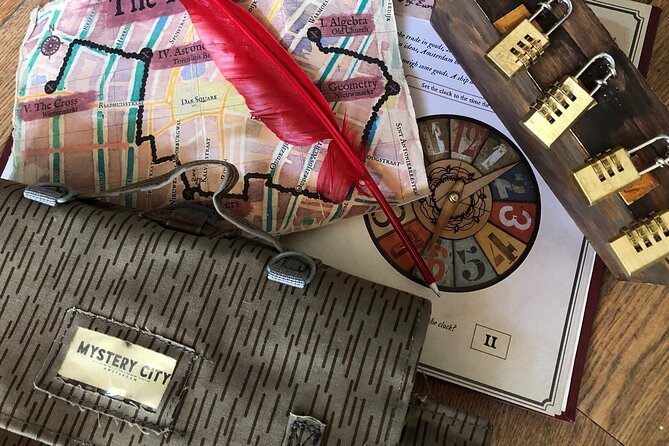
The strongest feature here is control. You choose the start time, then set your own pace once the game begins. If a particular building catches your eye, you can stop for a closer look. If your group needs a short break, you are not holding up a guide or another party.
That freedom also means you need to manage the experience yourself. You will not have a guide constantly explaining where to look or keeping everyone moving. The puzzle and route provide the structure, but your group must read carefully, discuss possible answers, and decide when to continue.
I think this format is especially useful during a first visit to Amsterdam. The route can help you get your bearings while pointing you toward places you might otherwise pass without a second glance. One useful approach is to book it near the beginning of your stay, then mark cafés, restaurants, or streets you want to revisit afterward.
The walk is offered in English, Dutch, French, German, Spanish, and Italian. That makes it more practical for mixed-language groups, although the exact language should be selected when booking.
More Treasure Hunts in Amsterdam:
- Amsterdam: Treasure Hunt Walking Tour “A Secret Sender”
★ 4.7 · 71 reviews - Amsterdam: “Operation 45 ” Treasure Hunt Walking Tour
★ 4.5 · 6 reviews - Hamburg: Treasure Hunt Game through HafenCity
★ 4.7 · 364 reviews
Oude Kerk: starting with Amsterdam’s oldest core
The Oude Kerk is the first listed stop, placing the game in one of the most historic parts of central Amsterdam. Its setting gives the opening clues a strong sense of place, with old streets and architecture close at hand.
This is a good location for a puzzle because it rewards careful observation. You may need to examine details that would be easy to ignore during a standard sightseeing walk. The game’s central idea is to search the city for clues, so do not rush through the first stop simply because you are eager to reach the next one.
The area around the Oude Kerk can also feel busy, and the route may require you to pay attention to where you are standing while reading the game material. Keep your group together and avoid blocking paths. The activity is designed to combine sightseeing and problem solving, not to make you race.
Nieuwmarkt: a useful change of scene
The route continues to Nieuwmarkt, a lively historic square with a different feel from the narrow streets around the Oude Kerk. This stop helps break up the walk and gives you another setting in which to connect city history with the mystery.
Nieuwmarkt is also a practical point for a short pause if your group needs one. The experience does not promise a guided lunch stop or included food, so any break is up to you. Keep an eye on the time, since stopping too long can turn a two-hour game into a longer outing.
For families, this part of the route can keep the activity from feeling like a museum lesson. Younger players have a job to do, and adults can help them link the clue to what they are seeing. That shared problem solving is one of the best reasons to choose this over a conventional walking tour.
Westerkerk: architecture as part of the answer
Westerkerk is the third stop. Here, the route continues its use of prominent Amsterdam buildings as more than background scenery. You are asked to look at the city with the puzzle in mind, searching for clues in the architecture and surroundings.
This is where the activity’s educational side becomes useful. You learn true stories from Amsterdam’s past, but the information arrives through a task rather than a long spoken explanation. If you enjoy learning by doing, the format should feel more involving than simply listening to a guide.
The tradeoff is that your understanding depends on your group’s attention. If someone rushes ahead or reads only the bare minimum, the historical details may pass by. I would have the whole group stop at each clue, read it aloud, and agree on the answer before moving on.
A few more escape games around Amsterdam worth a look
- Amsterdam Red Light District Treasure: Self-Guided Tour & Quest
★ 5.0 · 39 reviews - Discover Amsterdam’s city center in this Outside Escape game tour
★ 4.5 · 18 reviews - e-Scavenger hunt Amsterdam: Explore the city at your own pace
★ 4.5 · 14 reviews - Amsterdam Urban Legend Scavenger City Game
★ 5.0 · 11 reviews
Torensluis: a smaller detail on the route
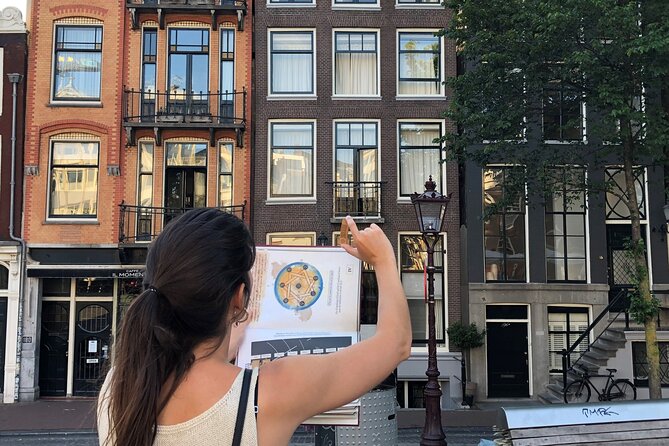
Torensluis is the fourth stop and helps the route move beyond the best-known landmarks. This is an important part of the experience because the game is designed to show you details that might otherwise go unnoticed.
A normal walk through Amsterdam often becomes a march between major sights. Here, the puzzle asks you to notice the spaces between them. That can lead you down streets or toward features you would not have singled out from a standard sightseeing list.
This stop also illustrates why the self-paced design matters. You should allow time to inspect the surroundings rather than treating the route as a set of checkpoints. The game works best when you give the clues a fair try before asking for help or moving on.
Amsterdam Museum: finishing with city context
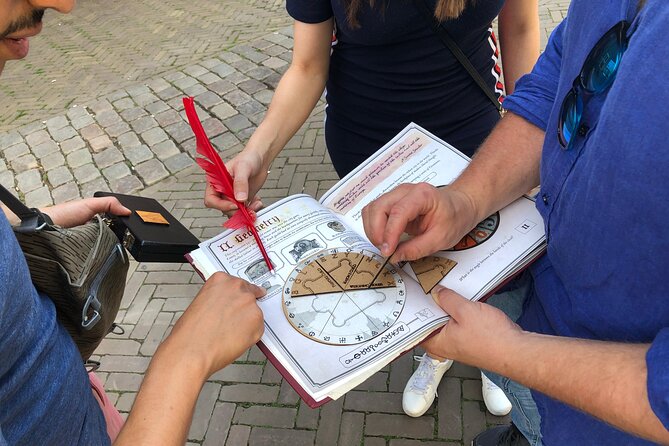
The Amsterdam Museum is the fifth listed stop and gives the route a strong final point. Its subject fits the activity well: you have spent the walk piecing together clues while learning how the city’s past appears in its buildings and public spaces.
The finish returns to the meeting point at Zwanenburgwal 178, where the activity begins and ends. That makes the outing easier to plan alongside the rest of your day. You do not need to arrange a separate pickup or work out where the route leaves you.
Do not assume the museum visit itself is included. The experience uses the museum as a stop on the walking route, and the supplied details do not promise admission or a separate interior tour. If you want to spend time inside, treat that as an additional plan rather than part of the two-hour game.
How difficult are the puzzles?
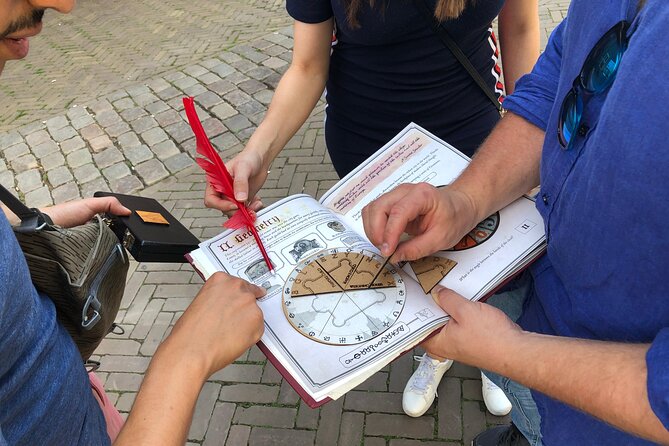
The clues are described as difficult enough to feel exciting without becoming a specialized test. That balance is important. A mystery for children that adults solve instantly can lose its energy, while a puzzle that is too obscure can frustrate a family.
I would expect the best results from a group that talks through the clues instead of letting one person take over. Teenagers can read and interpret the material, adults can add context, and younger children can search for visual details. The game is meant to be social, so cooperation is part of the fun.
A large group may be less comfortable. With several people sharing the same book or game materials, some may end up standing back while others do the actual solving. Two people, a couple, or a family with a few children may find the format easier to manage.
A family with teenagers has also used the activity during a seven-hour Amsterdam layover, fitting in a short lunch near Nieuwe Kerk. That is possible in principle because the route takes about two hours, but you should leave generous time for transport, airport procedures, and delays. The activity itself does not include airport transfers.
The practical side of the game materials
The game uses a physical setup that includes a backpack. The backpack was considered fine for the activity, though it was not especially easy to buckle and unbuckle. That is a small issue, but it is worth knowing if children will be handling it or if you expect to open it repeatedly.
Staff at the starting and ending location are described as friendly, with Ben specifically praised as a helpful host. Their role appears to be focused on getting you started and supporting the game rather than leading the full walk. Once you set off, the experience remains self-guided.
You receive confirmation at booking, and the ticket is mobile. The meeting point is Zwanenburgwal 178 in Amsterdam, near public transportation. Service animals are allowed, and most people can take part, though you should be comfortable walking for around two hours.
Is $30.25 good value?
At $30.25 per person, this costs more than a simple sightseeing stroll but includes a structured private activity for about two hours. The value comes from the combination of a route, game materials, historical information, and a shared challenge for your group.
It is a good buy if you would otherwise pay for a family activity or want something that gives teenagers a reason to stay involved. The price is easier to justify for a small private group, since you are not joining strangers and can set your own pace.
It is less attractive if you mainly want a traditional guided tour with a local expert explaining each sight in detail. You are paying for the puzzle format and the freedom to explore, not for two hours of continuous commentary.
The activity has a 4.9 rating from 149 reviews and is recommended by 97 percent of participants. Those figures suggest a consistently strong experience, but they do not remove the main question: do you want to solve clues while walking, or would you rather simply follow a guide?
Who should book this Amsterdam walk?
I would choose this for families with school-age children or teenagers, couples who enjoy puzzles, and friends looking for a more active way to see central Amsterdam. It is also a good option for people who prefer a private activity rather than a group tour.
The tour can suit first-time visitors particularly well. You see several central areas, receive bits of city history, and get a route that may point out streets and details you want to return to later.
I would think twice if anyone in your party has trouble walking 3 kilometers, dislikes reading clues, or wants a fixed schedule with constant explanation. The activity is not a substitute for a full historical walking tour, and it may not work well if your group is too large for everyone to take part.
Book with weather and energy in mind. The start time is flexible, but the experience remains an outdoor walking activity. Starting earlier can give you more room for pauses, meals, and unexpected delays.
Should you book the Secret Sender mystery?
Book it if you want Amsterdam sightseeing with a clear mission, a private group format, and puzzles that get your family or friends looking closely at the city. The route is long enough to feel like an outing, yet short enough to fit into a busy day.
The best match is a small group that enjoys working together and does not mind managing its own pace. Start early, keep the party together, and treat the historic stops as part of the game rather than places to rush past.
Skip it if you want a guide-led lecture or an attraction with a long indoor visit. For everyone else, the $30.25 price buys a playful way to explore central Amsterdam, with enough history and challenge to keep the walk from feeling ordinary.
Free cancellation is available if you cancel at least 24 hours before the start time. Cancellations or changes made within 24 hours are not accepted for a refund.
FAQ
How long does the Amsterdam Treasure Hunt take?
The activity takes approximately two hours and covers a route of about 3 kilometers through central Amsterdam.
Where does the activity start and finish?
It starts at Zwanenburgwal 178, 1011 JH Amsterdam, and ends back at the same meeting point.
Is this a guided walking tour?
No. This is a self-guided activity, so your private group follows the route, solves the puzzles, and chooses its own pace.
Which sights are included on the route?
The listed stops are the Oude Kerk, Nieuwmarkt, Westerkerk, Torensluis, and Amsterdam Museum.
What languages are available?
The experience is available in English, Dutch, French, German, Spanish, and Italian.
Can I cancel for a full refund?
Yes. You can receive a full refund if you cancel at least 24 hours before the experience starts. Changes or cancellations made less than 24 hours before the start time are not accepted for a refund.
Just added around Amsterdam
- e-Scavenger hunt Volendam: Explore the city at your own pace★ 4.5 · 8 reviews
- e-Scavenger hunt Amsterdam: Explore the city at your own pace★ 4.5 · 14 reviews
- e-Scavenger hunt Almere: Explore the city at your own pace★ 3.5 · 4 reviews
- Self-Guided Mystery Hunt by Dam Square in Amsterdam★ 5.0 · 2 reviews
- Discover Amsterdam Vondelpark in this Outside Escape city game!★ 4.5 · 6 reviews
- Self-Guided Secrets of Amsterdam Exploration Game★ 5.0 · 2 reviews
- Romantic Amsterdam: Fairytale or Tragedy? Self-Guided PuzzleQuest★ 5.0 · 2 reviews
- Amsterdam Urban Legend Scavenger City Game★ 5.0 · 11 reviews
Amsterdam Escape Games, compared.


Amsterdam Red Light District Treasure: Self-Guided Tour & Quest
Read our review →
Discover Amsterdam’s city center in this Outside Escape game tour
Read our review →
e-Scavenger hunt Amsterdam: Explore the city at your own pace
Read our review →

Amsterdam Scavenger Hunt and Highlights Self Guided Audio Tour
Read our review →
e-Scavenger hunt Volendam: Explore the city at your own pace
Read our review →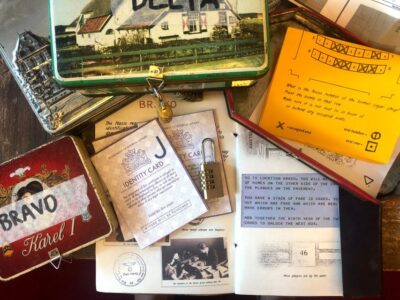
Browse the lists this tour appears in