
Review · BARCELONA
Barcelona: “The Secret of Cerdà” Treasure Hunt Walking Tour
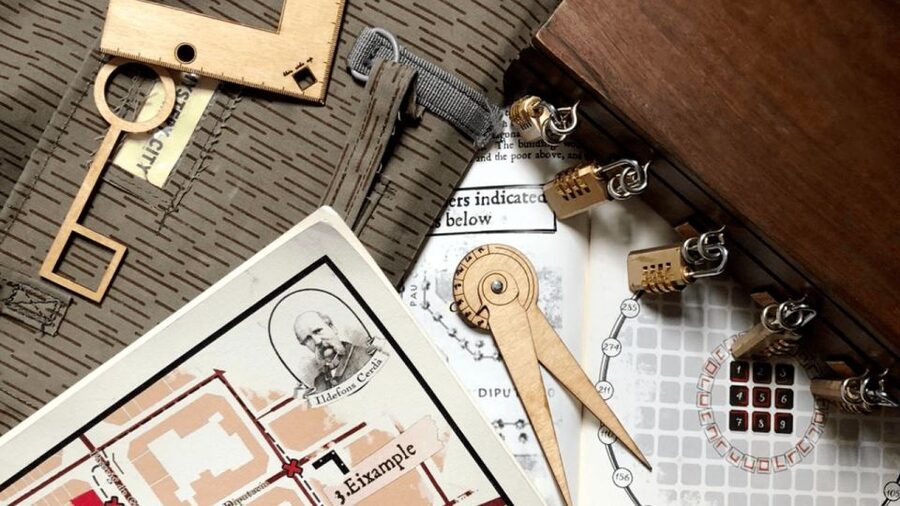
Barcelona: The Secret of Cerdà turns the city center into an outdoor escape room. You follow a treasure map and an old book of challenges from one landmark to the next, solving puzzles tied to Barcelona stories and the plans of an eccentric architect from the city’s past.
I like the freedom to stop for food, shopping, and photos instead of marching behind a guide. I also like the mix of famous places and small details you might otherwise pass without noticing. The main drawback is that the advertised two-hour game can take longer, especially if your group stops along the way or needs extra time with the puzzles.
Key points at a glance
- A private city game: Your booking is for your own group, not a mixed crowd.
- Five central sights: The route includes Illa de la Discòrdia, the Gothic Quarter, Eixample, Plaça de Catalunya, and the Palace of Catalan Music.
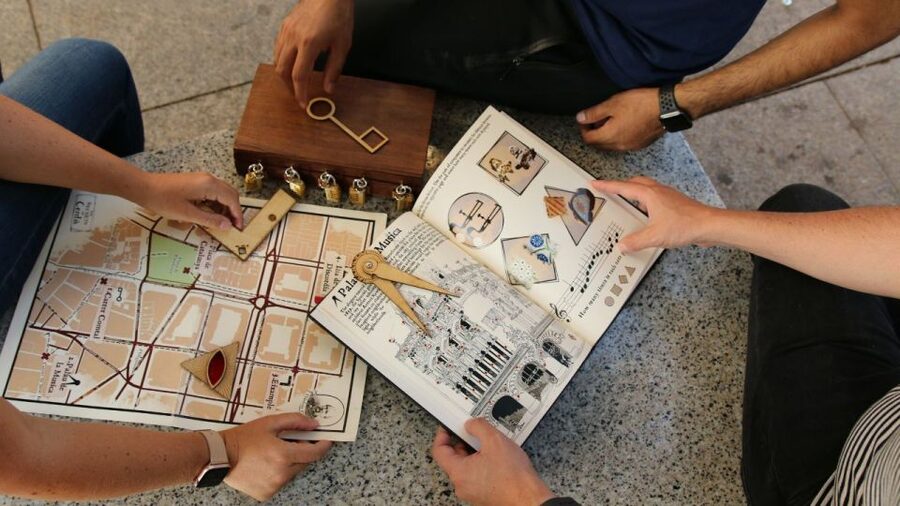
- Hands-on puzzles: You use a map, book, treasure box, locks, and other tools rather than simply listening to a guide.
- Flexible pacing: The game takes about two hours, but you can pause for snacks, shopping, and photos.
- Good for families with older children: Children aged 7 and above can play with their parents, while the puzzles are designed mainly for adults.
- Useful language choice: Instructions are offered in English, Spanish, Catalan, and French.
Starting near Plaça Urquinaona with a backpack of clues
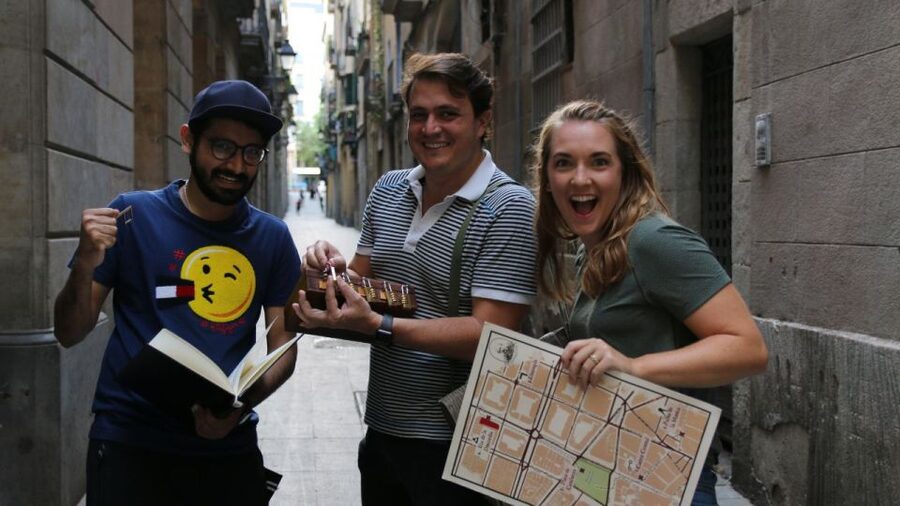
You begin at Carrer de Trafalgar 17, close to Plaça Urquinaona in central Barcelona. At the shop, you pick up a backpack packed with the working parts of the game: a treasure map, a treasure box, a book of challenges, and various tools described as magical.
This setup gives the experience a clear purpose from the first minute. You are not just walking from one attraction to another. You are carrying an object that needs to be opened, and each stop supplies another piece of the answer.
The story centers on an eccentric architect from Barcelona’s past who hid clues in his plans for the city. The architect is connected to the route’s focus on Cerdà and the Eixample, giving the puzzle a local theme instead of a generic detective plot.
You play without a guide walking beside you. That matters. Your group must read the directions, study the surroundings, discuss the clues, and decide what to do next. If you enjoy escape rooms, this format should feel familiar, but the rooms have been replaced by public squares, streets, and landmarks.
The activity is private, so you are not paired with strangers. That works well for families, couples, and small groups of friends who want to solve problems at their own speed. It also means the energy of the experience depends on your group. A cooperative group will have fun. A group that dislikes puzzles may find the backpack more work than entertainment.
More Treasure Hunts in Spain
Illa de la Discòrdia and Barcelona’s modernist competition
One of the first named stops is Illa de la Discòrdia, a famous stretch of Passeig de Gràcia known for its striking modernist buildings. The name refers to the visual contest among several grand façades gathered along the same block.
You come here not only to admire the architecture but also to look for details that fit the challenge. The activity is designed to make you examine the setting, rather than simply take a quick photo and move on. That is one of its strongest ideas: a familiar sight becomes part of a puzzle.
Plan for about 20 minutes at this stop. That is enough time to inspect the surroundings and work through the task, but not necessarily enough for a long architectural visit. If you want to study the buildings carefully, take photographs, or enter any paid attractions nearby, add your own time.
The route is outdoors, so the experience depends on the street setting. You can pause, look up, and compare details, but you also need to keep track of the map and the box. Keep the materials together in the backpack. Losing one puzzle item would make the rest of the game harder.
The Gothic Quarter turns old streets into a puzzle board
The Gothic Quarter brings a different feel from the broad avenues of Eixample. Its narrow streets and historic buildings give the challenge a more intimate setting, with plenty of corners and details to examine.
The activity promises stories about Barcelona’s past at each location. Here, that historical layer matters because the quarter is not simply a scenic backdrop. The story helps you pay attention to the setting and gives the stop a purpose beyond navigation.
Allow around 20 minutes for the planned visit, but be realistic. The Gothic Quarter is easy to explore slowly, and you may want to stop for a snack, browse a shop, or take photographs. Since the game is self-guided, you are free to do that, though your total time will grow.
This stop may be the most demanding for groups that prefer a simple route. You need to follow the map while also reading the challenges and locating the right details. A group that divides tasks can work well: one person handles the book, another watches the map, and someone else keeps an eye on the clues.
The activity is not intended for children under six. Children aged 7 and above can take part with their parents, but adults should expect to lead the reading and puzzle solving.
Eixample explains the Cerdà connection
Eixample is the natural center of the story. Barcelona’s broad, planned district is tied to the architect whose plans hold the fictional clues, so this is where the city design and the game’s mystery come closest together.
The district is easier to navigate than the Gothic Quarter, with wider streets and a more regular layout. That can make the walking simpler, but the clues still ask you to notice details. The point is not to rush between famous addresses. It is to understand how the city plan supports the story.
You should expect another roughly 20-minute stop here. The exact amount of time your group needs will depend on how quickly you solve the challenge. One useful approach is to read the full instruction before guessing at a code. Escape-room puzzles often reward patience, and the treasure box has several locks to deal with.
The Eixample stop also helps explain why this experience is more than a basic sightseeing walk. You receive context about Barcelona’s development while working toward a practical goal. You may remember the city plan better because you used it as part of the game.
More Treasure Hunts in Barcelona:
- Hamburg: Treasure Hunt Game through HafenCity
★ 4.7 · 364 reviews - St. Augustine: Treasure Hunt Cruise with Onboard Show
★ 4.4 · 315 reviews - Málaga: Private Sightseeing Treasure Hunt
★ 4.8 · 297 reviews - Fun, Flexible Treasure Hunt Around Manchester with Cryptic Clues & Hidden Gems
★ 5.0 · 253 reviews
Plaça de Catalunya gives the route a central pause
Plaça de Catalunya is one of Barcelona’s main meeting points, linking the older center with the Eixample. It is a useful stop in the route because you can orient yourself easily and take a break if needed.
The challenge here gives you another chance to connect a public space with the city’s story. The square is open and central, so this may feel less secretive than the Gothic Quarter. Its value is in the contrast. The route moves between tight historic streets, planned avenues, and a major civic square.
A 20-minute sightseeing period is suggested, but you can use the area for a short pause. If your group is behind schedule, this is a sensible place to check the map, reorganize the backpack, and make sure everyone understands the next task.
Do not assume the whole activity fits neatly into two hours. One player needed more time than advertised even without stopping along the way, and that is easy to understand. Puzzle solving has an uneven rhythm. One code may take seconds, while another can send your group back through the instructions several times.
The Palace of Catalan Music adds a grand final stop
The Palace of Catalan Music is the last named landmark on the route. This concert hall is known for its ornate Catalan modernist design, making it a strong visual finish to a walk that has already visited several parts of central Barcelona.
Here, you continue the same pattern: examine the place, learn a piece of Barcelona history, and solve a challenge connected to the treasure box. The tour information allows about 20 minutes for the stop. It does not state that an interior visit is included, so plan on the activity taking place as an outdoor sightseeing stop unless your booking instructions say otherwise.
The palace also makes a good reminder that this is not a traditional guided tour. You are given a destination and a task, not a long lecture. If you want detailed architectural commentary, you will need another visit or a separate guided tour. If you prefer to learn through action, the format should suit you better.
After the route, you return to the starting point to claim your prize. You need to open all the locks and solve the mystery before the box can be completed, so keep the materials and codes organized as you go.
How the puzzles work in practice
The core challenge is a series of locks on the treasure box. At each stop, you solve a task that provides what you need for another lock. The book of challenges explains the activity, while the map directs you through the city.
The puzzles are described as challenging enough to keep an adult group involved without making the route feel impossible. A QR code is available for the trickier parts, which is a useful safety net. You can try to solve the challenge unaided first, then use the support if your group gets stuck.
I like that the clues are connected to places you are already visiting. You are not carrying a box through Barcelona just to solve unrelated riddles. The landmarks and city stories are part of the game’s material.
Still, do not book this expecting a passive walk. You will need to read, discuss, inspect, and make decisions. The activity works best when everyone takes a role. If one person does all the solving, the others may spend much of the route simply following along.
The language options are English, Spanish, Catalan, and French. Choose a language your whole group can handle comfortably. A puzzle can become frustrating when the instructions are not clear, especially if the challenge depends on a small wording detail.
Timing, walking, and the value of $26
The price is $26 per person for about 2.5 hours, with the active game itself described as taking about two hours. That is a fair price if you value a private activity, the prepared materials, and a structured way to see several central districts.
It is less compelling if you only want a sightseeing walk. You are paying for the game design, backpack, treasure box, map, challenge book, and tools, not for entry to major attractions or a traditional guide’s commentary. The value rises when your group already enjoys escape rooms or scavenger hunts.
You also get control over the pace. There is no fixed group waiting for you at every corner, and you can stop to eat or shop. That flexibility is useful in Barcelona, where a good lunch or an unexpected shop can easily change the rhythm of a day.
The walk includes several central areas, but the exact distance is not provided. Wear comfortable shoes and leave room in your schedule. The activity is listed as 2.5 hours, while direct experience with the puzzle format can run longer even without planned stops.
All bookings are private. If other people are playing at the same time, they do so separately. That is a major advantage for families who want to help younger children without slowing down strangers, and for couples who prefer a quieter game.
Who will enjoy The Secret of Cerdà
This is a strong match for adults who enjoy escape rooms, mystery games, and city walks with a goal. It is also a good family choice for children aged 7 and older, provided adults take responsibility for the reading and harder puzzles.
Teenagers may especially like the format. One family booking described it as a good fit with adolescents, and the combination of walking, codes, and a physical treasure box gives young people something active to do at each landmark.
You should think twice if your group dislikes walking, needs a tightly scheduled morning, or wants detailed commentary from a local guide. You should also avoid playing alone. The activity is designed around discussion and shared problem solving, and the instructions specifically advise against solo play.
A wheelchair-accessible listing makes the activity possible for wheelchair users, though the route passes through city streets and public spaces. If you have particular mobility needs, confirm the route details before booking.
Booking details that matter
You can cancel up to 24 hours ahead for a full refund, and you can reserve now and pay later. Those terms help if your Barcelona plans are still shifting.
The starting point is Carrer de Trafalgar 17. Check the available starting times when you book, since the exact departure schedule is not fixed in the activity details.
The experience has a 4.4 rating from 19 ratings. The most consistent strengths are the private format, the interactive design, and the fact that the puzzles provide a real challenge without requiring you to sit indoors. The main caution is timing: allow more than the minimum if your group likes photos, food stops, or careful puzzle solving.
Should you book this Barcelona treasure hunt?
Book it if you want to see central Barcelona while doing something active with your group. The best reason to choose it is the combination of landmarks, local stories, and hands-on clues. You get a planned route without being tied to a guide’s pace.
Skip it if your priority is a detailed architectural tour, museum entry, or a relaxed walk with no tasks. At $26 per person, it earns its price through the private game materials and the shared challenge, not through attraction admissions.
For most families with older children, couples who like puzzles, and friends looking for a change from standard sightseeing, this is a smart way to spend part of a Barcelona day. Keep your schedule loose, wear good walking shoes, and treat the two-hour game time as a guide rather than a strict finish line.
FAQ
Where does the activity begin?
It begins at Carrer de Trafalgar 17, near Plaça Urquinaona in Barcelona city center.
How long does the treasure hunt take?
The game is described as taking about two hours, while the total activity duration is listed as 2.5 hours. You may need longer if you stop for photos, food, shopping, or extra puzzle-solving time.
Which places does the route visit?
The named stops include Illa de la Discòrdia, the Gothic Quarter, Eixample, Plaça de Catalunya, and the Palace of Catalan Music. You also return to Barcelona and the starting point at the end.
Is the experience guided?
It is a self-guided activity. You collect the backpack and materials at the starting shop, then follow the map and challenges with your own group.
What is included?
The activity includes a backpack with a treasure map, treasure box, book of challenges, and magical tools.
What languages are available?
The experience is available in English, Spanish, Catalan, and French.
Can children take part?
Children under six are not suitable for the activity. Children aged 7 and above can participate when playing with their parents.
More Walking Tours in Barcelona
- Barcelona Gothic Quarter Scavenger Hunt and City Highlights Walking Tour
★ 5.0 · 20 reviews - Dark Heart of Rome – Facts, Legend & Mystery Walking Tour
★ 4.5 · 329 reviews - Interactive Jack the Ripper Night Walk: London’s Murder Mystery
★ 5.0 · 171 reviews - Dubrovnik Ghosts and Mystery Walking Tour
★ 5.0 · 165 reviews
Just added around Barcelona
- Xcape Room Bcn: Corpse Gallery Escape Room Barcelona★ 5.0 · 3 reviews
- The Goldheist – Private City Escape Game in Barcelona★ 5.0 · 3 reviews
- Private Family Treasure Hunt | Guided, fun & 100% Offline | Xventura Barcelona★ 5.0 · 6 reviews
- Barcelona escape game, time travel★ 4.0 · 7 reviews
- Private Treasure Hunt The Explorer | Guided, fun & 100% Offline | Xventura★ 5.0 · 6 reviews
- Barcelona private Family-Friendly Cultural & Food Tour★ 5.0 · 3 reviews
- Barcelona: The Search for the Snake Stone City Treasure Hunt★ 4.6 · 12 reviews
- Barcelona: Escape Room Experience and Sailing Cruise★ 4.5 · 2 reviews
Barcelona Escape Games, compared.
The Gothic Trail – Ghosts of Barcelona Exploration Game
Read our review →
Barcelona Gothic Quarter Scavenger Hunt and City Highlights Walking Tour
Read our review →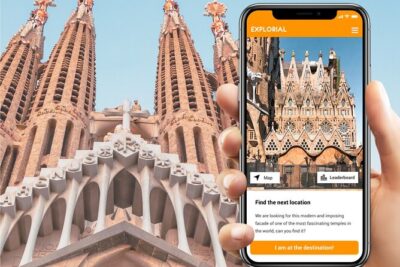
Barcelona Scavenger Hunt and Sights Self-Guided Tour
Read our review →
The Search for the Snake Stone City Treasure Hunt
Read our review →
Witch Hunt on Montjuïc: Self-Guided Puzzle Quest in Barcelona
Read our review →
Private Treasure Hunt The Explorer | Guided, fun & 100% Offline | Xventura
Read our review →
Private Family Treasure Hunt | Guided, fun & 100% Offline | Xventura Barcelona
Read our review →Browse the lists this tour appears in