
Review · VIENNA
Digital puzzle tour with Marcus Aurelius’ order
Roman Vienna becomes your puzzle board on this self-guided tour through the former legionary camp of Vindobona. Marcus Aurelius has a mission for you, and each solved clue sends you to another square, alley, or building where traces of the Roman settlement still appear.
I like the just-right puzzle difficulty and the way Roman facts are built into the game instead of delivered as a long lecture. I also like the freedom: your private group can begin at a convenient time, move at your own pace, and use one phone to work together.
The main drawback is that this is an outdoor activity with no seats and some stairs. You need internet access, weatherproof clothing, and enough patience to stop and inspect details around the city rather than simply walk from point to point.
Key points to know before you book
- Roman Vienna becomes the playing field: Follow clues through the former Vindobona camp, with historic details tied to the places you visit.
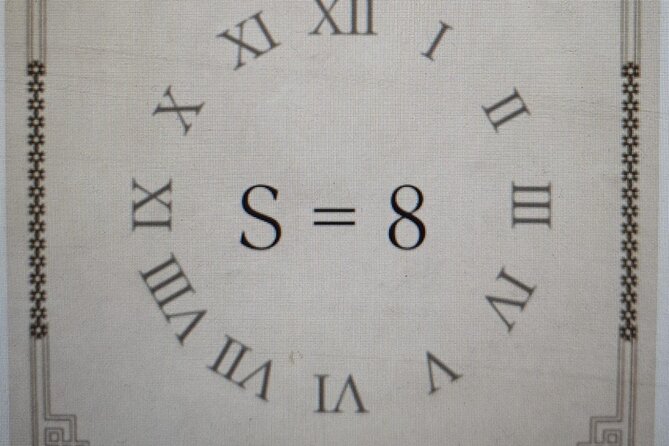
- The puzzles use real-world observation: Expect Roman number codes, building clues, and Latin passwords rather than a quiz completed only on your screen.
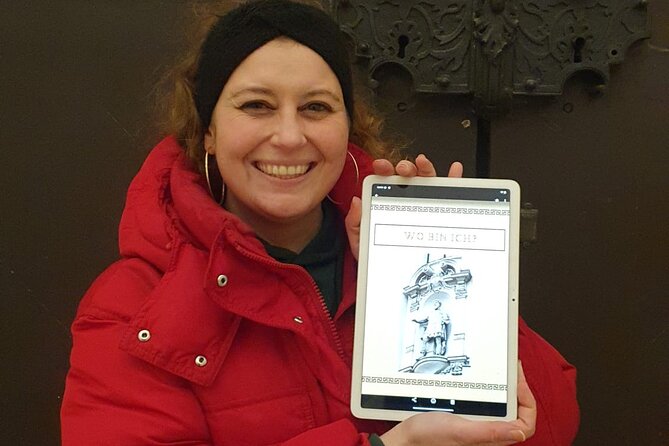
- Your phone replaces the guide: Start with the link and password supplied after booking, then let the virtual route direct your next move.
- The $52.04 price covers the group: Up to 15 people can take part, making the cost attractive for a family or group of friends.
- Plan for roughly two hours outdoors: The route begins and ends at Herrengasse 16, with no seating along the way.
- Adults are the main audience: Children may join, but the puzzle level and presentation are designed with adults in mind.
Your mission begins at Herrengasse 16
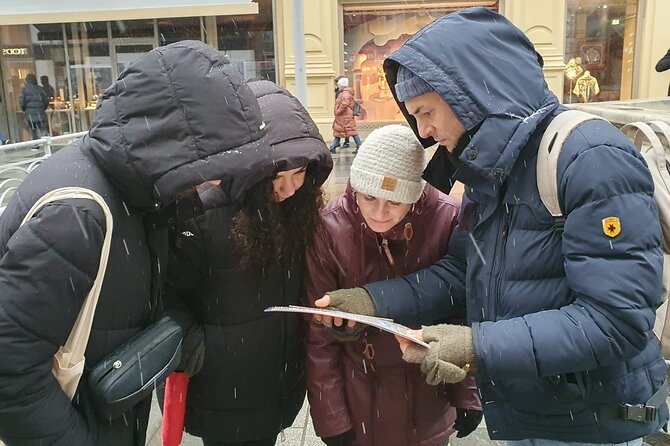
The tour starts at Herrengasse 16 in Vienna’s 1010 district, a central point that puts you in the setting of the old Roman camp from the first moment. You do not meet a guide there. Instead, you arrive with your phone, open the supplied link, enter the password from your ticket, and begin the digital challenge.
That simple start matters. You are not tied to a tour group leaving at a fixed hour, and you do not need to find a guide holding a sign. You can book for a time that fits your Vienna plans, then begin any time within the stated operating window of midnight to 11:30 p.m.
The broad opening hours give you plenty of choice, though I would still begin during daylight. The route takes place outside, and the clues depend on seeing buildings, streets, and small details. A late start may work, but darkness and poor weather could make the observation tasks less comfortable.
A few more escape games around Austria worth a look
- Vienna: Scavenger Hunt Self-Guided Tour
★ 4.7 · 83 reviews - Vienna: The Great Plague Exploration Game
★ 4.5 · 60 reviews - Escape game in Salzburg
★ 4.5 · 23 reviews
Vindobona is more than a backdrop
The former Roman legionary camp gives this activity its purpose. You are not walking through unrelated city streets while solving generic riddles. The route uses Vienna’s Roman past as its subject, asking you to connect modern urban spaces with the settlement that once occupied them.
You will pass squares and narrow streets where traces of the Roman period can still be seen. The supplied details do not promise a full archaeological site or a preserved military camp at every stop. Instead, expect fragments, signs, buildings, and urban clues that reward careful looking.
That approach works well for Vienna because much of the city’s past is easy to pass without noticing. A puzzle gives you a reason to pause. It turns a wall, inscription, building detail, or street location into part of the assignment, and the historical information helps explain why that place matters.
I especially like the balance between movement and learning. You are not asked to memorize a timeline before you start. The facts arrive at the locations, alongside the clues, so the city itself helps carry the lesson.
How the two-hour route works
The exact stop-by-stop sequence is not provided in advance, so you should think of this as a guided route rather than a printed sightseeing itinerary. The digital challenge reveals the next location after you solve the current puzzle.
The process is straightforward:
- Reach the starting point at Herrengasse 16.
- Open the link supplied after booking.
- Enter the password shown on your ticket.
- Read the first instruction and solve the opening puzzle.
- Travel to the next location indicated by the game.
- Use what you see around you to answer the next challenge.
- Continue until the route returns you to the starting point.
The movement is part of the game. You might need to spot a clue on a building, work out a Roman number, or decipher a Latin password before the route will continue. That keeps your eyes on the city, not only on the screen.
Allow about two hours, but remember that the pace belongs to your group. A fast team may move briskly, while a group that stops to read every historical note will take longer. The activity is designed for private groups, so you do not need to match the speed of strangers or worry about holding up a scheduled guide.
The puzzles are made for adults, not specialists
No prior knowledge is required. That is important because Roman numerals, Latin, and ancient military life can sound intimidating at first. The challenge is meant to make you work things out from the clues, not punish you for failing to arrive with a degree in classical history.
The puzzle level is described as suitable for adults, and the strongest feature here is its middle ground. It is not presented as a trivial hunt where you simply tap answers. At the same time, it is not built to frustrate you with obscure facts.
You can expect several kinds of tasks:
- Roman numeric codes, which connect the game to the period and require careful reading.
- Clues on buildings, which make you inspect your surroundings.
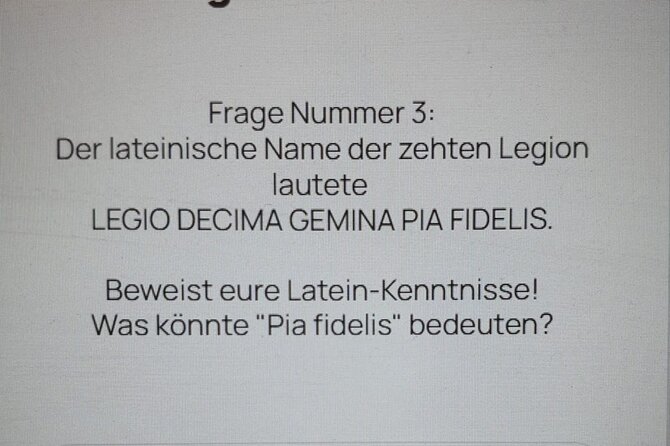
- Latin passwords, adding a small language challenge without requiring prior Latin study.
- Location-based progression, where the correct answer points you toward the next place.
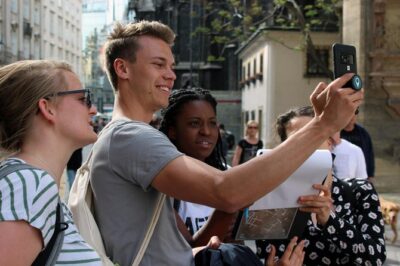
The group format helps. One person may notice a detail on a building, another may handle the phone, and someone else may be better at the code. With up to 15 people allowed in one booking, the activity can work for a small family, a couple, or a larger group of friends.
A very large group could become unwieldy on public sidewalks, however. The maximum is generous, but the most comfortable setup is likely one in which everyone can hear the discussion and see the screen when needed.
Same place, a different puzzle:
- Private City Discovery walk – Historical Treasure hunt
★ 5.0 · 18 reviews - Fun & mobile scavenger hunt through Vienna
★ 4.5 · 17 reviews - Fun & mobile scavenger hunt through Graz
★ 4.5 · 12 reviews - Salzburg Sound of Music Quest: Self-Guided Escape Game
★ 3.5 · 10 reviews
Historical stories make the stops matter
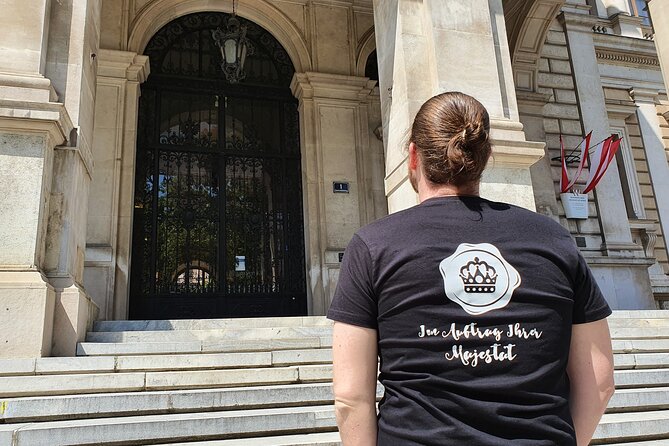
The most valuable part of the format is not simply finding the next location. It is learning why the location matters. Historical anecdotes are woven into the digital instructions, giving you context about life in the former Roman camp.
That design is useful for two kinds of people. If you already know a little about Vienna, the route can point out details you might otherwise overlook. If Roman history is new to you, the game gives you a clear reason to care about the places in front of you.
The information is delivered at the locations rather than in one long block at the start. I prefer that arrangement for a walking tour because the fact has a physical reference. You are more likely to remember a detail when you have just used a building or street to solve a clue.
Still, this is not a substitute for a museum visit or a formal archaeological tour. The focus is on solving and moving forward. If your main goal is a detailed lecture on Roman military organization, architecture, or excavated remains, you may want to add a separate history stop to your Vienna schedule.
For a lighter introduction, though, the format is smart. You learn while doing something, and the tasks give shape to the information.
What the route feels like on the street
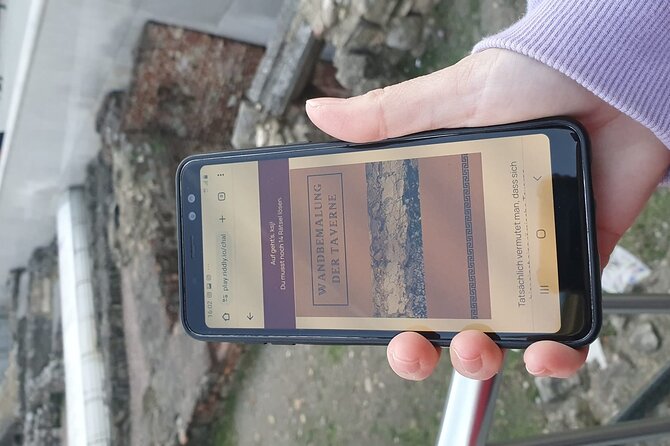
The tour is entirely outdoors. You will move from place to place on public sidewalks, with no seating provided. Wear shoes you can walk in and clothing suited to the forecast, since the game does not move indoors when the weather turns unpleasant.
The route includes stairs, so the activity is only partly easy for people with mobility limits. It is described as generally barrier-free because it uses public sidewalks, but the stairs are a real qualification. If someone in your group cannot manage them, contact the provider before booking rather than assuming every section will be step-free.
Service animals are allowed, and the route is near public transportation. Those details make the starting point practical for a day in central Vienna, though no specific transport line or station is supplied, so check your own route before setting out.
There are no seats along the way. That may not matter to a fit group taking a two-hour walk, but it matters if you are planning this after a full day of sightseeing. Build in time to pause where appropriate, but do not expect a regular place to sit while the game runs.
The phone setup is simple, but prepare it first
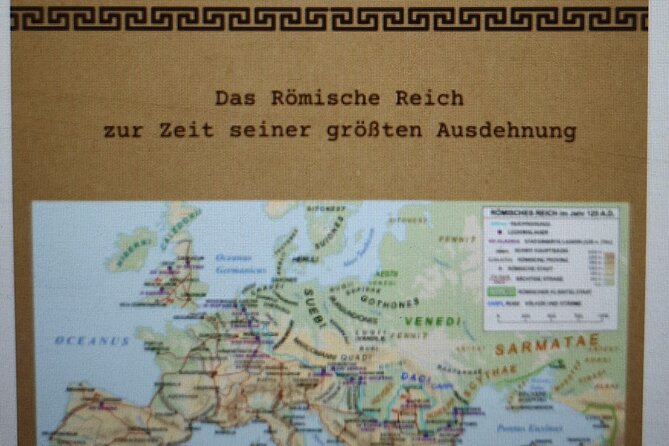
Your smartphone is the essential piece of equipment. You need internet access, the link, and the password shown on your ticket after booking. The route is virtual, but the walking and clue-finding happen in the real city.
Before leaving, I would take a few practical steps:
- Charge your phone fully.
- Make sure mobile data works in Austria.
- Save the booking information where you can find it quickly.
- Open the link once before reaching the starting point.
- Bring weatherproof clothing and comfortable shoes.
- Keep the phone easy to share if your group is solving together.
The supplied link opens the Riddly challenge platform. You start it only after arriving at the meeting point, which helps keep the first clue tied to the correct place.
Because the game depends on your phone, a dead battery or weak connection can spoil the flow. The activity description does not mention an offline option, printed backup, or loaner device. That is not a reason to avoid it, but it is a reason to prepare.
Is $52.04 good value for your group?
The listed price is $52.04 per group, with up to 15 people included. That changes the value calculation in a useful way. For two people, it is a fairly substantial fee for a two-hour self-guided activity. For a family or group of friends, the per-person cost drops quickly.
At the full group limit, the price works out to less than $4 per person. Even a group of five pays about $10.41 each, before considering the fact that the route combines sightseeing and entertainment.
You are paying for a private activity rather than a seat on a public tour. Nobody outside your group joins, and you can discuss the clues without worrying about a larger crowd. The flexible start time also has practical value, especially on a busy Vienna itinerary.
The tradeoff is the absence of a live guide. A guide can answer a question at once, adjust the pace, and add personal stories. Here, the digital instructions must do that work. The price is strongest for groups that enjoy solving problems together and weakest for someone who wants a traditional, expert-led walk.
Who will enjoy this most
I would recommend this activity to adults who like city walks with a purpose. It suits people who enjoy escape rooms, scavenger hunts, Roman history, or simply finding a different way to see familiar streets.
It can also work well for a couple. The puzzles are reported as neither too easy nor too difficult, and two people can share the tasks without needing a large team. A family can bring children, but the adult design means younger children may need help with the reading, codes, or historical material.
This is a good choice if you have already seen Vienna’s major sights and want an activity that sends you into less obvious corners of the center. It is also useful early in a stay because it gives you a structured walk through central streets while introducing a specific part of Vienna’s past.
I would think twice if you dislike screen-based activities, need frequent seating, or want a guide speaking continuously as you walk. The experience asks you to read, observe, solve, and keep moving.
Timing, cancellation, and practical limits
The activity is available Monday through Sunday during the listed period from September 1, 2024, through June 17, 2026. The published daily hours run from 12:00 a.m. to 11:30 p.m., but daylight remains the practical choice because several tasks involve visual clues outdoors.
You can cancel for a full refund up to 24 hours before the local start time. Cancellations or changes made within 24 hours are not accepted for a refund, so check the weather and your schedule before the deadline.
The tour begins and ends at Herrengasse 16. It is a private activity, and most people can participate, but the stairs and lack of seats deserve attention before you reserve.
Should you book it?
Book this Roman Vienna puzzle tour if you want a private, flexible walk that mixes local sightseeing with codes, Latin clues, and short historical stories. The $52.04 group price is particularly good for several people, and the format gives you a reason to notice parts of the city you might otherwise pass.
Skip it if you want a formal lecture, indoor comfort, or a fully step-free route. For everyone else, it is a clever way to spend two hours in central Vienna, especially when your group enjoys solving problems together and learning a little while it walks.
FAQ
Where does the digital puzzle tour start?
The tour starts at Herrengasse 16, 1010 Vienna, Austria.
Where does the tour end?
The activity ends back at the meeting point at Herrengasse 16.
How long does the tour take?
The tour takes approximately two hours.
How many people can join one booking?
One private group of up to 15 people can participate.
What do I need to take part?
You need a smartphone with internet access, the link, and the password shown on your ticket after booking. Weatherproof clothing is also recommended because the activity takes place outdoors.
Do I need prior knowledge of Roman history or Latin?
No prior knowledge is necessary. The puzzles include Roman numeric codes and Latin passwords, but the tour is designed to guide you through the tasks.
Is the route accessible?
The tour is generally barrier-free because it uses public sidewalks, but there are stairs to climb. There are no seating options along the route, and service animals are allowed.
Just added around Austria
- The Vienna Augmented Reality Puzzle Rally★ 5.0 · 7 reviews
- Vienna Highlights Self guided scavenger hunt and Walking Tour★ 4.0 · 5 reviews
- True Crime mobile puzzle rally Vienna★ 4.0 · 3 reviews
- Mozart’s Salzburg Exploration Game and Tour★ 4.0 · 8 reviews
- Zell am See Exploration Game and Tour★ 3.0 · 2 reviews
- Salzburg Sound of Music Quest: Self-Guided Escape Game★ 3.5 · 10 reviews
- CITY QUEST LINZ: uncover the secrets of this city!★ 4.5 · 6 reviews
- Innsbruck Self Guided Sherlock Holmes Murder Mystery Game★ 4.0 · 5 reviews
Vienna Escape Games, compared.
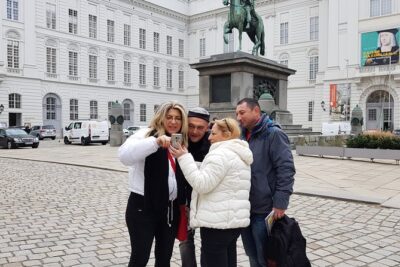
Private City Discovery walk – Historical Treasure hunt
Read our review →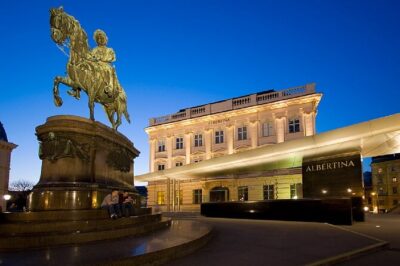
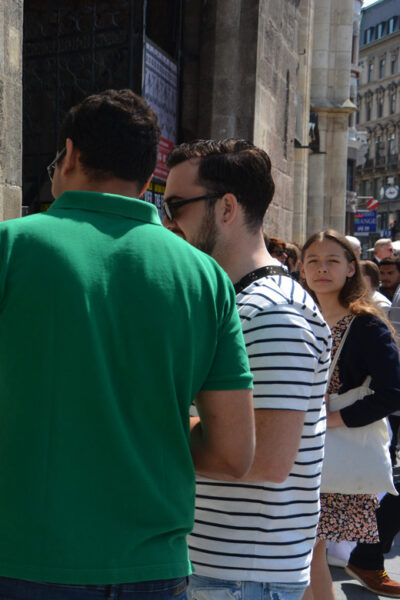

Vienna Highlights Self guided scavenger hunt and Walking Tour
Read our review →
Browse the lists this tour appears in