
Review · UK
e-Scavenger hunt Bath: Explore the city at your own pace
Bath is made for a walking game. Grand Georgian streets lead to Roman remains, a river bridge, leafy parks, and squares where you can stop for a drink. This self-guided scavenger hunt links many of the city’s best-known sights with questions and facts on your phone, letting you set the pace.
I like two things right away: the private format for up to six people and the freedom to pause when a view, café, or museum catches your eye. The main drawback is simple: you need your own smartphone and data, and the experience will feel less rewarding if you prefer a guide who tells the story as you walk.
Key points before you book

- Pulteney Bridge begins the route with a free, photogenic Bath landmark over the River Avon.
- The Royal Crescent and the Circus show off Bath’s Georgian design without requiring entrance tickets.
- Roman Bath and Bath Abbey add major historical depth to what could otherwise be just a city walk.
- You control the timing, with about three to four hours planned for the full activity.
- The $37.49 group price covers up to six people, making it good value for a small family or friend group.
- The route finishes where it starts, at 6 N Parade, near the center of Bath.
Why a phone game works well in Bath

Bath can feel like a city of disconnected sights at first. Pulteney Bridge is near the river, the Royal Crescent sits to the west, Great Pulteney Street runs east, and the main shopping streets fill the middle. This activity gives you a reason to connect them on foot rather than seeing one or two landmarks and calling it a day.
The phone format also keeps the mood light. You are not following a flag or trying to keep up with a group. You can stop to read a plaque, take photographs, sit in a park, or make an unplanned café break. The questions give you a small task at each stage, which helps children and adults stay involved.
I would not treat this as a replacement for a detailed guided tour of Roman Bath or Georgian architecture. It is better understood as a city orientation with puzzles and historical prompts. You get a broad look at Bath, then decide which places deserve a longer visit later.
The game is designed for one private group, with a maximum of six people. That matters if you are traveling with family or friends and want to talk freely without strangers joining in. No guide name is provided because this is a digital activity rather than a live-led walk.
More Scavenger Hunts in the UK
- Public BucketRace – Scavenger Hunts with a Twist
★ 5.0 · 32 reviews - Private Bespoke Scavenger Hunts
★ 5.0 · 26 reviews - London (Covent Garden) Scavenger Hunt and Sights Self-Guided Tour
★ 5.0 · 7 reviews
Starting at Pulteney Bridge and the Avon
The meeting point is 6 N Parade, Bath BA1 1LF. From there, the route takes you toward Pulteney Bridge, one of Bath’s most distinctive sights. Completed by 1774, the bridge crosses the River Avon and helped connect Bath with land owned by the Pulteney family, which they hoped to develop.
The bridge is unusual because it was designed with buildings along it, not simply as a crossing for pedestrians and traffic. The game gives you a good reason to look up and around rather than hurry across. You can take in the river, the stone façades, and the way the bridge fits into Bath’s wider Georgian plan.
There is no admission charge here, so this is an easy first stop. The suggested time is about 20 minutes, though you can stay longer if the river views appeal to you. This is one of the route’s strongest early moments because it feels like a proper Bath discovery, not just a standard shopping street.
The Royal Crescent and Bath’s grand Georgian face
The Royal Crescent is the postcard image of Bath: 30 terraced houses arranged in a broad sweeping curve. The scale is impressive, but the detail is what rewards a slow look. The pale stone, repeated windows, and long formal front show how carefully the city was planned for fashionable Georgian society.
The activity allows about 30 minutes here, enough time to walk along the crescent and view it from different angles. You do not need an admission ticket to enjoy the exterior. If you want to enter any attraction nearby, that would be separate from the scavenger hunt, so plan your day with that distinction in mind.
I like this stop because the questions can turn a familiar photograph into a closer study of the buildings. You may notice how the crescent opens toward the green space in front and how the houses work together as one grand architectural statement.
The limitation is that a phone game can only explain so much. If Georgian social history is your main interest, you may want extra time or a separate indoor visit. Still, as part of a self-guided route, the Royal Crescent gives you one of Bath’s clearest lessons in urban design.
The Circus and the Georgian theatre district
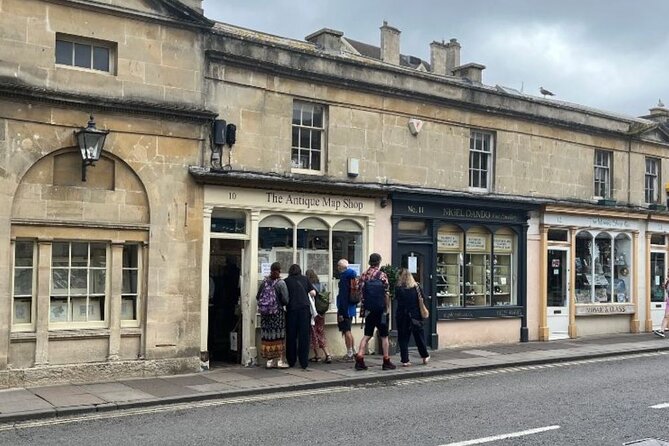
The Circus forms a circle of large townhouses with three entrances. Like the Royal Crescent, it is free to view, but its shape creates a different experience. Instead of a long outward-facing curve, you are enclosed by a circular arrangement that makes the space feel almost theatrical.
The route also includes a historic theatre built in 1805 and described by the Theatres Trust as one of the most important surviving examples of Georgian theatre architecture. The supplied details do not give the theatre’s name, but its inclusion adds useful context: Bath was not only a place of grand homes, it was also a social city built around performances, public gatherings, and display.
Allow roughly 30 minutes for this part. Look at the entrances and the repeated stonework, then give yourself time to understand how close the city’s major Georgian sights are to one another. The game works best here when you slow down and use the questions to notice the layout.
Same place, a different puzzle:
- Fun, Flexible Treasure Hunt Around Manchester with Cryptic Clues & Hidden Gems
★ 5.0 · 253 reviews - Fun, Flexible Treasure Hunt Around York with Cryptic Clues & Hidden Gems
★ 5.0 · 248 reviews - Fun, Flexible Treasure Hunt Around Bath with Cryptic Clues & Hidden Gems
★ 5.0 · 208 reviews - York Treasure Hunt Adventure: The Mystery of The Gunpowder Snitch
★ 5.0 · 203 reviews
Roman Bath and Bath Abbey
Bath’s Roman story is central to the city, and the route points you toward the Roman Baths museum and its archaeology. You can see the collection, learn about the site, and check for events, but admission to the museum is not included in the scavenger hunt. That is an important practical point when you plan your budget.
The activity can introduce the Roman Baths, but it does not replace time inside the museum. If you have never visited, I would consider treating the game as a way to find the entrance and understand the setting, then returning for a dedicated visit if your schedule allows. The Roman site is one of Bath’s major reasons to come, and a quick exterior look will not tell you everything.
Bath Abbey adds another layer. Founded in the 7th century, reorganized in the 10th century, and rebuilt in the 12th and 16th centuries, it later received major restoration work from Sir George Gilbert Scott in the 1860s. Those dates give you a useful sense of how many eras are packed into a single building.
The Abbey is close to the heart of the city, so it fits naturally into a walking route. As with the Roman Baths, check separately if you want to go inside. The scavenger hunt provides the city context and the puzzle structure, while the individual attractions may require their own time and charges.
Royal Victoria Park for a breathing space
Royal Victoria Park changes the mood of the route. After streets, façades, and historic buildings, you get an open park with a bandstand, botanical gardens, crazy golf, and other attractions. It is open at all times and has no admission charge.
The suggested stop is about 30 minutes. That is long enough for a pause, though you can make it a longer break if you need to rest. Families may find this one of the most useful parts of the route because the park offers more room to move than the central streets.
I also like the park as a practical reset. Three to four hours of walking can feel long, especially when you are trying to solve questions and keep a group together. A green stop makes the day less tiring.
Do not expect every attraction in the park to be part of the paid activity. The information provided confirms the park’s facilities and free access, but not separate prices or opening details for each feature. Use the scavenger hunt to explore the park, then decide on the spot if you want to spend extra time there.
Kingsmead Square and the pleasure of a food stop
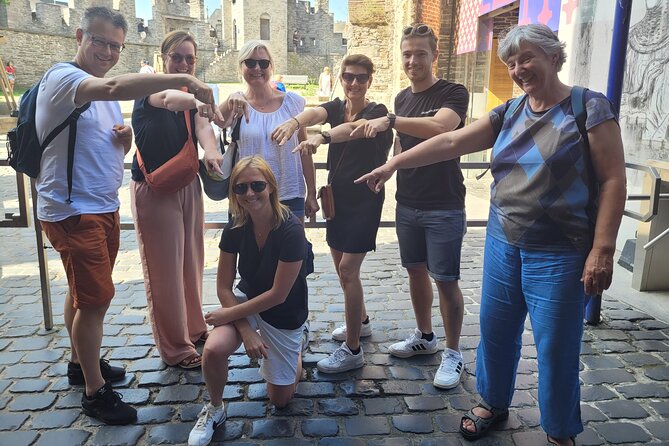
Kingsmead Square is less formal than Bath’s grander squares, but it is lively and has several places to eat and drink. This is a useful contrast in the route. Bath is not only crescents, museums, and historic stone. It is also a place where you can stop for a casual meal or refreshment.
The planned time is about 20 minutes. That may be enough for a quick look, but you will need more time if you want to sit down and eat. Since the game is not tied to a guide or fixed departure, you can make that choice without holding up anyone outside your group.
This stop also helps break up the sightseeing. If you are traveling with people who do not want three straight hours of architecture, a square with food and drink can keep the whole group happy.
Great Pulteney Street and Milsom Street
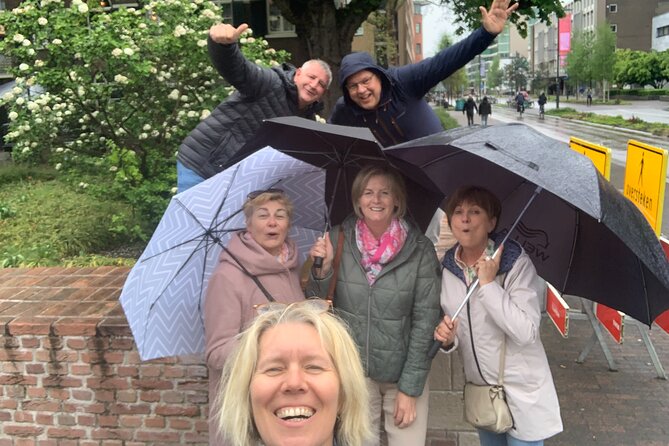
Great Pulteney Street is a grand thoroughfare linking Bathwick, east of the River Avon, with the city center. From the city side of the bridge, the road points toward the Holburne Museum of Art. The activity allows about 30 minutes here, giving you time to take in the long street and its formal Georgian scale.
This is a good place to notice how Bath’s design works beyond individual buildings. The street is broad and planned, with a strong visual direction. You are not just checking off a landmark. You are seeing how the city was arranged to create impressive approaches and views.
Milsom Street offers a more commercial version of historic Bath. Built in 1762 by Thomas Lightholder, its original grand townhouses now hold shops, offices, and banks. Allow about 30 minutes to walk through and compare the older building forms with their modern uses.
I enjoy this kind of stop because it shows how a historic city remains part of daily life. The buildings are not frozen museum pieces. People shop, work, and pass through them. The tradeoff is that busy retail streets can be less peaceful than Bath’s crescents and parks.
Parade Gardens and the route back
Parade Gardens sits near the city center and has an earlier connection to Bath’s Abbey Orchard. In the 17th century, the site lay outside the city wall. That detail gives you another small reminder that Bath’s boundaries and public spaces have changed over time.
The activity ends back at the meeting point. A circular route is helpful because you do not need to work out a separate return journey or finish on the far side of town. It also makes the experience easier to fit around other plans.
The exact order of every point may depend on the phone game, so leave room in your schedule rather than booking a tight appointment immediately afterward. The advertised duration is approximately three to four hours, and your pace will affect the total.
What $37.49 means for a group of six
The price is $37.49 per group, with up to six people included. For six participants, that works out to about $6.25 each. For two people, the per-person cost is much higher, so the value improves sharply as your group grows.
You are paying for a private, tailor-made city game rather than a live guide, museum tickets, transport, food, or use of a phone. You also need your own data connection. That makes this a particularly sensible choice for a family or group of friends who already have the equipment and want a low-cost way to see many parts of Bath.
If your priority is expert commentary at every stop, the price comparison changes. A live guide would offer more room for questions and deeper explanation. If your priority is freedom, privacy, and a relaxed walking plan, this activity gives you plenty for the money.
Who will enjoy this Bath activity
I would choose this for:
- A small group that wants to explore privately
- Families who like questions and simple challenges
- First-time visitors who want to connect Bath’s main areas
- People who dislike fixed tour schedules
- Visitors with three to four free hours
- Friends who want to add food or café breaks along the way
I would think twice if you want a specialist history tour, have limited phone data, or do not enjoy walking between several city districts. The route includes parks, squares, bridges, shopping streets, and major historic areas, so comfortable pacing matters even though no fitness requirement is stated.
Service animals are allowed, the route is near public transportation, and most people can participate. Those details make it broadly accessible, but the supplied information does not give a specific step-free route or exact accessibility notes for each stop. If that is important for your group, confirm the route details before booking.
Free cancellation is available if you cancel at least 24 hours before the start time. Changes or cancellations inside that window are not refunded, so keep the local cut-off time in mind.
Should you book the Bath scavenger hunt?
Book it if you want a relaxed way to connect Bath’s major sights, especially with a group of up to six. The best features are the freedom to set your own speed, the private format, and the mix of famous landmarks with places you might otherwise pass by, such as Pulteney Bridge, Kingsmead Square, and the city’s long Georgian streets.
Do not book it expecting a full guided history lesson or included entry to Roman Bath, Bath Abbey, or other paid attractions. Think of it as a playful walking framework. Bring a charged smartphone, mobile data, and enough time to stop when Bath catches your eye. For a small group, the price is hard to argue with.
FAQ
How long does the Bath scavenger hunt take?
The activity takes approximately three to four hours, depending on your pace and how long you spend at each location.
How many people can join one group?
Up to six people can take part in one group using the e-scavenger hunt.
Is the activity guided?
No live guide is listed. You use the scavenger hunt on your phone and explore Bath at your own pace.
What do I need to bring?
You need your own smartphone and data. The activity is supplied as a mobile ticket and is offered in English.
Where does the activity start and finish?
It starts at 6 N Parade, Bath BA1 1LF, UK, and ends back at the meeting point.
Are attraction tickets included?
The route includes free access to the city game, but admission tickets for attractions such as the Roman Baths museum are not included.
Just added around the UK
- Stratford-upon-Avon: Self-Guided Walk & Interactive Treasure Hunt★ 5.0 · 2 reviews
- Pedal & Puzzle, Outdoor Escape Room E-Bike Adventure★ 5.0 · 2 reviews
- Immersive Murder Mystery in Sheffield – Outdoor Escape Experience★ 4.5 · 15 reviews
- Adventurous Scavenger Hunt in Exeter by Operation City Quest★ 3.0 · 2 reviews
- Operation City Quest Scavenger Hunt – Peterborough, UK★ 3.0 · 4 reviews
- Oxford’s Famous Alumni: Self-Guided Story Puzzle Walk★ 4.0 · 2 reviews
- Oxford Scavenger Hunt and Sights Self-Guided Tour★ 4.5 · 3 reviews
- Fun and Flexible Treasure Hunt Around Nottingham with Hidden Gems★ 5.0 · 10 reviews
UK Escape Games, compared.

Fun, Flexible Treasure Hunt Around Manchester with Cryptic Clues & Hidden Gems
Read our review →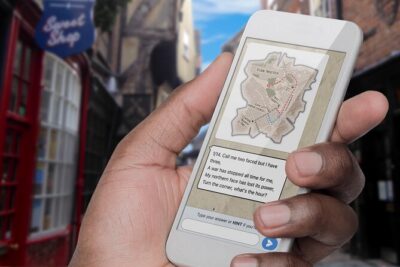
Fun, Flexible Treasure Hunt Around York with Cryptic Clues & Hidden Gems
Read our review →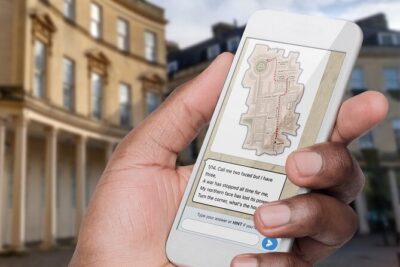
Fun, Flexible Treasure Hunt Around Bath with Cryptic Clues & Hidden Gems
Read our review →York Treasure Hunt Adventure: The Mystery of The Gunpowder Snitch
Read our review →
Fun, Flexible Treasure Hunt Around Oxford with Cryptic Clues & Hidden Gems
Read our review →
Interactive Jack the Ripper Night Walk: London’s Murder Mystery
Read our review →
Fun, Flexible Treasure Hunt Around Birmingham with Cryptic Clues & Hidden Gems
Read our review →Browse the lists this tour appears in