
Review · GHENT
e-Scavenger hunt Kortrijk: Explore the city at your own pace
Kortrijk’s best sights become a city game, not a march behind a guide. You use your phone to find locations, answer questions, and move from medieval courtyards to churches, museums, shopping streets, and parks. The route lets you pause for coffee, change your pace, or stop to look more closely at a building.
I like the mix of major landmarks and less obvious corners, especially the Beguinage, Baggaertshof, and the old military towers. I also like the flexible format: your group of up to six can play privately, and children can take part in many of the questions. The main caution is the technology. You need your own smartphone and data, and the GPS has not always worked smoothly, so navigation may occasionally require Google Maps or a bit of patience.
Key points to know before you book

- A self-guided route through Kortrijk: You explore without a fixed guide, timetable, or group of strangers.
- Around 20 points of interest: The route covers churches, towers, museums, shopping areas, gardens, monuments, and historic courtyards.
- Good value for a private group: The listed price is $37.33 for up to six people, not per person.
- A history lesson with questions: You learn about the Battle of the Golden Spurs, flax and linen, medieval trade, religion, and local architecture.
- Allow two to four hours: You can stop along the way, but construction work or navigation problems may lengthen the route.
- Bring your own phone and data: The app is included, but the device and mobile connection are not.
Kortrijk is a good city for a self-guided hunt because its sights are close enough to connect on foot, yet varied enough to keep the route from feeling repetitive. One moment you are looking at medieval defensive towers. Soon after, you are in a quiet beguinage courtyard, beside a modern shopping center, or reading about flax production along the Lys Valley.
The Qula format turns sightseeing into a series of small tasks. You do not simply receive a list of facts. You need to look around, match details to questions, and work out where to go next. That makes the walk more active than a standard audio guide, though it also means you may need to solve a few navigation issues without help from a local guide.
Starting at Kortrijk Station
The meeting point is Stationsplein 6, by Kortrijk railway station. This is practical if you are arriving by train or using public transport, and the activity returns to the same meeting point at the end.
The stated operating hours cover every day from noon to midnight, from February 16, 2020, through March 16, 2027. Since the game is self-guided, you choose when to begin within those hours. Still, daylight matters for outdoor clues and sightseeing, so I would not leave the route until late in the evening.
You should download or open the game before setting off and make sure your phone has enough battery. The app is included, but your smartphone and data are not. If your connection is weak, the route may be harder to follow. One useful backup is to keep Google Maps available, since the GPS function has occasionally failed and forced players to trace the route manually.
More Scavenger Hunts in Belgium
- e-Scavenger hunt Antwerp: Explore the city at your own pace
★ 4.5 · 67 reviews - e-Scavenger hunt Bruges: Explore the city at your own pace
★ 4.5 · 58 reviews - Bruges Scavenger Hunt and Highlights Self Guided Audio Tour
★ 4.0 · 54 reviews
The Beguinage and Kortrijk’s medieval core

The Beguinage is one of the strongest early stops. It dates from the 13th century and has been a UNESCO World Heritage Site since 1998. Its small houses and enclosed courtyard offer a quieter setting than the main streets, and you can pass through the courtyard or visit the Mattheuskapel.
The site also gives the hunt a useful lesson in how Kortrijk changed over time. The beguinage was destroyed several times, including during the Battle of the Golden Spurs in 1302, after the Battle of Westrozebeke in 1382, and again by the French in 1684. The 41 cottages you see today date mainly from the 17th century.
That combination of old buildings and a complicated past works well in a game. You are asked to inspect what is in front of you instead of rushing through. At the same time, keep in mind that a heritage site is not the same as a museum visit. The activity points out the place, but it does not provide a full guided explanation of daily life in the beguinage.
The nearby Kortrijk 1302 museum is another key stop. Located in the Groeninge Abbey in Beguinage Park, it uses multimedia to examine the myth-making around the Battle of the Golden Spurs. This is useful context for later stops, especially the Groeninge Gate and Groeninge monument.
Towers, walls, and the Lys Valley
The route visits the towers built from limestone and sandstone. The southern Speytorre dates to 1385 and was used to control traffic on the Lys. This is a small but telling detail: Kortrijk’s waterways were not just scenic. They were part of the city’s trade, security, and wealth.
The Artillery Tower, also called the Armorie Tower, belongs to an earlier military chapter. It was built with the castle in 1301 and 1302 by the French King Philip the Fair during the conflict with the Count of Flanders. Seeing these structures together helps you connect the city’s defenses to the political struggle between French power and Flemish forces.
The hunt’s questions give you a reason to stop and study masonry, towers, and nearby streets. If you prefer a guide who explains every stone in order, this format may feel thin. If you enjoy finding clues and then filling in the story yourself, the military stops are among the most rewarding parts of the walk.
Texture and Kortrijk’s linen story
Texture, a museum about flax and linen, adds an economic side to the route. It explains how flax was cultivated, processed, and turned into linen fabric, with the development of the Lys Valley at the center of the story.
This stop keeps the experience from becoming only a parade of churches and monuments. Kortrijk was shaped not just by battles and counts, but also by work, trade, agriculture, and cloth production. The former cloth hall, represented by the Belfry in the Grote Markt, fits into that same story.
If you want to visit the museum interiors, check how much time you have and whether admission arrangements suit your schedule. The scavenger hunt itself is designed as an outdoor city trail, so the route may take you to the museum without giving you the same depth as a dedicated museum visit.
Same place, a different puzzle:
- Escape Hunt Brussels, Escape Game
★ 5.0 · 103 reviews - e-Scavenger hunt Ghent: Explore the city at your own pace
★ 4.5 · 41 reviews - Beer Tasting and Scavenger Hunt in Brussels – About 3 Hours
★ 4.5 · 35 reviews - e-Scavenger hunt Mechelen: Explore the city at your own pace
★ 4.0 · 34 reviews
Churches that show Kortrijk’s changing identity
Several churches appear along the route. The Church of Our Lady began in 1199 on the initiative of Count Baldwin IX and was located within the grave domain of Kortrijk. Its age and connection to the counts of Flanders give it an important place in the city’s story.
St. Martin’s Church, or Sint-Maartenskerk, occupies a site where a place of worship existed around 650 AD. That date makes the stop useful for understanding how long religious life has shaped the city center. The church is also singled out for its views and is one of the route’s main landmarks.
The Passionists’ church, built in 1874, represents a later form of popular devotion. Its inclusion helps you compare medieval foundations with 19th-century religious architecture. The point is not simply to visit three churches. It is to notice how Kortrijk’s religious buildings reflect different periods and different audiences.
The route also includes the building with a Gothic-Renaissance transitional style and 14 statues of the counts of Flanders on its façade. The information supplied for this stop does not identify the building by name, so you will need to use the app’s clue at the location. This is a good example of why careful observation matters. A question may ask you to count or identify figures, and small wording issues can affect your answer.
The Belfry and the Golden Spurs story
Kortrijk’s Belfry rises in the center of the Grote Markt and was once part of the former cloth hall. The earliest mention of that hall dates to 1248. This gives the main square a practical history: it was tied to commerce, not just civic display.
The Golden Spurs story returns at the Groeningepoort and Groeninge monument. Both were built for the 600th anniversary of the Battle of the Golden Spurs. The triumphal arch is a memorial, while the monument adds another layer to the public memory of the battle.
This is one of the route’s strongest themes. Kortrijk does not treat 1302 as a single isolated event. The battle appears in museums, monuments, and civic symbols. The Qula questions encourage you to look at how later generations chose to remember it, including the difference between history and myth.
The route’s questions are generally suitable for children, but do not assume every answer will be obvious. One question involving the counts of Flanders caused confusion because a statue of Mary appeared to be included in the count. That kind of ambiguity can be funny in a family group, but it can also cost points if your team is competing.
Baggaertshof and the hospital courtyard
Baggaertshof was founded in 1638 by Joossine Baggaert, who established 13 cottages for women in need. This is a modest site with a strong social message. It shows a side of urban history often missed by grand churches and military towers: how a community cared for vulnerable people.
The hospital courtyard offers another quiet pause. It is one of Kortrijk’s best-preserved 17th-century sites. The word hospitalis originally referred to hospitality rather than illness, a detail that changes how you view the courtyard. This was connected to welcome and care, not simply medical treatment in the modern sense.
These stops are especially useful if you like smaller historic places. They may not provide the visual drama of a tower, but they give the route human scale. You can also use them as natural points to slow down and read the clue carefully.
Parks, roses, and a change of pace
The International Rose Garden dates from 1959 and lies in the grounds of Castle ‘t Hooghe along Doorniksesteenweg. It brings a formal garden setting into a route otherwise focused on dense urban streets and historic buildings.
Another park takes its name from Queen Astrid’s visit to Kortrijk on April 5, 1935. These outdoor stops offer breathing room and help prevent the city trail from feeling like one long sequence of façades. The drawback is that gardens and parks can be less satisfying outside their best season, especially if you are hoping for flowers rather than simply a pleasant green stop.
Shopping areas and modern Kortrijk
The route includes K in Kortrijk, a shopping center in the heart of town with more than 80 shops and restaurants across 34,000 square meters. Ring Shopping, on the outskirts, adds another indoor center with about 90 shops.
These stops may seem less historic, but they show how the city works today. They also give you practical options for a meal, a bathroom break, or a pause from the game. Still, the shopping centers are not likely to be the most memorable parts for a first-time visitor interested in Belgian heritage.
Ring Shopping is also farther from the center than the core sights, so this section may affect your timing. Allow the full two to four hours rather than assuming the route will be a quick one-hour walk.
How the game works in practice
The activity is private for your group, with a maximum of six people. That group size is large enough for discussion without becoming unwieldy. You can split into two teams if you want a friendly contest, which adds energy and gives older children or teenagers a reason to stay involved.
The app supplies the game, but the city supplies the evidence. You may need to count statues, spot architectural details, identify monuments, or work out the next location. This makes the experience more engaging than simply following a blue line on a map.
The tradeoff is that there is no guide to correct a mistaken interpretation or explain a question on the spot. Construction work has also made some clues hard to see at times. If a building is covered or a street is blocked, use common sense, compare the wording with the surroundings, and keep Google Maps open as a backup.
The route has an average advance booking time of eight days. That is not a requirement, but booking ahead is sensible if the hunt is central to your day in Kortrijk. Free cancellation is available up to 24 hours before the start time. Canceling inside that window does not qualify for a refund, and changes are not accepted within 24 hours.
Is $37.33 good value?
At $37.33 per group of up to six, this is a strong value for a family or group of friends. Split six ways, the cost is modest for two to four hours of activity. Even two people pay less per person than they would for many private guided experiences, though you do not receive a human guide.
The value depends on how much you enjoy solving tasks. If you want a detailed lecture on Kortrijk’s architecture, a traditional walking tour may suit you better. If you want a flexible way to combine sightseeing, teamwork, and local history, the flat group price works well.
I would also count the freedom to stop as part of the value. You can pause at a church, museum, restaurant, or shopping center without holding up another group. That makes this a practical choice for families and mixed-age parties.
Who should book the Kortrijk city trail?
I would choose this activity for:
- Families who want children to take part in sightseeing
- Friends who enjoy puzzles and friendly competition
- Couples who prefer exploring independently
- People who have already visited Kortrijk and want a new way to notice familiar places
- Visitors with two to four hours available for a city walk
I would hesitate if you do not want to use your phone, dislike navigation games, or need a guide to explain each site in depth. The route is also less predictable when GPS fails or city construction blocks a clue.
The experience is user-friendly for people with hearing impairments, service animals are allowed, and most people can participate. It is offered in English. The supplied location summary names Ghent, but the meeting point, route, sights, and description all identify the activity as being in Kortrijk, so check the booking details carefully before setting out.
Should you book it?
Book the Qula e-Scavenger Hunt if you want Kortrijk’s history in manageable pieces, with a private format and plenty of control over your timing. The Beguinage, Belfry, churches, towers, and Golden Spurs monuments give the route real substance, while the questions keep you looking instead of simply walking past.
Skip it if you want a polished, guide-led explanation or if unreliable GPS would frustrate you. Bring a charged phone, mobile data, and a backup map. For a small group that enjoys solving clues together, the $37.33 price is hard to fault.
FAQ
Where does the Kortrijk e-scavenger hunt start?
It starts at Stationsplein 6, 8500 Kortrijk, Belgium, by Kortrijk railway station.
Where does the activity finish?
The trail ends back at the meeting point.
How long does the scavenger hunt take?
The expected duration is approximately two to four hours.
How many people can join one booking?
The activity is designed for a private group of up to six people.
Is a smartphone included?
No. The online app is included, but you must bring your own smartphone and data.
What language is the activity offered in?
The activity is offered in English.
Can I cancel for a refund?
Yes. You can cancel at least 24 hours before the start time for a full refund. Cancellations and changes made within 24 hours are not accepted for a refund.
Just added around Belgium
- Discover Mechelen while playing! Escape game – The Walter case★ 3.5 · 2 reviews
- Discover the secrets of Mechelen while playing! Escape room★ 4.0 · 6 reviews
- Discover Mechelen while playing! Escape game – The alchemist★ 4.5 · 6 reviews
- Discover Mechelen while escaping the zombies! Escape room★ 4.0 · 3 reviews
- Discover Namur while playing! Escape game – The Walter case★ 4.5 · 2 reviews
- Discover Liège while playing! Escape game – The Walter case★ 4.5 · 5 reviews
- Namur: Escape Game in the city – The Alchemist★ 4.0 · 5 reviews
- e-Scavenger hunt Namur: Explore the city at your own pace★ 3.5 · 5 reviews
Ghent Escape Games, compared.

Discover Ostend while playing! Escape game – The Walter case
Read our review →
Discover Ghent with a self-guided Outside Escape city game tour!
Read our review →
e-Scavenger hunt Ostend: Explore the city at your own pace
Read our review →


Discover Ghent while playing! Escape game – The Walter case
Read our review →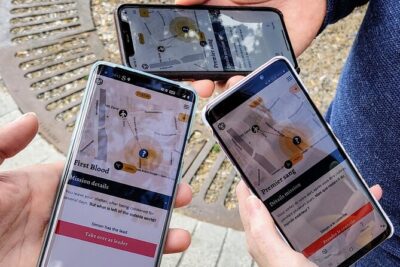
Browse the lists this tour appears in