
Review · LONDON
Jack the Ripper: Night Murder Mystery Walking Tour in London
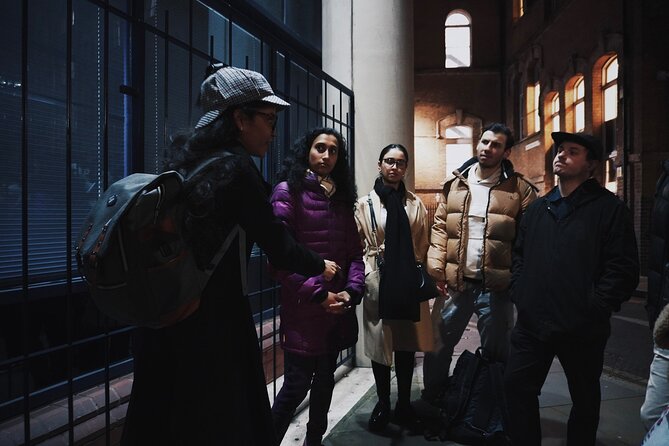
Jack the Ripper: Night Murder Mystery Walking Tour takes you through Whitechapel after dark, using narrow lanes, old streets, and Victorian crime scenes to tell a grim London story. The guide leads you in roughly chronological order, adding the lives of the women involved rather than treating them as mere names in a case file.
I like the focus on victims and social conditions, especially the poverty and overcrowding that shaped the district. I also like the interactive mystery angle, since you are asked to weigh clues and theories rather than simply hear a fixed tale.
The main drawback is the walking itself. You cover a lot of ground in about two and a half hours, with few chances to sit, and one or two guides have been hard to hear when facing away from the group. Dress for cold or wet weather and stay close to the guide.
Key points to know before you book
- Seven Whitechapel stops: The route links Brick Lane, Princelet Street, Puma Court, the Ten Bells, Gunthorpe Street, Goulston Street, and St Botolph without Aldgate.
- A chronological route: The guide follows the murders and clues in sequence, making the case easier to track.
- Victims receive real attention: Annie Chapman, Martha Tabram, Catherine Eddowes, and others are placed in the social world of Victorian London.
- Small enough to hear, usually: The maximum group size is 25, though the guide’s speaking position still matters.
- Good value for a long evening walk: At $22.93 per person, the tour costs less than many central London attractions and lasts about 2 hours 30 minutes.
- A pub finish, but not a pub tour: You learn about the Ten Bells from outside its doors, then continue toward the final stopping point at Mitre Square.
Why this Whitechapel walk works after dark
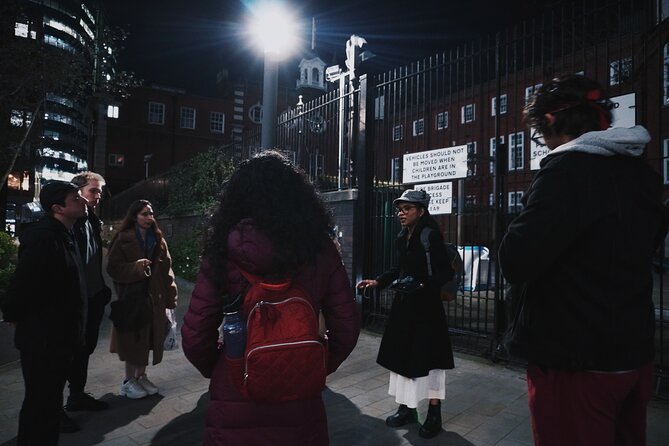
The setting does much of the work. Whitechapel is not a museum built around Jack the Ripper. It is a working part of London, and the tour moves through streets that still help you picture how confusing and close-packed the area could feel in the late 19th century.
That does not mean every building looks exactly as it did in 1888. Modern London is all around you. Yet narrow passages such as Puma Court and Gunthorpe Street give the guide a physical point from which to explain how victims could vanish from view within seconds.
The night timing also changes the mood. A chilly or cloudy evening can make the story feel more immediate, though weather is a real factor. One group completed the walk through torrential rain and still enjoyed it, but you should not count on a pleasant stroll. Comfortable shoes, a waterproof layer, and warm clothing are sensible.
This is a walking tour rather than a theatrical show. The guide does the storytelling, points out locations, discusses evidence, and invites you to consider competing ideas about the killer’s identity. Some guides add a little dry humor. The best guides use it carefully, giving the subject breathing room without making light of the murders.
More Murder Mystery Games in London:
- Interactive Jack the Ripper Night Walk: London’s Murder Mystery
★ 5.0 · 171 reviews - Colombia’s Finest Outdoor Murder Mystery London
★ 5.0 · 122 reviews - London: Murder Mystery Cruise With 3-Course Dinner
★ 4.5 · 18 reviews
Brick Lane: poverty behind the headlines
The first stop is Brick Lane, now known for food, street art, and nightlife. The tour looks at a very different past, when this part of London was marked by poverty, overcrowding, and desperate living conditions.
That opening context matters. Jack the Ripper stories can become a parade of gruesome details, but the Whitechapel murders make more sense when you understand the pressures around them. Women with few safe options lived and worked in a district where illness, unstable employment, and poor housing were common concerns.
The stop lasts about 17 minutes. That gives the guide enough time to establish the setting without turning the introduction into a long lecture. You also get your first sense of the tour’s main approach: the killer is part of the story, but the neighborhood and its people matter just as much.
Princelet Street and the lives behind the names
Princelet Street is quieter and narrower. Here the guide connects the area to the case and discusses conditions faced by women such as Annie Chapman.
This is one of the more useful parts of the route because it shifts the focus from mystery to human circumstances. You are encouraged to think about where people lived, how they survived, and why a woman could be especially exposed at night.
The street itself helps. You are not looking at a display panel or watching a staged reconstruction. You are standing in a real passage in London, listening to an explanation of how the district functioned. The tradeoff is that narrow streets can make it harder for a large group to gather neatly, so stay near the guide and keep the commentary in earshot.
Puma Court: a place built for atmosphere
Puma Court remains close enough to its 19th-century form to make the location feel particularly effective. The passage is narrow, and the tour uses it to discuss how quickly someone could disappear into darkness.
This is where the murder mystery element becomes strongest. You are not simply told what happened. You are asked to consider the physical clues: limited visibility, confined routes, and the difficulty of knowing who was nearby.
Allow the guide to set the scene without expecting a perfect recreation. The surrounding city has changed, lighting may vary, and other groups can be present. Still, Puma Court offers one of the clearest links between the surviving streets and the case’s atmosphere.
More Walking Tours in London:
- London: Food Treasure Hunt and Walking Tour
★ 5.0 · 92 reviews - Wizarding London: Interactive Game & Magical Walking Tour
★ 4.0 · 26 reviews - Rock & Roll London: Self-Guided Music Mystery Walk
★ 4.0 · 6 reviews - Romantic Notting Hill: Self-Guided Love Story Puzzle Walk
★ 4.5 · 3 reviews
The Ten Bells and the pub’s grim connection
The Ten Bells is one of the most recognizable names in the Jack the Ripper story. Many of the women associated with the case are believed to have visited the pub shortly before their deaths, which has kept the building tied to the mystery.
The tour stops outside to explain those final hours and the pub’s place in the story. This is an important distinction: the experience does not promise a pub session or a drink inside as part of the tour. You hear the history at the doors, then continue with the group.
I like this stop because it connects a familiar London pub to ordinary daily life. Pubs were not just backdrops for crime stories. They were places where people met, sought warmth, and passed through during difficult lives. The guide’s handling makes a difference here. Strong guides, including those praised for their careful tone, avoid turning the women into props.
Gunthorpe Street and the Martha Tabram question
Gunthorpe Street is presented as the place where Martha Tabram was brutally murdered. The tour examines why some experts include her among Jack the Ripper’s victims and why others remain cautious.
That uncertainty is central to the appeal. The case is not a neat puzzle with every answer preserved. It includes disputed evidence, incomplete records, and theories that have grown over time. A good guide separates established facts from speculation and lets you see why the debate continues.
The stop also reinforces the chronological design. Moving through events in sequence helps you understand how the case developed, rather than mixing every name and clue together. Several guides have been praised for knowing dates, locations, and names in detail, which is especially useful here.
Goulston Street and the apron clue
Goulston Street brings one of the most famous clues into the route: a bloody piece of apron linked to Catherine Eddowes. A chalk message was also found nearby, creating a dispute that has fed theories and conspiracy claims for generations.
This is a strong stop for anyone who enjoys evidence more than atmosphere. The guide can explain what was found, what the police did with it, and why the chalk message remains controversial. You get the chance to separate the documented clue from later interpretation.
The location also shows how much the case depended on fragments. A piece of clothing, a message, a witness account, or a timing detail could send the investigation in a new direction. The tour’s interactive approach works best when you listen for those distinctions and form your own view.
St Botolph without Aldgate and the people left out
The church is introduced as a place associated with vulnerable women seeking refuge. It becomes a pause in the walk, allowing the guide to discuss how Victorian society failed the women now associated with the Ripper case.
This is perhaps the most meaningful part of the experience. The tour is about murder, but it is also about homelessness, poverty, gender, work, and public indifference. The stop gives those issues a place beside the crime clues.
The quieter tone may appeal to you if you want more than a spooky night out. It also explains why the strongest guides do not rush from one shocking detail to the next. Guides such as Hadi and Kory have been praised for combining clear research with a human approach, while other guides have used old news reports and period images to help show how the district looked at the time.
Finishing at Mitre Square
The advertised endpoint is Mitre Square, described as the place where Mary Jane Kelly met her end. It gives the walk a final location rather than ending at a random station or meeting point.
By this stage, you have followed the route through streets, clues, and competing theories. Some guides stay on afterward to discuss possible identities and answer questions. That extra conversation can be valuable if you want to explore the main theories instead of simply accepting the guide’s preferred explanation.
The route starts at the St Marys Whitechapel Church Memorial and finishes at Mitre Square. Since the walk does not return to its starting point, check your onward plans before you set off. The experience is offered in English, and the maximum group size is 25 people.
Guides make the difference
The tour depends heavily on who leads it. Names praised for strong storytelling include Tyson, Kory or Korey, Dougal, Doogle, Hadi, Anahita, Lisa, Kody, Korhan, and Korhn Yasin. The guide assigned to your departure may vary, so you should not book on the assumption that one particular person will lead your group.
The strongest qualities are consistent across the best accounts: clear command of dates and places, a chronological structure, patience with the group, and respect for the victims. Some guides greet people personally, wait when transport problems delay arrivals, and make sure no one falls behind.
You should also keep your expectations practical. One guide was difficult to hear at times, especially when looking away while speaking. With a group of up to 25, stand near the front, avoid side conversations, and ask the guide to repeat anything lost in street noise.
Is $22.93 good value?
At $22.93 per person, this is a reasonable price for a 2.5-hour guided walk in central London. You are paying for a researched route, live interpretation, and access to locations that would mean little without context.
The value is strongest if you already like true crime, London history, or guided walks. You get seven stops, a clear sequence of events, and room to discuss theories. The cost is less attractive if you dislike standing outdoors, walking in poor weather, or hearing repeated details about murder.
The tour also offers group discounts, which may improve the price for a larger party. Confirmation arrives at booking, mobile tickets are accepted, and service animals are allowed. Most people can take part, but the route includes sustained walking and very few places to sit until the end.
Free cancellation is available if you cancel at least 24 hours before the start time. Changes or cancellations inside that window are not refunded, so keep the local start time in mind.
Who should book this night walk?
I would choose this tour if you want a serious but accessible introduction to the Ripper case. It suits history fans, mystery readers, true crime enthusiasts, and anyone curious about East London beyond the usual sightseeing circuit.
It is also a good fit for visitors who want the victims treated as people. The emphasis on women such as Annie Chapman, Martha Tabram, and Catherine Eddowes gives the evening more weight than a simple ghost walk.
I would think twice if you need frequent breaks, dislike grim subject matter, or want a fully theatrical performance with actors and props. This is a real street walk with live narration. Its power comes from the locations and the guide’s storytelling, not from special effects.
Should you book it?
Book it if the combination of dark London history, real streets, and disputed clues sounds appealing. The price is fair, the route is long enough to feel substantial, and the best guides bring care, humor, and strong research to a difficult subject.
Skip it if you want a relaxed pub evening or a short activity with plenty of seating. For everyone else, wear good shoes, arrive ready for weather, stay close enough to hear, and let the guide show you the Whitechapel behind the legend.
FAQ
How long does the Jack the Ripper walking tour last?
The tour lasts approximately 2 hours and 30 minutes.
How much does the tour cost?
The listed price is $22.93 per person. Group discounts are available.
Where does the tour begin?
The meeting point is St Marys Whitechapel Church Memorial on Unnamed Road, London E1 1FE, UK.
Where does the tour finish?
The tour finishes at Mitre Square, London EC3A 5DE, UK.
Is the tour offered in English?
Yes. The tour is offered in English.
What is the cancellation policy?
You can cancel for a full refund up to 24 hours before the experience begins. Cancellations or changes made less than 24 hours before the start time are not refunded.
More Evening Experiences in London
- Escape Game Vampires The Last Night
★ 5.0 · 9 reviews - 2-Night Private Jordan Secret Escape Tour: Petra, Wadi Rum, and Dead Sea
★ 5.0 · 4 reviews - Jordan Pass 2- Night Private Secret Escape Tour Petra, Wadi Rum, & the Dead Sea
★ 5.0 · 3 reviews
Just added around London
- Secrets of Bermondsey: Self-Guided Urban Puzzle Walk★ 5.0 · 2 reviews
- e-Scavenger Hunt London: Explore the City at Your Own Pace★ 4.5 · 3 reviews
- Undercover Agent Escape Game – High-Tech Spy Thriller★ 5.0 · 2 reviews
- Unique Survival Scavenger Hunt in Luton by Zombie Scavengers★ 3.0 · 2 reviews
- The Mind of Moriarty: Live Escape Experience★ 3.5 · 9 reviews
- Private Prison Van Escape Game – London Immersive Experience★ 4.0 · 15 reviews
- London Self-Guided Sherlock Holmes Murder Mystery Game★ 4.0 · 2 reviews
- London’s Crown Secret: Self-Guided Royal Puzzle Quest★ 4.5 · 8 reviews
London Escape Games, compared.
Interactive Jack the Ripper Night Walk: London’s Murder Mystery
Read our review →

Colombia’s Finest Outdoor Murder Mystery London
Read our review →

One-Hour Private Capital Caper Escape Room Gaming in London
Read our review →
One-hour Private Star Struck Escape Room Gaming in London
Read our review →
Interactive Treasure Hunt Experience – Central London’s Secrets
Read our review →
Browse the lists this tour appears in