
Review · BERLIN
Love and War in Berlin: Self-Guided Story Puzzle Walk
Berlin’s past unfolds as a trail of puzzles on this self-guided walk from Alexanderplatz to the Memorial to the Murdered Jews of Europe. Along the way, you connect grand squares, Nazi-era crimes, Communist-era monuments, and the site of Hitler’s former bunker without being tied to a guide’s timetable.
I like the very low price and the freedom to start when you want, pause for lunch, or stop to study a building. I also like that the route uses real details at each location, so you look closely instead of simply following a guide through the center.
The main tradeoff is that you are on your own. Some answers require exact wording, and a few puzzles may feel either too easy or surprisingly fussy. Busy markets or public events can also make a location harder to inspect.
Key points to know before you go
- The route links major Berlin landmarks: Begin at the World Clock in Alexanderplatz and finish near the Holocaust Memorial.
- The puzzles make you look closely: You search signs, sculptures, façades, and public spaces for answers.
- WWII is the main thread: Bebelplatz, the former bunker site, and the Holocaust Memorial give the walk its strongest historical weight.
- You control the clock: The game is available from 5:00 AM to 9:00 PM, with breaks allowed along the way.
- The experience is private and contact-free: Only your group takes part, and no physical guide accompanies you.
- The $6 price is hard to beat: It offers about an hour of sightseeing and a story-driven activity for less than many guided walks.
A puzzle walk through Berlin’s changing center
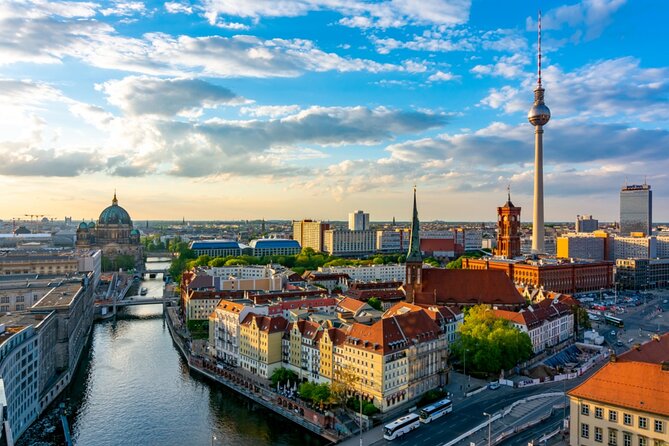
This experience works best as a city game rather than a traditional tour. You receive a mobile ticket, begin at Alexanderplatz, and use the clues to move from one place to the next. The route is offered in English and can be played offline, a useful feature if you do not want to rely on mobile data while crossing central Berlin.
The advertised duration is about one hour. That is a reasonable target if you solve the clues quickly and keep moving, but the flexible format lets you make the walk longer. You can pause at a square, take a museum break, or resume later during the stated operating hours.
I would not book this expecting a historian to explain every event in person. Instead, expect short pieces of information attached to public places, with each puzzle acting as the key to the next part of the story. That format suits curious visitors who like a little game with their sightseeing.
More Puzzle Walks in Berlin:
- Spy Mission in Berlin: Self-Guided Espionage Puzzle Quest
★ 5.0 · 3 reviews - Fun, Flexible Treasure Hunt Around Manchester with Cryptic Clues & Hidden Gems
★ 5.0 · 253 reviews - Fun, Flexible Treasure Hunt Around York with Cryptic Clues & Hidden Gems
★ 5.0 · 248 reviews
Starting at the World Clock in Alexanderplatz
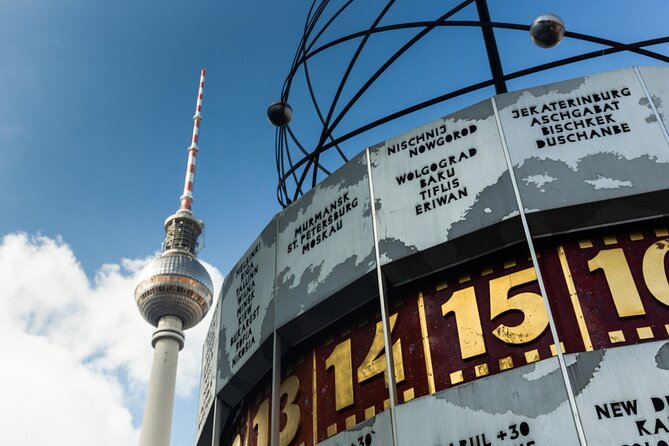
The meeting point is the World Clock at Alexanderplatz, also called the Urania World Clock. Its metal rotunda displays the current time in 148 major cities, making it an easy place to find your starting point in one of Berlin’s best-known public squares.
Your first task is to inspect the clock and locate the answer needed to continue. This is a good opening because the object rewards close attention. You are not just told that Alexanderplatz is important. You must use what is in front of you.
Alexanderplatz can feel large and visually busy, so give yourself a few minutes to get oriented. The start is near public transportation, which makes it practical to reach from many parts of Berlin. Since the walk ends in a different part of central Berlin, you should also be comfortable navigating onward from the Holocaust Memorial.
Rathaus and Neptune Fountain: Berlin in stone and bronze
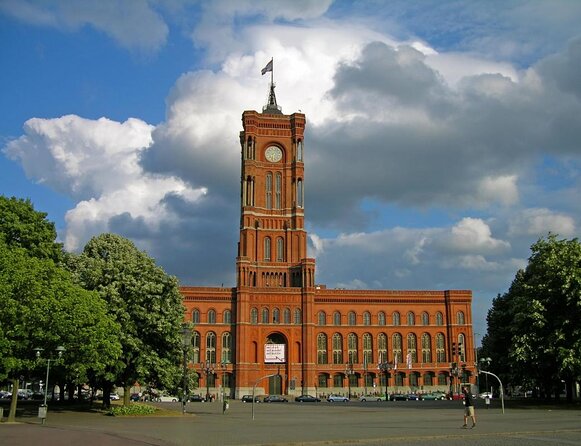
The route then brings you to the Rathaus, Berlin’s Red Town Hall. Built between 1861 and 1869, it uses the Northern Italian High Renaissance style and was designed by Hermann Friedrich Waesemann. Its tower recalls the cathedral tower of Notre-Dame de Laon, while the building was modeled on the Old Town Hall of Thorn, now Toruń in Poland.
The puzzle asks you to look around the building for a detail that advances the game. This stop adds architectural variety early in the walk and shows how Berlin’s civic image was shaped long before the Nazi period.
Nearby, the Neptune Fountain gives you another visual clue. Built in 1891 and designed by Reinhold Begas, the fountain places the Roman god Neptune at its center. The suggested stop time is about ten minutes, though the actual time depends on how quickly you solve the task.
The strength of these first locations is their physical detail. You can stand in front of a building or sculpture and work out the answer from the setting. The limitation is that a public square may be noisy, crowded, or partly blocked by temporary activity, so do not assume every clue will be visible at once.
Marx and Engels, and the memory of East Berlin
Next comes Marx-Engels-Forum, a public park named for Karl Marx and Friedrich Engels, the authors of The Communist Manifesto. The former German Democratic Republic created the park in 1986, giving this part of the route a clear connection to East German political identity.
This is an important change in tone. The walk does not treat Berlin’s story as only a WWII story. It also brings in the divided city and the ideas that shaped East Berlin after the war. If you have already visited other central monuments, this stop helps you notice how different periods were placed side by side.
You again search the area for the answer to the next challenge. The puzzle format is useful here because it asks you to inspect the public space rather than rush past it. The route’s historical range is one of its better features, even though the explanations are naturally shorter than those on a full guided tour.
More Walking Tours in Berlin:
- Berlin Wall: Greatest Escapes Self-Guided Walking Adventure
★ 4.5 · 27 reviews - Berlin Highlights Self guided scavenger hunt and Walking Tour
★ 4.5 · 4 reviews - Dark Heart of Rome – Facts, Legend & Mystery Walking Tour
★ 4.5 · 329 reviews - Interactive Jack the Ripper Night Walk: London’s Murder Mystery
★ 5.0 · 171 reviews
Lustgarten and Neue Wache along Unter den Linden
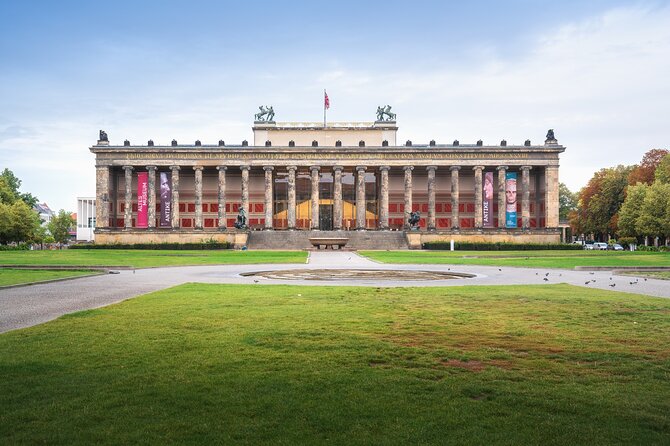
Lustgarten, or Pleasure Garden, sits on Museum Island near the former Berlin City Palace. Its role has changed over time. It has served as a garden, parade ground, place for mass rallies, and public park.
That changing use makes it a fitting stop on a walk about power and memory. A public square can look peaceful today while carrying traces of royal ceremony, political display, and modern civic life. The game gives you a reason to pause and examine the setting.
The Neue Wache follows. Karl Friedrich Schinkel designed this neoclassical building, erected between 1816 and 1818 as a guardhouse for the Royal Palace and a memorial to the Liberation Wars. Its formal design reflects Prussian state power, but its memorial role gives the building a more serious purpose.
For me, these stops show why the route works better than a simple list of famous sights. You move through places that changed function as Berlin changed. Still, the amount of context depends on the game’s text, so anyone wanting a detailed account of Prussian history or German memorial culture may want a separate museum visit.
Bebelplatz and the 1933 book burning
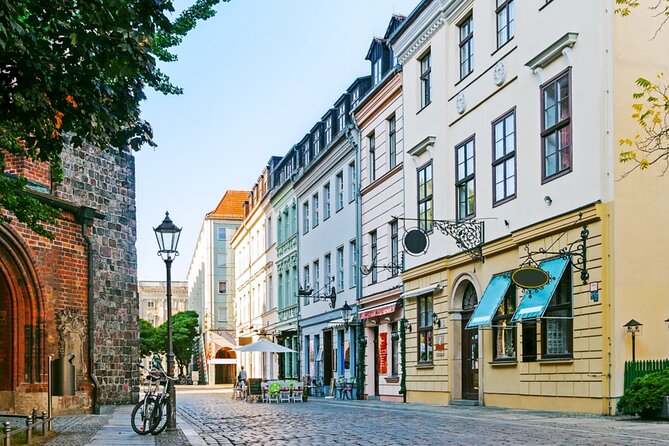
Bebelplatz is one of the walk’s most important stops. It is known as the site of the Nazi book burning held on May 10, 1933, when books were burned in many German university cities.
The event was organized by the nationalist German Student Association, which acted ahead of the National Socialist German Students’ League. That detail matters because the burning was not some random act of disorder. It was a public attack on ideas, writers, and intellectual freedom, carried out as part of the wider Nazi movement.
The suggested time here is about ten minutes. You search the square for the answer and take in the setting before moving on. This is a place where you should resist rushing. The subject is heavy, and the open square can make the act of remembering feel stark rather than theatrical.
The puzzle adds focus, but it also has a limit. A clue can direct your eyes to a feature of Bebelplatz, yet it cannot replace the fuller explanation you might receive from a specialist guide. I see this stop as a strong introduction, especially for a first visit, not as a complete lesson on Nazi censorship.
Gendarmenmarkt and Berlin’s grand civic face
Gendarmenmarkt gives the walk a grand architectural pause. The square took its name from the Gens d’armes cuirassier regiment, whose stables were demolished by Frederick II. Between the two churches sits the Konzerthaus Berlin, formerly a theatre.
The square helps you see Berlin as a city built for ceremony and public display. Its buildings create a more formal mood than the parks and open spaces earlier in the route. The puzzle asks you to inspect the square, so look up and around rather than focusing only on the phone.
The suggested stop time is about ten minutes. Gendarmenmarkt is also a practical place to pause because the route has already covered several central locations. If you need a short rest, this is a sensible point to slow down, although public events or seasonal activity can make the exact route less direct.
A short look at Hamburg’s political presence
The route then passes the state representation of Hamburg on Jägerstraße. This classicist townhouse is used for meetings, political work, and events connected with Hamburg’s role in federal government. The building hosts more than 500 events and encounters each year, and it gives the walk a glimpse of how Germany’s federal states take part in national politics.
This stop is less famous than Bebelplatz or the Holocaust Memorial, but that is part of its value. You get a reminder that central Berlin is not only a collection of monuments. It is also a working political district.
The puzzle asks you to find another detail at the site. You should remember that this is an active state representation, not a normal museum attraction. The experience is designed around looking from the public area, not around a scheduled interior visit.
Hitler’s former bunker site and the final memorial
The route’s WWII thread becomes most direct at the site of Hitler’s former war bunker. The bunker itself is not presented as a dramatic underground attraction. Instead, the walk takes you to the location and uses the surrounding city to explain where it stood.
That understated approach is appropriate. Berlin does not offer a preserved monument to glorify the bunker, and the ordinary appearance of the site can be part of the lesson. You are asked to understand the place through location and story rather than spectacle.
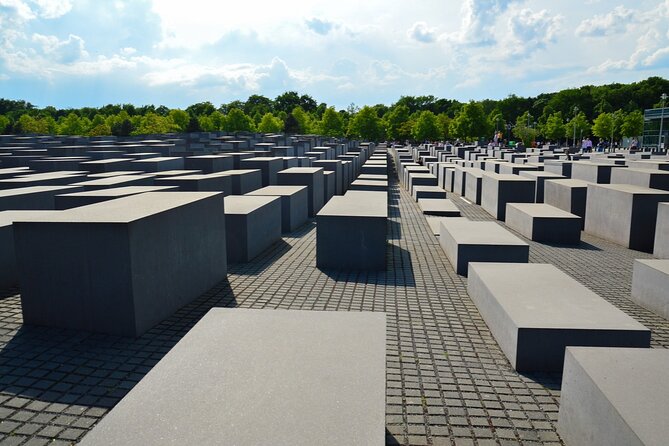
The finish is at the Memorial to the Murdered Jews of Europe on Cora-Berliner-Straße. After lengthy debate, the German parliament decided in 1999 to establish a central memorial. New York architect Peter Eisenman won the design competition, and the memorial opened in 2005.
This is the strongest ending for the route. The walk begins with a clock showing the world’s cities and finishes with a memorial focused on the murder of Europe’s Jews. The contrast gives the final section more weight than a normal sightseeing endpoint.
You should allow yourself time here beyond the puzzle itself. The game may take about an hour overall, but the memorial deserves a slower visit if you want to walk among the concrete blocks and consider the design. The supplied information identifies the memorial and its history, but it does not promise a guided explanation of the site or its underground information center.
How difficult are the puzzles?
The difficulty is mixed. Some clues are easy to spot, while others demand a precise answer. That variation keeps the activity moving, but exact wording can cause frustration if you identify the right detail and the game does not accept your response.
One useful tip is to read signs and inscriptions carefully before guessing. If an answer seems obvious, check the spelling and wording. A small difference may matter.
The walk is suitable for most people, and service animals are allowed. Since it is a private activity, only your group participates. That makes it a good choice for couples, families, or friends who prefer to solve clues together rather than join a larger party.
Timing, price, and practical value
At $6 per person, this is an inexpensive way to organize an hour in central Berlin. The value comes from the combination of a planned route, short historical stories, and a reason to examine each stop. You are paying less for a full lecture and more for a self-guided structure that keeps you moving.
The game can be started at any hour during the stated 5:00 AM to 9:00 PM opening period. It is available every day, and you can pause and resume when you wish. Offline play is included, which is helpful if your connection is weak or you want to preserve battery and data.
The route is available to book at any time, and group discounts are offered. Confirmation arrives at booking. Free cancellation is available if you cancel at least 24 hours before the scheduled start time. Within 24 hours, the amount paid is not refunded.
The advertised start point is Alexanderpl. 1, 10178 Berlin. The finish is Cora-Berliner-Straße 1, 10117 Berlin. Since the endpoint differs from the start, plan your next move rather than expecting a return to Alexanderplatz.
Who should choose this Berlin experience?
I would choose this for a first visit if you want a short introduction to Berlin’s central landmarks and prefer an active format. It also works well for repeat visitors. The route includes familiar sights, but the clues can draw your attention to details you might otherwise pass without noticing.
It suits people who like independent sightseeing, small puzzles, and control over their schedule. Families and friends may enjoy solving the questions together, while solo visitors can use the route as a simple framework for exploring Mitte.
I would not choose it as your only WWII experience in Berlin if you want extended explanations, discussion, or answers to follow-up questions. There is no physical guide, and the self-guided format leaves you responsible for pacing, navigation, and interpretation.
Should you book Love and War in Berlin?
Book it if you want a cheap, flexible walk that connects Berlin’s Nazi past, East German period, Prussian architecture, and modern memorial culture. The strongest parts are the route’s variety, the visit to Bebelplatz, the former bunker site, and the thoughtful finish at the Holocaust Memorial.
Skip it if you want a long, detailed guided history tour or if exact-answer puzzles tend to irritate you. For everyone else, $6 buys a useful hour in the city center, with the freedom to stop whenever Berlin offers a reason to look around.
FAQ
How long does Love and War in Berlin take?
The experience takes approximately one hour, though you can make it longer by taking breaks or spending extra time at the stops.
Where does the walk begin?
It begins at the World Clock, also known as the Urania World Clock, at Alexanderpl. 1, 10178 Berlin, Germany.
Where does the walk finish?
The route ends at Cora-Berliner-Straße 1, 10117 Berlin, Germany, near the Memorial to the Murdered Jews of Europe.
Is the experience guided?
No. This is a self-guided story puzzle walk, and no physical tour guide accompanies you.
Can I take breaks during the game?
Yes. You can pause whenever you wish and resume later.
Is an internet connection required?
No. The game can be played offline.
What is the cancellation policy?
You can receive a full refund by canceling at least 24 hours before the experience start time. Cancellations or changes made within 24 hours are not refunded or accepted.
More Self-Guided Tours in Berlin
- Berlin: Self-Guided Family and School Class Scavenger Hunt
★ 4.6 · 128 reviews - Berlin: Scavenger Hunt Self-Guided Tour
★ 4.6 · 79 reviews - Berlin Kreuzberg: Scavenger Hunt Self-Guided Tour
★ 4.1 · 19 reviews - Berlin Prenzlauer Berg: Scavenger Hunt Self-Guided Tour
★ 4.6 · 14 reviews
Just added around Berlin
- Winter is Coming Live Escape Room in Berlin★ 3.0 · 5 reviews
- First Profiler Berlin: Private Self-guided Outdoor Escape Game★ 3.5 · 3 reviews
- Scavenger Hunt from Maranja Adventure Club★ 5.0 · 6 reviews
- Berlin Highlights Self guided scavenger hunt and Walking Tour★ 4.5 · 4 reviews
- Kreuzberg’s Secret Society: Exploration Game and Tour★ 4.5 · 3 reviews
- Private Tutankhamun’s Tomb Live Escape Room in Berlin★ 3.5 · 11 reviews
- Self-Guided City Quest & First Date in Berlin★ 3.0 · 2 reviews
- Berlin stories – an exciting scavenger hunt tour★ 3.5 · 2 reviews
Berlin Escape Games, compared.

Escape Room Adventure in Berlin Solve the Mystery
Read our review →
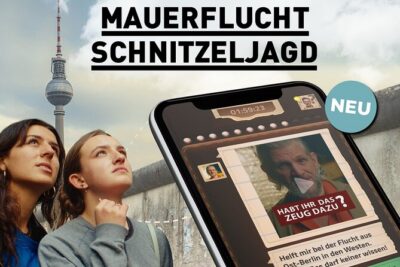
Escaping and spying on the Berlin Wall Scavenger hunt
Read our review →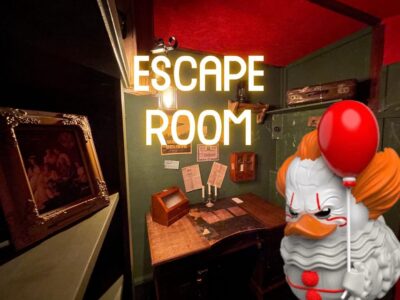
“Shadow of the Rubber Duck” Escape Room Experience
Read our review →
Berlin Wall: Greatest Escapes Self-Guided Walking Adventure
Read our review →
Browse the lists this tour appears in