
Review · FRANCE
“Old Marseille” district tour and treasure hunt
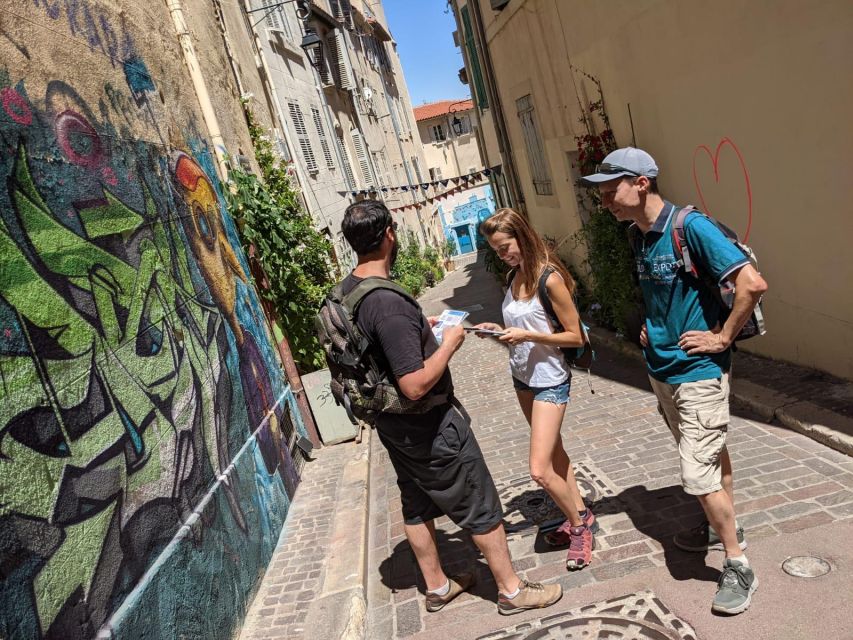
Marseille’s oldest quarter becomes your game board on this 150-minute treasure hunt through Le Panier. You follow clues about street names, facades, monuments, and bits of urban furniture, moving from one stage to the next like a small team of Sherlock Holmeses. I like the clever mix of sightseeing and play, and I like that the small group, limited to 10 people, keeps everyone involved. The main caution is the 4.5-kilometer walk and some stairs, which may be a stretch for very young children or anyone who dislikes walking games.
I also like the way guide Eric D. keeps the activity open to different ages and languages. The German, English, and French options are useful for mixed-language families, and the winner receives a gift. Children under 6 cannot join, so this works best when kids are old enough to read clues, notice details, and keep moving for two and a half hours.
Key details at a glance
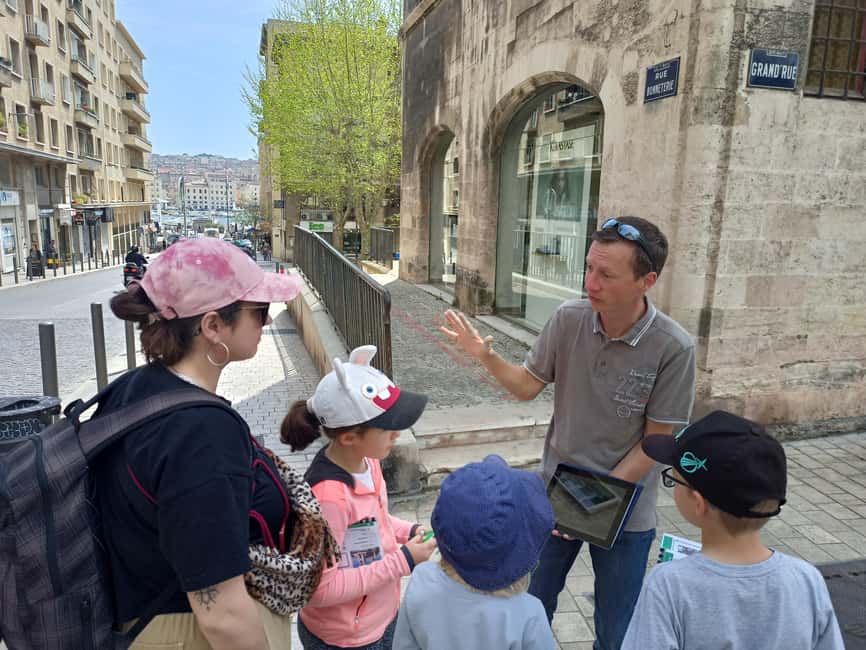
- A clue-based route through Le Panier: You solve riddles using street names, building details, monuments, and objects along the way.
- A 4.5-kilometer walk with stairs: The route is not described as difficult, but comfortable shoes and steady walking ability matter.
- A small group of up to 10 people: This helps the game stay social instead of turning into a crowded race.
- A history lesson disguised as play: The route connects modern Marseille with the city’s beginnings under Greek settlers 2,600 years ago.
- A finish near Fort Saint-Jean: You begin beside City Hall and the Old Port, then end at one of Marseille’s notable historic sites.
- A prize keeps the hunt lively: One winner receives a gift, adding a little friendly competition without changing the sightseeing focus.
Starting beside Marseille’s Old Port

Your meeting point is near the Ferry-Boat pier beside City Hall, on the north shore of the Old Port. This is a practical place to begin because it puts you close to central Marseille and gives the group an easy reference point: the water, the harbor, and the Hôtel de Ville.
The Old Port is more than a pickup spot. It places the activity at the center of Marseille’s daily life, where the city’s historic core meets its waterfront. From here, you move toward Le Panier, the district often called old Marseille.
I recommend arriving with everyone ready to walk before the start time. The activity depends on watching your surroundings, so you will get more from it if you are not busy sorting bags, checking directions, or catching up with late arrivals. Since the group is capped at 10, the guide can keep the starting instructions personal and make sure each team understands how the booklet works.
More Treasure Hunts in France
- Louvre Guided Treasure Hunt for Families and Kids
★ 4.7 · 92 reviews - Louvre Museum Guided Family Treasure Hunt
★ 5.0 · 78 reviews - Louvre Museum – Private Family Tour with Da Vinci Treasure Hunt
★ 5.0 · 38 reviews
How the booklet turns streets into clues
Eric gives you a game and riddles booklet created for this route. It is not simply a list of facts to read while walking. The booklet directs you from one stage to the next, asking you to inspect the city around you and work out the path.
That changes the rhythm of a normal guided walk. Instead of following a guide from one landmark to another, you look for evidence in the street itself. A street name may provide the next answer. A detail on a facade may point you in the right direction. An object of urban furniture, easy to ignore on an ordinary stroll, can suddenly become part of the puzzle.
I like this format because it rewards attention. Le Panier is made for slow looking, with streets and alleys that invite you to examine what is around each corner. The booklet gives children a reason to focus, while adults can enjoy the history and local stories behind the clues.
The format also has a small risk. If your group prefers a clear, uninterrupted explanation from a guide, stopping to solve riddles may feel less direct. The activity works best when everyone agrees to play along rather than leaving the puzzle to one quick reader in the family.
Entering Le Panier, Marseille’s oldest quarter

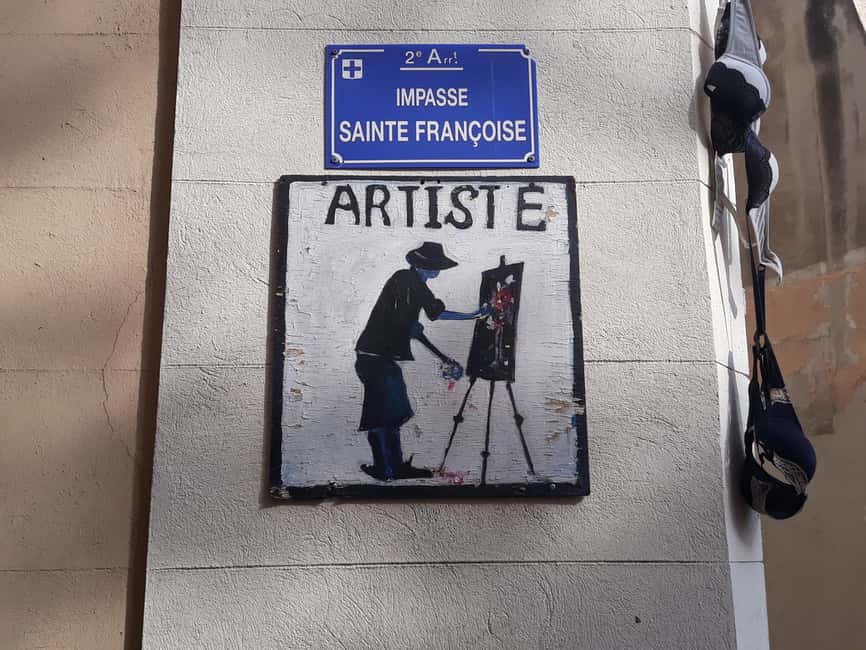
The route takes you through Le Panier and nearby streets, a part of Marseille where heritage, local culture, and food traditions meet. You are not just walking through a preserved old quarter. You are tracing the city’s long development from its foundation by Greek settlers to the present day.
The tour uses the district as a classroom, but it avoids the feel of a formal lesson. Eric explains the sites you meet, along with their history and legends, while the clues keep the group moving. That combination matters in a city as old as Marseille. A list of dates can blur together, but a riddle tied to a street or building gives the information a place in your memory.
Expect a route that shifts between wider streets and narrower passages. The supplied details do not give a stop-by-stop list of every building, so you should think of the route as an active investigation rather than a fixed checklist of major sights. You will encounter some must-see places, along with less obvious corners that a standard city walk might pass without comment.
For adults, the benefit is context. You see how the old quarter fits into Marseille’s larger story. For children, the benefit is purpose. They are not being asked to admire old walls for two and a half hours. They are searching, answering, and helping the group advance.
A 2,600-year story told through small details
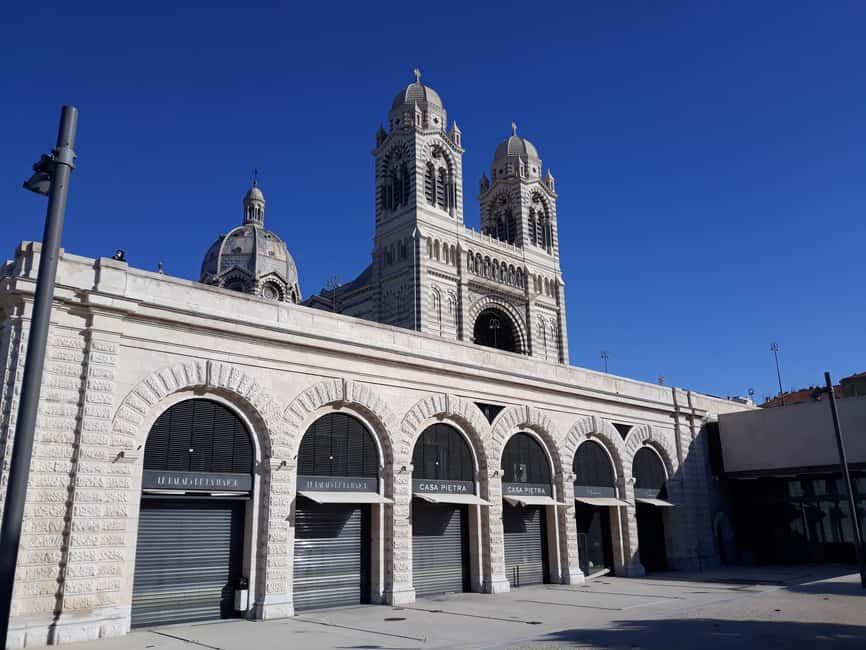
Marseille can claim about 2,600 years of history, beginning with Greek settlers. This tour uses that long timeline as a thread rather than trying to cover every period in equal depth.
You will hear about the places you encounter, their past, and their legends. The exact balance depends on the group and the pace of the hunt, but the design clearly favors stories connected to the streets in front of you. That is a good approach for Le Panier, where the setting itself supplies much of the material.
I find this kind of city history more useful than a dense lecture. You can connect an old story to a doorway, a name, or a particular view. The booklet then asks you to use your eyes, so the information becomes part of a task rather than something you must simply remember.
The playful tone should not be mistaken for a shallow experience. You still learn where Marseille began and how the old district relates to the modern city. Just expect the history to arrive in short pieces, mixed with walking, clue solving, and conversation.
Same place, a different puzzle:
- Saw2 vs Squid Game – Escape Game Montpellier
★ 5.0 · 752 reviews - Prison Break – Escape game in Montpellier
★ 5.0 · 583 reviews - School of Magic – Escape game Montpellier
★ 4.5 · 536 reviews - Mission Possible – Escape game Montpellier
★ 5.0 · 437 reviews
The treasure hunt and the prize
Alongside the guided walk, you take part in a treasure hunt. The winner receives a gift, which gives the group a clear finish line and a reason to keep concentrating when small legs begin to tire.
The competition is likely to work best when you treat it as friendly rather than intense. The point is not simply to reach the answer first. You are also learning to notice the city, and the guide remains part of the experience, explaining sites and legends as you go.
This format suits families particularly well. Children can search for answers, adults can help interpret clues, and everyone has a role. The small group size supports that shared effort. With no more than 10 participants, it is easier for a family to ask questions and for Eric to keep the game from becoming chaotic.
The winner’s gift is a modest feature, but a useful one. It gives children something concrete to anticipate. It also adds structure to an activity that might otherwise feel like a general walking tour with occasional questions.
Walking 4.5 kilometers through old Marseille

The route covers about 4.5 kilometers. It is described as not very difficult, but it includes some stairs. That makes footwear and pacing worth considering before you book.
You do not need to prepare for a demanding hike. Still, this is not a short stroll from one postcard view to the next. You will be on your feet for 150 minutes, and the clue format may encourage frequent stops, starts, and turns. Children who can manage a city walk but dislike long sightseeing tours may do better here because the game gives them a task.
The stated minimum age is 6. That makes sense for the format. Younger children may struggle to follow the booklet, wait for the group to solve a clue, or stay engaged through the full route. Older children can read, search, and contribute more actively, though the adults in the group should still plan to help.
If your party includes anyone with limited walking ability, ask yourself how stairs and a 4.5-kilometer route will feel. The activity is not presented as difficult, but no special accessibility details are provided. You should also remember that old districts often require attention underfoot, especially when your eyes are busy looking for clues.
What Eric adds as a local guide

Eric D. has lived in Marseille for several years and uses that local connection to point out both familiar sights and less obvious places. The value here is not only the number of facts he can share. It is the way he connects the route to places you might otherwise pass without noticing.
A local guide can also explain legends and small details in a way that a printed guidebook cannot. Since the activity moves through streets and alleys rather than staying at one monument, Eric’s commentary helps tie the separate clues together.
The language choice is another practical advantage. The tour is offered in German, English, and French. One German-speaking participant specifically praised Eric’s command of German, making this a useful choice for families who want more than a basic translated explanation.
The tone is meant to stay playful. That matters because a guide who turns every clue into a long lecture could slow the activity. Here, the stated aim is simple: walk, have fun, and discover. If that sounds like your preferred way to see Marseille, the format should suit you.
Why the small group matters
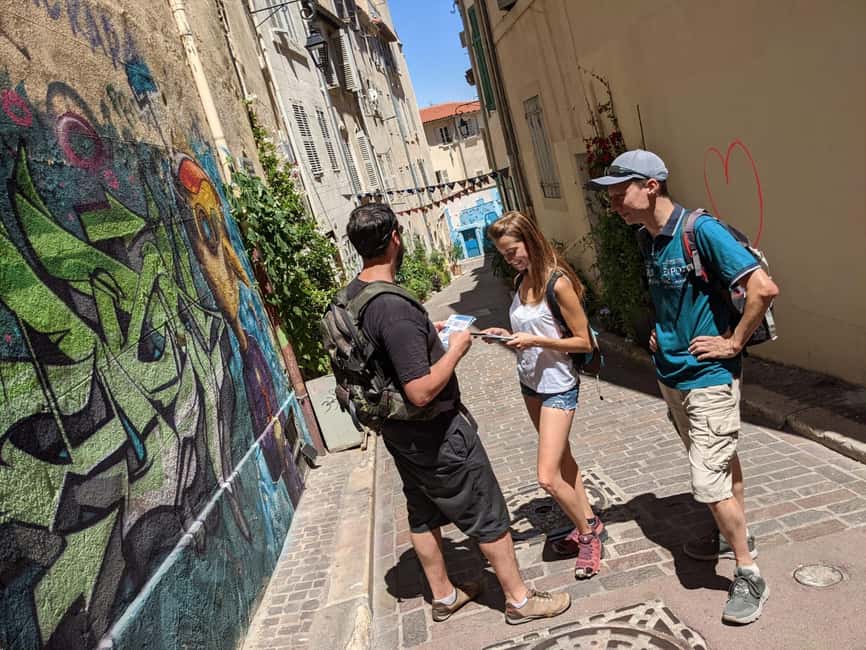
A group limit of 10 is one of the strongest features of this experience. Treasure hunts need cooperation. In a large crowd, the fastest person can solve every clue while everyone else follows along. In a smaller group, children and adults have more room to take part.
The size also helps Eric adjust his explanations. He can answer questions, keep the group together, and preserve the playful spirit without needing to address a packed crowd.
Small groups do not guarantee that every participant will have the same pace or enthusiasm. You may still need to encourage a tired child or slow down while someone studies a clue. But the limit gives the activity a better chance of feeling like a shared game rather than a public worksheet.
Value at $33 per person
At $33 per person, the cost is reasonable if you want both a guided introduction to Marseille and a structured family activity. You receive the guide’s time, the custom game and riddles booklet, a 150-minute route, and the chance to compete for a gift.
The value depends on how much your group uses the game. If everyone participates, the price covers more than a basic walk from the Old Port to Le Panier. You are paying for a prepared route, local storytelling, and an activity designed to keep children involved.
It may feel less worthwhile if your group wants only a quick orientation or prefers to explore independently. You could walk through the old quarter without a guide, but you would lose the organized clues, the explanations, and the local stories that connect the route.
Free cancellation up to 24 hours before the start and the option to reserve now and pay later also make the booking less rigid. Check the available start times before choosing a slot, since the activity lasts two and a half hours and may shape the rest of your day.
Finishing near Fort Saint-Jean
The route ends at Fort Saint-Jean, at 13002 Marseille. Finishing there gives the walk a clear historic endpoint instead of returning you to the starting pier.
That matters when planning the rest of your day. You begin near City Hall on the Old Port’s north shore and finish near Fort Saint-Jean, so you should not assume you will end where you started. The supplied information does not include onward transport arrangements, so plan your next stop from the finish point.
Fort Saint-Jean also fits the theme of the activity. After following clues through old Marseille, you finish near another major piece of the city’s past. Even if you do not continue sightseeing there, the endpoint gives the walk a satisfying sense of place.
Who should book this Marseille treasure hunt?
I would choose this for families with children aged 6 and older who enjoy puzzles, walking, and a little friendly competition. It also suits adults who want a more active way to learn about Le Panier instead of standing still for long explanations.
It is a good fit for mixed-age groups because the clues can be shared. Children search and solve, while adults can help with reading, history, and direction. The German, English, and French options make it practical for several kinds of groups.
I would think twice if your party includes very young children, anyone who cannot comfortably walk about 4.5 kilometers, or people who dislike stairs. I would also skip it if your main goal is a highly detailed monument tour with a fixed sequence of major sights.
FAQ
Where does the tour begin?
It begins near the Ferry-Boat pier next to City Hall on the north shore of Marseille’s Old Port.
Where does the tour finish?
The tour finishes at Fort Saint-Jean, 13002 Marseille, France.
How long does the activity last?
The activity lasts 150 minutes, or two and a half hours.
How far do you walk?
The walking distance is about 4.5 kilometers.
Is the route difficult?
The route is described as having no major difficulty, but it does include some stairs.
What languages are available?
The live guide can conduct the tour in German, English, or French.
Can children join?
Children under 6 cannot join. The activity is designed for families with older children who can take part in the clues and walking.
Should you book it?
Book this tour if you want Marseille’s old quarter to feel like a discovery rather than a sequence of facts. The custom booklet, small group, local stories, and prize give children a reason to stay engaged, while adults receive a useful introduction to Le Panier and Marseille’s 2,600-year story.
The deciding point is the walking. At 4.5 kilometers with some stairs, this is a real outing, not a quick family diversion. For an active group that likes to look closely, solve problems, and learn as it moves, $33 buys a well-shaped afternoon in the heart of Marseille.
Just added around France
- Historical treasure hunt in the city of Versailles★ 4.0 · 15 reviews
- Escape game outdoor The Walking Dead in Tours★ 3.0 · 2 reviews
- Outdoor escape game | The Minotaur★ 4.5 · 2 reviews
- Discover Toulouse while playing! Escape game – The alchemist★ 3.5 · 4 reviews
- Tours: Magic Team Escape Game in Town★ 3.0 · 2 reviews
- Urban escape game in Toulouse – Crazytopia★ 3.0 · 3 reviews
- Romantic Toulouse: Self-Guided Love Story Puzzle Walk★ 4.0 · 2 reviews
- Strasbourg Highlights Self Guided Scavenger hunt and City Walking Tour★ 4.0 · 9 reviews
France Escape Games, compared.


Who Killed Victor ? Escape Game at Père Lachaise Cemetery
Read our review →

Romantic Montmartre: Paris Lost Lovers Exploration Game and Tour
Read our review →Browse the lists this tour appears in