Review · USA
Portland, Maine Madness Scavenger Hunt
Portland, Maine Madness turns sightseeing into a live phone game. You start at Bard Coffee on Middle Street, receive your quest from a remote host, then follow clues to shops, public places, and local stops around town. The format is playful and social, with photos, oddball challenges, and chances to interact with people along the way.
I like the no-paper setup and the fact that your host can send a hint when a clue stalls the group. I also like the family-friendly design, dog-friendly policy, and wheelchair and stroller access. The main concern is the route: it can spread across town, making a two-hour hunt feel rushed on foot and awkward by car, especially when downtown parking is tight.
Quick points to know before you book
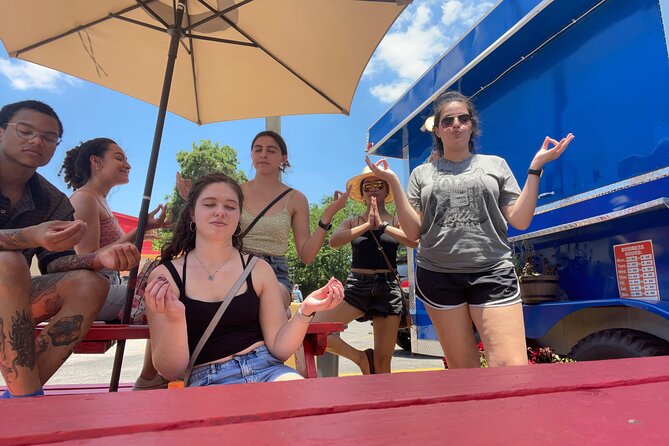
- Five named Portland stops: Abacus Gallery, Old Port Candy, Coast Guard Beach, Treehouse Toys, and Simply Scandinavian form the main framework.
- A live remote host stays involved: You send photos and messages by text, WhatsApp, or email, and receive help when needed.
- Bring one fully charged smartphone per team: It must have GPS and be able to send and receive texts, photos, videos, and data.
- The route may require more movement than expected: Some teams may walk from one side of town to another or choose to drive.
- It works for several group types: Families, work teams, students, birthday groups, bachelor or bachelorette parties, dog owners, and curious locals can all take part.
- Plan for a firm two-hour window: The route includes clues, challenges, and bonus tasks, so wandering too long between stops can leave little time to play.
How the Portland phone hunt works
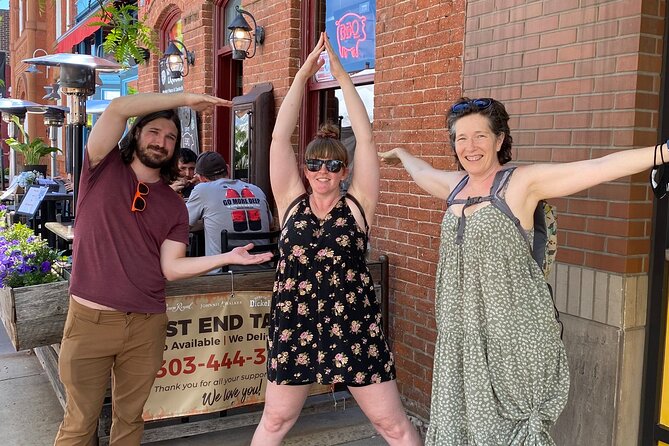
This is not a guide-led walking tour where someone points out monuments as you stroll. Instead, your phone becomes the map, scorecard, camera, and link to the person running the game from a distance.
You meet at Bard Coffee, at 185 Middle Street. From there, your remote host sends the digital quest and explains what to do. The group then works through clues and missions at its own pace. You may walk or drive between checkpoints, depending on the route and your group’s needs.
I like this setup for people who enjoy a little uncertainty. You are not simply following a guide from one sight to the next. You have to read carefully, make decisions, take photos, and sometimes ask people around you for help. The host adds a useful safety net. If your group gets stuck, you can ask for a hint rather than burn ten minutes arguing over a clue.
The host also asks you to send photos as proof of progress. That gives the game a live feel, even though the host is not physically beside you. It also leaves your group with a record of the sillier moments, if you are willing to complete the photo challenges.
The activity is offered in English and lasts about two hours. The maximum group size is 30 people, though a group that large will likely work best when divided into smaller teams. A large crowd can make phone communication, clue solving, and movement less tidy.
More Scavenger Hunts in the USA
- An Epic Scavenger Hunt: New York City Central Park Adventure
★ 4.5 · 244 reviews - Creative Soul Scavenger Hunt of Santa Fe
★ 5.0 · 62 reviews - Keep Austin Weird Scavenger Hunt
★ 4.0 · 51 reviews
Bard Coffee and the first clue
Bard Coffee is the meeting point and the place where your hunt begins and ends. You should arrive with your team organized and your phone ready, since the experience depends on quick communication with the remote host.
The starting point gives the activity a clear anchor. You do not have to search for a guide carrying a sign or wait for a printed packet. Once your team receives the quest, you can get moving.
I would use the opening minutes to check a few practical things:
- Confirm that your phone has a strong charge.
- Make sure mobile data is working.
- Turn on location services and notifications.
- Decide who will carry the team phone.
- Check how the host wants photos and messages sent.
The activity requires at least one working smartphone for each team. It must have GPS and be able to send and receive data, text messages, photos, and videos. A domestic phone number is required in the reservation. If you use an international number or run into technical problems, the game can be completed through WhatsApp or email, but you need to provide those details ahead of time.
The same meeting point serves as the finish. That is helpful because you do not have to arrange a pickup somewhere else at the end.
Abacus Gallery brings a shopping stop into the game
Abacus Gallery is one of the named stops. Its presence suggests that this hunt is not only about public streets or standard sightseeing views. You may be asked to notice objects, solve a clue connected to the shop, or complete a task that sends you inside.
That mix can make the game feel more connected to Portland’s small businesses. A shop-based clue gives your group a reason to look closely instead of simply passing through. It also creates a chance to browse if time allows.
The catch is that a business may not have staff waiting to run the activity. You should not assume each shop has a special desk, prepared sample, or employee assigned to your team. Keep the interaction polite, avoid blocking customers, and be prepared to solve a clue without hands-on help from the shop.
If your group enjoys browsing, Abacus Gallery may be a pleasant pause. If you prefer a fast, direct route with no shopping stops, the added indoor visits could feel like a delay.
Old Port Candy adds a playful Portland stop

Old Port Candy is another named checkpoint. A candy shop fits the lighter mood of the experience, especially for families and groups looking for something less formal than a traditional city tour.
This stop can be fun for children, but it may also tempt your team to linger. The two-hour time limit matters here. If you stop to browse or buy something, keep an eye on the clock so the next clue does not become a race.
You should also remember that the businesses may not know your exact mission. The activity encourages interaction with local people, but that does not mean every employee has been briefed on your team’s arrival. Treat the stop as part of a normal business setting, not as a private game room.
For adults, Old Port Candy can provide a quick change of pace. For families, it may be one of the more naturally appealing checkpoints. The value comes from using the shop as part of a puzzle rather than treating it as a stand-alone retail visit.
Same place, a different puzzle:
- Branson Murder Mystery- Branson’s Original #1 Murder Mystery
★ 5.0 · 1,513 reviews - The Escape Game Orlando: Epic 60-Minute Adventures on I-Drive
★ 5.0 · 730 reviews - The Escape Game Pigeon Forge: 60-Minute Adventures on The Island
★ 5.0 · 646 reviews - The Escape Game Nashville Berry Hill
★ 5.0 · 546 reviews
Coast Guard Beach changes the pace
Coast Guard Beach gives the route an outdoor element. The activity alternates between indoor and outdoor locations, and this stop helps explain why you should dress for changing conditions and wear shoes suitable for walking.
A beach stop can give your group room to spread out and complete a challenge without the close quarters of a shop. It may also create a welcome break from storefronts and sidewalks. The experience description says the hunt begins at a scenic spot that locals enjoy, and Coast Guard Beach is one of the named places included in the route.
At the same time, a beach checkpoint can add distance. If your team is trying to complete every clue in two hours, travel time becomes important. You may need to move quickly rather than linger by the water.
The exact route between the stops matters a great deal. If you plan to walk, check the distance as soon as the host sends the quest. If the stops are widely spaced, decide early whether your team will use a car. Do not wait until the middle of the hunt to discover that parking or traffic is slowing you down.
Treehouse Toys is well suited to families
Treehouse Toys is a natural fit for a family-oriented scavenger hunt. A toy shop gives children something concrete to look at and may make clue solving feel less like homework.
I would choose this activity for a family that enjoys working together, not for a group hoping to keep children entertained with a fixed attraction at every stop. The game still depends on reading instructions, walking or driving, taking photos, and staying with the team.
The toy-shop stop also shows how the hunt uses local businesses as part of the experience. You are not only checking off famous sights. You are being sent into places that help you notice Portland’s retail side.
Keep your schedule in mind. Children may want to browse, and adults may want to shop. Those are fine extras, but they can use up the time set aside for later clues. A simple rule helps: finish the mission first, then browse if your team has time.
Simply Scandinavian keeps the route local and shop-focused
Simply Scandinavian completes the set of named stops. Like the other retail locations, it adds a local-business angle that you would not get from a standard monument walk.
The stop may appeal most to people who enjoy design, specialty goods, and browsing. It also gives the group another chance to interact with the city rather than looking at it only through a phone screen.
Still, the route can feel scattered if the shops are far apart. The game’s strength is its variety, but that same variety can become its weakness when too much of the two-hour session is spent getting from place to place. One direct criticism of the route was that teams crossed from one side of town to another more than once, leaving little time to stop and solve clues.
That is the key planning issue for this experience. The named stops sound compact when read as a list. In practice, the distance between them can shape your whole day.
Walking, driving, and the downtown parking problem

You can walk or drive between checkpoints. Neither option is perfect for every group.
Walking keeps the game simple and avoids the need to find a new parking space at each stop. It also lets you notice more of the city and makes spontaneous conversations with local people easier. But a long route can turn the activity into a brisk march. One two-hour attempt involved so much movement that the team had little time to pause for the actual missions.
Driving saves energy but brings its own trouble. Downtown Portland parking can be difficult, and moving a car between stops can take longer than expected. You may spend part of the game circling for a space, walking back from a lot, or deciding whether the next checkpoint is worth the parking fee.
I would ask the provider for a rough sense of the route before the start, especially if anyone in your group walks slowly, uses a wheelchair, pushes a stroller, or is bringing a young child. The activity is described as wheelchair and stroller accessible, but accessibility is not only about whether a destination has an entrance. Distance, curb conditions, parking, and time pressure all matter.
The route may also pass through areas that feel uncomfortable to some people. A previous team stopped early after concerns about personal safety and an unwanted follower. That does not establish a general condition for the entire route, but it is a reason to stay together, remain aware of your surroundings, and ask about current route conditions before setting out.
What the remote host adds
The remote host is the person who keeps the activity from becoming a pile of confusing riddles. You receive the quest digitally, send in photos, ask for hints, and get encouragement as your team works through the missions.
I like this part because it gives you freedom without leaving you completely on your own. You can solve clues at your own speed, but help is available if the group reaches a dead end. The host also creates a sense of accountability. Sending proof photos makes it harder for one person to wander off while everyone else does the work.
The downside is that the host cannot physically guide you around a difficult block, help with parking, or manage local conditions in person. Your team remains responsible for navigation and safety.
The phone connection also needs to work. A weak battery, missing data, or a phone that cannot send photos will interfere with the central feature of the game. Bring a backup battery if you have one, and keep the phone dry and easy to reach.
Who gets the best value from this activity
This hunt makes the most sense for a group that values shared laughs over a polished sightseeing lecture. I would consider it for:
- Families who like games and can keep children moving
- Friends celebrating a birthday or bachelor or bachelorette event
- Work teams and student groups looking for a cooperative challenge
- Dog owners who want an activity that allows dogs
- Locals who want a playful reason to visit familiar parts of Portland
- Visitors who prefer active participation to a standard guided walk
The value depends on how your group plays. If everyone joins in, the remote host, photo tasks, and unusual clues can make two hours feel full. If only one person reads the phone and everyone else follows, the activity may feel thin.
The experience also works better for people who accept a little disorder. You may need to adjust your route, interpret an odd clue, or interact with someone who was not expecting your mission. That is part of the game, but it is not ideal if you want a tightly managed schedule.
No price is provided here, so I cannot judge the exact cost against other Portland activities. I would judge the value by group size and participation. For a large team splitting the fee, the live host and shared challenges can be worthwhile. For a small group that wants a calm city walk, the route and parking demands may make the experience less attractive.
Access, dogs, and group logistics
The activity is family-friendly, dog-friendly, and open to service animals. It is described as wheelchair and stroller accessible, and most people can participate.
That makes the concept flexible, but your group should still plan around the route. A wheelchair or stroller user may need more time between stops, and a dog may slow down indoor transitions or shop visits. Ask the provider any route questions before the hunt rather than assuming every stretch will feel equally easy.
The maximum is 30 participants. For a company or school group, that capacity can be useful. A large group should still expect to coordinate several phones and teams, since a single cluster can block sidewalks or make clue work harder.
The hunt is near public transportation, which can help with reaching the starting point. The supplied details do not specify a transit route or whether public transportation is useful between each stop, so you should not count on it as the main way to follow the game unless the provider confirms that plan.
Cancellation and timing
You can cancel for a full refund up to 24 hours before the scheduled start time. Cancellations or changes made within 24 hours are not refunded or accepted, and the cut-off follows local Portland time.
That policy matters because the activity depends on a live remote host and a planned start. Check your group’s phone availability, transport plan, and weather concerns before the final 24-hour window passes.
Should you book the Portland Madness Scavenger Hunt?
Book it if your group wants a playful challenge, enjoys using phones as part of the activity, and does not mind walking or driving between several different Portland locations. The live host, photo missions, family access, and local shop stops give the game a social purpose beyond simply checking sights off a list.
Think twice if you want a compact route, easy downtown parking, or a calm two-hour stroll. Ask about the current route, the distance between checkpoints, and any safety or access concerns before booking. If your group is prepared for movement and keeps the phone charged, this can be a memorable way to see Portland from an active, slightly goofy angle. If the route is still spread out, the game may feel more like a timed city trek than a relaxed scavenger hunt.
FAQ
Where does the Portland Madness Scavenger Hunt start?
It starts at Bard Coffee, 185 Middle Street, Portland, Maine 04101.
Where does the activity end?
The activity ends back at the meeting point at Bard Coffee.
How long does the scavenger hunt last?
The hunt lasts approximately two hours.
What phone does each team need?
Each team must bring at least one fully charged smartphone with GPS and the ability to send and receive data, photos, videos, and text messages.
Can international phone numbers be used?
Yes. If you have an international number or technical problems, you must complete the game through WhatsApp or email and provide that contact information through a message in advance.
Is the activity accessible for wheelchairs and strollers?
The activity is described as wheelchair and stroller accessible. Service animals are also allowed, and the experience is dog-friendly.
How far in advance can I cancel for a refund?
You can cancel at least 24 hours before the start time for a full refund. Cancellations or changes made less than 24 hours before the start time are not refunded or accepted.
Just added around the USA
- Ventura Scavenger Hunt Walking Tour and Game★ 4.0 · 4 reviews
- Vail Venture Scavenger Hunt★ 3.5 · 8 reviews
- Save the Mountain Escape Room Adventure★ 5.0 · 4 reviews
- Tybee Island, Georgia Scavenger Hunt★ 4.0 · 7 reviews
- A Spectacular Scavenger Hunt: Center of the Universe★ 4.0 · 4 reviews
- Tucson Scavenger Hunt by Wacky Walks★ 4.5 · 2 reviews
- Amazing Scavenger Hunt: Desert Oasis★ 3.5 · 3 reviews
- Thrilling Traverse City Scavenger Hunt★ 4.0 · 7 reviews
USA Escape Games, compared.

Branson Murder Mystery- Branson’s Original #1 Murder Mystery
Read our review →
The Escape Game Orlando: Epic 60-Minute Adventures on I-Drive
Read our review →
The Escape Game Pigeon Forge: 60-Minute Adventures on The Island
Read our review →
The Escape Game Cincinnati: 60-Minute Adventures at The Banks
Read our review →