Review · USA
Santa Fe Follies Scavenger Hunt
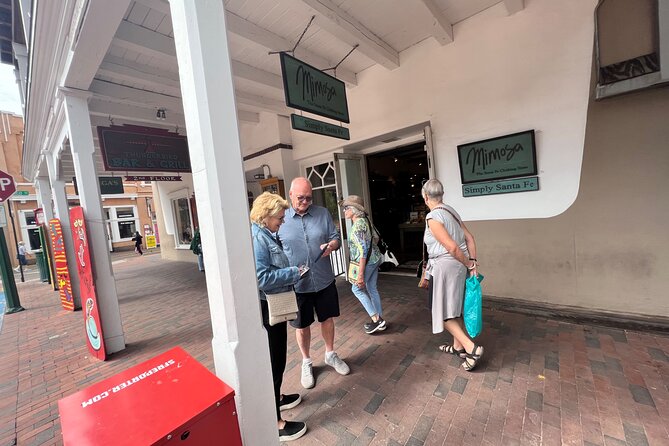
Santa Fe Follies turns sightseeing into a two-hour city game. You begin at the French Pastry Shop near Santa Fe Plaza, receive your digital quest from a live remote host, then set out to solve clues, complete oddball challenges, and find your way through town. It is part scavenger hunt, part local orientation, and part permission to act a little silly in public.
I like the way the hunt gets you beyond passive sightseeing. You visit art, shopping, and food stops while interacting with the city instead of simply walking past it. I also like the flexible team setup: families, friends, birthday groups, bachelor and bachelorette parties, corporate teams, and dog owners can all take part.
The main consideration is that this is not a traditional guided walk. You need at least one fully charged smartphone with GPS, texting, photos, videos, and data. If your phone uses an international number, you need to arrange WhatsApp or email contact in advance.
Key points to know before booking
- A live host guides you remotely: Trisha and Kat can cheer you on, answer questions, and help through WhatsApp or text while your team explores on its own.
- The route mixes four distinct stops: You visit Santa Fe Plaza, Chocolate + Cashmere, New Millennium Art Gallery, and Doodlet’s.
- Expect social challenges: Some clues may ask you to speak with locals or step outside your comfort zone, including playful photo tasks and human interaction.
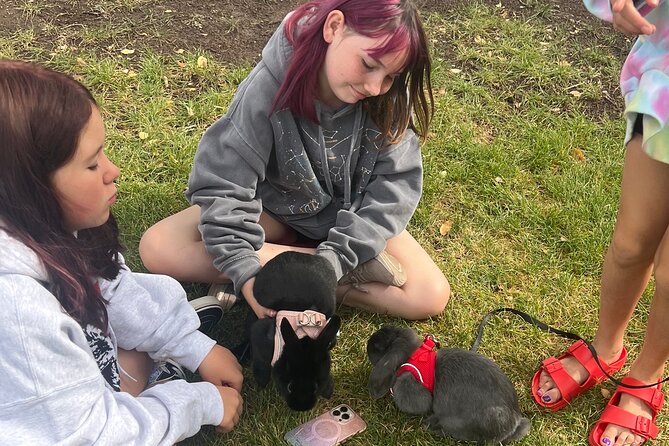
- It works for mixed-age groups: Families with teenagers and groups with different ages can play together, and service animals are allowed.
- You may walk or drive: The activity sends you to several checkpoints around town, so your team decides how to move between them.
- Technology is part of the ticket: Bring one charged smartphone per team with working data and the ability to send photos and messages.
Santa Fe sightseeing with a playful twist
The appeal here is simple: Santa Fe gives you plenty to look at, but a scavenger hunt gives you a reason to pay attention. Instead of following a guide holding a flag, you receive clues and challenges from a remote host. Your team then makes choices, interprets the prompts, and records progress with photos and messages.
That format suits people who like a little independence. You are not locked into a large group moving at one pace, and you do not have to listen to a long explanation at every stop. At the same time, you are not left entirely on your own. Trisha and Kat remain available through the phone, which is useful if a clue seems unclear or your group loses its bearings.
I would expect the tone to be light and deliberately unusual. The challenges can include talking with strangers, asking questions, taking photos, and doing things that feel mildly embarrassing at first. That is part of the point. One family found that teenagers who were reluctant at the beginning eventually joined in, even when the tasks pushed them to speak with strangers and hug people.
This is not the right choice if you want a quiet, formal introduction to Santa Fe architecture or art. It is a better fit if you want to laugh, move around, and see how your group handles surprises.
More Scavenger Hunts in the USA
- An Epic Scavenger Hunt: New York City Central Park Adventure
★ 4.5 · 244 reviews - Creative Soul Scavenger Hunt of Santa Fe
★ 5.0 · 62 reviews - Keep Austin Weird Scavenger Hunt
★ 4.0 · 51 reviews
Starting near Santa Fe Plaza
Your meeting point is the French Pastry Shop & Restaurant at 100 East San Francisco Street. From there, the first listed stop is Santa Fe Plaza, the natural center of the activity and a useful place to begin getting oriented.
The Plaza gives the hunt an immediate sense of place. You are not starting in a parking lot or at an anonymous office. You begin in one of the city’s best-known public spaces, where the surrounding streets, shops, galleries, and public activity provide plenty of material for clues.
Expect the opening stage to explain how the digital quest works. Your host sends the first instructions, and your team begins solving rather than listening. This is also when you may discover how your group divides tasks. One person may read the clue, another may handle the phone, and someone else may be more willing to approach a stranger.
The Plaza is also a practical starting point for mixed groups. People who want a gentle first few minutes can look around and get organized, while more competitive teams can begin tackling the bonus challenges right away.
Stop 2: Chocolate + Cashmere
Chocolate + Cashmere brings a change of mood. The name suggests a stop built around two very different pleasures, and its inclusion gives the hunt a shopping and sensory angle instead of keeping the route focused only on monuments or galleries.
I like this kind of checkpoint because it makes you notice the character of local businesses. A scavenger hunt can turn an ordinary storefront into part of the story. You may be looking for an answer, a detail, a photo, or a way to complete a challenge, so the shop becomes more than a place you pass on the way to somewhere else.
The activity alternates between indoor and outdoor settings. That matters in Santa Fe, where a two-hour outing can feel different depending on the weather and the amount of sun. An indoor stop offers a break from walking and gives your group another setting for solving clues.
The exact challenges are not published in advance, which is part of the fun but also something to consider. If your group dislikes surprises or prefers to know every stop and task before setting out, this format may feel too loose. If you enjoy not knowing what comes next, the uncertainty adds energy.
Stop 3: New Millennium Art Gallery

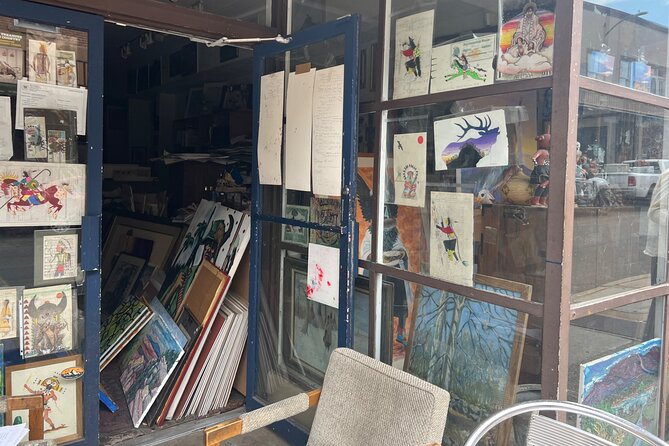
New Millennium Art Gallery shifts the focus toward Santa Fe’s art scene. The city is well known for galleries, and this checkpoint gives the hunt a chance to connect playful problem-solving with the visual culture around you.
A gallery stop works especially well for groups with different interests. Art lovers get something to study, while less enthusiastic participants have a clue or challenge to give them a reason to look closely. You may not spend long enough for a full gallery visit, but the game can make you notice details you might otherwise miss.
I would not book this expecting a formal art talk. The host is remote, and your task is to solve the quest rather than receive a long lecture. That is a strength for families and friend groups who want a lively outing, but it is a limitation if your main goal is serious art instruction.
The stop also shows how the activity blends sightseeing with participation. You are not simply told why the gallery matters. You have to observe, communicate, and use what you see to move your team forward.
Same place, a different puzzle:
- Branson Murder Mystery- Branson’s Original #1 Murder Mystery
★ 5.0 · 1,513 reviews - The Escape Game Orlando: Epic 60-Minute Adventures on I-Drive
★ 5.0 · 730 reviews - The Escape Game Pigeon Forge: 60-Minute Adventures on The Island
★ 5.0 · 646 reviews - The Escape Game Cincinnati: 60-Minute Adventures at The Banks
★ 5.0 · 546 reviews
Stop 4: Doodlet’s and the return to the start
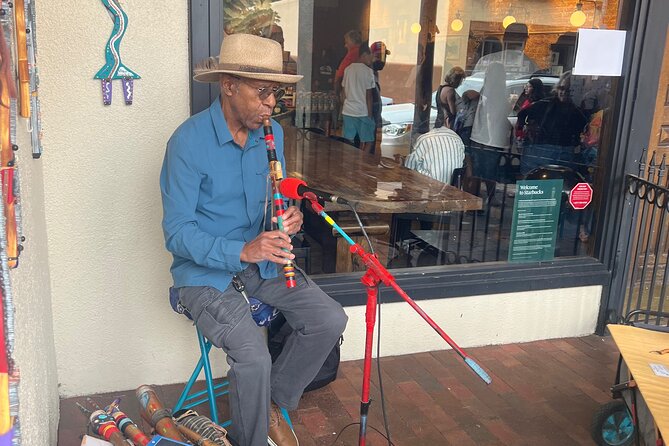
Doodlet’s is the final listed checkpoint before the activity returns to the original meeting point. Its place in the route gives the hunt another change of scene and keeps the finish from feeling like a simple walk back to the beginning.
By this stage, your team will have learned how the clues work and may be more willing to attempt the sillier challenges. The finish can therefore feel more social than the opening. You have shared the same odd tasks, sent photos to the host, and built a set of memories that are specific to your group.
The activity ends back at the meeting point. The route is not presented as a fixed, guide-led procession, so your movement between locations may involve walking or driving. I would make sure everyone in your group understands that before starting, especially if children, older family members, or dogs are joining you.
How the remote hosting works
The remote host is the backbone of this activity. Your team receives the digital quest, then communicates by phone while completing the tasks. You send photos to document your progress, and the host responds with encouragement and assistance.
This setup gives the game a useful middle ground. You have freedom to explore independently, but you still have a real person following your progress. One group worked with Trisha and Kat through WhatsApp and found that constant contact helped them feel supported rather than lost.
You must provide a correct, working domestic phone number when booking. Each team also needs at least one fully charged smartphone with GPS and the ability to send and receive data, photos, videos, and text messages.
If you have an international phone number, contact the operator ahead of time so the game can be completed through WhatsApp or email. Do not wait until the starting time to solve phone problems. A dead battery or blocked messaging service can turn a fun challenge into a technical chore.
The social side of the challenges

This hunt asks more of you than simply finding objects. You may need to speak with local people, take unusual photos, or perform a task that feels outside your normal routine. That social element is what makes the activity memorable, but it is also the clearest personality test for your group.
Teenagers can be a good match once they get past the initial hesitation. One family found that their teenagers resisted at first, then ended up having fun as the tasks became more daring. The lesson is practical: explain the playful nature of the hunt before booking, especially if someone in your group dislikes public attention.
A bachelorette group used a customized version of the activity and created photos they continued laughing about afterward. That points to one of the strongest uses for the hunt: special groups that want a shared record of the day, not just another meal or bar stop.
The game can also bring different ages together. You do not need everyone to be equally athletic, outgoing, or interested in art. One person can solve the clue, another can navigate, and another can handle the social challenge. That shared effort is often more important than winning.
Is the experience good value?

No price is provided here, so I cannot judge the dollar cost directly. I can tell you what you are paying for: roughly two hours of organized activity, a remote live host, a route through several Santa Fe stops, photo-based interaction, and a flexible format for private groups.
The value is strongest when you want an event rather than a standard tour. A group celebrating a birthday, bachelor or bachelorette occasion, family reunion, corporate outing, or friend trip gets a planned activity that creates a common story. You also avoid the stiffness of a conventional group excursion.
For a solo visitor or a couple, the value may be less clear unless you particularly enjoy games and public challenges. The description is built around teams, and the experience seems best when several people can divide the tasks and laugh together.
The ability to request custom-designed experiences may also matter for groups with a specific theme or occasion. Ask about that before booking if the standard route does not quite fit your plans. The operator also offers virtual team-building options, though that is a separate format from this Santa Fe outing.
Who should book Santa Fe Follies?
I would recommend it to families with older children or teenagers, friend groups, birthday parties, corporate teams, and anyone who wants a playful way to see central Santa Fe. It is also a good option for people traveling with a dog, since the activity is dog friendly and service animals are allowed.
It suits outgoing people best, but you do not need to arrive as the loudest person in the group. The challenges are designed to draw you out. If your team has one confident member willing to start conversations and take the first silly photo, others may follow.
I would be cautious about booking it for someone who wants a quiet museum visit, a tightly scripted walking tour, or a private activity with no interaction outside the group. You should also check that everyone is comfortable with using a phone throughout the game and possibly approaching local people.
With a maximum of 30 participants, the activity can handle a sizeable group, though smaller teams may find it easier to coordinate. For a large party, divide responsibilities clearly and keep the phone charged.
Practical details that make a difference
The experience lasts about two hours and is offered in English. Mobile ticketing keeps the start simple, but you still need to arrive with the right phone setup and the required contact information.
The meeting point is near public transportation, and the activity ends where it begins. Most people can participate, and service animals are allowed. The route includes indoor and outdoor portions, so comfortable clothing and shoes make sense, though no specific dress code is provided.
Cancellation is free if you cancel at least 24 hours before the local start time. Cancellations within 24 hours are not refunded, and changes in that final window are not accepted. That deadline matters for groups, since one person’s schedule problem may affect the whole booking.
Should you book it?
Book Santa Fe Follies if you want Santa Fe to feel like a playground rather than a checklist of sights. The best reasons are the live support from Trisha and Kat, the mix of plaza, shopping, and gallery stops, and the way the challenges turn a mixed-age group into a team.
Skip it if you want a calm, expert-led lesson or dislike sending photos, texting during an activity, and interacting with strangers. For everyone else, especially families and celebration groups, this is a lively two-hour choice with enough structure to keep you moving and enough freedom to let your group make the day its own.
FAQ
How long does the Santa Fe Follies Scavenger Hunt last?
The activity lasts approximately two hours.
Where does the hunt begin?
It begins at the French Pastry Shop & Restaurant, 100 East San Francisco Street, Santa Fe, New Mexico 87501.
Where does the activity end?
The hunt ends back at the meeting point.
Which stops are included?
The listed stops are Santa Fe Plaza, Chocolate + Cashmere, New Millennium Art Gallery, and Doodlet’s.
Is the hunt hosted in person?
The quest is provided by a live remote host. You communicate with the host through text, WhatsApp, or email, depending on your phone setup.
What kind of phone do I need?
Each team must bring at least one fully charged smartphone with GPS and the ability to send and receive data, photos, videos, and text messages. A correct, working domestic phone number is required when booking. International numbers can use WhatsApp or email if arranged in advance.
Is the activity family and dog friendly?
Yes. The hunt is family friendly, service animals are allowed, and the activity is described as dog friendly. Most people can participate, and the meeting area is near public transportation.
Just added around the USA
- Ventura Scavenger Hunt Walking Tour and Game★ 4.0 · 4 reviews
- Vail Venture Scavenger Hunt★ 3.5 · 8 reviews
- Save the Mountain Escape Room Adventure★ 5.0 · 4 reviews
- Tybee Island, Georgia Scavenger Hunt★ 4.0 · 7 reviews
- A Spectacular Scavenger Hunt: Center of the Universe★ 4.0 · 4 reviews
- Tucson Scavenger Hunt by Wacky Walks★ 4.5 · 2 reviews
- Amazing Scavenger Hunt: Desert Oasis★ 3.5 · 3 reviews
- Thrilling Traverse City Scavenger Hunt★ 4.0 · 7 reviews
USA Escape Games, compared.

Branson Murder Mystery- Branson’s Original #1 Murder Mystery
Read our review →
The Escape Game Orlando: Epic 60-Minute Adventures on I-Drive
Read our review →
The Escape Game Pigeon Forge: 60-Minute Adventures on The Island
Read our review →
The Escape Game Cincinnati: 60-Minute Adventures at The Banks
Read our review →