

Review · UK
Stratford Treasure Hunt The Mystery of Shakespeare’s Lucky Quill
Shakespeare’s Lucky Quill turns Stratford-upon-Avon into a giant puzzle. You follow 18 cryptic clues through the old centre, identify suspects, and piece together a robbery story while moving between Shakespeare sites, the canal, and local pubs. It is part sightseeing walk, part detective game, and the final reveal gives the route a clear purpose.
I like the self-paced format, since you can begin when you choose, pause for coffee, lunch, or a drink, and keep the activity private to your own group. I also like how the 40-page Mystery Guide adds short local stories, maps, and historical details instead of making you stare at clues with no sense of place.
The main drawback is that a few clues may require patience and careful interpretation. One clue has been hard to locate, and a reference to Tudor Gate has caused confusion, so this is not the best pick if you want a perfectly smooth route with every answer immediately obvious.
Key points at a glance
- 18 cryptic clues lead you through Stratford’s historic centre.
- 3.25 kilometres of walking usually takes about three hours.
- Five major stops include Shakespeare’s Schoolroom, the RSC, Birthplace, Holy Trinity Church, and the canal.
- A private activity lets your own group compete or work together.
- An English booklet with maps and stories replaces a live guide.
- Coffee, food, and pub stops fit naturally into the route, but drinks and admission fees are not included.
A Shakespeare mystery with Stratford as the game board

This is not a standard guided walk where someone talks while you follow. You receive a Mystery Guide, head to the start at Lily’s Cafe on Rother Street, and take charge of the case yourself.
The plot centres on Shakespeare’s Lucky Quill, a valuable object at the heart of a daring robbery. As you work through the clues, the story unfolds in stages. You will inspect details around the town, eliminate suspects, and look for the next location. The clues are designed to make you pay attention to buildings, signs, statues, and small features you might otherwise walk past.
I like that the mystery gives structure to a first visit. Stratford has plenty of famous sights, but it is easy to move from Shakespeare’s Birthplace to the Royal Shakespeare Theatre without noticing the smaller details between them. Here, every street corner may matter.
The activity also works well for repeat visits. You may know Stratford’s headline attractions already, but the clues send you to places you have previously missed. The story adds a reason to pause and examine the town instead of simply ticking off its best-known buildings.
More Treasure Hunts in the UK
- Fun, Flexible Treasure Hunt Around Manchester with Cryptic Clues & Hidden Gems
★ 5.0 · 253 reviews - Fun, Flexible Treasure Hunt Around York with Cryptic Clues & Hidden Gems
★ 5.0 · 248 reviews - Fun, Flexible Treasure Hunt Around Bath with Cryptic Clues & Hidden Gems
★ 5.0 · 208 reviews
Starting at Lily’s Cafe on Rother Street
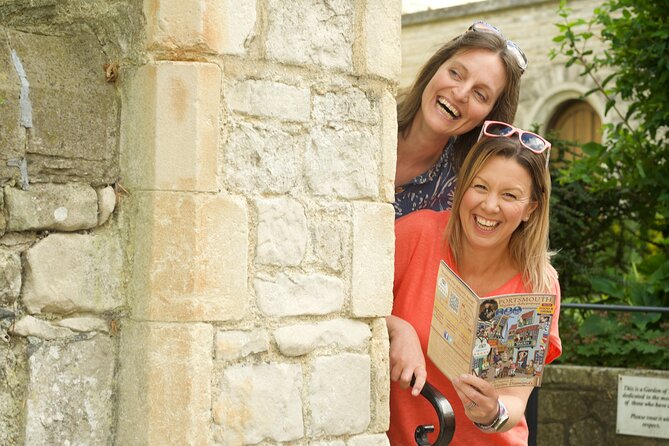
The meeting point is Lily’s Cafe, 19 Rother Street, Stratford-upon-Avon, CV37 6LU. The activity ends back at the same place, which makes the route easy to understand and removes the need to arrange transport back from a distant finish.
You do not meet a guide. The booklet contains the plot, maps, historical information, and all 18 clues in English. A mobile ticket is used for the booking, but the physical activity booklet is the key tool during the walk.
Bring a pen. One useful practical tip is to turn only one page at a time, since looking too far ahead can spoil the order of the mystery. You will also want a phone for the mobile ticket and, if needed, for checking information connected with the activity.
The route covers about 3.25 kilometres. That is a manageable distance for most people with moderate fitness, though the three-hour timing includes standing, looking around, and solving rather than simply walking from point to point.
Shakespeare’s Schoolroom and Guildhall: an atmospheric opening
The first listed stop is Shakespeare’s Schoolroom and Guildhall. This is a strong place to begin because it sets the tone for the town’s Tudor connections and puts you close to the world associated with Shakespeare’s early life.
At this stage, you are learning how the clues work. The booklet combines a location puzzle with a short piece of local history, so the opening does more than send you towards the next stop. It gives you a reason to study the setting.
You should expect to look closely at architectural details and nearby information rather than rush through. The puzzle does not require a live storyteller, but it does ask you to read, compare, and discuss. That makes it a good fit for families and pairs who enjoy working things out together.
One caution: the route can feel less direct if you expect every clue to name its location plainly. A clue may point to an object or feature rather than the building you first assume. The game becomes easier once you stop taking every place name literally.
Royal Shakespeare Theatre: the modern stage in the mystery
The route continues to the Royal Shakespeare Theatre, Stratford’s most famous performing arts venue. This stop changes the mood from Tudor streets to the town’s living connection with Shakespeare on stage.
You do not receive a theatre performance or a backstage visit as part of the activity. Instead, the theatre serves as one of the locations in the wider trail. That matters when you compare this with a theatre tour: you are seeing the building as part of a puzzle, not buying admission to a show.
The theatre stop is especially useful if you are attending an evening performance. One group used the mystery as a way to fill the time before a show, completing the walk in about three hours. You can also pause for a seasonal drink or meal along the way, provided you allow enough time to finish the case.
The route’s flexibility is a real advantage here. A fixed guided walk has a set pace. This activity lets you stop to look around, take a break, or adjust your timing. Just remember that the advertised duration is approximate, and a long lunch will extend the day.
Same place, a different puzzle:
- York Treasure Hunt Adventure: The Mystery of The Gunpowder Snitch
★ 5.0 · 203 reviews - Fun, Flexible Treasure Hunt Around Oxford with Cryptic Clues & Hidden Gems
★ 5.0 · 202 reviews - Shepton Mallet Prison Escape Room – The Cell
★ 5.0 · 187 reviews - Interactive Jack the Ripper Night Walk: London’s Murder Mystery
★ 5.0 · 171 reviews
Shakespeare’s Birthplace: the famous stop with a puzzle purpose
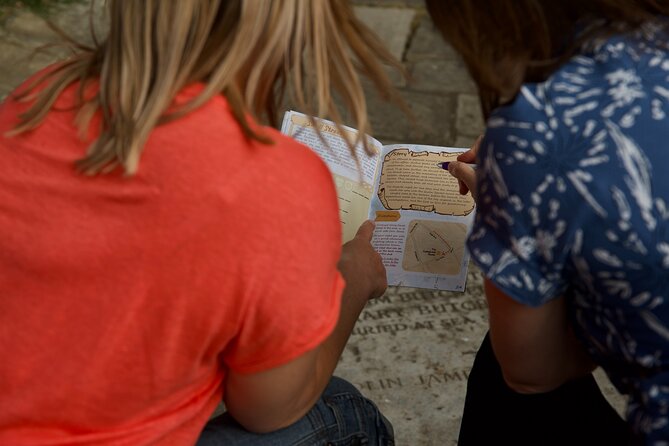
Shakespeare’s Birthplace is the most obvious name on the route, but the mystery keeps it from feeling like a simple photo stop. You approach it as part of the investigation, looking for details that help move the story forward.
The activity does not include admission to the Birthplace. If you want to go inside, you should treat that as a separate visit and allow extra time and cost. The booklet can still make the area useful even if you stay outside, since the clue route is designed around the historic centre rather than a paid attraction-only visit.
I like this arrangement for people who want to combine several parts of Stratford in one day. You can use the walk to see where everything is, then decide where you want to spend more time. The game is not trying to replace every museum or house visit. It gives you a framework for choosing them.
Families may find this stop easier than a long historical explanation. Children who lose interest in a conventional talk have a clear task: find the next clue and help solve the case. Adults still get useful local stories and a reason to examine the surroundings.
Holy Trinity Church: a quieter change of pace

Holy Trinity Church provides a different setting from the town centre streets and theatre district. It is closely linked with Shakespeare and adds a calmer point to the route.
The clue here encourages you to slow down. That is important because the best part of this activity is not speed. The game rewards observation, and rushing can make you miss the detail that connects one answer to the next.
The church is also a reminder that Stratford is more than a collection of Shakespeare attractions. Its streets, buildings, and places of worship form the setting for the story. The booklet’s historical notes help you understand that setting without turning the entire walk into a lecture.
You should check the time if you hope to enter any attraction or church connected with the route. The supplied details do not promise entry, opening hours, or admission, so plan the mystery as an outdoor self-guided activity first.
Stratford-upon-Avon Canal: the route opens out
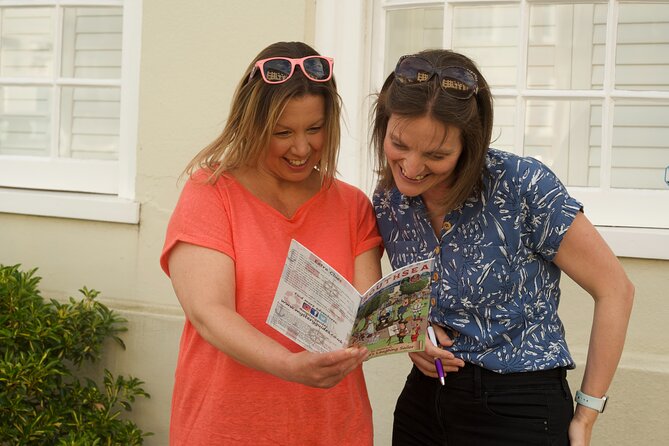
The canal gives the walk a change of scenery after the central streets. It is the final listed stop and helps the route feel like a proper circuit rather than a short sequence of Shakespeare addresses.
This part may also provide a welcome breathing space. You have been solving clues and checking details in busy historic areas. A waterside stretch lets you reset before finishing the case and returning to the meeting point.
The total distance is not severe, but the activity can feel longer if the weather is poor. One pair completed it in exactly three hours despite cold conditions, while another group took a couple of hours of active puzzle time but added coffee, lunch, and other stops. You should allow the full three hours and add time for breaks.
The canal is also a good reason to bring sensible footwear and weather protection. The activity runs independently of a guide, so you are responsible for choosing a comfortable pace and dealing with changing conditions.
How difficult are the 18 clues?
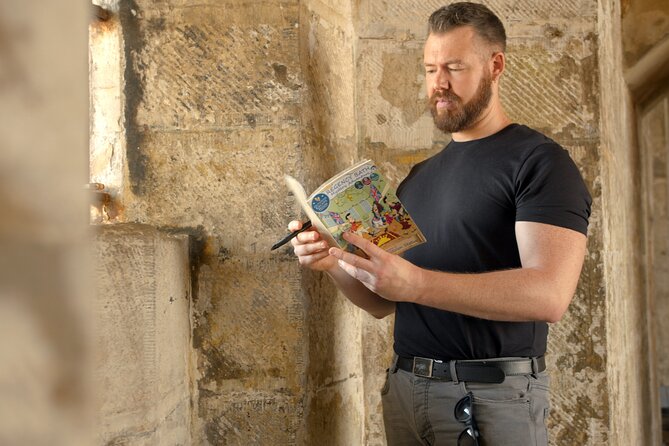
The clues are intended to be solvable but not automatic. You will need to read the wording carefully, compare it with what you see, and talk through possibilities with your group.
The challenge level works best for people who enjoy a little uncertainty. You may solve some clues at once and pause over others. That uneven rhythm is part of the fun, but it can frustrate anyone who wants a clear instruction at every stage.
One clue has caused trouble when the expected item was not immediately found. Another reference to Tudor Gate led people to search a place with that name, only for the relevant clue to be located elsewhere. The practical lesson is simple: read the clue as a puzzle, not always as a literal address.
If you get stuck, do not spend too long circling the same spot. Check the picture or online help connected with the activity if available, then move on. The goal is to enjoy the town and solve the mystery, not prove that your group can suffer through one stubborn clue.
You may also find it useful to divide tasks. One person can read the story, another can scan the surroundings, and a third can keep track of answers. Couples can discuss each clue together, while families can give children the job of spotting signs, statues, or unusual details.
The booklet is the real guide
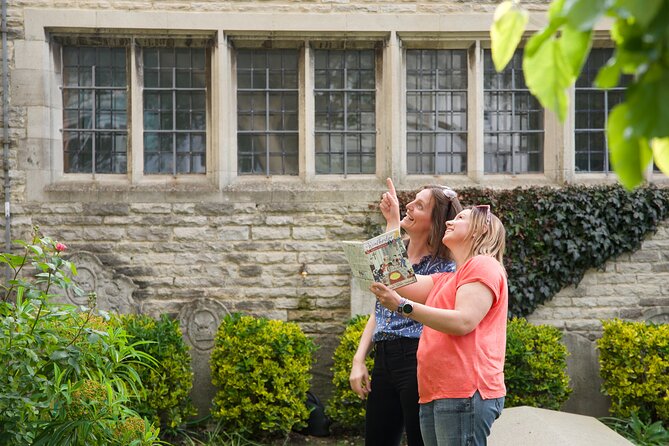
The 40-page booklet is more than a worksheet. It includes the narrative, maps, 18 clues, and local history notes. That combination gives you enough information to keep moving without a guide standing beside you.
I like the control this gives you. You can read the story at your own speed, skip ahead only when ready, and pause whenever Stratford catches your eye. You are not tied to a group’s timetable or limited to questions that fit a guide’s schedule.
The trade-off is that the booklet cannot respond to confusion in the same way a person can. If your group interprets a clue incorrectly, you must reassess it yourselves. The activity suits independent people who enjoy solving problems more than those looking for a polished commentary from start to finish.
The guide is in English, so all clue solving and historical notes depend on being comfortable reading English. It is also a private activity, which means your group can compete against one another or cooperate without sharing the route with strangers.
Who will get the most from this activity?
I would choose this for:
- Families looking for an active alternative to a standard sightseeing walk
- Couples wanting a shared challenge with room for coffee and food stops
- Friends who enjoy puzzles, detective stories, and gentle competition
- First-time visitors who want a route linking Stratford’s main sights
- Repeat visitors who think they already know the town
- People with a few hours before a Royal Shakespeare Theatre performance
It is less suitable if you want a live guide, a detailed indoor tour, or a completely predictable route. It is also not ideal for anyone who dislikes stopping in public places to inspect clues or discuss possible answers.
The walk is private, and service animals are allowed. It is near public transport, but the supplied details do not specify a particular bus or rail connection, so you should check your own route to Rother Street before setting out.
Is the experience good value?
No price is provided here, so I cannot judge the exact cost against other Stratford activities. The useful value question is what you receive for the booking.
You get a private, self-guided activity for your group, a 40-page booklet, a three-hour route, historical notes, and a story that links five important parts of Stratford. You do not pay for a guide, and you can fit in your own refreshments along the way. That makes the experience more useful if you value flexibility and shared entertainment.
The value is weaker if you want admission to Shakespeare’s Birthplace, a church, the theatre, or other attractions included in your day. Those extras are not part of the activity. You should budget for them separately if they matter to you.
I also would not buy this solely for a list of sights. You can see Stratford’s famous places without a mystery guide. The added value lies in the clues, the story, and the way the route encourages you to notice details.
Cancellation is free if you cancel at least 24 hours before the start time. Within 24 hours, the payment is not refunded, and changes are not accepted.
Should you book Shakespeare’s Lucky Quill?
Book it if you want to explore Stratford by doing something, not just looking. The combination of 18 clues, a manageable 3.25-kilometre route, local stories, and a final villain reveal gives your visit a clear thread.
I would especially recommend it for a family, couple, or small group that likes puzzles and does not mind the occasional tricky clue. Bring a pen, wear comfortable shoes, leave room for a café or pub stop, and allow the full three hours.
Skip it if you want a live expert explaining Shakespeare at every stop or if you find public clue hunting awkward. For everyone else, this is a clever way to slow down, notice more of Stratford, and give the famous sights a playful purpose.
FAQ
How long does the Stratford Treasure Hunt take?
The activity lasts approximately three hours, with a walking distance of about 3.25 kilometres. Breaks for coffee, food, or drinks will make the outing longer.
Where does the activity start and finish?
It starts at Lily’s Cafe, 19 Rother Street, Stratford-upon-Avon, CV37 6LU. The activity ends back at the same meeting point.
Is there a live guide?
No. You receive an English Mystery Guide booklet with the story, maps, historical information, and 18 cryptic clues. Only your own group takes part.
What sights are included in the route?
The listed stops are Shakespeare’s Schoolroom and Guildhall, the Royal Shakespeare Theatre, Shakespeare’s Birthplace, Holy Trinity Church, and Stratford-upon-Avon Canal.
Are drinks or attraction admissions included?
No. Alcoholic beverages are not included. The supplied details also do not include admission to the listed attractions, so check and budget for any separate visits you want to make.
Can I cancel for a refund?
Yes. You can receive a full refund if you cancel at least 24 hours before the experience start time. Cancellations or changes made within 24 hours are not accepted for a refund.
Just added around the UK
- Stratford-upon-Avon: Self-Guided Walk & Interactive Treasure Hunt★ 5.0 · 2 reviews
- Pedal & Puzzle, Outdoor Escape Room E-Bike Adventure★ 5.0 · 2 reviews
- Immersive Murder Mystery in Sheffield – Outdoor Escape Experience★ 4.5 · 15 reviews
- Adventurous Scavenger Hunt in Exeter by Operation City Quest★ 3.0 · 2 reviews
- Operation City Quest Scavenger Hunt – Peterborough, UK★ 3.0 · 4 reviews
- Oxford’s Famous Alumni: Self-Guided Story Puzzle Walk★ 4.0 · 2 reviews
- Oxford Scavenger Hunt and Sights Self-Guided Tour★ 4.5 · 3 reviews
- Fun and Flexible Treasure Hunt Around Nottingham with Hidden Gems★ 5.0 · 10 reviews
UK Escape Games, compared.

Fun, Flexible Treasure Hunt Around Manchester with Cryptic Clues & Hidden Gems
Read our review →
Fun, Flexible Treasure Hunt Around York with Cryptic Clues & Hidden Gems
Read our review →
Fun, Flexible Treasure Hunt Around Bath with Cryptic Clues & Hidden Gems
Read our review →York Treasure Hunt Adventure: The Mystery of The Gunpowder Snitch
Read our review →
Fun, Flexible Treasure Hunt Around Oxford with Cryptic Clues & Hidden Gems
Read our review →

Interactive Jack the Ripper Night Walk: London’s Murder Mystery
Read our review →
Fun, Flexible Treasure Hunt Around Birmingham with Cryptic Clues & Hidden Gems
Read our review →Browse the lists this tour appears in