
Review · DUBLIN
Private Dublin Treasure Hunt Self Guided Tour
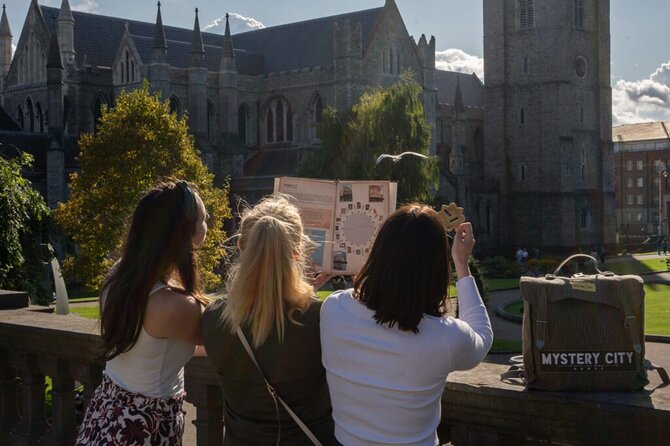
Dublin becomes your puzzle board on this private treasure hunt, with an ancient map, a backpack of clues, and a route through the city center. You’ll pass the Garda station on Kevin Street and use the outside of traditional pubs as part of the game, rather than simply walking from one famous sight to another.
I like the way this turns a city walk into a team challenge, and I like that your group controls the pace. The main caution is practical: you may need to solve clues while standing outdoors, and poor weather or a troublesome mobile link can make the game much harder than intended.
Key points to know
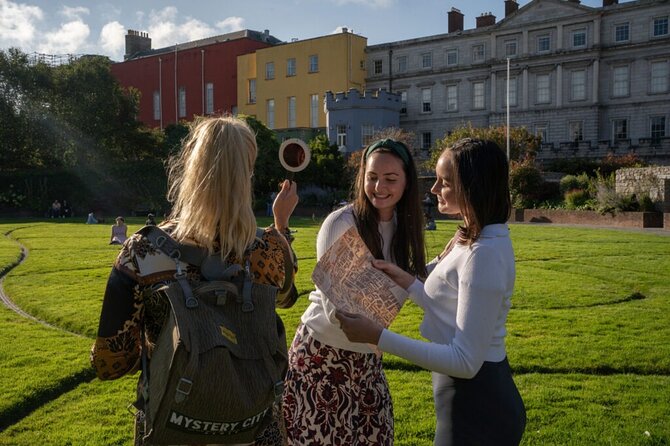
- A self-guided Dublin puzzle walk: You follow an ancient treasure map instead of a live guide.
- A private group activity: Only your party takes part, making it useful for families, friends, or work teams.
- Central start and finish: Collect the experience at The Clockwork Door, 51 Wellington Quay, Temple Bar.
- Real city details become clues: Look for the Kevin Street Garda station and traditional pubs along the route.
- Plan for more than two hours: The stated time is approximate, and solving clues can take longer.
- Weather matters: Wind and rain can make the physical puzzles, writing, and phone use awkward.
Turning Dublin into a treasure map
This is not a standard sightseeing walk with a guide pointing out monuments and explaining dates. Instead, you receive a mystery to solve and work through Dublin’s central streets as a private team.
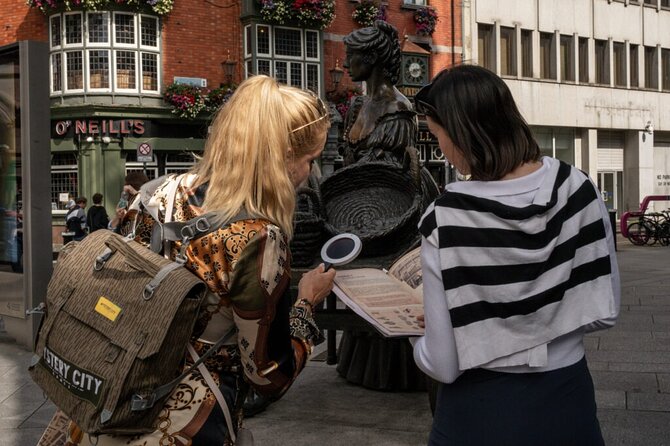
That difference is important. You are not being led from one major attraction to the next. The city becomes a set of clues, details, and objects to inspect. You may pass a police station, study pub fronts, and use what you see around you to answer the next question.
I like this format for people who enjoy solving things together. One person may spot a detail, another may interpret a clue, and someone else may manage the phone or written answers. It gives a group a shared task, which is why the activity works especially well for team outings and birthday plans.
The trade-off is that the sightseeing is secondary. If your main goal is a guided introduction to Dublin’s major landmarks, this will feel loose and puzzle-led. You should choose it because you want a game in the city, not because you expect a detailed lecture on Dublin.
More Treasure Hunts in the world:
- Hamburg: Treasure Hunt Game through HafenCity
★ 4.7 · 364 reviews - St. Augustine: Treasure Hunt Cruise with Onboard Show
★ 4.4 · 315 reviews - Málaga: Private Sightseeing Treasure Hunt
★ 4.8 · 297 reviews
Starting at The Clockwork Door in Temple Bar
The meeting point is The Clockwork Door at 51 Wellington Quay, in Temple Bar. The activity also ends there, so you do not need to arrange a separate pickup or figure out where the route finishes.
That start point is useful for a group. You can gather everyone in one central location before the game begins, receive the materials, and get organized before setting off. One account describes the starting location as a comfortable place to shelter from rain, with helpful staff, which matters in Dublin’s changeable weather.
The experience uses a mobile ticket, but the physical kit also plays a major role. Expect a backpack containing clues and puzzle materials. The idea is imaginative, but you should be ready to handle the equipment carefully while walking through city streets.
A practical tip: organize the group before you leave. Decide who carries the pack, who handles the phone, and who writes down answers. That small bit of planning can save time when the route gets complicated.
Following the ancient map through central Dublin
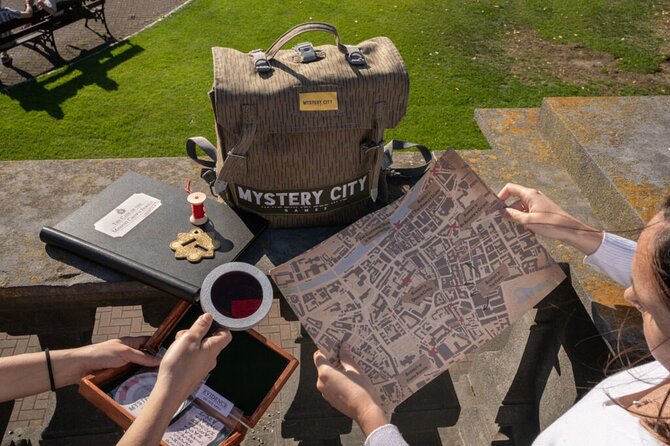
The main activity is a walk through Dublin city center, guided by an ancient treasure map. The exact route is not laid out in the supplied details, so you should not expect a simple list of famous sights with fixed explanations at each stop.
Instead, the route is built around finding and interpreting clues. The city itself supplies the setting. You might be asked to examine a sign, connect a visual detail to the puzzle, or work out the next location from information around you.
This makes the experience active. You are not simply looking at Dublin while someone else does the talking. You need to pay attention and discuss your options with the rest of the group.
The puzzle format also means the pace varies. A sharp group may move quickly through one clue, then spend much longer on the next. The advertised duration is about two hours, but one work group found that allowing extra time made the activity more enjoyable. You can technically finish within the planned window, but a relaxed schedule gives you room for pauses, food, or a drink along the way.
Kevin Street Garda station and the less-polished side of Dublin
One named point on the route is the Garda Police Station on Kevin Street. Garda is the Irish name for the national police service, so this stop adds a distinctly local detail to the game.
It also shows what kind of sightseeing to expect. The route is not limited to postcard views or Dublin’s best-known monuments. You may be sent through ordinary streets and less polished areas because they contain the information needed for the puzzle.
That can be a strength. A game that uses everyday Dublin gives you a wider sense of the city than a tightly packed monument walk. You see places that may not appear on a first-time sightseeing list, and you have a reason to pay attention to them.
It can also be a drawback. One disappointing experience described parts of the route as run-down and felt that it passed too few points of interest. If you want a route centered on major landmarks, this may not satisfy you. I would pair it with a separate visit to Dublin’s main sights rather than treating it as your only city tour.
More Self-Guided Tours in the world:
- Hamburg: Scavenger Hunt Self-Guided Tour for Children
★ 4.5 · 319 reviews - Dresden: Old Town Self-Guided Scavenger Hunt Tour
★ 4.5 · 151 reviews - Berlin: Self-Guided Family and School Class Scavenger Hunt
★ 4.6 · 128 reviews - Düsseldorf: Scavenger Hunt Self-Guided Tour
★ 4.6 · 127 reviews
Traditional pubs as part of the puzzle
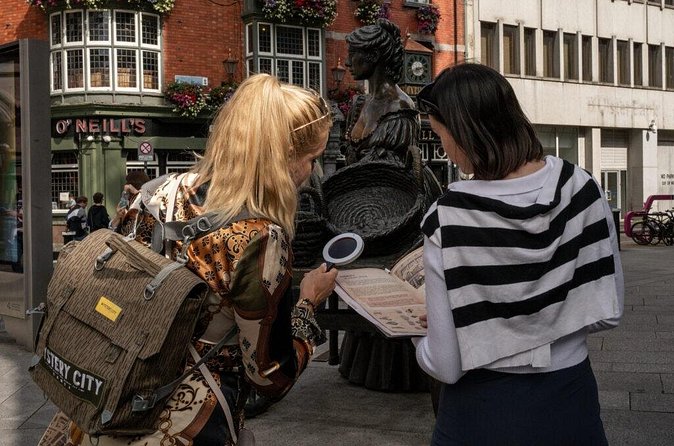
Traditional pubs are used as outdoor puzzle points. You will explore the outside of several pubs, looking for details that help you solve the next stage.
This is a clever way to connect the game with Dublin’s everyday character. Pubs are part of the city’s visual identity, and using their signs or exterior details gives the walk a local flavor without requiring your group to stop for a full sit-down visit each time.
The wording matters here: the activity involves the outside of the pubs. Do not book this expecting a guided pub crawl or a tasting tour. You may choose to stop for refreshments, but food and drinks are not listed as included features.
A group can make good use of the route by building in a short snack or drink stop if time allows. Just remember that every pause reduces the time available for solving the clues. If you are competing with another group, one useful approach is to take different routes, as long as the game instructions allow it.
The puzzle kit, mobile link, and real-world friction
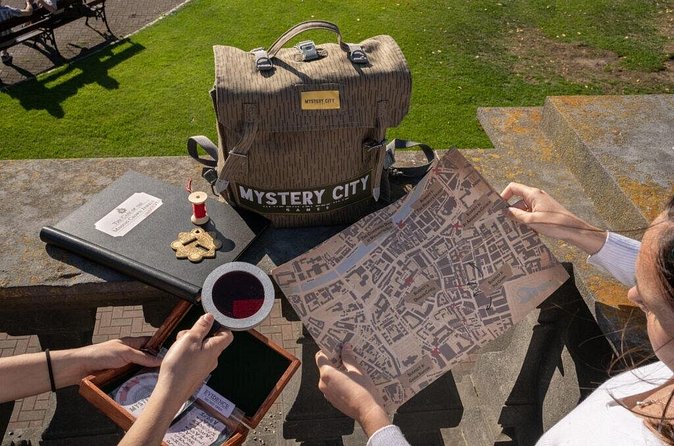
The physical materials are central to the experience. The backpack includes clues and an evidence box, along with items such as string and written puzzle pages. That hands-on approach gives the game a more theatrical feel than a simple phone app.
It also creates some problems. A backpack with buckles can be awkward to open and close repeatedly, especially on a busy pavement. Loose materials are harder to manage when you are standing rather than sitting. You may find yourself balancing papers, checking the map, and trying to keep the kit secure at the same time.
The mobile link is another important part of the experience. It helps move the game from one clue to the next, but technical trouble can interrupt the flow. Reports of crashes, freezing, and a reset to the start show why your group should not rely on one phone alone.
Bring a fully charged phone, and if possible, have a second device available. Keep the booking details and any instructions easy to find. If the chat function stops working, the game can become much harder, particularly if a clue depends on access to the next digital step.
This is not a reason to reject the activity outright, but it is a reason to set realistic expectations. You are buying a self-guided game with physical and digital components, not a perfectly smooth guided tour.
Rain, wind, and the search for a place to sit
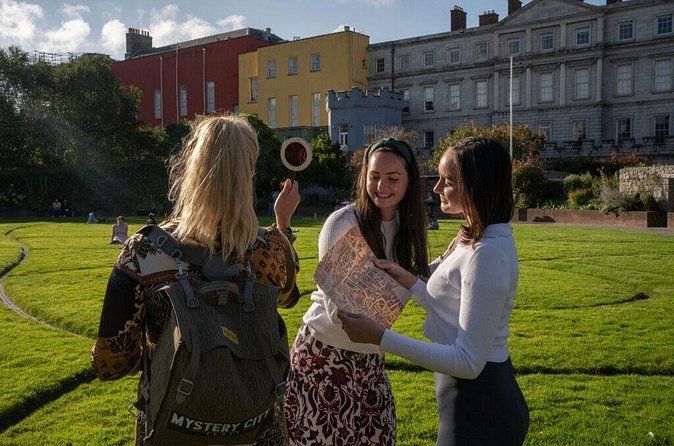
Dublin weather can make or break an outdoor puzzle. The route takes about two hours, and the game requires concentration, writing, and handling materials. Rain and strong wind can turn a fun clue into a practical nuisance.
One group struggled to work through the materials outside because there was nowhere convenient to sit. That is worth taking seriously. A city walk is easy in light weather, but solving a puzzle on wet paper while holding a phone and a backpack is a different matter.
Check the forecast before you go. Wear a waterproof jacket, protect your phone, and bring something to write with if the instructions call for it. Comfortable shoes matter too, since you will be walking between clue locations.
If the weather turns poor, you may need to use cafés or pub stops as temporary bases, but the supplied details do not promise indoor solving areas along the route. The starting point may offer shelter before departure, yet the game itself takes place outdoors.
How hard are the clues?
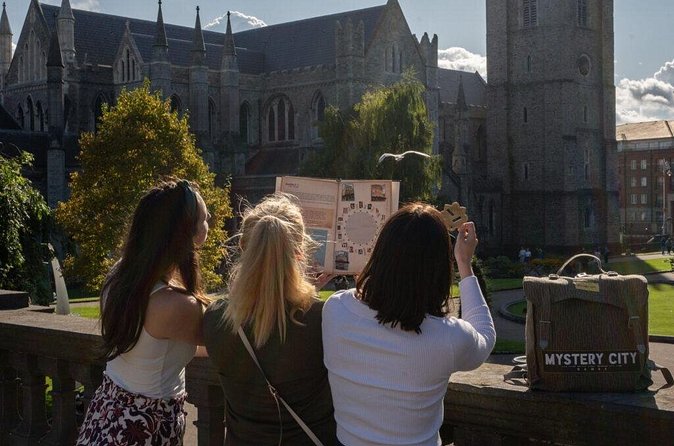
The clues are intended to be challenging rather than instant answers. That is good news if your group enjoys wordplay, observation, and teamwork. A simple walk with obvious answers would lose its appeal quickly.
The challenge level can feel uneven, though. Some participants found the puzzles imaginative and well designed, while others found the wording unclear and the instructions difficult to follow. Your experience may depend on how comfortable your group is with open-ended clues.
I recommend assigning roles. Let one person read the instructions carefully, another inspect the surroundings, and a third track the answers. Do not let one confident solver take over. The fun comes from combining different ways of thinking.
The game is likely to suit adults and older children who enjoy puzzles, but the available details do not give a specific minimum age. Because the route involves public streets and outdoor problem-solving, younger children may need active help from adults.
Best for private groups and team events
The private format is one of the strongest reasons to book. Only your group participates, so you do not have to solve clues beside strangers or match the pace of a larger scheduled party.
That makes it flexible for a family outing, a birthday, or a group of colleagues. A particularly large work group can make the experience competitive, with smaller teams solving the same mystery. One group of about 35 people enjoyed using it for team bonding.
For a work event, allow more time than the basic two-hour estimate. The game becomes more sociable when people can pause, compare ideas, and stop for refreshments. Rushing everyone back to the finish point by a strict deadline removes much of the benefit.
It is also a good option for a group that has already seen the obvious Dublin sights. The puzzles give you a reason to walk farther and notice smaller details. For a first visit, I would use it as one activity among several, not as a replacement for Trinity College, Dublin Castle, St Patrick’s Cathedral, or a proper guided city tour.
What the price means at $30.07 per person
At $30.07 per person, this is not the cheapest way to walk around central Dublin. You are paying for a private activity, the puzzle materials, the digital game system, and the work involved in creating a route for your group.
The value improves when several people take part and everyone joins in. A private game gives your group a shared experience, and it can be more memorable than simply wandering between pubs and shops. For a company paying for a team event, the price may be reasonable because it provides a structured activity with a clear meeting and finishing point.
The value drops if your group dislikes puzzles, wants detailed commentary, or expects a smooth sightseeing route. You will not get a dedicated guide explaining each stop, and one useful criticism is that the activity gives little historical background. You may see interesting places without learning much about why they matter.
I would think of the price as payment for a two-hour city game, not a history tour. That is fair value for the right group, but poor value if your priority is information about Dublin’s past.
Booking, participation, and cancellation
Confirmation is provided at the time of booking. The activity is offered in English and uses a mobile ticket, so check that the person making the reservation can access the booking information on the day.
Service animals are allowed, and the activity is near public transportation. Most people can participate, although the route involves walking through the city and handling puzzle materials outdoors.
The booking is private, so only your party takes part. You can cancel for a full refund if you do so at least 24 hours before the scheduled start time. Cancellations or changes made less than 24 hours before the start are not refunded or accepted, and the cut-off follows Dublin local time.
Should you book the Dublin Treasure Hunt?
Book it if you want a private, puzzle-led walk and your group enjoys solving problems together. It is especially well suited to team days, birthdays, families with puzzle-minded older children, and friends who want a different way to explore central Dublin.
Skip it if you want a polished history tour, a direct route through the city’s top sights, or a pub crawl with drinks included. You should also think twice if heavy rain is forecast or if your group is likely to become frustrated by unclear instructions and technology problems.
My advice is to treat the activity as a social game with Dublin as its setting. Bring a charged phone, allow more than two hours, prepare for outdoor solving, and plan a separate visit to the city’s major sights. With the right expectations, the map, pub clues, and team problem-solving can make a memorable afternoon. With the wrong expectations, the kit and route may feel like more work than fun.
FAQ
How long does the Dublin Treasure Hunt take?
The activity lasts approximately two hours, but the time can vary because the group solves the clues at its own pace.
Where does the tour start?
It starts at The Clockwork Door, 51 Wellington Quay, Temple Bar, Dublin, D02 NH04, Ireland.
Where does the activity finish?
The activity ends back at the same meeting point, The Clockwork Door.
Is this a guided tour?
No. It is a private, self-guided treasure hunt using an ancient map, puzzle materials, and a mobile ticket.
What language is the activity offered in?
The experience is offered in English.
Is the activity private?
Yes. Only your group participates in the activity.
Can I cancel for a refund?
Yes. You can cancel at least 24 hours before the scheduled start time for a full refund. Cancellations or changes made less than 24 hours before the start are not accepted or refunded.
Just added around the world
- Digital puzzle tour with Marcus Aurelius’ order★ 5.0 · 5 reviews
- The Vienna Augmented Reality Puzzle Rally★ 5.0 · 7 reviews
- Vienna Highlights Self guided scavenger hunt and Walking Tour★ 4.0 · 5 reviews
- True Crime mobile puzzle rally Vienna★ 4.0 · 3 reviews
- Verona Scavenger Hunt and Highlights Self Guided Tour★ 4.0 · 17 reviews
- Time Travel to Ottoman Vidin: Exploration Game and Tour★ 5.0 · 2 reviews
- Historical treasure hunt in the city of Versailles★ 4.0 · 15 reviews
- Verona Scavenger Hunt and Highlights Self Guided Audio Tour★ 4.5 · 7 reviews
Dublin Escape Games, compared.




Dublin Old Town: Famous Pubs Exploration Game and Tour
Read our review →

The Dublin Incident: Alien, Whiskey & Clues Exploration Game
Read our review →
Dublin Scavenger Hunt and Highlights Self Guided Audio Tour
Read our review →
Browse the lists this tour appears in