Review · PRIVATE
From Bamboo to Hidden Shrines: Kyoto’s Private Escape Tour by Car
Kyoto’s best surprise here is not the famous bamboo. It is the sharp change in mood afterward. You leave Arashiyama’s busy core by private car and reach forest shrines, old villages, and a mountain sanctuary that is deliberately left off ordinary maps. I especially like the quiet northern setting and the chance to visit places that public transport does not serve well. I also like that guide Katsu can turn a short outing into something personal and easygoing.
The main drawback is the tight weekday schedule, listed from 10:00 a.m. to 2:30 p.m., plus the fact that the most secret stop cannot be named or fully explained in advance. At $95 per person, this is fair value for a private car and guide, though temple entry fees and any snacks cost extra.
Key points at a glance
- A quieter side of Arashiyama: Reach a less crowded part of the bamboo grove by car rather than joining the thickest foot traffic.
- Over 1,000 stone figures: Otagi Nenbutsu-ji offers one of Kyoto’s most unusual temple visits, with expressive statues scattered around the grounds.
- Two forest sanctuaries: Kuzu Shrine and a remote mountain site bring a slower, more spiritual feel than central Kyoto.
- Private guide Katsu: You travel only with your own group, giving the day a more flexible and friendly character.
- Useful car access: Transport, fuel, and parking are included, which matters once the route leaves central Kyoto.
- Weather matters: The experience can be moved or refunded if poor weather makes the trip unsuitable.
Why this short private tour feels different
Many Kyoto outings keep you near the same famous temples, shopping streets, and packed lanes. This one uses Arashiyama as a starting point, then pushes north into wooded country. That shift is the whole point. You get a familiar Kyoto image first, followed by places where silence and trees do more of the talking.
The trip lasts about 2 to 4 hours. The listed stops add up to roughly 130 minutes, before driving time, so expect the route to include a fair amount of time in the car. That is not a weakness here. The vehicle is what makes the remote stops possible, and it saves you from piecing together buses, taxis, and long walks.
Because the activity is private, you are not matched with a larger group. That can make a real difference at a quiet shrine. You can take your time with a statue, ask Katsu about a detail, or simply walk without trying to keep pace with strangers. One of the strongest impressions from the available feedback is Katsu’s warm, personal approach. One person described him as becoming a first Japanese friend, which tells you more about the tone than a list of sightseeing claims ever could.
More Private Bookings in the world:
- Bank Heist Escape Room Game for Private Group
★ 5.0 · 519 reviews - Titanic Escape Room Game for Private Group
★ 5.0 · 464 reviews - Vampire’s Lair Escape Room Game for Private Group
★ 5.0 · 324 reviews
Starting with bamboo in a quieter corner of Arashiyama
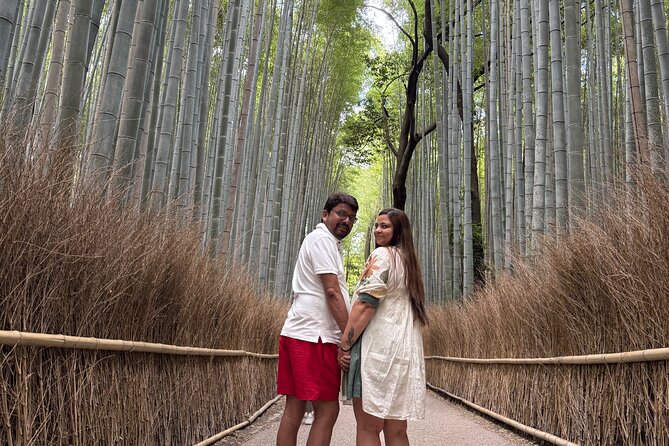
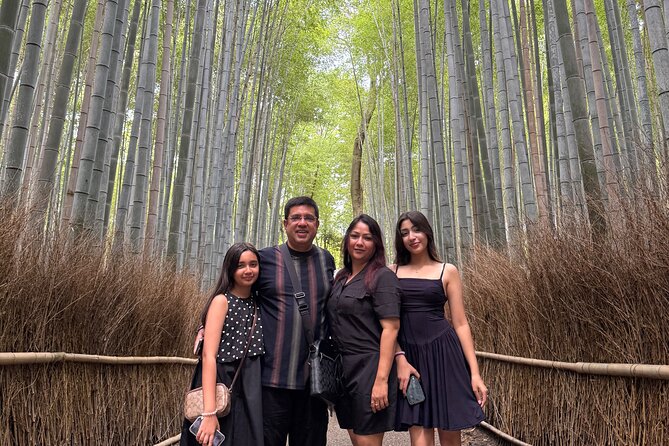
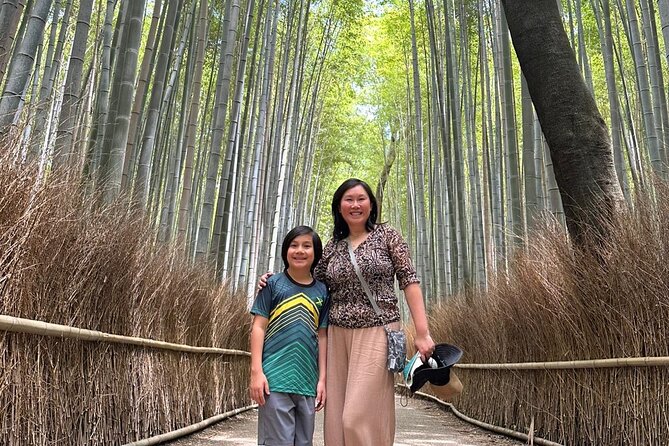
The first stop is the Arashiyama Bamboo Forest, with about 30 minutes set aside and admission included. The famous lanes can be crowded, especially around the most photographed section. This tour aims to take you farther into the grove, where tall green stalks close over the path and the noise eases.
Thirty minutes is enough for a walk and photographs, but it is not a long nature hike. Keep your expectations in check. You are getting a focused visit to one of Kyoto’s signature sights, not an afternoon spent wandering every corner of Arashiyama.
The car helps here because it cuts down the effort of reaching a less busy section. Still, bamboo is not automatically peaceful. Conditions depend on the time of day and the number of people in the area. The practical advantage is that you are not locked into the busiest entrance and can move on before the experience becomes repetitive.
I like this opening because it gives you a recognizable Kyoto scene without allowing the whole tour to become a standard bamboo-forest photo stop. It also sets up the contrast with the forest roads and shrines that follow.
Meeting Arashiyama’s stone figures at Otagi Nenbutsu-ji
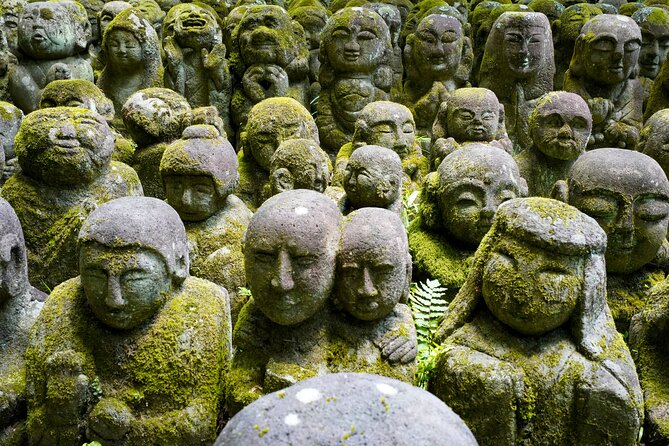
Next comes Otagi Nenbutsu-ji, with around 40 minutes at the temple. Admission is not included, and temple and shrine entrance fees are listed at about $6.50 per person. Set that money aside so the small extra charge does not surprise you.
The temple is known for more than 1,000 stone statues, each with a different expression. This is a more playful and personal stop than the grand, polished temple grounds found elsewhere in Kyoto. You can spend your time looking for a figure that reminds you of yourself, a family member, or perhaps someone who has had too much coffee.
The statues give the visit a simple purpose. Instead of rushing through a large complex, you have a visual game that makes you look closely. Forty minutes should allow time to see the collection and enjoy the setting without making the stop feel hurried.
Otagi Nenbutsu-ji has been gaining attention, so do not assume it will be empty. Even so, it tends to feel more intimate than the headline sights in central Kyoto. I would consider this one of the strongest parts of the route for families, photographers, and anyone who prefers character over ceremony.
Finding stillness at Kuzu Shrine
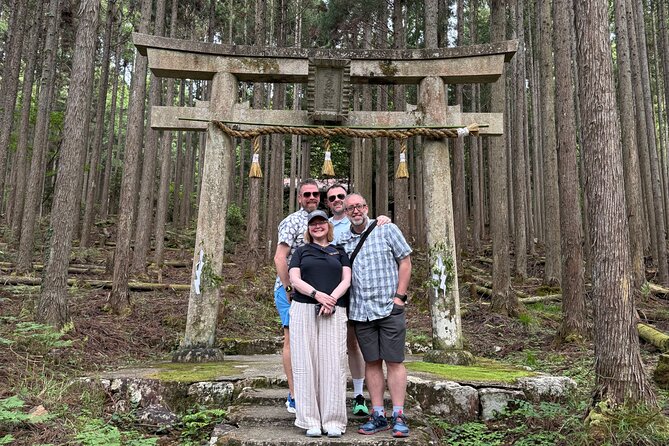
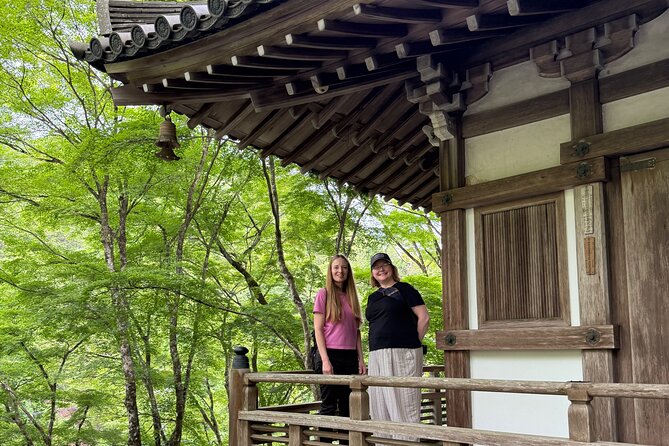
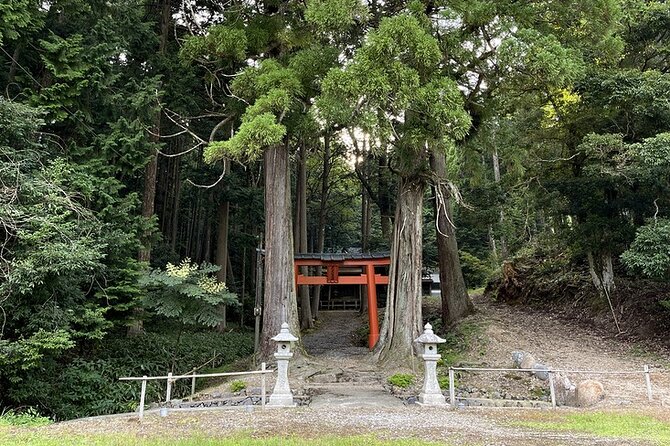
The third stop is Kuzu Shrine, set in the forest and far from the usual sightseeing circuit. You have about 30 minutes here, and there is no admission charge. The main hall is a Registered Tangible Cultural Property, giving the site cultural importance without the crowds and formal presentation found at Kyoto’s best-known shrines.
The appeal is the setting. You are among trees, shaded paths, and quiet air rather than souvenir stalls and busy crossings. The shrine is regarded locally as a spiritual power spot, so the visit may appeal to you if you enjoy places where religious meaning remains part of the atmosphere.
This is not the place for a long checklist of buildings. Thirty minutes gives you enough time to walk, look, and let the surroundings settle. Katsu’s role matters here. A private guide can explain what you are seeing and answer questions without turning a quiet shrine into a lecture.
There is also a useful distinction between famous and meaningful. Kuzu Shrine may not have the name recognition of Fushimi Inari or Kiyomizu-dera, but that is precisely why it can feel more peaceful. If your idea of a good Kyoto stop includes moss, trees, and a pause from the city, this portion earns its place.
A few more escape games around the world worth a look
- Sofia Escape Room – Teorema Rooms
★ 5.0 · 895 reviews - Saw2 vs Squid Game – Escape Game Montpellier
★ 5.0 · 752 reviews - Prague Wizard Experience Magic School Escape Game
★ 5.0 · 746 reviews - The Escape Game Orlando: Epic 60-Minute Adventures on I-Drive
★ 5.0 · 730 reviews
Riding beyond the city to a secret sacred site
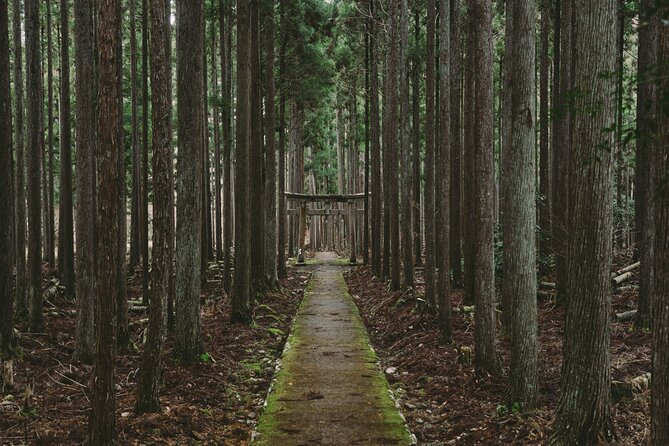
The final listed stop is in Keihokushuzancho, deep in the northern mountains. The site is described as one of Kyoto’s last untouched sacred places and is not fully marked on maps. A moss-covered stone path and a remote setting are part of the appeal. Admission is free, and about 30 minutes is planned here.
The name of the shrine is deliberately kept secret. That may sound theatrical, but it also protects the character of the place. You are not being sent to another heavily photographed landmark with a long queue and a shop at the exit. The mystery is part of the experience, though it also means you cannot research every detail before booking.
This stop is accessible only by car, which explains the tour’s structure. Public transport is not a practical fit for every quiet corner of northern Kyoto, and arranging a taxi for a remote site would be less straightforward. With private transportation, fuel, and parking covered, the journey is simpler.
Do not expect a large attraction with many facilities. The value is the sense of distance from urban Kyoto. You may find that the forest, stone, and lack of noise matter more than a long list of monuments. The setting asks you to slow down, which is why the trip is described as a meditative outing rather than a conventional sightseeing circuit.
What the private car adds to the experience
The car is not just a comfortable transfer between attractions. It is the key to the route. Arashiyama, Kuzu Shrine, and the northern mountain stop do not form a simple pedestrian loop, and the remote portions are difficult to combine efficiently without a vehicle.
You also avoid paying separately for fuel, parking, and a series of taxi rides. Those costs can add up quickly in Kyoto, especially when an itinerary leaves the center. At $95 per person, the value improves when you consider that the price covers private transportation and a guide for your group.
The value is less convincing if you only want famous central sights. You could spend the same time visiting more major temples by train or bus, often at a lower cost. This outing makes the most sense when your priority is quiet places and a private pace, not the greatest number of attractions.
The exact duration can range from 2 to 4 hours, so ask about the expected timing if your day is tightly planned. The listed schedule runs Monday through Friday, from 10:00 a.m. to 2:30 p.m., for the operating period shown from June 17, 2025, through February 13, 2027. It begins and ends at Kyoto Station.
What Katsu’s guiding style may mean for you
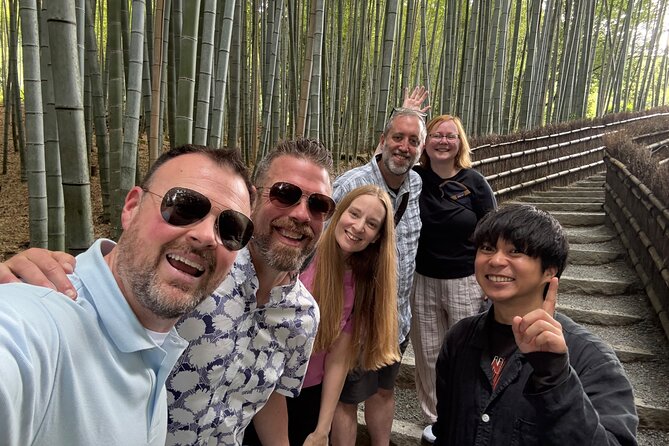
The strongest personal detail connected with this experience is the guide’s name, Katsu. The available comments describe him as friendly, well informed, and able to make the outing feel like an adventure rather than a basic transfer service.
That matters most at the lesser-known stops. A famous temple can explain itself through signs and guidebooks. A small shrine in the woods benefits from someone who can provide context, point out details, and help you understand why the place matters.
Since this is a private activity, you can ask questions without worrying about slowing a group. You can also choose how much time you want to spend taking pictures or sitting quietly, within the overall schedule. The tour is still structured, so do not expect an entirely spontaneous day, but it should feel more personal than a standard coach excursion.
The feedback is limited, with three ratings shown, so I would not treat the perfect score as a guarantee of every detail. Still, the repeated praise for Katsu’s character is useful. For a short tour built around atmosphere, a good guide can shape the entire experience.
Price, extra fees, and the early offer
The listed price is $95 per person, with a special launch offer advertising 40 percent off for early bookings. Confirm the price shown for your chosen date before paying, since promotional rates can change.
Private transportation, fuel surcharge, and parking fees are included. That is the core of the value. You are paying not only for entry to four places, but also for a private vehicle, route planning, and access to areas that are awkward to reach on your own.
Temple and shrine entrance fees are not included and are listed at $6.50 per person. Snacks are also extra, though optional snack stops may be arranged on request. There is no need to build a large food budget around this trip, but you should not assume every small expense is covered.
I would call the price reasonable for couples, families, or small groups who value privacy and transport. Solo visitors should think harder about the cost per person, since private tours do not spread the vehicle expense across a large group.
Who should book this Kyoto escape
I would recommend this experience if you want:
- A break from central Kyoto’s crowded sights
- Forest walks and small sacred places
- A private guide rather than a large group
- A car-based route into northern Kyoto
- A short outing that leaves room in your day
- A less predictable stop where the exact shrine is not publicly named
It suits people who enjoy atmosphere, quiet, and small details. Families may like the stone figures at Otagi Nenbutsu-ji, while couples may appreciate the slower mood of the forest shrines. Photographers should find plenty to work with, though the tour does not promise long photo sessions at every stop.
I would be cautious if you need a fully wheelchair-friendly itinerary, since the route includes shaded paths, a moss-covered stone path, and forest sites. The information says most people can participate, but it does not give detailed mobility guidance. Ask before booking if you have specific access needs.
The weekday operating hours also rule it out for some schedules. And if rain would ruin your plans, remember that the experience requires good weather. If poor weather causes cancellation, you are offered another date or a full refund.
Should you book From Bamboo to Hidden Shrines?
Book it if you have already seen Kyoto’s headline sights, or if you want your Kyoto day to include silence as well as famous scenery. The combination of a quieter bamboo visit, Otagi Nenbutsu-ji’s unusual statues, Kuzu Shrine, and a remote unnamed sanctuary is more distinctive than another standard temple loop.
Skip it if you want a full-day tour, major landmark after major landmark, or a detailed public history of every stop. The final shrine is intentionally private, the schedule is short, and part of the appeal is simply being somewhere quiet.
For the right person, this is a thoughtful use of half a day. You get a private car, a guide with a personal touch, and a route that reaches corners of Kyoto most visitors would not find easily. Just budget for the entry fee, confirm the promotional price, and keep your afternoon flexible.
FAQ
Where does the tour start and end?
It starts at Kyoto Station in Shimogyo Ward and ends back at the same meeting point.
How long does the experience take?
The tour lasts approximately 2 to 4 hours. The four listed stops total about 130 minutes, with driving time included in the overall outing.
Which days and hours is it available?
The listed operating schedule is Monday through Friday, from 10:00 a.m. to 2:30 p.m., during the period from June 17, 2025, through February 13, 2027.
Is transportation included?
Yes. Private transportation, the fuel surcharge, and parking fees are included.
Are admission fees included?
Admission fees are not included. Temple and shrine entrance fees are listed at about $6.50 per person. Kuzu Shrine and the remote mountain site are listed as free.
What happens if the weather is poor?
The experience requires good weather. If it is canceled because of poor weather, you can choose another date or receive a full refund. You can also cancel for a full refund up to 24 hours before the start time.
Just added around the world
- Digital puzzle tour with Marcus Aurelius’ order★ 5.0 · 5 reviews
- The Vienna Augmented Reality Puzzle Rally★ 5.0 · 7 reviews
- Vienna Highlights Self guided scavenger hunt and Walking Tour★ 4.0 · 5 reviews
- True Crime mobile puzzle rally Vienna★ 4.0 · 3 reviews
- Verona Scavenger Hunt and Highlights Self Guided Tour★ 4.0 · 17 reviews
- Time Travel to Ottoman Vidin: Exploration Game and Tour★ 5.0 · 2 reviews
- Historical treasure hunt in the city of Versailles★ 4.0 · 15 reviews
- Verona Scavenger Hunt and Highlights Self Guided Audio Tour★ 4.5 · 7 reviews
Private, compared.

Vampire’s Lair Escape Room Game for Private Group
Read our review →

Merlin’s Magic School Escape Room Game for Private Group
Read our review →
Jack the Ripper Escape Room Game for Private Group
Read our review →
Private Car: 8 Hour Highly Customized Taipei City Exploration!
Read our review →