
Review · FLORENCE
Florence: Uffizi Gallery Private Treasure Hunt for Families
The clever part of this tour is that it turns the Uffizi’s paintings into a game. Instead of asking children to admire rows of old masterpieces, your guide sends them looking for dogs, cats, flowers, chairs, hidden sculptures, and other clues. Michelangelo’s Tondo Doni and Caravaggio’s Medusa become puzzles rather than distant works behind a rope.
I like two things in particular: the private format lets the guide adjust the pace for your family, and the booklet gives children something active to do. I also like the short outdoor introduction at the Neptune Fountain, Piazza della Signoria, and Loggia dei Lanzi. The main drawback is the price, $286.04 per person, which is a serious investment for a three-hour museum visit.
Key points to know
- A treasure hunt built around major art: Look for symbols and small details in works connected with Botticelli, Leonardo, Michelangelo, and Caravaggio.
- A private family group: Your guide can focus on your children’s questions rather than managing a large mixed group.
- Three Florence landmarks before the museum: The tour begins at the Neptune Fountain and includes Piazza della Signoria and the Loggia dei Lanzi.
- A guide who works well with children: Rosa is specifically praised for keeping young children involved while explaining Renaissance art.
- Useful hands-on extras: You receive a clue booklet, earphones for up to eight people, and a family picture at the end.
- A costly but focused option: The price makes the most sense for families who want a private, guided introduction to the Uffizi.
Why this Uffizi visit works for families
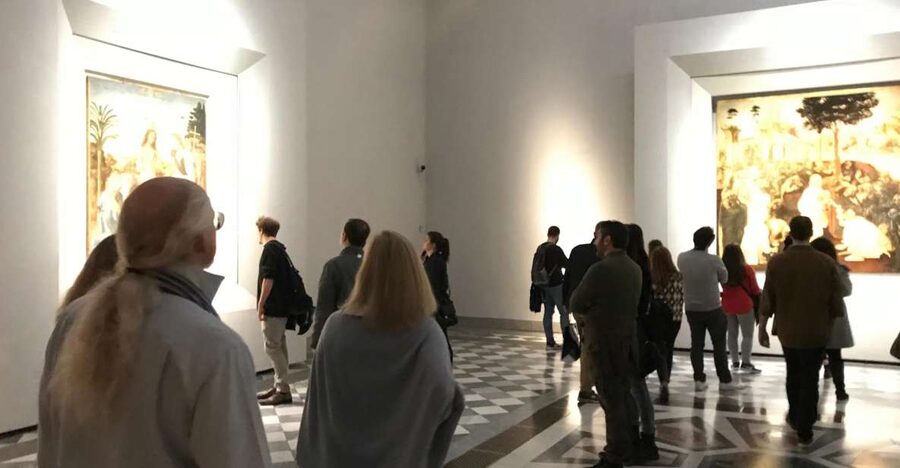
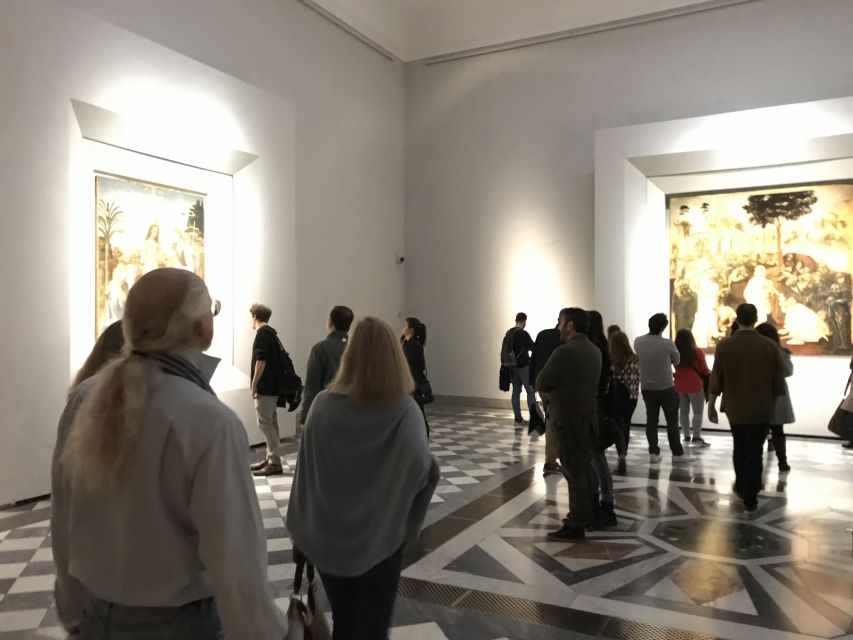
The Uffizi can be a lot for children. Its rooms hold some of Europe’s most important paintings, but a young visitor may see only gilded frames and serious adults moving slowly from one gallery to the next. This experience changes the question from What am I looking at? to Can you find the dog, chair, flower, or strange detail?
That small shift matters. Children get a task, while you get a reason to look closely. The guide connects each clue to a larger idea, such as religious symbolism, family commissions, myths, or daily life in Renaissance Florence.
You are not simply being rushed from one famous painting to another. The hunt asks you to notice details that many adults might miss. Why does the Virgin Mary’s bed in Botticelli’s Annunciation have only one pillow? What is inside the open mouth of Caravaggio’s Medusa? These questions give the tour a clear thread.
The experience is designed for all ages, but the family focus is strongest when children are old enough to follow clues and answer questions. Very young children may enjoy the search more than the art explanation. Older children and teenagers can take the symbols and myths further, especially with a guide who adjusts the conversation to their interests.
One guide singled out in the available feedback is Rosa. She is praised for explaining Renaissance art well and for keeping young children engaged. That combination is important. A guide may know the paintings but still lose a child after ten minutes. Here, the useful skill is making art understandable without turning the tour into a school lesson.
More Family Escape Games in Italy
- Best of Florence Treasure Hunt Tour for Kids & Families
★ 5.0 · 44 reviews - Private Family Tour – Uffizi Gallery for Kids
★ 5.0 · 27 reviews - Kids treasure hunt in Uffizi museum Private, timed entry!
★ 5.0 · 15 reviews
Starting at the Neptune Fountain
The meeting point is the Neptune Fountain in Piazza della Signoria. This puts your family in one of Florence’s most dramatic public spaces before you enter the museum.
The fountain is easy to connect with the rest of the tour because it begins the conversation about public art, powerful figures, mythology, and the Medici family’s influence. You are already looking at sculpture in an open square before moving indoors to painted masterpieces.
The start also gives you a clear meeting point. You should bring your passport or identity card, as required for the activity. The tour ends at the same fountain, so you return to a familiar spot rather than finishing somewhere across town.
Do not expect a long city walk. The listed route moves from the Neptune Fountain through Piazza della Signoria and the Loggia dei Lanzi before reaching the Uffizi. These stops are part of the introduction, not a separate sightseeing tour of Florence.
Piazza della Signoria and the Loggia dei Lanzi
Piazza della Signoria is one of Florence’s best settings for understanding how art and civic life meet. The square is filled with major sculpture and has long functioned as an outdoor gallery beside the Palazzo Vecchio.
The Loggia dei Lanzi continues that idea. Its sculptures are displayed under a roof but in the open air, so you can examine them without entering a museum room. For children, this is often an easier first step than beginning with a packed interior gallery. The scale is immediate, and the guide can point out poses, expressions, stories, and symbols before asking you to search for smaller details in paintings.
I like this sequence because it gives the Uffizi a little context. You are not dropped straight into a quiet room and told to appreciate art. You first see Florence using public spaces to display sculpture, then move inside to the Medici family’s former collection and commissions.
There is a practical limit. The outdoor stops are guided, but the experience is still centered on the Uffizi. If your family wants a full tour of Piazza della Signoria or an extended explanation of every sculpture in the Loggia dei Lanzi, this is not the right format. The time is better spent preparing you for the museum hunt.
Three hours inside the Uffizi
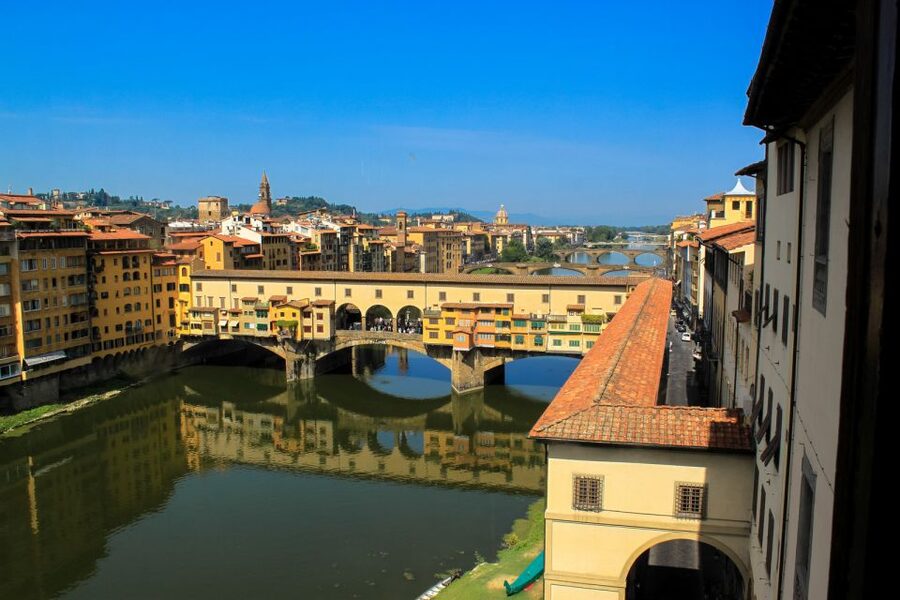
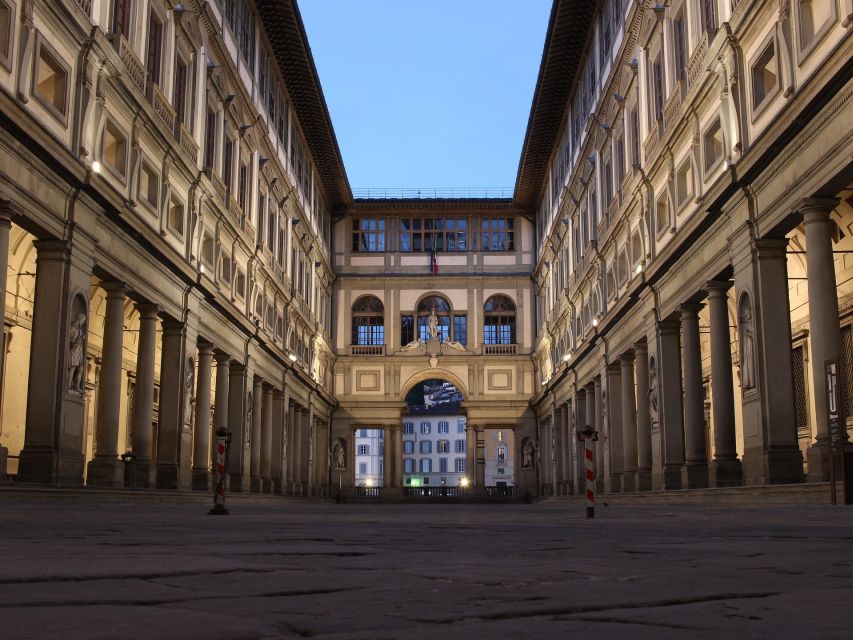
The Uffizi is one of Europe’s oldest museums and one of Florence’s main Renaissance collections. It is also the part of the tour where the private guide matters most.
A standard museum visit can leave you wondering what deserves your attention. The Uffizi contains far more art than most families can absorb in one sitting. This tour narrows the focus to significant works and specific details. You still see major names, including Leonardo, Botticelli, and Michelangelo, but you approach them through questions rather than a long list of dates and titles.
The stated duration is three hours, with the Uffizi visit listed as a three-hour guided stop. Since the overall itinerary also includes the outdoor meeting and return points, check the confirmed schedule carefully when booking so you understand how the timing is arranged.
Three hours is a useful length for a serious museum visit with children. It gives the guide time to explain several works without reducing everything to a quick glance. It is also long enough that younger children may need a change of pace. The hunt helps, but you should still expect a substantial museum experience rather than a short introduction.
Earphones are included for groups of up to eight people. That is helpful in crowded rooms, where a quiet explanation can disappear beneath the sound of other groups. If your private group is larger than eight, the provided earphone arrangement may not cover everyone, so pay attention to that limit.
More Treasure Hunts in Italy
- Florence Self-Guided Treasure Hunt & Medici Mystery Walking Tour
★ 5.0 · 69 reviews - Kids Treasure Hunt in Florence Downtown. A Private Adventure!
★ 5.0 · 10 reviews - Private Kids Treasure Hunt in Palazzo Vecchio. Timed entry!
★ 5.0 · 6 reviews - Treasure Hunt in Florence for Families
★ 4.5 · 3 reviews
Turning paintings into clues
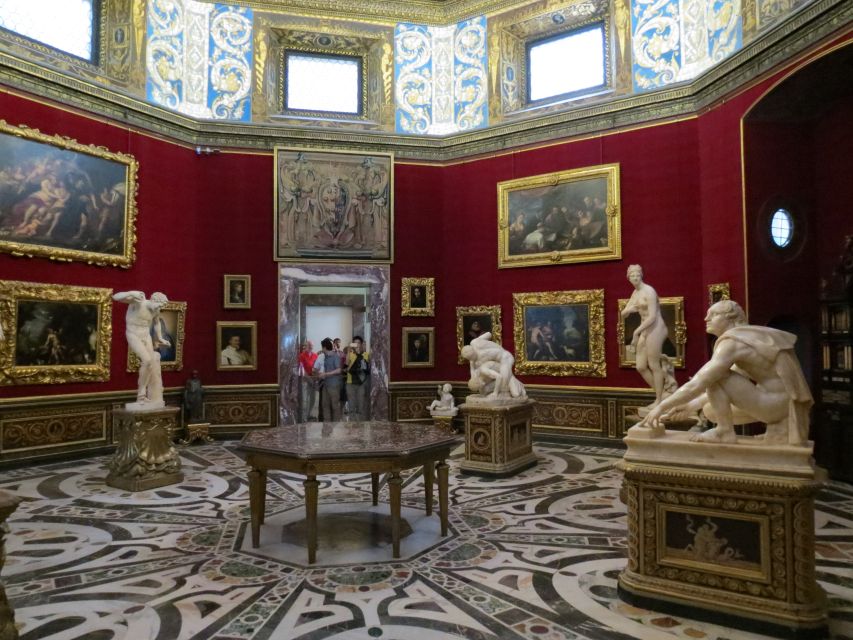
The best part of this experience is its choice of questions. You are not asked to memorize artists or dates. You are asked to find things.
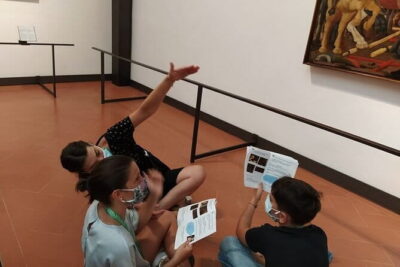
The booklet gives children a place to write answers and follow the hunt. That makes the activity feel more like a shared family project. Parents can search alongside their children instead of standing behind them while a guide talks.
The clues include dogs, cats, flowers, and chairs in Renaissance paintings. These are ordinary objects, but their presence can carry meaning. A flower may connect with purity or a religious theme. An animal may have a symbolic role or simply show how artists represented the world around them. A chair can reveal status, domestic life, or the arrangement of a scene.
The value is not that every object has one simple answer. The value is learning to look at a painting as a set of choices. Why is an object there? Why is it placed beside one person and not another? What does it tell you about the scene?
This approach also helps adults. I often find that a child’s question forces you to look properly at a work you might otherwise pass by. A treasure hunt gives your family a reason to slow down without demanding silent concentration for an entire gallery.
Michelangelo’s Tondo Doni and Caravaggio’s Medusa
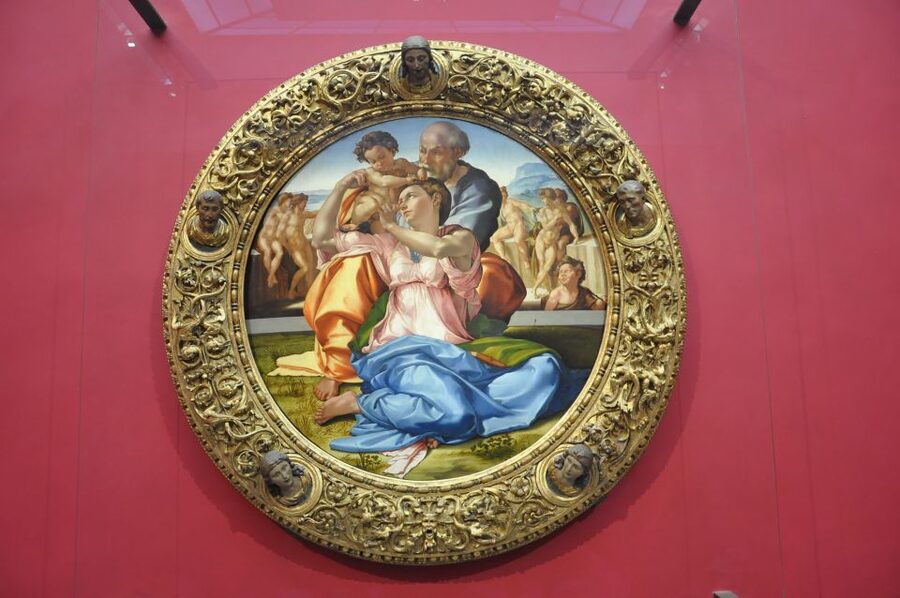
Two works receive especially memorable treatment.
In Michelangelo’s Tondo Doni, the hunt asks you to search for hidden sculptures. The painting is already unusual for families because of its circular format and striking figures. Looking for smaller sculptural details adds a visual puzzle to the art lesson.
The point is not simply to identify the artist. You are encouraged to inspect the whole composition and notice what sits behind the main figures. Children who enjoy spotting details can take the lead here, while the guide explains why the work matters.
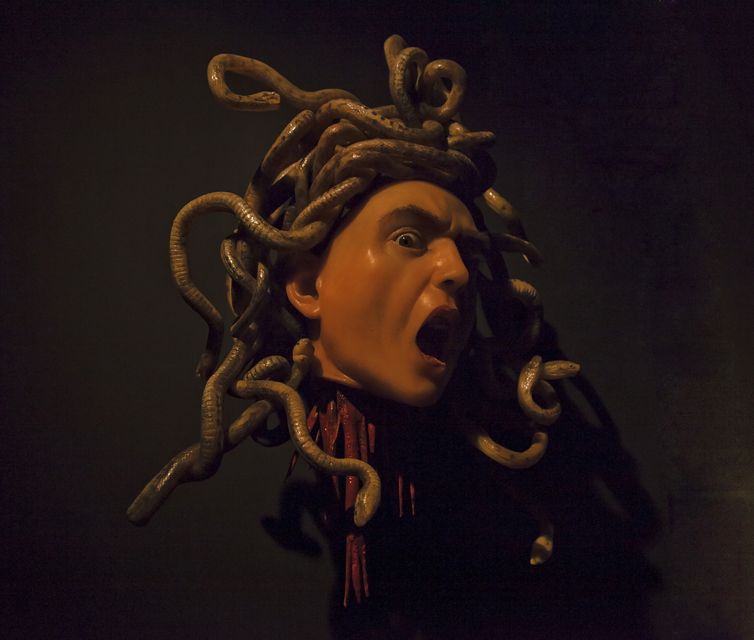
Caravaggio’s Medusa offers a different kind of drama. The tour asks you to look at what lurks inside Medusa’s mouth. That is a vivid question, and it gives the painting an immediate hook for children who might not care about the artist’s name.
The guide also brings in myths and legends. That helps explain why Medusa appears with such a frightening expression and why the subject would appeal to a powerful Florentine patron. You get a story, a visual challenge, and a piece of art history in one stop.
The Medici connection adds another useful layer. The tour highlights commissions associated with the Medici family, helping you see the Uffizi not just as a collection of famous paintings but as part of Florence’s political and cultural story.
Botticelli’s Annunciation and the value of small details
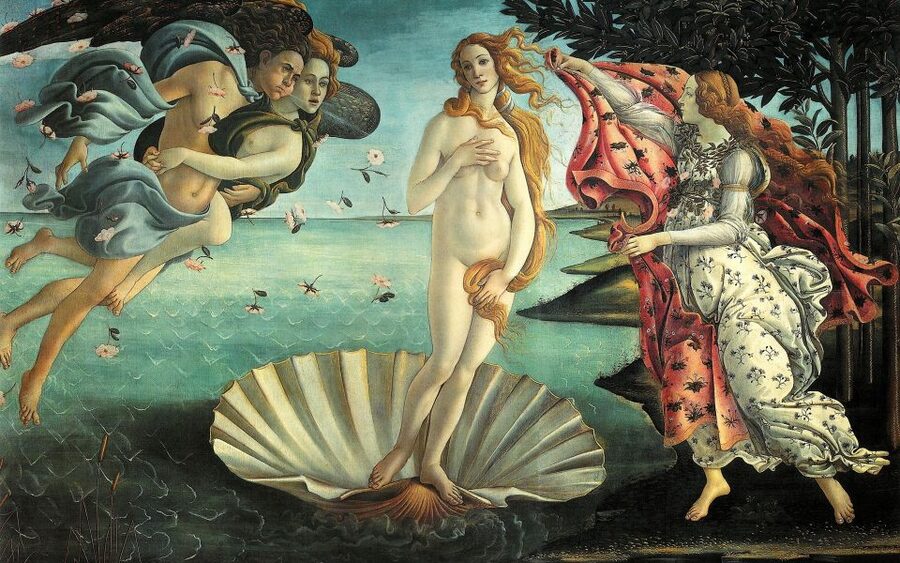
Botticelli’s Annunciation is used to raise one of the tour’s simplest and most effective questions: why does the Virgin Mary’s bed have only one pillow?
That sort of question works because there is no need to start with a long biography. You first notice the object, then consider its setting and meaning. The guide can connect the room, the figures, and the religious subject in a way that gives children an entry point.
Botticelli’s paintings can look delicate and calm at first glance. A treasure hunt keeps you from merely admiring the surface. You search the architecture, furniture, flowers, and gestures for clues about the scene.
This is also where the private setup earns its keep. If one child is interested in furniture and another wants stories about angels or myths, the guide can respond to both. A large public group usually has to keep moving with one fixed explanation.
The private format and guide quality
This is a private-group activity, which is a major advantage for families who want control over the pace. You do not have to worry about holding up strangers when a child needs a moment, and the guide can direct questions to your family rather than a crowd.
The private format does not guarantee a perfect match with every child. Much depends on the individual guide. Rosa is one named guide associated with the experience, and the strongest detail available about her is practical: she explains Renaissance art clearly and keeps young children engaged.
That is exactly what I would want from this tour. You do not need a lecture packed with dates. You need someone who can turn an unfamiliar painting into a question your child can answer.
Live guiding is available in English, French, German, Spanish, Italian, and Russian. Choose the language that lets your family ask questions freely. A child who is struggling to follow the language may miss the whole point of the treasure hunt.
What the $286.04 price means
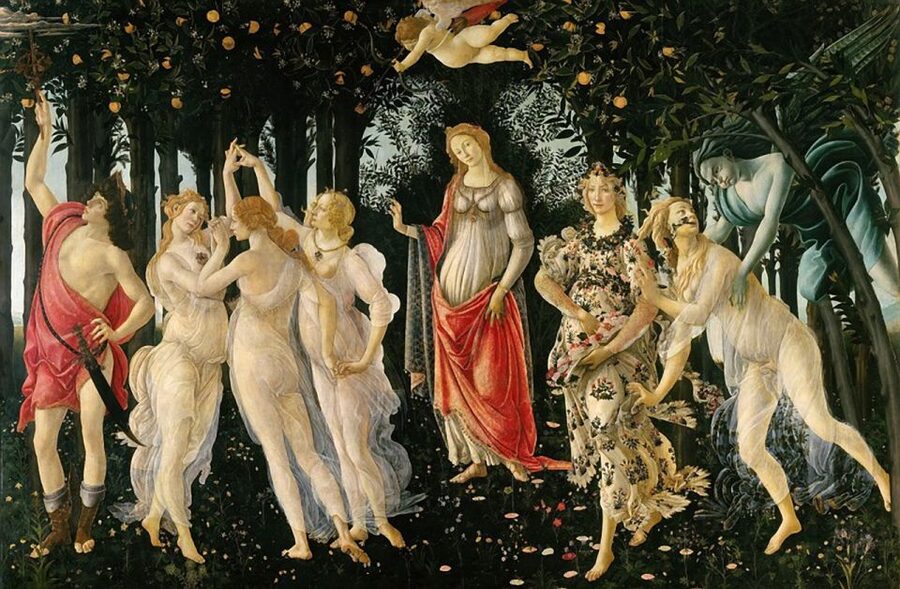
At $286.04 per person, this is not a bargain museum ticket. The cost covers a private guided experience, entrance, the booklet, earphones for up to eight people, and the family portrait at the end.
The price makes more sense if you place a high value on a private guide who can keep children focused. You are paying for structure, interpretation, and a family activity, not just entry to the Uffizi. The entrance ticket alone would not give you the hunt or the guide’s questions.
Still, the total rises quickly for a family. Four people would pay more than $1,100 at the listed per-person rate. If your children are too young to follow clues, or if your family prefers wandering independently, that cost may feel hard to justify.
I would consider this a better value for families who already know they want a guided Uffizi visit and would otherwise book a private tour. It is less compelling for anyone looking only for a quick museum introduction.
The family picture helps give the experience a clear ending, though it should be viewed as a pleasant extra rather than a reason to book on its own. The real value is the way the guide gives your family a shared task inside a difficult museum.
Accessibility, cancellation, and practical details
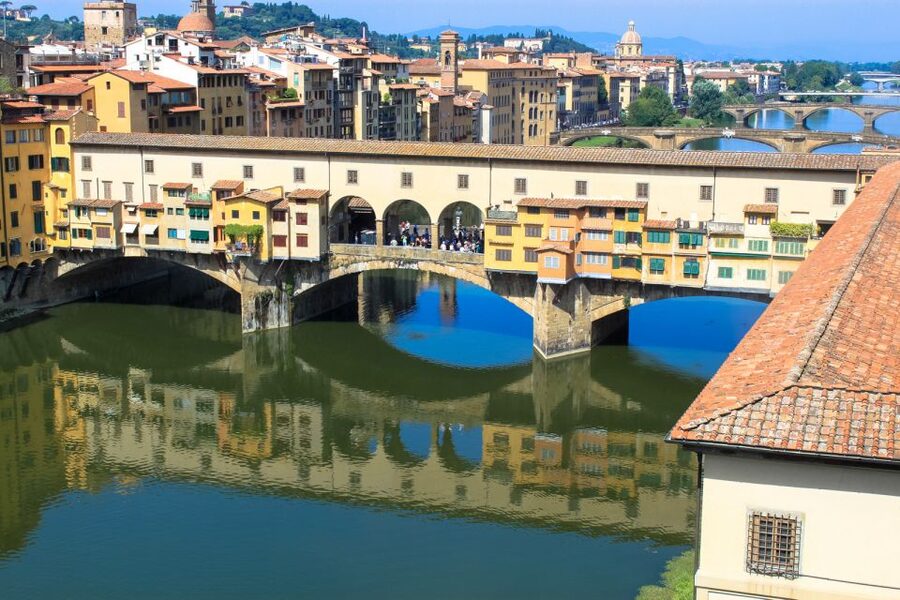
The activity is listed as wheelchair accessible. If accessibility is essential for your group, confirm the current route and arrangements when you book, since the experience includes outdoor public spaces as well as the museum.
You can cancel up to 24 hours in advance for a full refund, and the reserve-now, pay-later option keeps you from paying at the time of booking. Those policies are useful when your Florence schedule is still changing.
The first Sunday of each month needs special care. Entrance to the Uffizi is free that day, but tickets cannot be reserved ahead of time, so entry is not guaranteed. I would avoid choosing this tour for that date if getting inside is essential.
Bring your passport or identity card. The meeting point and return point are both at the Neptune Fountain.
Who should book this treasure hunt?
I would recommend it most strongly to families who want to see the Uffizi but worry that their children will lose interest. The hunt gives young visitors a role and lets adults enjoy the art without abandoning the needs of the youngest person in the group.
It also suits families who prefer a private setting, want a guide in one of the six listed languages, and are happy to pay more for a focused experience. Children who like puzzles, spotting games, stories, and myths should respond well to the format.
I would hesitate if your family wants a quiet, self-directed museum visit, has a tight budget, or plans to spend only an hour inside. The three-hour structure is a commitment, and the per-person cost is high.
Should you book it?
Book this tour if your main goal is to make the Uffizi understandable and enjoyable for children, not simply to check famous artists off a list. The questions about Tondo Doni, Medusa, Annunciation, animals, flowers, and furniture give the visit a useful sense of purpose.
The price is the deciding factor. For families who value a private guide and need help keeping young children involved, it can be money well spent. For independent museum-goers, it is probably too expensive. The first Sunday of the month is also a poor choice because free entry cannot be reserved.
If you choose it, arrive with your identification, expect a three-hour art-focused outing, and encourage your children to take the clue booklet seriously. The best memories are likely to come from the small discoveries, not just the famous names.
FAQ
How long does the Uffizi family treasure hunt last?
The activity lasts three hours. Check availability for the available starting times.
Where does the tour start and finish?
It starts at the Neptune Fountain in Florence and ends back at the same meeting point.
Which languages are available?
The live guide is available in English, French, German, Spanish, Italian, and Russian.
Is the activity private?
Yes. It is organized as a private-group experience.
What is included in the price?
The price includes the entrance ticket, a booklet for recording answers and adding a family picture, and earphones for groups of up to eight people.
What should I bring?
Bring a passport or identity card. On the first Sunday of each month, entrance is free, but tickets cannot be reserved ahead of time, so entry is not guaranteed.
More Treasure Hunts in Florence
- 2-Hour Private Treasure Hunt in Florence
★ 5.0 · 3 reviews - Hamburg: Treasure Hunt Game through HafenCity
★ 4.7 · 364 reviews - St. Augustine: Treasure Hunt Cruise with Onboard Show
★ 4.4 · 315 reviews - Málaga: Private Sightseeing Treasure Hunt
★ 4.8 · 297 reviews
More Family Escape Games in Florence
- Kids treasure hunt in the Boboli Garden. Private, timed entry!
★ 5.0 · 2 reviews - Florence: Kids Treasure Hunt in Florence Downtown
★ 5.0 · 2 reviews - Hamburg: Scavenger Hunt Self-Guided Tour for Children
★ 4.5 · 319 reviews - Berlin: Self-Guided Family and School Class Scavenger Hunt
★ 4.6 · 128 reviews
Just added around Florence
- Treasure Hunt in Florence for Families★ 4.5 · 3 reviews
- 2-Hour Private Treasure Hunt in Florence★ 5.0 · 3 reviews
- Florence Highlights Self guided scavenger hunt and Walking Tour★ 4.5 · 3 reviews
- Private Kids Treasure Hunt in Palazzo Vecchio. Timed entry!★ 5.0 · 6 reviews
- Florence Scavenger Hunt and Highlights Self-Guided Tour★ 4.5 · 3 reviews
- Florence Haunted Secrets: Echoes of the Dead Exploration Game★ 4.0 · 9 reviews
- Kids treasure hunt in Uffizi museum Private, timed entry!★ 5.0 · 15 reviews
- Kids Treasure Hunt in Florence Downtown. A Private Adventure!★ 5.0 · 10 reviews
Florence Escape Games, compared.

Florence Self-Guided Treasure Hunt & Medici Mystery Walking Tour
Read our review →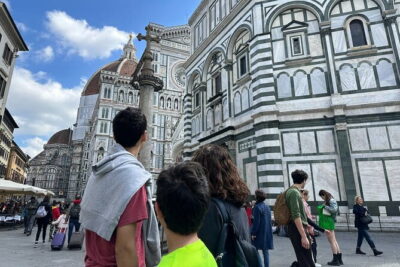
Best of Florence Treasure Hunt Tour for Kids & Families
Read our review →
Medici Secrets & Mysteries: Interactive Walking Tour Game
Read our review →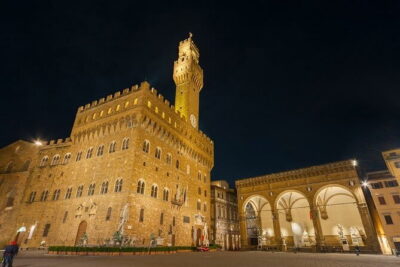
Florence Inferno: Dante’s Haunted Exploration Game and Tour
Read our review →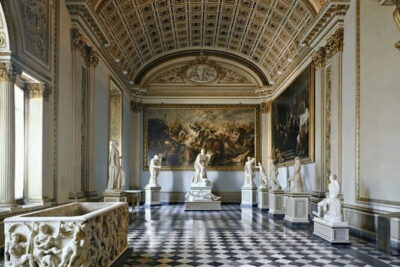
Kids treasure hunt in Uffizi museum Private, timed entry!
Read our review →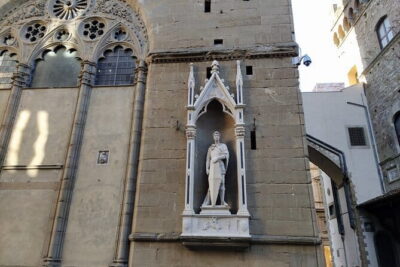
Kids Treasure Hunt in Florence Downtown. A Private Adventure!
Read our review →
Florence Haunted Secrets: Echoes of the Dead Exploration Game
Read our review →Browse the lists this tour appears in