
Review · CROATIA
Pula Empire Secrets Exploration Game and Tour
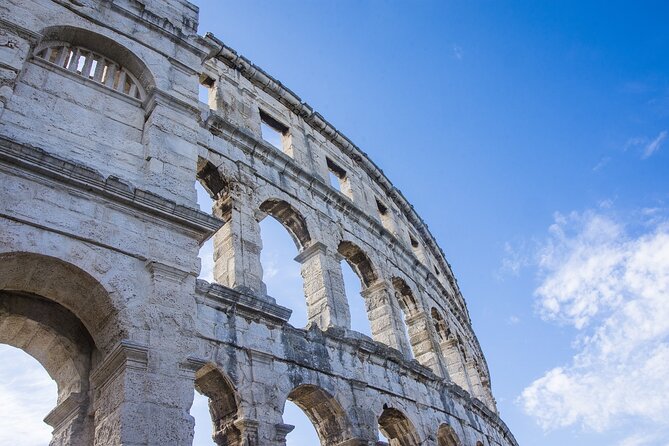
Pula’s past comes at you in layers on this phone-based city quest. In about 90 minutes, you move from Roman monuments to World War I tunnels, Yugoslav-era memorials, Austro-Hungarian buildings, and a Venetian fortress. The route gives you a reason to look up, slow down, and notice details you could easily miss on a normal walk.
I like the low price of $5.91 and the freedom to pause or restart when you wish. I also like the mix of famous sights and less obvious places, especially the Roman mosaic and Zerostrasse. The main drawback is that this is not a guided history walk. Some directions and puzzle instructions can take extra reading, particularly at the start.
- Ten puzzles across central Pula: Each stop adds a clue, riddle, or observation task.
- A strong historical range: Roman, Venetian, Austro-Hungarian, Yugoslav, and wartime Pula all appear.
- A flexible 90-minute format: Pause, resume, and explore at your own pace.
- A phone-led route: GPS navigation and the access code are included, but there is no live guide.
- A very low-cost introduction: The price is closer to a small museum ticket than a traditional tour.
- A hilltop finish: The route ends at Pulski Kaštel, with the walk finishing at Gradinski uspon 10.
A phone quest through Pula’s many pasts
This experience is part walking tour, part city puzzle. You begin at Narodni trg 9, in the People’s Square, and follow instructions on your phone from one location to the next. The route uses GPS, so you are not left with a printed map or a fixed group schedule.
The basic idea is simple. Reach a place, study what is around you, and solve a challenge tied to that site. The story gives the walk a sense of purpose, but you still need to pay attention to the buildings, carvings, streets, and public spaces in front of you.
That format works especially well in Pula. The old town is full of clues from different periods, and a standard stroll can make them blur together. A puzzle asking you to inspect a façade or monument gives you a reason to stop and look closely.
Still, keep your expectations clear. This is a self-guided activity, not a talk by a local historian. The historical background is presented through the app, and some of it must be worked out from the clues and objects around you. If you want detailed explanations at every stop, a live guide would suit you better.
Starting at Narodni trg and the Arch of the Sergii
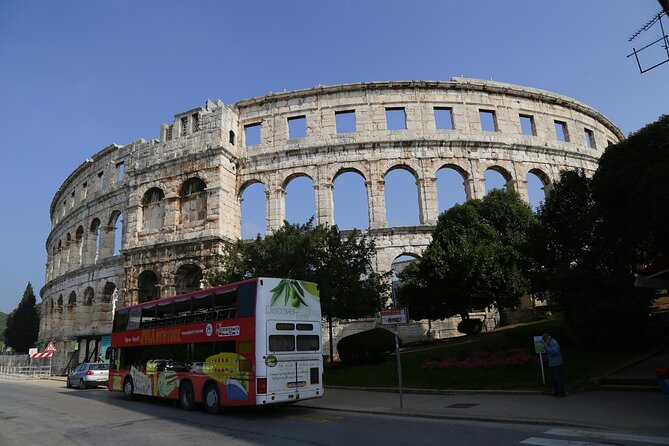
Narodni trg is a sensible opening point. The People’s Square sits in the old town, surrounded by historic buildings and cafés. It has long served as a meeting place, so it gives you an immediate feel for Pula as a lived-in city rather than only an archaeological site.
The first challenge takes about 10 minutes. You follow clues through the streets, reach the square, and solve a puzzle tied to a story from Pula’s past. This opening is useful because it teaches you how the game works before the route becomes more varied.
The start may require patience. Read the instructions carefully, and do not rush the first puzzle. The app setup and early directions can feel less clear than expected, and it may not be obvious at first how much of an image or scene you need to inspect.
From there, the route points you toward the Arch of the Sergii. This Roman triumphal arch dates back more than 2,000 years and carries carvings linked to the Sergii family. It is a compact monument, but one that rewards close inspection.
The puzzle here asks you to connect the monument with the family’s power and story. That is a good example of the activity’s value: instead of simply passing under or beside an ancient arch, you are encouraged to examine its details and think about why it was built.
More City Exploration Games in the world:
- Half Day Bangkok Old Town City Quest – GOLDEN MOUTAIN’S ECLIPSE
★ 5.0 · 118 reviews - Malaga city game: Operation Mindfall
★ 5.0 · 111 reviews - Romantic Montmartre: Paris Lost Lovers Exploration Game and Tour
★ 4.5 · 107 reviews
Zerostrasse and Pula’s underground wartime world
Zerostrasse changes the mood. This network of underground tunnels was built during World War I as shelter for Pula’s residents. The passageways are dark, cool, and echoing, offering a sharp contrast to the open streets above.
The quest uses the tunnels as a puzzle setting. You follow clues into this underground part of the city and solve a challenge connected with Pula’s wartime defenses. The location brings a practical side of history into view: Pula was not only a Roman city and a harbor, but also a strategic military center.
The tunnel stop is one of the route’s strongest changes of pace. It gives you a physical sense of the city’s wartime life instead of presenting the subject only through text. Since the experience is app-led, take time to read the instructions before moving through the tunnels. A rushed approach can make the task harder to follow.
Tito’s Park and the memory of Yugoslavia
Tito’s Park offers a quieter stop between the older monuments and the harbor. The park includes old cannons and memorials connected with Pula’s military past and 20th-century history.
Here, the puzzle depends on observation. You look at the public space, decode the clues, and connect the setting with Yugoslav history. This is a useful reminder that Pula’s story did not end with the Roman Empire or the Venetian period.
I like this part of the route because it broadens the time frame. Many city tours focus heavily on antiquity, while this stop asks you to consider more recent political and military history. The setting also gives you a chance to slow down before the next section.
ACI Marina and the building called the Cake

At ACI Marina Pula, the route turns toward the harbor. The bay has served sailors since ancient times and later became the main naval base of the Austro-Hungarian Empire. That makes the marina more than a scenic waterfront stop.
Look for the circular building known locally as the Cake. Its unusual form gives the puzzle a clear visual focus, and the nautical theme connects the challenge to Pula’s role as a naval and maritime center.
This stop works best if you enjoy linking a place to its wider purpose. You are not simply looking at boats or water. You are considering why this particular bay mattered to several empires and why the harbor shaped Pula’s growth.
The route does not include a live guide to explain the naval past in person. The app gives you the framework, but you may need to read carefully and use the surroundings to fill in the story.
More Self-Guided Tours in the world:
- Hamburg: Scavenger Hunt Self-Guided Tour for Children
★ 4.5 · 319 reviews - Dresden: Old Town Self-Guided Scavenger Hunt Tour
★ 4.5 · 151 reviews - Berlin: Self-Guided Family and School Class Scavenger Hunt
★ 4.6 · 128 reviews - Düsseldorf: Scavenger Hunt Self-Guided Tour
★ 4.6 · 127 reviews
The Cathedral and Pula’s Roman foundations
The Cathedral of the Assumption of the Blessed Virgin Mary shows how Pula’s religious life developed on top of earlier Roman layers. The building was raised over Roman ruins and reflects the city’s shift from imperial power to Christian worship and later periods.
The quest leads you through quieter streets to the cathedral, where the puzzle uses symbols and relics as clues. The stop encourages you to look beyond the building’s main façade and think about what may lie beneath its present form.
This is another good match for a puzzle walk. Churches often reward patient observation, but a visitor without a specific task may simply step inside, glance around, and move on. Here, the challenge gives you a reason to notice details.
The activity data does not promise entry arrangements or a guided visit inside the cathedral, so treat this as a location-based puzzle stop rather than a formal church tour. Respect any posted access rules during your visit.
The Town Hall beside the Roman Forum
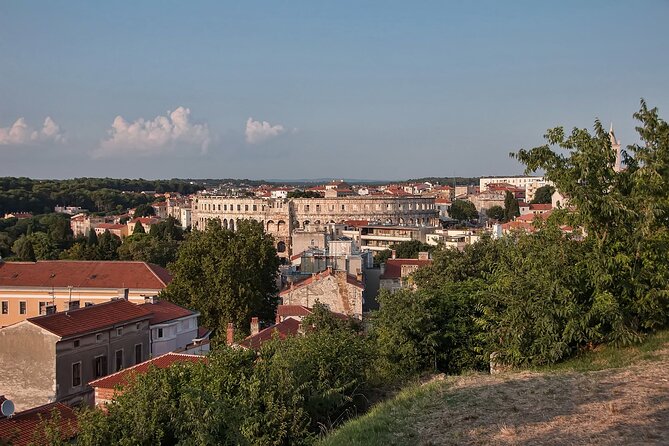
The Town Hall, also called the City Palace, sits at the edge of Pula’s Roman Forum. Its design combines Romanesque, Gothic, and Renaissance elements, while the building occupies the site of the Temple of Diana.
That combination makes the stop a compact lesson in how cities reuse important sites. Roman civic and religious spaces gave way to later buildings, yet traces of the earlier city remain part of the view.
The puzzle asks you to examine architectural details and connect them with Pula’s political past. It is a good place to slow down and look at the building as more than a backdrop for photographs.
The forum area also helps you understand the route’s overall structure. The quest keeps returning to the idea that Pula is built in layers, with each era leaving something behind for the next one.
Dom branitelja and an Austro-Hungarian chapter
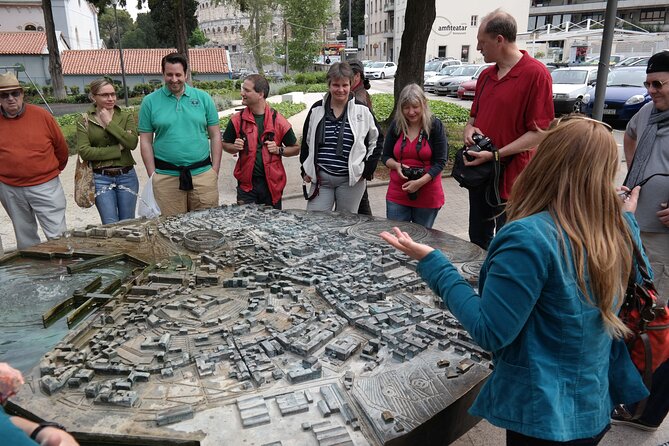
Dom branitelja was once an Austro-Hungarian naval casino. Its grand staircase, high ceilings, and ornate rooms point to a period when naval officers and imperial society shaped Pula’s public life.
The app-led challenge here reveals a different side of the Austro-Hungarian era. Instead of focusing only on forts and ships, it brings attention to social life, ceremony, and the buildings used by the naval elite.
This is an appealing stop for architecture fans. The building’s appearance supplies much of the atmosphere, while the riddle gives you a reason to examine its design. As with the other locations, the experience will not provide a long architectural lecture, so use the app as a prompt rather than a complete substitute for local interpretation.
The Roman mosaic of The Punishment of Dirce
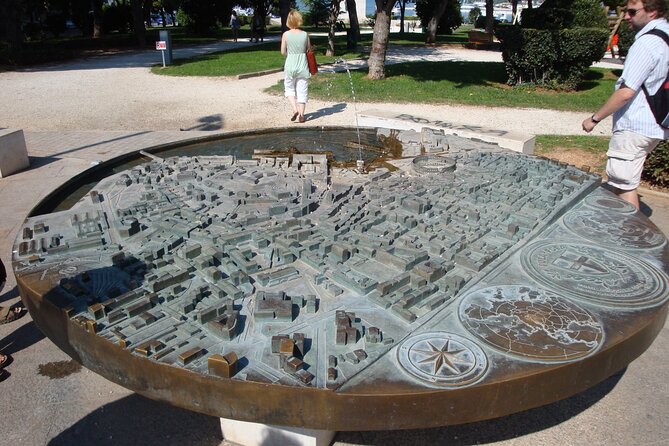
One of the route’s most unusual stops is the Roman mosaic called The Punishment of Dirce. Dating from the 3rd century, it depicts a dramatic scene from Greek mythology and is tucked behind an otherwise easy-to-miss courtyard.
The setting matters. You are not approaching a large monument that announces itself from across the city. You follow clues to find a quieter archaeological detail, then use the mosaic’s imagery to solve the puzzle.
This stop gives the quest one of its best moments of discovery. The mosaic shows how much of Pula’s Roman past can sit just out of sight while modern life continues nearby.
Take care with the app’s directions here. Small location details matter, and the route’s instructions are not always perfectly clear. If you feel unsure, pause and reread the clue instead of guessing quickly.
The climb to Pulski Kaštel
The final destination is Pulski Kaštel, a hilltop fortress with broad views over the city and harbor. The fort began as a Venetian stronghold and later witnessed many shifts in power and military use.
Reaching it gives the quest a strong finish. The route has moved from squares and streets to tunnels, parks, the harbor, and finally a defensive position above the city. The last puzzle connects the fortress with its long military past.
The finish at Gradinski uspon 10 means you should be ready for an uphill walk through Pula’s old streets. The information provided does not give a separate visit duration or entry detail for the fortress, so think of the location as the end point of the quest rather than a full fortress tour.
What $5.91 really gets you
At $5.91 per person, this is unusually inexpensive for a structured way to see Pula. You receive a mobile access code, ten interactive puzzles, GPS navigation, historical context, and the ability to pause and resume. For a couple, family, or small private group, the total cost remains modest.
The value depends on what you want from a tour. If you need a guide to explain every monument, answer questions, and adjust the route to your interests, this will feel limited. If you want a low-cost reason to walk through central Pula and pay closer attention, it offers a lot for the money.
Group discounts are available, and only your group participates. That private format can be helpful for families or friends who want to solve the clues together without keeping up with strangers.
The activity is offered in English. You need a phone to use it, and the access code is supplied after booking. The stated operating hours are 8:00 AM to 9:00 PM daily, from March 6, 2025, through July 2, 2027.
Who should choose this Pula activity?
I would recommend it most to families, couples, and friends who like light puzzles and independent sightseeing. The game format can draw children into monuments that might otherwise seem dull, while adults get a route through several periods of Pula’s past.
It also suits you if your schedule is uncertain. You can pause and continue later, with no fixed group departure. That flexibility is useful on a day when you want to stop for coffee, enter another attraction, or take a break from walking.
You should think twice if you prefer polished directions and detailed commentary at every stop. The first setup may feel tricky, and some route or quiz instructions can be unclear. A careful, patient approach helps.
Most participants can take part, and service animals are allowed. The activity runs near public transportation, but the supplied details do not specify a particular bus or tram line.
Booking, cancellation, and practical details
Your meeting point is Narodni trg 9, 52100 Pula. The route ends at Gradinski uspon 10, near Pulski Kaštel, so you do not finish where you began.
Confirmation arrives at booking. Cancellation is free if you cancel at least 24 hours before the scheduled start time. Inside that 24-hour window, the payment is not refunded, and changes are not accepted.
Plan for about 90 minutes, though the flexible format means your actual elapsed time can be longer. Allow extra time if you want to examine the monuments, take photographs, or pause between puzzles.
Bring a charged phone and give yourself a few minutes at the start to understand the app. Read each instruction closely, especially the first image-based challenge. That small bit of preparation should make the rest of the route easier.
Should you book the Pula Empire Secrets quest?
Book it if you want a cheap, private, English-language walk that turns Pula’s streets into a series of small challenges. The Roman arch, Zerostrasse, Tito’s Park, the marina, the mosaic, and the Kaštel give the route a good spread of places and time periods.
Skip it if your priority is expert narration or effortless navigation. This is a game first and a history tour second. For the price, its flexibility and range make it a strong choice for independent explorers, but you need to bring some patience and curiosity.
FAQ
How long does the Pula Empire Secrets Exploration Game and Tour take?
The experience lasts approximately 1 hour and 30 minutes.
What is the price?
The listed price is $5.91 per person.
Is there a live tour guide?
No. This is a self-guided activity using a mobile access code, GPS navigation, puzzles, and historical context.
What language is available?
The experience is offered in English.
Where does the activity start?
It starts at Narodni trg 9, 52100 Pula, Croatia.
Where does the activity finish?
The route ends at Gradinski uspon 10, 52100 Pula, Croatia, near Pulski Kaštel.
How many puzzles are included?
The experience includes 10 interactive puzzle challenges.
Can I pause the activity?
Yes. You can pause and resume the quest and explore at your own pace.
Is this a private activity?
Yes. Only your group participates.
What is the cancellation policy?
You can cancel for a full refund up to 24 hours before the experience start time. Cancellations or changes made within 24 hours are not accepted, and the amount paid is not refunded.
Just added around the world
- Digital puzzle tour with Marcus Aurelius’ order★ 5.0 · 5 reviews
- The Vienna Augmented Reality Puzzle Rally★ 5.0 · 7 reviews
- Vienna Highlights Self guided scavenger hunt and Walking Tour★ 4.0 · 5 reviews
- True Crime mobile puzzle rally Vienna★ 4.0 · 3 reviews
- Verona Scavenger Hunt and Highlights Self Guided Tour★ 4.0 · 17 reviews
- Time Travel to Ottoman Vidin: Exploration Game and Tour★ 5.0 · 2 reviews
- Historical treasure hunt in the city of Versailles★ 4.0 · 15 reviews
- Verona Scavenger Hunt and Highlights Self Guided Audio Tour★ 4.5 · 7 reviews
Croatia Escape Games, compared.
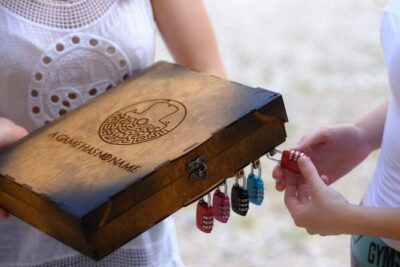
Game of Thrones Private Outdoor Escape Game in Dubrovnik
Read our review →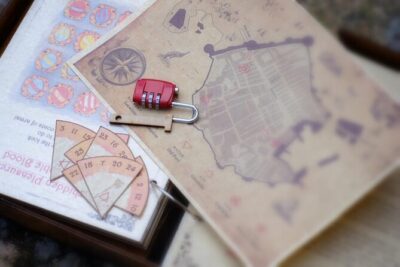
Outdoor Escape Game Dubrovnik – The Spy And The Traitor (History theme)
Read our review →
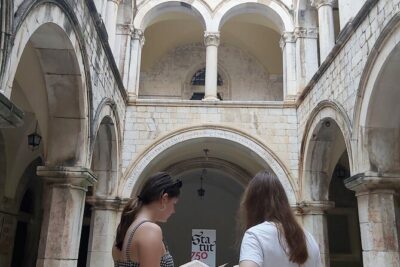
Mysterious Game of Dubrovnik – Private Mystery walking tour
Read our review →
Dubrovnik Scavenger Hunt and Highlights Self Guided Audio Tour
Read our review →
Dubrovnik Game of Thrones Bundle: Tour, Escape Room, Throne
Read our review →Browse the lists this tour appears in