
Review · VIENNA
Vienna: The Great Plague Exploration Game
Vienna’s old center becomes a smartphone scavenger hunt on this self-guided game, which links churches, cafés, medieval oddities, and imperial sights through a chain of clues. You start at St. Rupert’s Church and finish at the Hofburg, walking through some of the city’s most rewarding streets without following a guide holding up a flag.
I like the freedom to stop for coffee or linger at a sight, and I like the way the route sends you through smaller streets you might otherwise miss. It costs only $7.23 per person, with free participation for children, so it offers strong value for families and friends.
The catch is that this is a game first, not a traditional tour. If you want long explanations from a historian, you may find the audio stories and short challenges too light. The app also requires careful answers, and some players have had trouble getting correct responses accepted.
Key points to know before you book
- A self-guided route through central Vienna: Walk from St. Rupert’s Church to the Hofburg with no physical guide.
- Clues reveal small details: Look for old murals, nailed tree trunks, stained glass, church features, and historic façades.
- Flexible timing: The game takes about 90 minutes, but you can pause for coffee, sightseeing, or lunch.
- Excellent family value: Children play free, and easily distracted youngsters get an active task instead of a long lecture.
- Bring a working smartphone: The game depends on app access, written answers, clues, and audio stories.
- Expect light history, not a full lecture: The storyline adds context, but the main pleasure is solving and wandering.
Why this Vienna game feels different from a normal walking tour
The route uses Vienna as a puzzle board. You receive a clue, walk to a landmark, inspect what is around you, and enter an answer to continue. This simple structure changes how you look at the city. Instead of passing an old doorway or church detail, you stop and search for it.
The route also has a loose plague-era story tied to the song about dear Augustin. One German-language review described how the game helped explain the meaning behind the song’s verses. That gives the route a stronger narrative thread than a basic list of city sights.
Still, keep your expectations in check. The experience gives you audio stories and background information, but each stop is short. You may spend ten minutes at one location, then move on. I would pair this with a museum visit or a proper guided tour if Vienna’s art and political history are your main goals.
The private format is useful. Only your own party plays together, so you do not need to keep pace with strangers or feel awkward solving a clue aloud. Groups of more than 15 people must make multiple bookings, but smaller families, couples, and friend groups should find the format easy to manage.
More City Exploration Games in Austria:
- Salzburg Sound of Music Quest: Self-Guided Escape Game
★ 3.5 · 10 reviews - Mozart’s Salzburg Exploration Game and Tour
★ 4.0 · 8 reviews - CITY QUEST LINZ: uncover the secrets of this city!
★ 4.5 · 6 reviews
Starting at St. Rupert’s Church
Begin at Ruprechtsplatz, beside St. Rupert’s Church. This is a fine starting point because the church is far older than the grand imperial buildings that usually dominate first-time visits. It dates back roughly 13 centuries and incorporates stone from an ancient Roman settlement.
Inside, you are asked to look around for an answer before the next location opens. That first task sets the tone: observation matters more than speed. You are not simply told what to see. You have to notice it.
St. Rupert’s is dedicated to Rupert of Salzburg, the patron saint of Danube salt merchants. It also has Vienna’s oldest stained-glass window and oldest bells, according to the supplied description. A window in the vaulted apse, showing Christ on the cross with the Madonna and Child below, has survived from the 13th century.
Admission at this stop is free. The church can also host atmospheric ancient-music concerts in summer, with evening performances in July, though the game itself does not include a concert. If the church is open when you arrive, give yourself a quiet moment before starting the puzzle.
Griechenbeisl and the city’s musical past
The next section brings you to Griechenbeisl, one of Vienna’s oldest restaurants. Its name means Greek Inn, a reference to Greek merchants and Levant travelers who settled in the area. This is the sort of stop that makes the game feel connected to everyday city life rather than only grand monuments.
The tavern is linked with Mozart, Beethoven, and Schubert. You can also look for framed signatures in the Mark Twain room, where names such as Luciano Pavarotti and Johnny Cash appear among the famous diners and performers connected with the place.
The challenge asks you to inspect the area and solve a question before moving on. You do not need to pay for a meal to take part, since admission is free. Still, the stop gives you a natural place to pause for food if you want to turn the 90-minute route into a relaxed afternoon.
That flexibility is one of the best parts of the format. A normal walking tour keeps moving. Here, you can stop for a drink, explore nearby streets, then return to the game when ready.
Bäckerstrasse and Vienna’s odd medieval mural
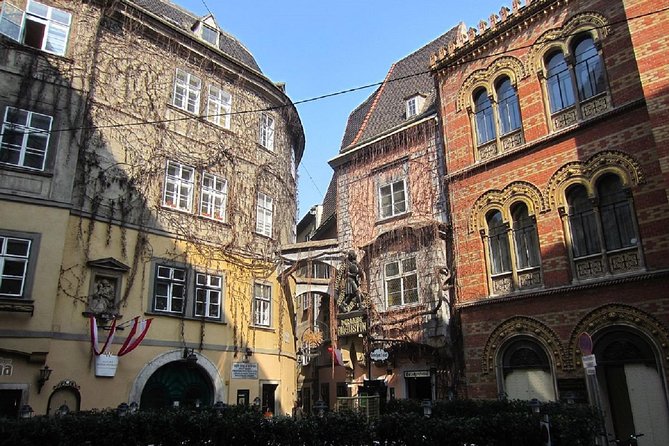
Bäckerstrasse adds a small but memorable piece of street art. At No. 2, look for a mural on the façade of the Hasenaus, or Hare House. It shows a wolf and a cow wearing spectacles while playing backgammon.
The image is unusual enough to reward a careful look. Its meaning is not certain. Some interpretations connect it with a former scene of medieval life, while others read it as an allegory about conflict between Protestants and Catholics. The game uses this curiosity as a clue, encouraging you to examine the building instead of simply walking past.
The street itself deserves attention. Bäckerstrasse has 17th and 18th-century façades, including a 17th-century tower at No. 2, the Palace of Count Seilern at No. 8, and the Schwanenfeld House at No. 7, with a Renaissance courtyard. No. 16 is another notable address.
This is one of the route’s better sections for people who enjoy architectural details. The stop lasts only about five minutes, but you can easily spend longer looking at façades and courtyards.
More Self-Guided Tours in Austria:
- Vienna: Scavenger Hunt Self-Guided Tour
★ 4.7 · 83 reviews - Graz Scavenger Hunt and Sights Self Guided Tour
★ 4.0 · 9 reviews - Vienna Highlights Self guided scavenger hunt and Walking Tour
★ 4.0 · 5 reviews - Innsbruck Self Guided Sherlock Holmes Murder Mystery Game
★ 4.0 · 5 reviews
Stephansplatz and the Stock im Eisen
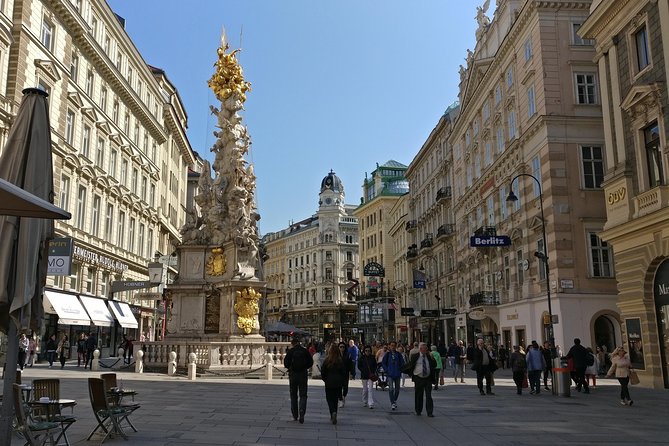
From Bäckerstrasse, follow the clue toward Stephansplatz. The square is one of central Vienna’s main gathering points, but the game gives you a reason to examine it instead of treating it as a place to cross on the way to the cathedral.
Next comes Stock im Eisen, the famous nailed tree trunk at the corner of Kärntner Strasse. At first glance, the object looks strange enough to inspire old stories about Satan. Its more practical explanation is a tradition in which people hammered nails into the trunk for good luck.
The medieval trunk section now sits on a pedestal about 1.5 meters high. An iron ring and dummy lock surround it. You can take as much time as you need at this point before following the next clue, which makes it a useful place to pause if the square is crowded or your group needs a break.
This stop shows the game at its best. It sends you toward a small object that many people could pass without understanding. You learn a little, solve a task, and leave with a detail that is easy to remember.
St. Stephen’s Cathedral deserves extra time
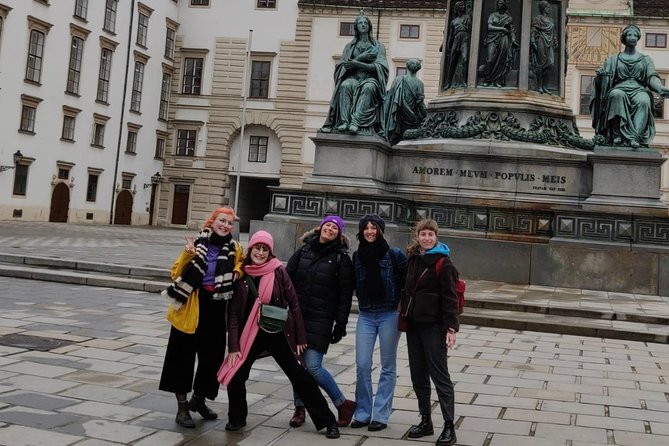
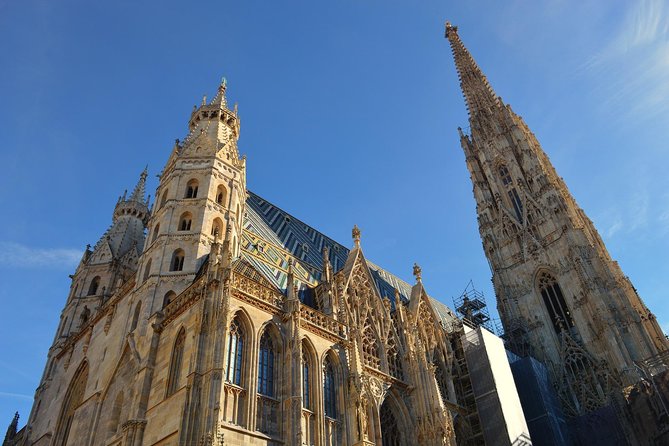
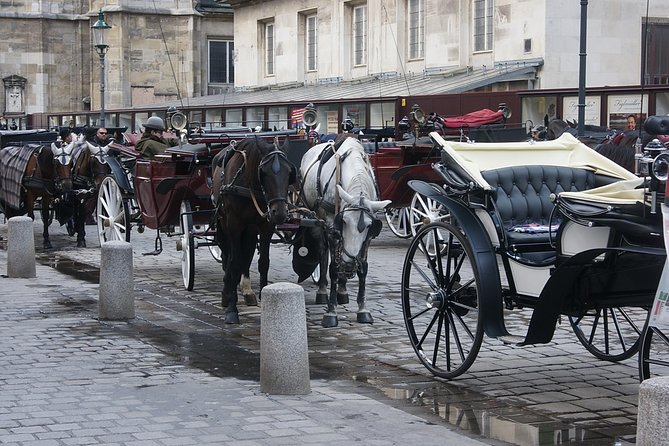
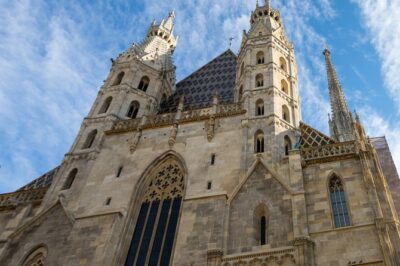
St. Stephen’s Cathedral is the route’s grandest stop. The building dates from the 12th century and ranks among Austria’s major Gothic landmarks. The game asks you to look around and solve another challenge, but you should not rush away after entering the answer.
The roof is covered with about 230,000 glazed tiles arranged in colorful patterns. The double-headed eagle reflects the Habsburg imperial past, while other roof sections carry the arms of Vienna and the Republic of Austria. The tower room has 13 bells and offers a broad view over the city.
Admission to the cathedral is not included. That matters when you compare this experience with a paid guided tour. The game takes you to the door and gives you a reason to inspect the building, but it does not replace a cathedral ticket or a full interior visit.
Plan your timing around your interests. If you only want to complete the clue, 15 minutes may be enough. If you want to explore the cathedral properly, add more time and budget for admission.
A coffeehouse option at Frauenhuber
The route also points you toward Café Frauenhuber on Rauhensteingasse. It is described as Vienna’s oldest coffeehouse, dating to 1746, and is associated with Mozart and Beethoven, who reportedly played table music there for diners between 1782 and 1791.
This is not listed as one of the numbered puzzle stops, so treat it as an optional cultural pause rather than a required stage. That is useful because Vienna’s coffeehouse tradition is best enjoyed slowly. You can sit down, order a drink, and let the game wait.
The café is known for a calm, traditional atmosphere rather than a hurried stop. If you are playing with children, this may be the point where adults enjoy a break while younger players reset before the next clue.
Art at the Albertina and power at the Hofburg
The route continues to the Albertina, housed in the largest Habsburg residential palace. Its collections cover modern art, graphic art, architecture, and photography. The museum holds more than 50,000 drawings and over one million master prints, displayed on a rotating basis.
Works associated with Impressionism, Fauvism, German Expressionism, and the Russian avant-garde are part of the collection. Monet’s Water Lily Pond is one named highlight. The building also gives you a taste of Habsburg palace life, even if you only stop outside for the game.
Admission is not included. Ten minutes may be enough for the clue, but it is not enough for a serious museum visit. If art interests you, plan a separate entry and do not treat the Albertina as a quick checkbox.
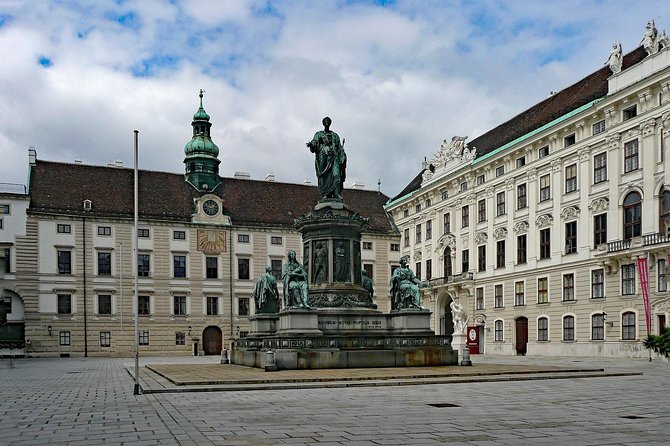
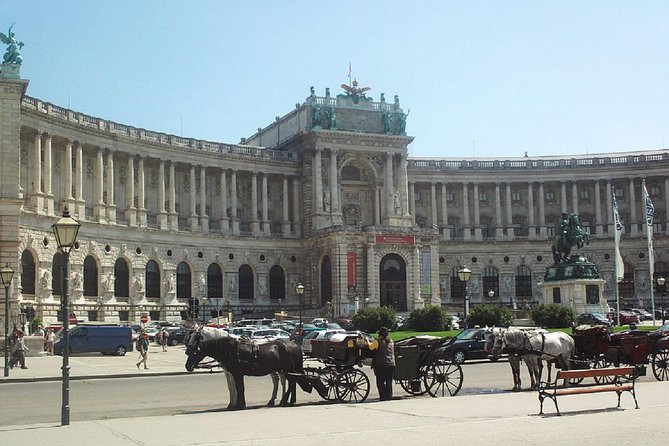
The final stop is the Hofburg, where the game ends. The palace served as the Habsburg residence and seat of government until 1918 and remains the workplace and home of Austria’s president. Its complex includes the Imperial Apartments, the Sisi Museum, the Silver Collection, the National Library, and the Hall of Ceremonies.
The Hofburg is a fitting finish because it brings the route from medieval church and street details to imperial Vienna. Once the final challenge is complete, you can keep exploring at your own pace.
Price, timing, and app matters
At $7.23 per person, the price is low for a private activity covering this much of central Vienna. Children play free, group discounts are available, and you are not paying for a guide, transport, or included museum entry. The value is strongest if you already plan to visit the sights and want a playful route between them.
The advertised duration is about 90 minutes. In real use, your timing can change a lot. You may finish quickly if the clues are easy, or take most of a day if you stop for coffee, visit the cathedral, enter the Albertina, or follow side streets.
The game can be played at any time after booking, between the stated daily operating hours of 7 a.m. and 10 p.m. You can also take a break and return later. It is usually booked about 10 days ahead, so reserving before your Vienna trip is sensible.
The app deserves attention before you begin. One player had trouble installing and activating the game but received help and resolved the issue in about 15 minutes. Another stopped after the opening point because the app was difficult to use. I suggest downloading and opening everything before reaching the start, and entering answers exactly as requested.
Some correct answers may be rejected if capitalization, spacing, or connecting words do not match the expected format. That can be frustrating, especially when you know the answer. Read each prompt carefully and keep support contact information available.
Who will enjoy the Great Plague Exploration Game?
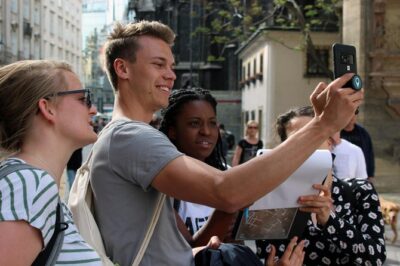
I would recommend this for families with older children or teenagers, couples who like puzzles, and friends who want a low-cost afternoon activity. The route gives easily distracted children a job to do, while adults get a reason to inspect Vienna’s smaller details.
It also suits repeat visitors. If you have already seen Stephansdom and the Hofburg, the clues may draw your attention to lesser-known objects and side streets. Several people found the route led them to areas they would not have visited on a standard sightseeing walk.
It is less suitable if you want a detailed lecture, a human guide, or a tightly controlled schedule. The route is offered in English, but the app and answer system remain central to the experience. If your group dislikes phones during sightseeing, choose a conventional walking tour instead.
Free cancellation is available when you cancel at least 24 hours before the local start time. Changes or cancellations inside that window do not receive a refund.
Should you book it?
Book the Great Plague Exploration Game if you want a cheap, flexible way to connect Vienna’s medieval corners with its major sights. The best parts are the freedom to pause, the private group format, and the small discoveries at Bäckerstrasse, Stock im Eisen, and St. Rupert’s Church.
Skip it if you expect a guide to explain every building in detail. For most families and curious couples, though, $7.23 buys a useful route, a bit of story, and a fresh reason to look closely at Vienna.
FAQ
Is this a guided walking tour?
No. It is a self-guided city game played on your smartphone, with audio stories, clues, questions, and puzzles.
How long does the experience take?
The estimated playing time is about 1 hour and 30 minutes. You can take breaks, stop for coffee, and continue later, so the overall outing can take longer.
Where does the game start?
It starts at St. Rupert’s Church, Ruprechtsplatz 1, 1010 Vienna.
Where does the game finish?
The final stop is the Hofburg in central Vienna.
Is admission to the sights included?
Admission is free at St. Rupert’s Church, Griechenbeisl, Bäckerstrasse, Stephansplatz, and Stock im Eisen. Admission to St. Stephen’s Cathedral, the Albertina, and the Hofburg is not included.
Can children play for free?
Yes. The experience is free for kids.
What happens if I need to cancel?
You receive a full refund if you cancel at least 24 hours before the experience’s start time. Cancellations or changes made less than 24 hours before the start are not refunded or accepted.
Just added around Austria
- Digital puzzle tour with Marcus Aurelius’ order★ 5.0 · 5 reviews
- The Vienna Augmented Reality Puzzle Rally★ 5.0 · 7 reviews
- Vienna Highlights Self guided scavenger hunt and Walking Tour★ 4.0 · 5 reviews
- True Crime mobile puzzle rally Vienna★ 4.0 · 3 reviews
- Mozart’s Salzburg Exploration Game and Tour★ 4.0 · 8 reviews
- Zell am See Exploration Game and Tour★ 3.0 · 2 reviews
- Salzburg Sound of Music Quest: Self-Guided Escape Game★ 3.5 · 10 reviews
- CITY QUEST LINZ: uncover the secrets of this city!★ 4.5 · 6 reviews
Vienna Escape Games, compared.
Private City Discovery walk – Historical Treasure hunt
Read our review →
Vienna Highlights Self guided scavenger hunt and Walking Tour
Read our review →
Browse the lists this tour appears in