
Review · SHOPPING TOURS
Kyoto Flea Market Cultural Exchange with English Learners
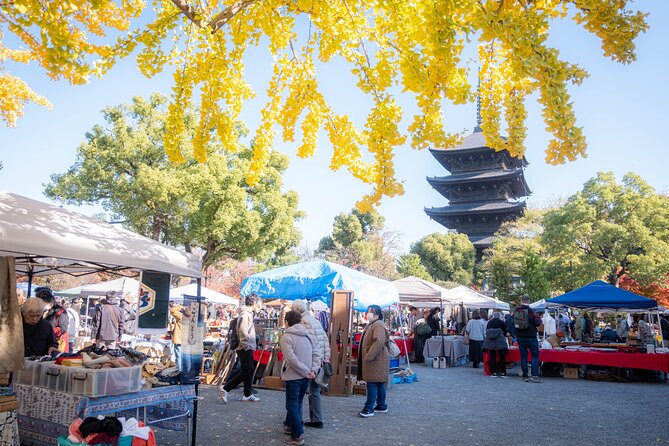
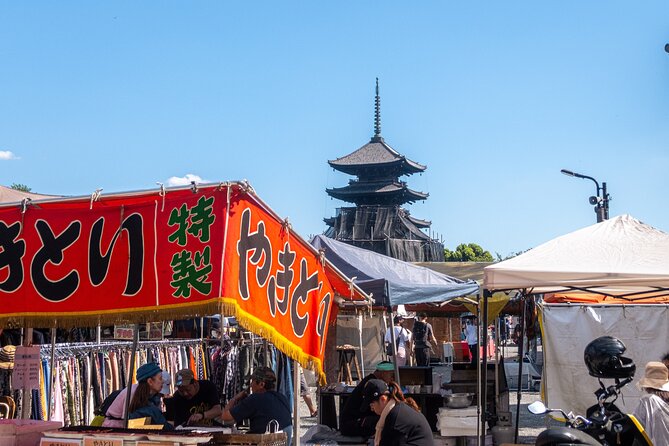
Kyoto’s best cultural encounters do not always happen behind a ticket gate. This private walk takes you to the Kobo-ichi and Kotto-ichi flea markets at To-ji Temple, where old ceramics, clothing, toys, and collectibles sit on ordinary stalls. Your guide is a local English student, so the conversation works both ways: you get local insight, and your guide gets real practice speaking English.
I like two things here. First, the guide can help you handle friendly price negotiations, a useful service when you are unsure how Japanese market bargaining works. Second, the tour costs only $13.01 per person and includes a private guide, a strong value for a personal introduction to Kyoto. The main drawback is that the activity depends on good weather, and the exact market schedule is not provided, so confirm your date before booking.
Key points at a glance
- Two flea markets at To-ji Temple: Browse Kobo-ichi and Kotto-ichi for antique ceramics, vintage clothes, old toys, and unusual collectibles.
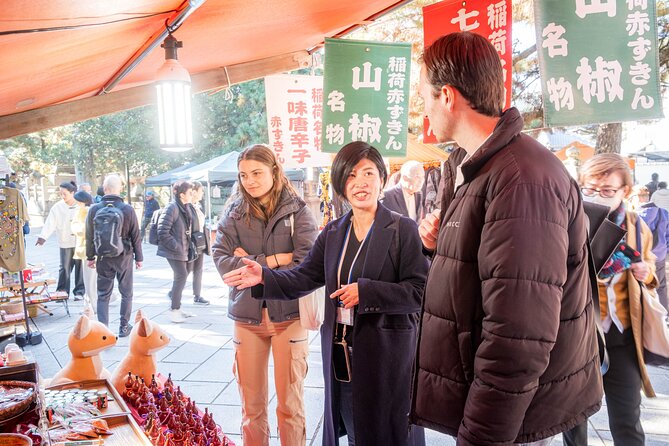
- A local English learner as your guide: Expect relaxed conversation about Japanese customs, Kyoto life, and places worth visiting.
- Help with haggling: Your guide can assist with friendly price discussions when you find something you want to buy.
- A private outing for your group: Only your party takes part, making it easier to ask questions and set the pace.
- A free temple-ground visit: You walk around the To-ji grounds, including views of the famous five-story pagoda, without an additional admission charge for the free area.
- Low cost, extra transport expense: The tour is $13.01 per person, but public transportation is not included.
Why To-ji’s flea markets make a good Kyoto outing
To-ji gives you two sides of Kyoto in one stop. The temple offers calm grounds and a famous five-story pagoda. The market adds the everyday side of the city, with sellers laying out objects that have passed through Japanese homes and collections.
That mix matters. A standard temple visit can tell you about architecture and religion, but a flea market shows what people buy, keep, use, and pass along. You might find antique ceramics, vintage clothing, old toys, or rare collectibles. The appeal is not simply finding a souvenir. It is learning how to look at objects in their local setting.
The market names are Kobo-ichi and Kotto-ichi. You will browse the stalls with a guide who can explain customs and help you judge how to approach a seller. If you are not used to Japanese markets, that small bit of support can make the difference between walking past an interesting item and asking about it.
The tour is also more social than a standard sightseeing walk. Your guide is studying English, so you can expect conversation rather than a one-way lecture. You may discuss Japanese habits, Kyoto neighborhoods, food, shopping, or your own trip. The format is especially appealing if you like meeting local people but do not want to commit to a long class or a full-day tour.
A few more escape games around the world worth a look
- Outdoor Escape Room in Chicago – Fulton Market
★ 5.0 · 28 reviews - Antiques and Curios – Private Flea Market Treasure Hunt
★ 4.5 · 10 reviews
Starting in central Kyoto and walking toward To-ji
The listed starting point is 544 Yamabushiyamacho in Nakagyo Ward, Kyoto. The outing begins at 1:00 pm and ends at To-ji Temple, at 1 Kujocho in Minami Ward. Since the route uses public transportation, you should allow time to reach the meeting point and budget separately for the ride.
The precise route is not fully described, so you should treat the journey as part of the local orientation rather than a fixed sightseeing circuit. Your guide is there to lead you toward To-ji and the market, answer questions, and point out useful places along the way. The walking portion should suit most people, as the activity notes that most participants can take part.
A starting point in central Kyoto also gives you a practical way to connect this outing with the rest of your day. You could arrange another central stop before 1:00 pm, then finish near To-ji. Do not plan too tightly around the end, since the total time is approximately one hour and 30 minutes to two hours.
The end point is useful in its own right. Once you finish at To-ji, you are not returned to the starting address. You will need to decide where to go next using public transportation or your own arrangements. That is convenient if To-ji fits your plans, but less convenient if you expected a round-trip guided walk.
Entering Kobo-ichi and Kotto-ichi
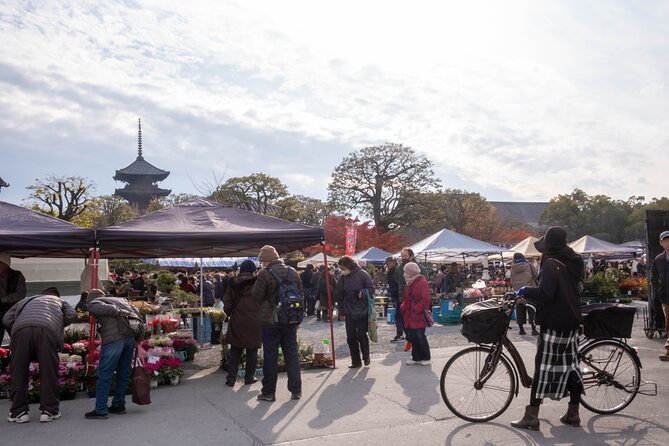
The main portion of the outing takes place at To-ji’s flea markets. Kobo-ichi and Kotto-ichi bring together stalls with a wide mix of objects, so this is not a polished shopping arcade with identical souvenirs. The fun comes from looking carefully and noticing what catches your eye.
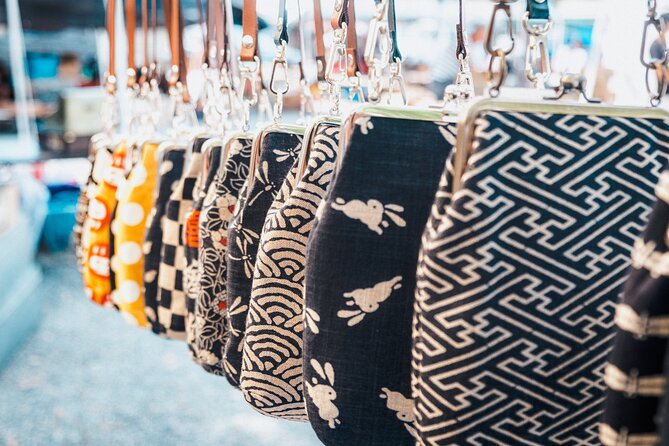
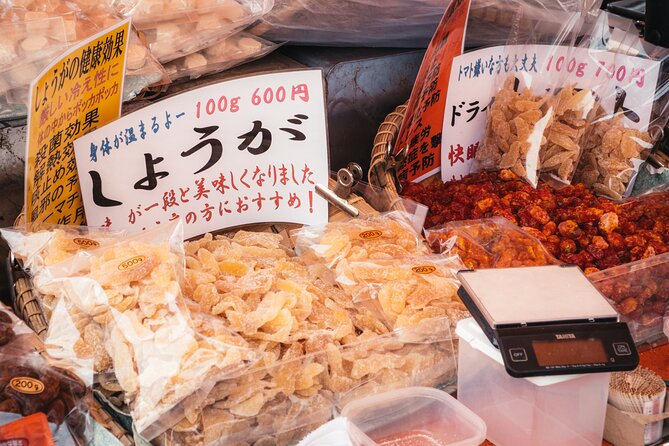
You might find an antique plate, a piece of vintage clothing, an old toy, or a collectible you would never see in a regular department store. The information does not promise a particular item on a particular date, so keep your expectations open. Flea markets change from seller to seller and from market day to market day.
The guide’s role adds value in three practical ways. First, you can ask what an object is or how it might have been used. Second, you can ask about Japanese customs connected to shopping and gift giving. Third, you can get help when a price discussion begins.
Haggling in a flea market is not the same as bargaining in every other country. The tour presents it as friendly negotiation, not aggressive price cutting. Your guide can help you understand how to make an offer and how to keep the exchange polite. You still decide what to buy and what to pay, but you do not have to handle every conversation alone.
Bring patience. A market visit is better when you allow time to scan tables, compare objects, and ask questions. If you only want a quick photograph of the pagoda, this will feel slow. If you enjoy browsing and talking, the pace is likely to suit you.
To-ji’s pagoda and free temple grounds
To-ji’s five-story pagoda gives the market visit a memorable setting. The pagoda is one of Kyoto’s familiar sights, but this tour approaches it as part of a broader neighborhood and temple visit rather than a separate photo stop.
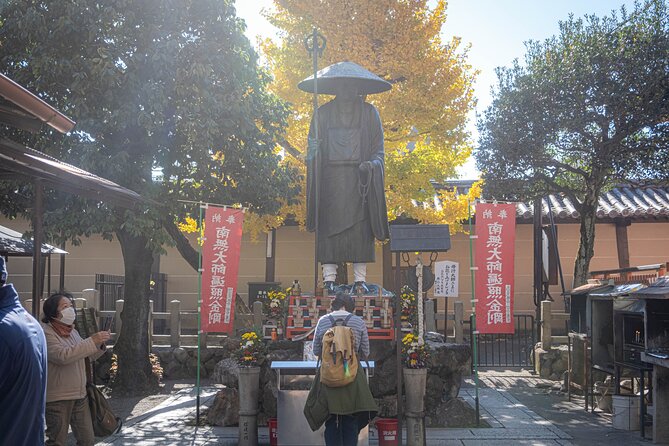
You will also walk through the free area of the temple grounds. The tour does not include a separate admission ticket for this part. That keeps the price simple, although you should not assume that every part of the temple complex or any special exhibition is included. The supplied details specifically describe access to the free area.
The contrast between the stalls and the temple grounds is one of the outing’s best features. One moment you are considering an old object on a market table. The next, you are looking across an important temple setting with the pagoda above you. Your guide can connect the place to Kyoto customs and local life, giving the visit more meaning than a quick stop for photographs.
You should also be realistic about what the tour promises. It is not presented as an in-depth temple architecture tour, a formal religious lesson, or a museum visit. The temple provides the setting and context. The main focus remains the market and the conversation with your guide.
Same place, a different puzzle:
- Sofia Escape Room – Teorema Rooms
★ 5.0 · 895 reviews - Saw2 vs Squid Game – Escape Game Montpellier
★ 5.0 · 752 reviews - Prague Wizard Experience Magic School Escape Game
★ 5.0 · 746 reviews - The Escape Game Orlando: Epic 60-Minute Adventures on I-Drive
★ 5.0 · 730 reviews
A conversation with a local English learner
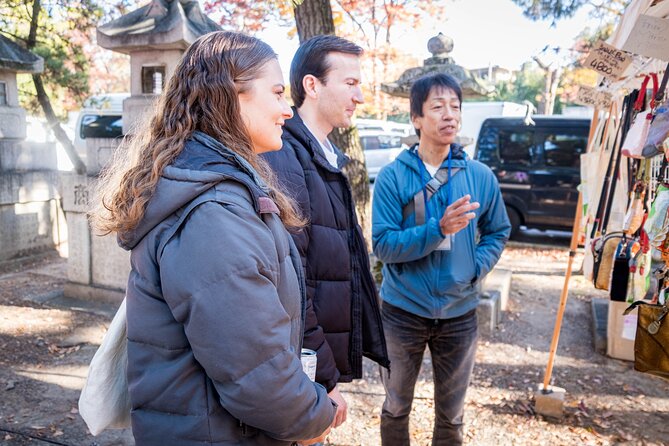
The guide is a local resident who studies English. That detail shapes the tone of the outing. You are not signing up for a formal professional guide service built around a long script. You are meeting someone keen to speak English and introduce you to Japanese culture.
That can make the exchange feel more natural. You can ask questions about customs, daily life, shopping, and Kyoto recommendations. Your guide can also suggest places to visit beyond the usual route. The experience is best when you take part actively rather than waiting for constant narration.
Previous comments about the outing highlight a friendly and entertaining guide, useful help with prices, and a particularly enjoyable conversation with a woman attending an English conversation school. No guide name is provided, and the guide may vary, so you should not book expecting a specific person.
Language level is another point to consider. The activity is designed around English practice, and the guides are English learners. Communication should be friendly and workable, but it may not have the polished flow of a private tour led by a veteran English-speaking guide. In exchange, you get a more personal cultural exchange and the chance to slow down when a phrase needs explaining.
If you enjoy meeting people, this is a major strength. If you want a tightly scripted tour with detailed dates, architectural terms, and a fixed lecture, you may prefer a conventional sightseeing guide.
What $13.01 really gets you
At $13.01 per person, this is one of the least expensive ways to arrange a private introduction to a Kyoto market. The price includes guiding and gratuities, and only your group participates. That combination is important: you are not paying simply for entry to a market, since the temple’s free area does not require an admission ticket.
You are paying for help with context, conversation, navigation, and shopping etiquette. A guide who can explain a custom or help with a price discussion may save you uncertainty, especially if you have never used a Japanese flea market.
The value is strongest for a small group that wants a personal outing. Group discounts are also available, which may make the per-person cost more attractive if you are booking with companions. Public transportation is not included, so add that cost when you plan your budget.
There is no promise that you will find a valuable antique or make a spectacular purchase. The price makes more sense if you see the outing as a cultural walk with market browsing, not as a shopping service. You may buy nothing and still get the main benefit: a local conversation and a better understanding of how to approach the market.
Timing, weather, and practical planning
The scheduled start is 1:00 pm. The total duration is approximately 90 minutes to two hours, which is long enough for a useful market visit without taking over your entire day. Since the end is at To-ji, keep your later plans flexible enough to allow for the full two-hour window.
Good weather is required. If poor weather causes the tour to be canceled, you are offered a different date or a full refund. However, the normal cancellation policy is strict: the booking is non-refundable and cannot be changed for any reason. That makes travel insurance or careful date planning worth considering if your schedule is uncertain.
The activity is near public transportation, and most people can participate. You should still expect walking around temple grounds and market stalls. The supplied details do not describe seating, step-free access, restroom arrangements, or specific support for mobility needs, so ask the provider if any of those points matter to you.
Use a mobile ticket and keep the meeting details handy. Because the starting address and ending address are different, check your route before leaving. Public transportation costs are your responsibility.
Who will enjoy this private Kyoto walk
I would recommend this outing to you if you fit one or more of these descriptions:
- You like flea markets, antiques, vintage clothing, or unusual souvenirs.
- You want to talk with a local rather than follow a long prepared speech.
- You are curious about Japanese customs and shopping manners.
- You want a low-cost private activity in Kyoto.
- You are comfortable with a guide who is practicing English.
- You want to finish near To-ji instead of returning to central Kyoto.
Families, couples, friends, and solo visitors can all use the private format. A private booking also makes it easier to ask simple questions without worrying about holding up a large group.
I would think twice if you need a guaranteed shopping haul, a named guide, a full temple tour, or a fully accessible route. I would also check the market date before booking, since the information provided does not specify which days Kobo-ichi and Kotto-ichi operate.
Should you book the To-ji market tour?
Book it if your idea of a good Kyoto afternoon includes old objects, casual conversation, a famous pagoda, and a little help with local shopping etiquette. The cost is modest, the group is private, and the strongest feature is the human exchange with a local English learner.
Skip it if you prefer major paid attractions, polished professional narration, or a fixed itinerary with guaranteed sights and shopping results. This is a flexible cultural meeting, not a high-production sightseeing tour.
For the right person, the $13.01 price is easy to justify. You get access to a local perspective, two flea markets, a temple setting, and practical haggling help. Just confirm the date, plan for transport, dress for the weather, and leave room in your schedule for the market to set the pace.
FAQ
How much does the Kyoto flea market tour cost?
The listed price is $13.01 per person. Group discounts are available.
How long does the activity last?
The outing lasts approximately one hour and 30 minutes to two hours.
What time does the tour start?
The scheduled start time is 1:00 pm.
Where does the tour begin?
The meeting point is 544 Yamabushiyamacho, Nakagyo Ward, Kyoto, 604-8156, Japan.
Where does the tour end?
The tour ends at To-ji Temple, 1 Kujocho, Minami Ward, Kyoto, 601-8473, Japan.
Is public transportation included?
No. Public transportation is not included in the tour price.
Is this a private tour?
Yes. Only your group participates in the activity.
What happens if bad weather cancels the tour?
If poor weather causes cancellation, you are offered another date or a full refund. Normal cancellations or amendments are non-refundable.
Just added around the world
- Digital puzzle tour with Marcus Aurelius’ order★ 5.0 · 5 reviews
- The Vienna Augmented Reality Puzzle Rally★ 5.0 · 7 reviews
- Vienna Highlights Self guided scavenger hunt and Walking Tour★ 4.0 · 5 reviews
- True Crime mobile puzzle rally Vienna★ 4.0 · 3 reviews
- Verona Scavenger Hunt and Highlights Self Guided Tour★ 4.0 · 17 reviews
- Time Travel to Ottoman Vidin: Exploration Game and Tour★ 5.0 · 2 reviews
- Historical treasure hunt in the city of Versailles★ 4.0 · 15 reviews
- Verona Scavenger Hunt and Highlights Self Guided Audio Tour★ 4.5 · 7 reviews
Shopping Tours, compared.

The Escape Game Las Vegas: 60-Minute Adventure at The Forum Shops
Read our review →
The Escape Game: Epic 60-Minute Adventures at the Mall of America
Read our review →

The Escape Game: 60-Minute Adventures at King of Prussia Mall
Read our review →
Minneapolis: Mall of America 1-Hour Escape Room Adventure
Read our review →


Antiques and Curios – Private Flea Market Treasure Hunt
Read our review →Browse the lists this tour appears in