
Review · CANADA
Old Town Quebec Secrets: Private Exploration Game and Tour
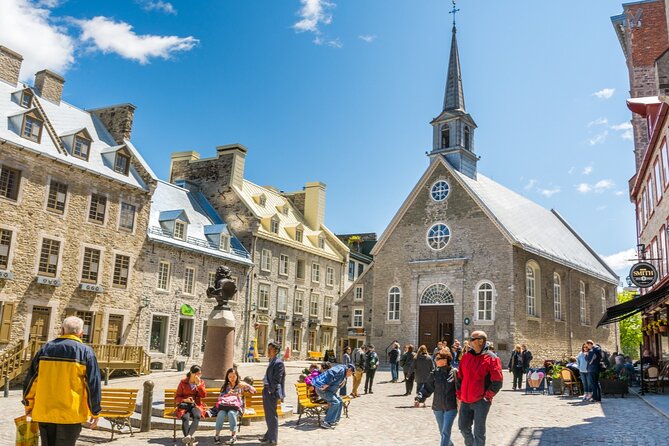
Quebec City turns sightseeing into a puzzle with this self-guided Old Quebec game, sending you from the Tourny Fountain and Saint-Louis Gate to churches, monuments, and Place Royale. You use the Questo app to solve clues, rather than follow a person carrying a flag.
I like the low price and the freedom to start, stop, or pause whenever you want. I also like the way the riddles make you look closely at details you could otherwise walk past, including an old elm tree with a cannonball caught in its roots.
The main drawback is that the game depends on accurate clues and a working app. A few puzzles have reportedly been affected by construction, changes at the sites, or awkward wording, so competitive players may get frustrated. The game is also a sightseeing activity, not a personal guided tour.
Key points to know before you book
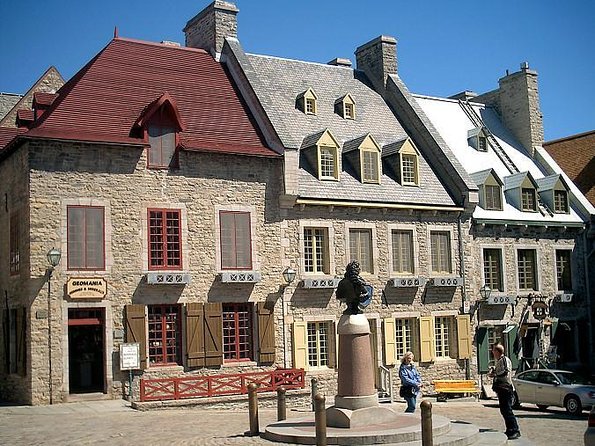
- A puzzle route through major Old Quebec sights: The path includes Tourny Fountain, Saint-Louis Gate, the Ursulines, Holy Trinity Cathedral, Place Royale, and more.
- Works without mobile data: Download or access the game as instructed, then play offline without an internet connection.
- About 90 minutes at a relaxed pace: You can pause the game, making it easier to fit around meals, shopping, or other plans.
- A private activity for your group: There is no physical guide, and only your party takes part.
- Good value at $9.29 per person: Kids play free, and group discounts are available.
- A few clues may need patience: Construction or outdated details can make some challenges less clear than they should be.
How the Old Quebec puzzle walk works

This is a city exploration game rather than a standard walking tour. You begin at 3004 Av. Honoré-Mercier, use the Questo app, and follow step-by-step directions toward Place Royale. Along the way, the game presents a question or challenge at each stop.
You do not simply read a paragraph and move on. You look around for a detail, interpret what you see, and enter an answer to advance. That small change matters. Instead of walking past a fountain or church while listening to a guide, you inspect the place with a job to do.
The route takes about one hour and 30 minutes, though your actual time depends on how quickly you solve the puzzles and how often you pause. You can begin any time after booking, and the experience is open from midnight to 11:30 p.m. every day during the stated operating period. That gives you plenty of room to avoid a busy sightseeing hour or fit the game into a larger day in Quebec City.
The activity is private, so you do not share the game with another group. That works well for a family, a couple, or friends who enjoy solving problems together. It also means you will not have a guide to answer questions or adjust the route to match your interests.
More City Exploration Games in Canada
- Street Art Exploration Game and Self-Guided Tour in Ottawa
★ 4.0 · 20 reviews - Ottawa Mystery Quest: Self-Guided Detective Adventure
★ 4.0 · 11 reviews - Rockcliffe Ottawa: Exploration Game and Tour
★ 4.0 · 9 reviews
Tourny Fountain opens the route with art and clues
The Tourny Fountain is a strong first stop because it looks decorative at a glance but has a story behind it. The work was designed by French sculptor Mathurin Moreau in 1853, shown at the 1855 World’s Fair in Paris, and produced in six copies.
The challenge asks you to examine the fountain and find the answer needed to continue. This is the kind of puzzle that gives you a reason to study the sculpture, its figures, and its setting rather than treating it as a quick photo stop.
The fountain is also a useful place to get comfortable with the game. You learn how the app presents its questions and how precise your answers need to be. If you are playing with children, this opening task can turn a formal monument into a visual scavenger hunt.
Saint-Louis Gate shows how the city once controlled movement

The route then reaches Saint-Louis Gate, whose first version was built in the late 17th century under French rule. During the British period, the army closed the gate at night, limiting movement between the walled city and the surrounding areas.
That policy had practical costs. It interfered with trade and made life harder for people who needed to move in and out of the city. The gate therefore represents more than an old entrance. It shows how fortifications shaped daily business and travel.
The puzzle asks you to inspect the site for a detail. The setting gives the question some purpose, since the gate is easiest to understand when you notice its relationship to the streets and the old city walls. You may need to slow down here, since the route is asking you to observe rather than simply identify the gate.
The cannonball tree adds a touch of local mystery
One of the more unusual stops is the old elm on Rue Saint-Louis, near Rue du Corps-de-Garde. A large cannonball appears to be lodged in its twisted roots, creating one of those odd details that catches the eye long after grand buildings have blurred together.
Calèche drivers traditionally point it out to passengers, and people passing by often stop to work out how the cannonball got there. The game uses this curiosity as a clue stop, asking you to look carefully and learn the story connected with the tree.
This is exactly where the game format earns its small fee. A regular walking route might mention the tree in passing, but a challenge encourages you to inspect the roots and think about the object. It is also a good reminder that Old Quebec is not only about famous churches and government buildings. Small, puzzling details can be just as memorable.
Same place, a different puzzle:
- Vancouver City Sightseeing Adventure: a murder mystery in Gastown
★ 5.0 · 38 reviews - Montréal Scavenger Hunt and City Highlights Walking Tour
★ 4.5 · 25 reviews - Private Vancouver Sightseeing Adventure: a Gastown murder mystery
★ 5.0 · 19 reviews - Victoria Scavenger Hunt and City Highlights Walking Tour
★ 5.0 · 17 reviews
The Ursulines connect education, religion, and the Battle of 1759

The Couvent des Ursulines was founded in 1639 and is the oldest institution of learning for women in North America. Its chapel also holds the burial place of French general Louis-Joseph Montcalm, who died in the 1759 battle that decided the future of New France.
This stop brings several strands of Quebec City’s past together. You get the story of women’s education, the role of religious communities, and the military struggle between France and Britain. The game asks you to search for an answer at the site, so you will want to pay attention to visible signs and architectural details.
The challenge format can make a stop like this more approachable for children. Instead of expecting them to absorb a long lecture, you give them one fact to find. Adults who want a fuller explanation should treat the game as an introduction, not a substitute for a museum visit or a longer guided tour.
Holy Trinity Cathedral marks an important British-era change

Built in 1804, the Cathedral of the Holy Trinity was the first Anglican church built outside Britain. It is now a National Historic Site of Canada, and its neoclassical Palladian design was modeled after St Martin-in-the-Fields in London.
The church helps explain the change in Quebec’s political and religious character after the British took control. Its style also gives you something concrete to examine. Look for the formal balance and classical design that set it apart from the older French Catholic buildings nearby.
The game sends you searching for a clue at the cathedral. This creates a useful comparison between architectural traditions. You are not only collecting answers. You are moving through a city where French and British influences sit close together.
Place de l’Hôtel-de-Ville reveals the changing face of the upper town
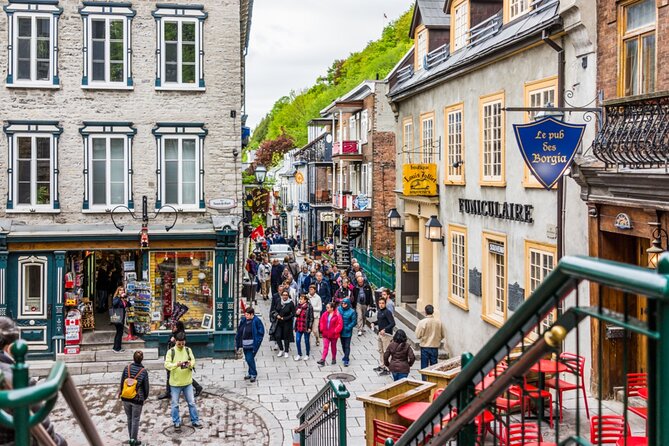
The public square now known as Place de l’Hôtel-de-Ville has carried several names, including Grande Place, Grande Place de la Haute Ville, Place du Marché, Place Notre-Dame, and Place de la Basilique. In 1900, after city hall was built, it became Place de l’Hôtel-de-Ville.
The changing names reflect changing uses. A market square, a civic space, and a place associated with the basilica can all occupy the same patch of city. The puzzle asks you to examine the square and find the answer that moves you along.
This is a good stop for anyone who likes urban history. You see how a public space can change as the city grows, even when its basic shape remains. It is also a spot where you may want to pause before entering the next challenge, since the square connects several important buildings.
The Séminaire de Québec explains the colony’s early religious structure
The Séminaire de Québec was founded in 1663 by François de Laval, the first bishop of Quebec. The society trained priests, worked to evangelize Indigenous people, and administered the colony’s parishes.
The site helps you understand how closely religious, educational, and administrative life were tied together in early Quebec. It was not simply a place for worship. It helped organize the colony and train the people who would serve its churches.
The game turns this institutional story into another observation task. You will need to look around for the answer rather than expect a detailed lecture from the app. If you already know little about Quebec’s early religious institutions, this stop may prompt you to read more afterward.
Champlain’s monument points to the city’s founder
A monument honoring Quebec City founder Samuel de Champlain was created by Paul Chevré and inaugurated in 1898. It gives the route a clear link to the person most associated with the city’s founding.
This stop is less about solving a complicated historical question and more about placing Champlain within the city’s public memory. The monument shows how later generations chose to honor the founder.
As with the other stops, the challenge requires you to inspect the monument. That makes you notice the work itself, not just the name attached to it. You may find the question easy or slightly fussy depending on how the app phrases it.
Jean-Paul Lemieux brings Canadian art into the walk
Jean-Paul Lemieux, who lived from 1904 to 1990, was one of Canada’s leading 20th-century painters. He worked in several styles, represented by five artistic periods.
This stop adds art to a route otherwise weighted toward churches, gates, government buildings, and colonial history. It reminds you that Quebec City’s identity is not frozen in the 17th or 18th centuries.
The puzzle asks you to find information connected with Lemieux. If you enjoy architecture and sightseeing, this may be a welcome change of pace. One strong point of the game is this mix of subjects. You are not solving the same type of question at every stop.
Place Royale is the route’s historic center
The game leads you to the precise area where Samuel de Champlain built the first permanent French settlement in the Americas. In 1608, his first habitation served as a fort, store, trading post, and residence.
That combination explains why Place Royale is called the cradle of French North America. It was not just a house or military post. It was a working base for settlement, trade, defense, and daily life.
The route ends on Rue des Pains Bénits in the Place Royale area. Reaching this point gives the game a satisfying shape, since you finish where Quebec City’s French settlement began. The app guides you step by step, but follow its directions closely so you do not miss the intended ending.
Parliament and city hall broaden the route
Two later civic buildings add balance to the older colonial stops. Quebec’s Parliament Building is an eight-story structure designed by Eugène-Étienne Taché and built from 1877 to 1886. It houses the Parliament of Quebec, including the Lieutenant-Governor and the National Assembly.
The route also includes Quebec City Hall, inaugurated in 1896 in Old Quebec. Its site slopes because it was built on a hill, and the building once occupied the location of the Jesuit College, also known as the Jesuit Barracks, from the 1730s to 1878. City hall became a National Historic Site of Canada in 1984.
These stops help you see Quebec City as a living capital, not only a preserved old quarter. They also give the puzzle walk more visual variety. You move from military gateways and religious sites to political institutions and civic architecture.
Notre-Dame-de-Québec closes the historical circle
Notre-Dame-de-Québec has served as the first Catholic parish in North America since 1664. It became a cathedral in 1674 when it became the seat of the Diocese of Quebec, and it gained basilica status two centuries later.
The church has survived shelling, fires, reconstructions, and renovations. That long sequence gives the final stop real weight. You are looking at a building that has changed repeatedly while remaining central to the city’s religious life.
The game again asks you to find an answer at the site. Take a moment to look beyond the puzzle. The building’s history is best understood as a record of damage, rebuilding, and continued use.
What the $9.29 price really buys you
At $9.29 per person, this is an inexpensive way to add structure to a walk through Old Quebec. You are paying for a private digital activity, not a person who can explain every building, answer follow-up questions, or change the route on the spot.
The value is strongest if you already want to walk through the old city and enjoy riddles. The game gives your group a shared task and points you toward places you might otherwise overlook. One couple particularly enjoyed the combination of architecture, sightseeing, history, and puzzles, and found that the route led them to areas they might not have visited alone.
Kids play free, which improves the family value. Groups larger than 15 can make multiple bookings. Group discounts are also available, though the exact discount is not specified here.
The price is less attractive if you want a polished, fact-packed tour with a guide. You may need hints, as one group did, and occasional app or clue problems can eat into the fun. Still, at this price, the risk is modest, especially if you treat it as a game with historical information rather than a formal tour.
App limits, clue accuracy, and practical planning
The offline feature is useful in Quebec City. You do not need a data connection or internet access while playing, which removes one common worry when walking through an unfamiliar city. Still, read the instructions carefully before you begin and make sure the game is ready on your phone.
A more serious concern is clue maintenance. Some challenges have been affected by construction or changes at the sites, and a few have been worded poorly enough to seem incorrect. If you are highly competitive, that can spoil the mood. If you are playing casually, use the hints and keep moving when a clue feels unreasonable.
There is no physical guide. Service animals are allowed, public transportation is nearby, and most people can take part. The start and finish are different, so plan your next activity from the Place Royale area rather than assuming you will return to the starting point.
Free cancellation is available up to 24 hours before the start time. Changes or cancellations inside that window are not refunded.
Who should book this Quebec City experience?
I would choose this game for families with older children, couples who enjoy riddles, and friends who want a reason to examine the city closely. It also suits repeat visitors who have already seen the headline sights and want a different way to move through Old Quebec.
You should skip it if you want a personal guide, a carefully paced lecture, or guaranteed precision in every clue. People with limited mobility should also consider the walking format and the route between stops, since the available information does not give a detailed accessibility description.
Should you book Old Town Quebec Secrets?
Book it if $9.29 feels like a fair bet on a playful walk through Quebec City’s most important sights. The best parts are the flexible timing, offline play, private format, low cost, and unusual stops such as the cannonball tree and the Tourny Fountain.
Go in with the right expectations. This is not a guided tour, and the app may not handle every site perfectly. If you can laugh off a fussy clue, the game adds a welcome layer of purpose to Old Quebec. If you need every fact and direction to be exact, spend more on a live guide instead.
FAQ
How long does Old Town Quebec Secrets take?
The experience takes approximately one hour and 30 minutes. You can pause the game, so your total time may be longer if you stop for photos or other activities.
Does the game require an internet connection?
No. The city game can be played offline without mobile data or an internet connection.
Is there a physical tour guide?
No. This is a self-guided activity played through the Questo app. The app gives you directions and challenges.
Where does the game start and finish?
It starts at 3004 Av. Honoré-Mercier in Quebec City. It ends on Rue des Pains Bénits in the Place Royale area.
Can I choose when to play?
Yes. You can play any time after booking, and you can begin, pause, and continue when it suits you. The stated operating hours are daily from 12:00 a.m. to 11:30 p.m.
Is this a private activity?
Yes. Only your group participates. If your group has more than 15 people, you need to make multiple bookings.
How much does it cost, and do children pay?
The listed price is $9.29 per person. Kids play free, and group discounts are available.
More Self-Guided Tours in Canada
- Vancouver Old Town Treasure Hunt: Self-Guided Walking Game
★ 4.5 · 12 reviews - Kingston Self-Guided Walking Tour & Scavenger hunt (updated)
★ 3.5 · 10 reviews - Old Quebec Scavenger Hunt and Highlights Self Guided Audio Tour
★ 4.0 · 8 reviews - Old Montreal self-guided walking tour & scavenger hunt
★ 3.5 · 7 reviews
Just added around Canada
- Vancouver Old Town Treasure Hunt: Self-Guided Walking Game★ 4.5 · 12 reviews
- Vancouver Gastown Scavenger Hunt★ 5.0 · 7 reviews
- Spy Escape in Vancouver: Outdoor Puzzle Adventure★ 5.0 · 2 reviews
- Outdoor Escape Room – Downtown Vancouver★ 5.0 · 2 reviews
- Murder Mystery Detective Experience in Langford BC★ 4.5 · 3 reviews
- Trois-Rivières Self-Guided Walking Tour and Scavenger Hunt★ 3.0 · 2 reviews
- Toronto Distillery District: Whisky Exploration Game and Tour★ 3.5 · 4 reviews
- An Exciting Scavenger Hunt: The Wonders of Old Toronto★ 3.5 · 5 reviews
Canada Escape Games, compared.
Vancouver City Sightseeing Adventure: a murder mystery in Gastown
Read our review →
Montréal Scavenger Hunt and City Highlights Walking Tour
Read our review →
Street Art Exploration Game and Self-Guided Tour in Ottawa
Read our review →
Private Vancouver Sightseeing Adventure: a Gastown murder mystery
Read our review →
Victoria Scavenger Hunt and City Highlights Walking Tour
Read our review →

Quebec City Scavenger Hunt and City Highlights Walking Tour
Read our review →
Browse the lists this tour appears in