
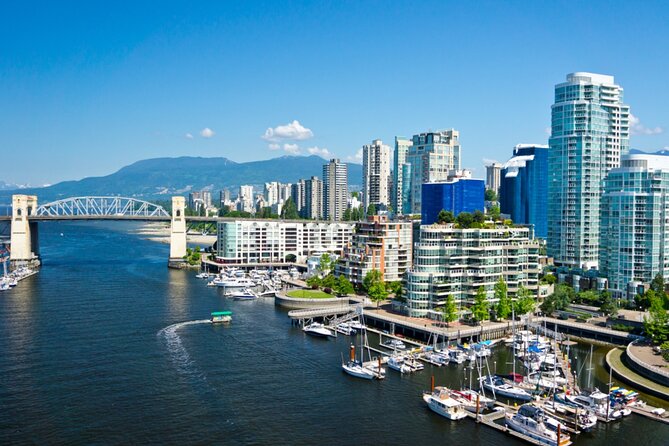
Review · VANCOUVER
Vancouver Old Town Treasure Hunt: Self-Guided Walking Game
Vancouver’s old center becomes a game board on this 90-minute smartphone hunt, which links grand Art Deco buildings, railway landmarks, Gastown stories, and one of the city’s most unusual buildings. You solve 14 puzzles in the Questo app, moving from the Marine Building toward Maple Tree Square.
I like the low price of $7.20 per person, and I like the freedom to pause for shops, food, or photos. The main catch is that you are on your own: a tricky clue can slow the group, and some puzzles may feel less clever than the best ones.
Key points at a glance
- Fourteen puzzles guide you from the Marine Building to Maple Tree Square and the Gassy Jack statue.
- Offline access makes the game practical when mobile service is weak or you want to limit data use.
- Art Deco, Beaux-Arts, railway, Indigenous, and Chinese Canadian history all appear along the route.
- One phone can work for a group, though everyone must share the screen.
- Hints and a skip button help when a clue refuses to yield.
- Pause and resume anytime, making it easy to stop for coffee, food, or a look inside nearby shops.
A playful way to meet Vancouver’s old center
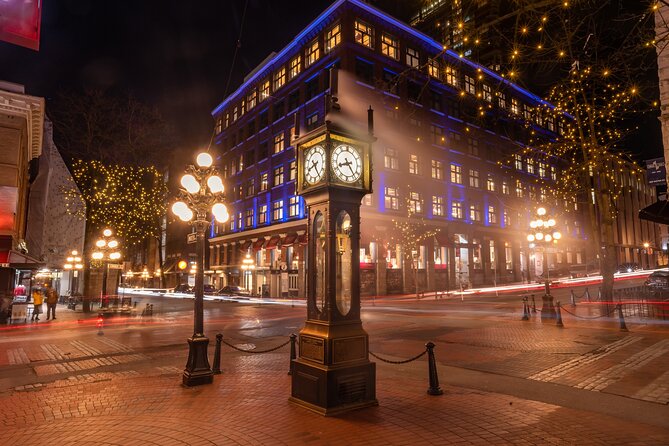
This experience turns downtown Vancouver into a self-guided puzzle trail. You begin at 355 Burrard Street, outside the Marine Building, and follow step-by-step instructions in the Questo app. The route ends at Maple Tree Square on Water Street, near the Gassy Jack statue and the heart of Gastown.
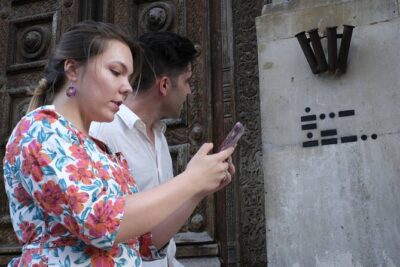
The appeal is simple: instead of walking past old buildings while checking a map, you must inspect them. Each stop gives you a short piece of local history, then asks you to find a detail or answer a question before the next location opens.
That format works especially well for families, friends, and couples who enjoy a little competition. You are not tied to a guide’s schedule, and only your own group takes part. The activity is offered in English, with a mobile access code provided after booking.
At $7.20 per person, this is inexpensive entertainment in a city where even a short organized tour can cost much more. You are paying for a route, a story, and a set of puzzles rather than a live guide. That keeps the cost down, but it also means the app cannot give you a personal explanation when a building raises a question.
More Treasure Hunts in Canada:
- Hamburg: Treasure Hunt Game through HafenCity
★ 4.7 · 364 reviews - St. Augustine: Treasure Hunt Cruise with Onboard Show
★ 4.4 · 315 reviews - Málaga: Private Sightseeing Treasure Hunt
★ 4.8 · 297 reviews
Start with Vancouver’s striking Marine Building
The walk opens at the Marine Building, at 355 Burrard Street. Designed by McCarter Nairne and built in 1929 and 1930, it is Vancouver’s best surviving example of Art Deco architecture.
This is a smart first stop because the building gives you plenty to examine. Look closely at the exterior details and decorative motifs before attempting the puzzle. The game asks you to search the surroundings for an answer, so the building is not just scenery behind a phone screen.
The Marine Building was developed by Toronto’s short-lived Stimson Developers for commercial shipping interests and the Vancouver Merchants’ Exchange. That connection helps set the tone for the route. Vancouver’s early downtown grew around shipping, trade, railways, newspapers, and immigration, and the clues gradually connect those parts of the city.
Give yourself a moment here before rushing onward. The first puzzle also teaches you how the game works. Once you understand the pattern, later challenges feel more natural.
Customs, trade, and the waterfront connection
The next stop is a federal warehouse built from 1911 to 1913 at Howe and Cordova Streets. Public Works Chief Architect David Ewart designed it for handling federal requirements on imported goods, and Customs used the building until 1958.
This stop adds useful context to the Marine Building. The story shifts from commercial ambition to the practical work of receiving goods into Canada. Vancouver’s waterfront was not simply a place for scenic walks. It was a working trade district, with customs offices, warehouses, rail lines, and shipping interests packed close together.
The challenge again asks you to inspect the building and its surroundings. That is where this experience is at its best. You are encouraged to look up, read architectural details, and notice things that a quick walk might miss.
The drawback is that the puzzle quality may vary. Some challenges connect tightly to the place beneath your feet, while others can feel more like a task inserted into the route. If you get stuck, use the hint option rather than spending too long on one answer.
Waterfront Station and Canada’s railway age
Waterfront Station brings the route to one of Vancouver’s key transportation landmarks. The current building opened on August 1, 1914, after being built by the Canadian Pacific Railway. It served as the Pacific terminus for transcontinental passenger trains running to Montreal, Quebec City, and Toronto.
The station you see today is the third Canadian Pacific Railway station on the site. That detail gives the puzzle more weight than a simple architectural observation. This was the western end of a national railway system, and the building helped link Vancouver with the rest of Canada.
For you, the stop also provides a natural chance to pause. The route passes through a central part of downtown, so you may want to check the next clue before moving on. The game lets you stop and resume later, which is useful if you want to eat, shop, or take photographs.
The station is one of the stronger places to slow down because it connects the city’s waterfront to the larger story of Canadian expansion. You get a sense of how rail and shipping worked together to shape Vancouver.
More Walking Tours in Canada:
- Montréal Scavenger Hunt and City Highlights Walking Tour
★ 4.5 · 25 reviews - Victoria Scavenger Hunt and City Highlights Walking Tour
★ 5.0 · 17 reviews - Quebec City Scavenger Hunt and City Highlights Walking Tour
★ 4.5 · 15 reviews - Kingston Self-Guided Walking Tour & Scavenger hunt (updated)
★ 3.5 · 10 reviews
Gastown’s famous steam clock
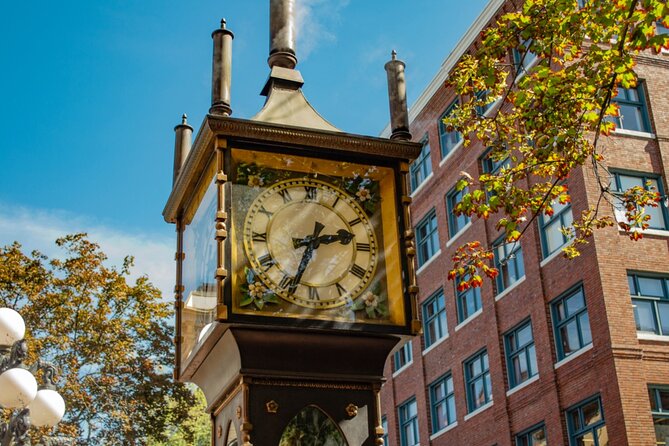
The route then reaches Gastown’s well-known antique-style steam clock. Built in 1977, the clock uses steam and whistles to tell the time.
It is an easy landmark to recognize, but the game gives you a reason to examine it instead of simply taking a quick photograph. The clock is also a good point for group play. One person can read the clue while the others look at the structure and nearby details.
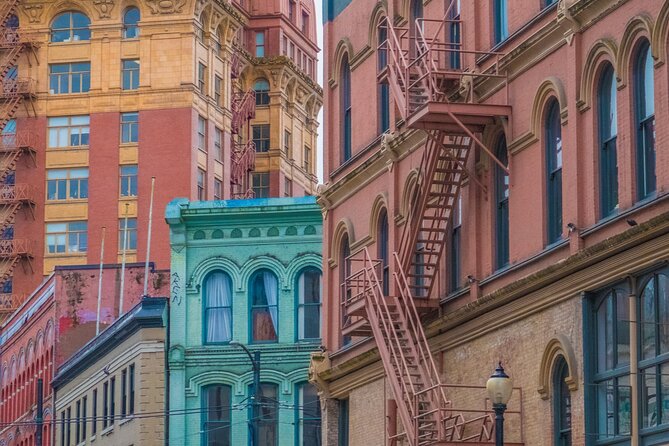
This stop is more about Vancouver’s modern relationship with its historic district than about the city’s earliest buildings. Gastown presents itself through restored brick facades, old-style storefronts, and period details, but the steam clock is a much newer creation.
That contrast is worth noticing. The area blends actual historic buildings with later additions designed to support its old-fashioned character. The puzzle format can help you spot that difference without turning the walk into a formal lecture.
The Dominion’s colorful Beaux-Arts face
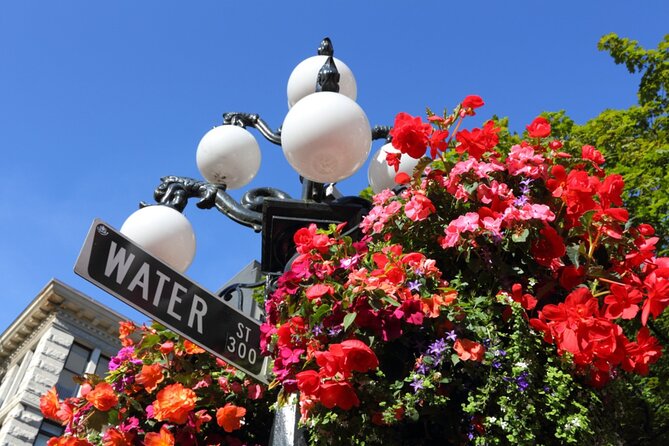
The Dominion was built from 1908 to 1910 by J. S. Heyler. Its Beaux-Arts design includes terracotta spandrels and Corinthian columns at the entrance, making it one of the more colorful heritage buildings on the route.
This is a rewarding stop for anyone who enjoys architecture. The game asks you to look carefully, and the building gives you clear features to find. Terracotta decoration can be easy to miss when you are focused on street level, so the challenge encourages you to raise your eyes.
The Dominion also helps break up the route’s railway and waterfront themes. You are seeing how Vancouver’s business district developed through a mix of architectural styles, not one uniform plan.
If your group includes children, this sort of clue may work better than a long block of historical text. The building itself provides the answer clues, and everyone can take part without needing specialist knowledge.
The Sun Tower and Vancouver’s newspaper past
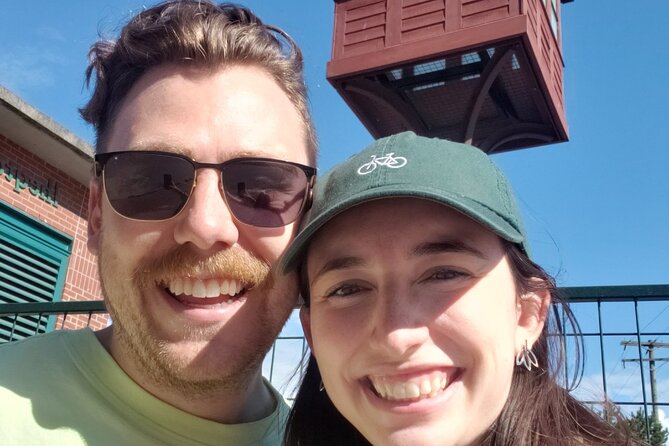
The Sun Tower was built in 1911 and 1912. Its heritage value comes from its distinctive architecture and its connection to Louis D. Taylor, as well as the Vancouver World and Sun newspapers.
The tower also marks the expansion of Vancouver’s business district toward the eastern edge of downtown. That makes it more than a pretty facade. It tells you that the city’s commercial center was growing and shifting.
This part of the walk rewards you for considering the buildings as evidence of change. Newspaper offices needed prominent locations, and their owners helped shape the city’s public identity. The puzzle gives you a small task, but the setting supplies the larger story.
As you move between stops, keep the app open and follow the route closely. The game is designed to release the next location after you solve the current challenge. If you skip too quickly, you may miss the architectural details that make this walk worthwhile.
The narrow Sam Kee Building
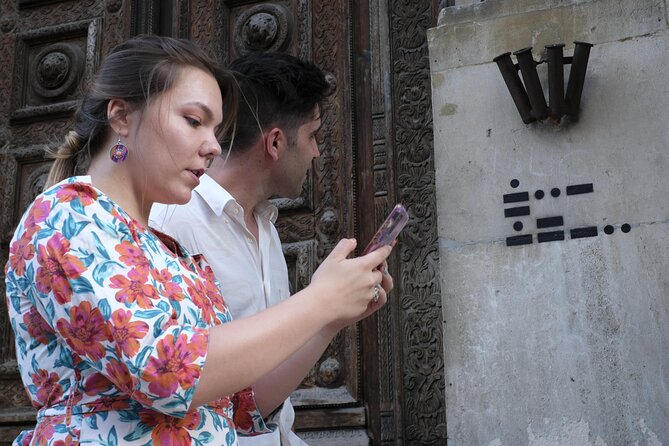
The Sam Kee Building at Pender and Carrall is one of the most memorable stops. Built in 1913, it is known for its clever use of a very narrow site, its architectural design, and its importance to Vancouver’s Chinese community.
The building represents the resourcefulness of early residents who had to work within tight property limits and difficult conditions. Its small footprint is the point, so you will want to view it from the street and consider how much commercial use was fitted into such a restricted space.
The story also introduces a part of Vancouver that deserves more than a passing glance. Chinese Canadian residents helped shape the city’s business and cultural life, and this building carries that connection in a very physical way.
For me, this is the sort of stop that makes a puzzle walk more valuable than a standard list of photo points. You are asked to notice a building, then given enough context to understand why it matters.
Gassy Jack, Gastown, and a difficult legacy
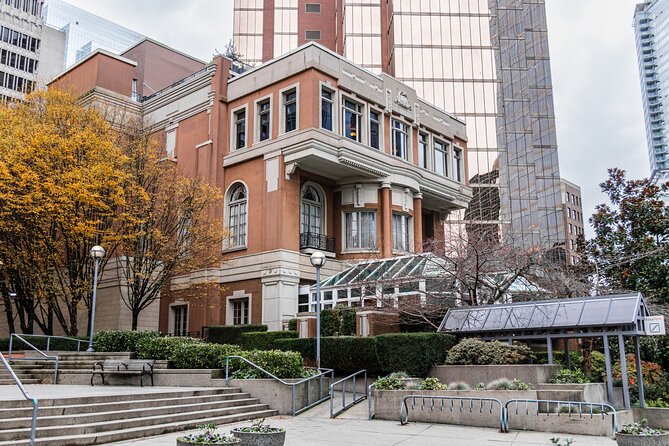
The statue in Maple Tree Square honors John Deighton, better known as Gassy Jack, a saloon owner from Vancouver’s 1860s period. Gastown takes its name from him.
The story here needs care. Deighton’s legacy has been questioned because of his marriage to a 12-year-old Squamish girl, Quahail-ya, whose English name was Madeline Deighton. The statue is not only a familiar Gastown meeting point. It is also a reminder that city history can include exploitation, unequal power, and painful relationships.
The app presents this stop as part of the route’s historical storyline, but you should bring your own attention to the subject. A playful game can make a complicated past easier to encounter, yet it cannot replace a fuller discussion of Indigenous history or colonial power.
This is also the point where the route instructions guide you directly to Gassy Jack. Follow them carefully, since the next clue depends on reaching the correct spot.
Gaoler’s Mews and the city’s first jail
Gaoler’s Mews sits in the center of Gastown on a site that once held Vancouver’s first jail. The original building dates from the mid-1800s and burned in the Great Fire of 1886. A brick fire hall replaced it.
This stop gives the route a practical, gritty side. The early city needed jails, fire protection, and basic public services, not just grand commercial buildings. The site helps you picture how quickly Vancouver could change after a disaster.
The game asks you to look around and find the answer, so take time to examine the setting rather than treating it as a simple passage between major landmarks. The compact nature of the site makes it easy to inspect as a group.
By this stage, you should have a good feel for the activity. Some puzzles are challenging, and the app offers hints. If a question still will not yield, the skip button lets you move on with the answer rather than ending your outing in frustration.
Finish near the railyard at The Alibi
The final stop described on the route is a heritage building near the railyard and Vancouver’s old trade and shipping ports. The Alibi has become a neighborhood place for food, beer, and culture.
This ending works because it brings the historic material into present-day city life. The building is more than an old shell. It now serves as a place where people gather, eat, and share local culture.
The route finishes at Maple Tree Square, listed as Maple Tree Square at 1 Water Street. Depending on your pace, the walk takes about an hour and a half. You can also stop along the way, so the clock is not as strict as it would be on a scheduled guided tour.
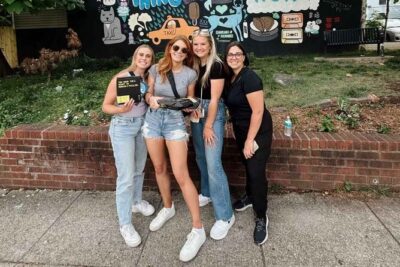
A practical tip: keep the group on one phone if needed. The game worked for a group of three using one device, and sharing can be simpler than trying to download the game on several phones. The tradeoff is that everyone needs to stay close enough to see and hear the person holding the phone.
How the app and puzzles work in practice
You receive a mobile access code to the Questo quest. The game operates in English and includes offline functionality, which is useful if your connection becomes unreliable or you want to avoid using much mobile data.
The route is private to your group. There is no live guide, and no guide’s name is provided because the experience is app-led. You follow the instructions, solve each challenge, and receive the story content as you go.
I like the pause-and-resume feature. It lets you turn the walk into part of a larger Gastown outing instead of forcing you to complete every stop in one push. You can browse, eat, or take a break, then return to the quest.
The weaker point is technical and practical: installing the game on multiple phones may be awkward. One phone is enough, but the activity works best when the group agrees on one puzzle solver and keeps the device easy to view.
Who gets the best value from $7.20?
At $7.20, the value is strong if you want a light activity that adds structure to a walk. You receive 14 puzzle-based challenges, historical stories, a route through several important buildings, and the freedom to set your own pace.
The price is especially appealing for a private group. A family or group of friends can split the cost while getting a shared activity rather than separate audio guides. Group discounts are also available, though the exact saving is not provided here.
You should not book this expecting a detailed architectural tour or a live expert explaining every stop. The history is delivered in short pieces, and the puzzles are the main engine. Some clues are clever and place-specific. Others may feel weaker, especially in the middle of the route.
The experience suits you best if you enjoy riddles, city walks, and casual history. It is less suitable if you want deep interpretation, a fixed schedule, or immediate help from a human guide.
Booking confirmation arrives at the time of booking. Service animals are allowed, public transportation is nearby, and most people can participate. The activity runs daily from midnight to 11:30 p.m. during the stated operating period, giving you wide control over timing.
Free cancellation is available if you cancel at least 24 hours before the start time. Cancellations inside that window are not refunded, and changes made inside 24 hours are not accepted.
Should you book this Gastown treasure hunt?
I would book this if you want an inexpensive, flexible introduction to Vancouver’s old downtown and enjoy solving puzzles along the way. The best parts are the close look at the Marine Building, the Sam Kee Building, Waterfront Station, and the changing stories around Gastown.
Bring a friend or family member, use one phone if needed, and do not hesitate to use hints or skip a stubborn clue. You will get the most from it if you treat the game as a reason to notice the city, not as a race to finish every question perfectly.
Skip it if you need a live guide or want a detailed treatment of Vancouver’s Indigenous and colonial history. For everyone else, this is a low-cost way to turn a familiar downtown walk into a more alert and playful outing.
FAQ
How long does the Vancouver Old Town Treasure Hunt take?
The activity takes approximately 1 hour and 30 minutes. You can also pause and resume whenever you like.
Where does the treasure hunt start?
It starts at 1530-355 Burrard Street in Vancouver, at the Marine Building.
Where does the route finish?
The route finishes at Maple Tree Square, at 1 Water Street in Vancouver. The Questo app guides you step by step to the Gassy Jack statue.
How many puzzles are included?
The experience includes 14 puzzle-based challenges.
Is there a live tour guide?
No. This is a self-guided activity delivered through the Questo app, and no live tour guide is included.
Can I cancel for a full refund?
Yes. You can receive a full refund if you cancel at least 24 hours before the experience start time. Cancellations within 24 hours are not refunded.
More Self-Guided Tours in Canada
- Street Art Exploration Game and Self-Guided Tour in Ottawa
★ 4.0 · 20 reviews - Old Town Quebec Secrets: Private Exploration Game and Tour
★ 4.0 · 13 reviews - Ottawa Mystery Quest: Self-Guided Detective Adventure
★ 4.0 · 11 reviews - Rockcliffe Ottawa: Exploration Game and Tour
★ 4.0 · 9 reviews
Just added around Canada
- Vancouver Gastown Scavenger Hunt★ 5.0 · 7 reviews
- Spy Escape in Vancouver: Outdoor Puzzle Adventure★ 5.0 · 2 reviews
- Outdoor Escape Room – Downtown Vancouver★ 5.0 · 2 reviews
- Murder Mystery Detective Experience in Langford BC★ 4.5 · 3 reviews
- Trois-Rivières Self-Guided Walking Tour and Scavenger Hunt★ 3.0 · 2 reviews
- Toronto Distillery District: Whisky Exploration Game and Tour★ 3.5 · 4 reviews
- An Exciting Scavenger Hunt: The Wonders of Old Toronto★ 3.5 · 5 reviews
- Fun Scavenger Hunt in Sydney by Zombie Scavengers★ 3.0 · 2 reviews
Vancouver Escape Games, compared.
Vancouver City Sightseeing Adventure: a murder mystery in Gastown
Read our review →
Private Vancouver Sightseeing Adventure: a Gastown murder mystery
Read our review →

Browse the lists this tour appears in