
Review · FOOD
Osaka Food Quest: Self-Guided Culinary & History Adventure
Osaka’s food story comes alive through a smartphone puzzle walk that sends you from neon-lit Dotonbori to quiet temple grounds, old markets, and traditional theater landmarks. You solve 10 clues as you go, with each answer revealing another piece of the city’s past and its famous appetite.
I like the freedom to start any time and pause for a meal, and I like the low price of $7.85 per person, especially for a private activity. The main caution is the technology: one participant found the app slow and abandoned the quest, so a charged phone and reliable mobile connection matter.
Key Things to Know Before You Go
- Ten puzzles connect Osaka food with local history, including takoyaki, horumon, market culture, temples, and Bunraku.
- The route begins in Dotonbori at Ebisu Bridge and ends near Namba Yasaka Shrine.
- You explore without a guide, using a mobile access code and your own phone.
- The advertised time is about one hour, but allow two to three hours if you want to stop for food and explore properly.
- The route is private and flexible, with only your group taking part and the option to pause and resume.
- The price is excellent for a self-guided activity, though food, transport, and admission costs are not included.
Osaka Food Quest: A Playful Way Into the Nation’s Kitchen
Osaka has long been known as Japan’s Nation’s Kitchen, and this quest uses that idea as its organizing thread. Instead of sending you from one sight to another with a list of facts, it asks you to look closely, solve clues, and connect what you see with Osaka’s food customs and cultural past.
That makes the experience more active than a standard walking route. You are not simply told that a bridge links two shopping streets. You look around for an answer, enter it into your phone, and then receive the next part of the story.
I like this format for a first visit, particularly if you have only one day in Osaka. The route covers several major areas, and the clues give you a reason to notice details you might otherwise pass on the way to the next restaurant.
The experience is self-guided, so there is no person explaining the route in real time. That is both its greatest strength and its main limitation. You can stop for takoyaki, take a shopping break, or pause the game when the streets get crowded. But if you want lively conversation, personal recommendations, or help when you lose your way, you will need to manage that yourself.
More City Exploration Games in the world:
- Half Day Bangkok Old Town City Quest – GOLDEN MOUTAIN’S ECLIPSE
★ 5.0 · 118 reviews - Malaga city game: Operation Mindfall
★ 5.0 · 111 reviews - Romantic Montmartre: Paris Lost Lovers Exploration Game and Tour
★ 4.5 · 107 reviews
From Ebisu Bridge Into Dotonbori
The starting point is 1 Chome-6 Dotonbori, near Ebisu Bridge. This is a smart opening location because it places you in one of Osaka’s best-known entertainment and food districts right away.
Ebisu Bridge was first built to provide access to nearby Ebisu Shrine. Today, it links the Shinsaibashi-suji and Ebisubashi-suji shopping areas. It is also tied to a famous Osaka sports curse involving the Hanshin Tigers, after fans celebrated a baseball victory there in a way that became part of local folklore.
The first challenge asks you to inspect the area and find an answer. That sounds simple, but it sets the tone for the whole activity: keep your eyes on signs, buildings, displays, and public details rather than staring only at the map on your phone.
Dotonbori can be crowded, especially around its famous canal and restaurant signs. Give yourself space to stop without blocking foot traffic. If you are traveling with children, the puzzle format gives them a clear job to do, though younger children may need help reading clues and entering answers.
Takoyaki at the Konamon Museum
The next food-focused stop is the Konamon Museum, a place devoted to Osaka’s konamon, or flour-based foods. Its main draw is takoyaki, the hot octopus-filled balls often linked with Osaka’s street-food identity.
Here, the quest connects a physical food setting with a clue. You learn about takoyaki while standing near a place where you can eat it, study it, and, according to the supplied details, make it. Food is not included in the ticket, so treat this as an opportunity rather than part of the paid experience.
I would plan a snack stop here if your schedule allows. The quest itself does not provide tastings, and you should budget separately for anything you choose to eat. That is worth remembering when comparing this activity with a guided food tour, where samples are often included in the price.
The useful part is the context. Instead of ordering takoyaki as an isolated snack, you get a short explanation of why this dish matters in Osaka’s food culture. You can then decide if you want to try it while the subject is right in front of you.
Horumon and the Less Polished Side of Osaka Food
Showa Taishu Horumon Dotonbori brings the route to horumon, a restaurant style centered on beef offal. This stop gives the activity some range. Osaka food is not only about bright signs, noodles, and takoyaki. It also includes hearty grilled dishes and ingredients that may be unfamiliar to many visitors.
Horumon can be a useful introduction to a more local style of eating, but you do not need to dine there to continue the quest. If offal is not your preference, you can treat the stop as a cultural lesson and move on.
This is one reason I would not call the activity a full food tour. It points you toward specialties and explains their place in Osaka, but it does not include a meal, a guide, or a set of tastings. You are paying for the route, puzzles, and storytelling. The actual eating is up to you.
More Food and Drink Tours in the world:
- London: Food Treasure Hunt and Walking Tour
★ 5.0 · 92 reviews - Fort Worth Stockyards History, Food, and Puzzle Tour
★ 5.0 · 38 reviews - Beer Tasting and Scavenger Hunt in Brussels – About 3 Hours
★ 4.5 · 35 reviews - Lille: Scavenger hunt and beer tasting in Old Lille
★ 4.5 · 23 reviews
Hozenji Temple and the Quiet Turn
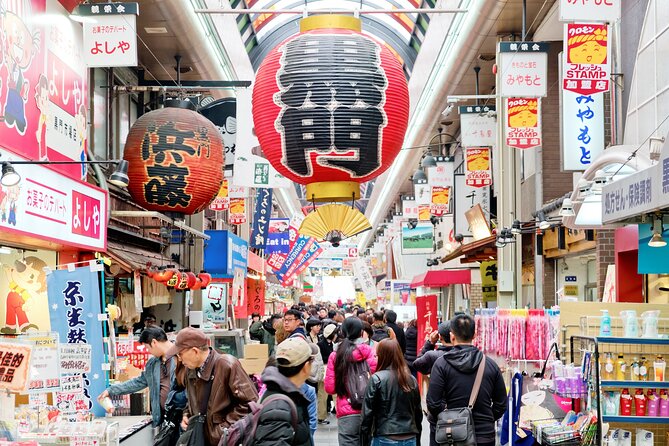
Hozenji Temple changes the mood. Built in 1637, it honors Fudo Myoo, one of five Buddhist guardians. Its setting also connects with the history of Namba and Dotonbori, which grew as entertainment districts during the 1600s, when kabuki and bunraku performances drew audiences to the area.
After the noise of Dotonbori, a temple stop gives you a pause. The quest asks you to look around for another answer, so you are encouraged to notice the site rather than rush through it.
This is a good example of what the activity does best. Food and history are not treated as separate subjects. Osaka’s eating districts grew alongside theater, shopping, religious sites, and public entertainment. The route helps you see those links without requiring a long museum visit.
Be respectful here. Keep your voice low, follow any posted rules, and avoid treating the temple as just another puzzle station. The activity provides a reason to visit, but the place deserves your attention beyond the answer you need to enter.
Bunraku at the National Theater
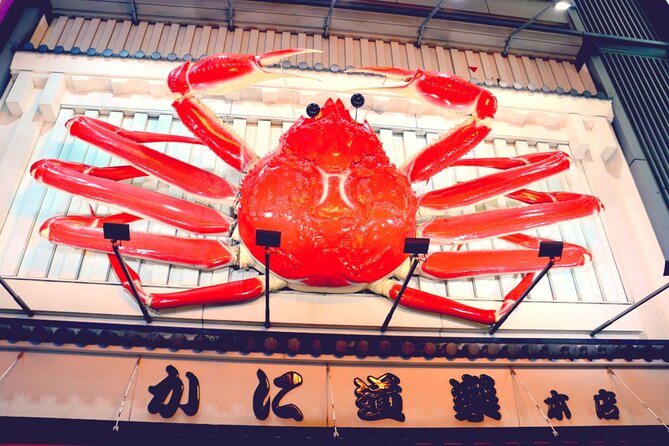
The National Bunraku Theater was established in 1984 as the Kansai home of Bunraku, Japan’s traditional puppet theater. Its main hall seats 753 people, while its small hall seats 159. The larger space is mainly used for Bunraku, as well as traditional dance and other forms of drama.
The theater helps explain why this part of Osaka became associated with food and entertainment. People came to the district for performances, and restaurants, markets, and street food grew around that audience.
You should not expect a performance ticket to be part of the quest. This is an exterior and cultural-history stop within the walking route. If you already plan to attend a Bunraku show, the puzzle gives you useful background. If not, it still adds another layer to the city beyond eating.
The route’s historical facts are brief, which suits a one-hour activity. They will not replace a full cultural tour, but they give you enough context to make the streets feel less random.
Kuromon Market, Osaka’s Food Corridor
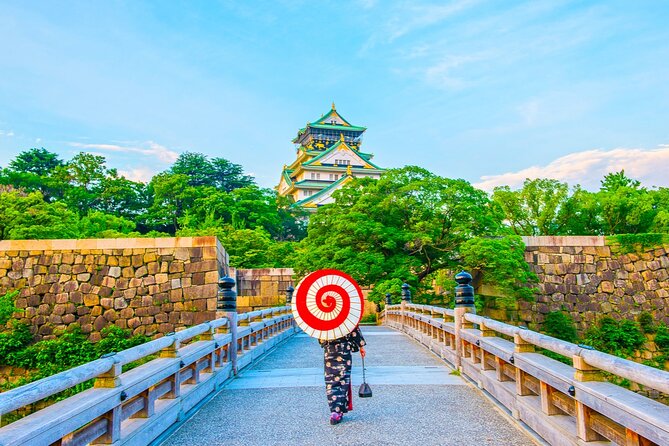
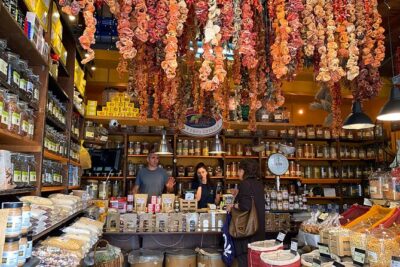
Kuromon Market is one of the strongest stops for anyone choosing this activity for its food angle. The market began as a fish market around 1822 and became an officially approved market in 1902. Its name means black gate, a reference to the black gate of Enmyo Temple, which once stood nearby until 1912, the final year of the Meiji Period.
The quest asks you to search the market area for another answer. This is where the experience becomes especially practical. You are in a place where food is not just displayed for tourists, but sold as part of the daily life and commercial history of Osaka.
The supplied timing gives this stop about 10 minutes, but that is a tight limit if you want to browse or eat. A better plan is to regard the one-hour estimate as the puzzle time, then add time for the market itself.
You might find seafood, prepared foods, and Osaka specialties as you walk, but the activity does not guarantee any particular vendor or food sample. Market conditions can change, and the price of food is separate. Bring patience and make room in your schedule for a snack if something catches your eye.
Namba Yasaka Shrine and the Finish
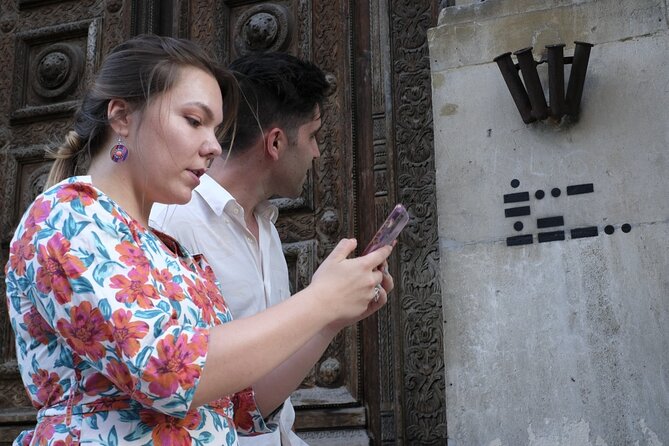
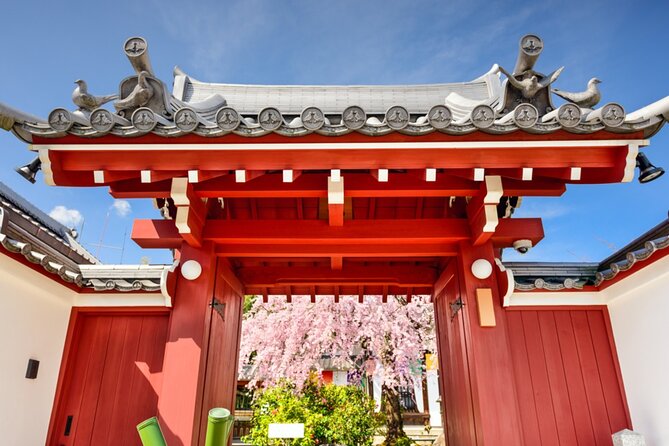
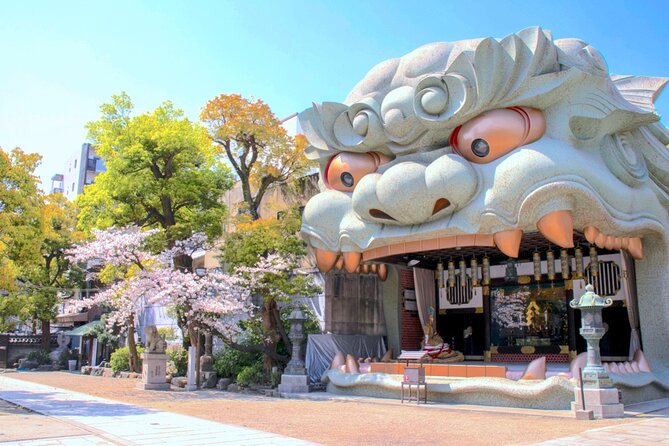
The final destination is Namba Yasaka Shrine at 2-chome-9-19 Motomachi. The shrine is traditionally said to have been commissioned by Emperor Hanzei in honor of his father, Emperor Nintoku. Its original site was in present-day Kawachi Matsubara City, and it was later moved when Toyotomi Hideyoshi began building Osaka Castle.
This gives the route a strong ending. You finish with a religious site connected to Osaka’s older political and cultural story, rather than ending at another shopping street.
The supplied information does not specify how long you should spend at the shrine, but the final puzzle should not be treated as the only reason to visit. Take a moment to look at the grounds and let the route’s food, theater, and temple themes come together.
The end point is not back at Ebisu Bridge. That matters for planning. You will finish in the Namba area, so you should check your next destination before starting, especially if you have a timed reservation elsewhere.
How Much Time Should You Set Aside?
The stated duration is about one hour. That is possible if you focus on the clues and keep moving, but it is not the best way to use the route.
A participant completed it in about two hours while pressed for time, with a recommendation to allow at least three hours for a slower visit. That sounds more realistic if you want to eat, take photos, browse Kuromon Market, and give the temple and theater stops proper attention.
I would plan for two to three hours:
- One hour for a quick puzzle-focused walk
- Two hours for the route with short pauses
- Three hours if you want food stops and a relaxed pace
You can pause and resume, which helps. The activity is available around the clock during the stated operating period, from January 21, 2021 through June 16, 2026. That means you are not tied to a morning meeting time, though the food businesses and markets you pass will have their own hours.
Price, Technology, and Practical Value
At $7.85 per person, this is inexpensive for a private activity covering Dotonbori, Hozenji Temple, Kuromon Market, the National Bunraku Theater, and Namba Yasaka Shrine. You also get 10 puzzles and the associated food and history storyline.
The value depends on what you want. If you want a guide who explains Osaka, answers questions, and leads you to specific dishes, this is not a substitute for a traditional food tour. If you want a flexible route with a game attached, the price is easy to justify.
You receive a mobile access code, not a printed booklet or physical guide. Most people can participate, and the route is near public transportation. Service animals are allowed. Because it is private, only your own group takes part, which is useful for couples and families who want to set their own pace.
The main risk is the app. A poor experience involved slow loading and difficulty telling which direction to take. The provider disputed the claim that the quest itself used 3GB of data, stating that the quest file is 2.5MB, and processed a refund. The practical lesson is simple: charge your phone, update the needed app before you leave, and use a dependable connection. If the route stops responding, do not assume the whole day is lost. You can still use the stops as a self-guided walk, but the puzzle element may not work as intended.
Who Will Enjoy This Quest Most?
I would recommend it to food-focused visitors who like having a task while they explore. Couples can turn the clues into a light competition, and families can give children responsibility for spotting signs and solving answers.
It also suits a solo visitor with limited time. You do not need to wait for a group or match a guide’s schedule. Start when convenient, stop when hungry, and continue when ready.
The activity is less suitable if you want long explanations, personal food advice, or included tastings. It also may frustrate anyone who dislikes using a phone while walking. The clues require attention, and Dotonbori and Kuromon Market are not ideal places to stare at a screen constantly.
The overall rating is 3.7 from six ratings, which fits the experience’s profile: the concept can be fun and useful, but the technology needs to work well for the day to go smoothly.
Should You Book the Osaka Food Quest?
Book it if you want a low-cost, flexible introduction to Osaka’s food districts and cultural sights. The best version of the day includes a takoyaki stop, time at Kuromon Market, and enough breathing room to appreciate Hozenji Temple and Namba Yasaka Shrine.
Skip it if you want a fully guided culinary outing or guaranteed food tastings. For $7.85, you are buying a puzzle route and a framework for exploring, not a hosted meal.
The free cancellation policy makes the decision easier: cancel at least 24 hours before the start time for a full refund. Changes or cancellations within 24 hours are not refunded. If you book, prepare your phone first and allow more than the advertised hour. That is the difference between rushing from clue to clue and enjoying Osaka’s food story at your own pace.
FAQ
How long does the Osaka Food Quest take?
The stated duration is approximately one hour. You can finish faster or take longer, and allowing two to three hours gives you time for food, shopping, and sightseeing along the route.
How many puzzles are included?
The experience includes 10 puzzle-based challenges connected to Osaka’s food and history.
Is a guide included?
No. This is a self-guided activity using a mobile access code. There is no physical tour guide.
Where does the quest start?
It starts at 1 Chome-6 Dotonbori, Chuo Ward, Osaka, 542-0071, Japan, near Ebisu Bridge.
Where does the quest end?
It ends at 2-chōme-9-19 Motomachi, Naniwa Ward, Osaka, 556-0016, Japan, near Namba Yasaka Shrine.
Are food and admission tickets included?
No. Food purchases and any admission costs are not included. The listed stops have free admission, but you pay separately for anything you choose to eat.
Can I pause and resume the activity?
Yes. The quest is designed to let you pause and resume whenever you want.
What happens if I need to cancel?
You can receive a full refund if you cancel at least 24 hours before the scheduled start time. Cancellations or changes made within 24 hours are not refunded.
More Heritage Tours in the world
- The Anatomist – Award Winning Historical Escape Room Experience
★ 5.0 · 151 reviews - Private city discovery tour – A Historical Treasure Hunt
★ 5.0 · 146 reviews - Queer Lisbon – A Treasure Hunt in LGBT History
★ 5.0 · 71 reviews - Outdoor Escape Game Dubrovnik – The Spy And The Traitor (History theme)
★ 5.0 · 32 reviews
More Food in the world
- Athens Urban Treasure Hunt w Food Stop
★ 5.0 · 16 reviews - Mystery Puzzle Food Tour in Golden, CO
★ 4.5 · 15 reviews - Athens Family Mythology Treasure Hunt and Tour w Food Stop
★ 5.0 · 15 reviews - Athens: Street Art Treasure Hunt with Food Stop
★ 4.2 · 9 reviews
Just added around the world
- Digital puzzle tour with Marcus Aurelius’ order★ 5.0 · 5 reviews
- The Vienna Augmented Reality Puzzle Rally★ 5.0 · 7 reviews
- Vienna Highlights Self guided scavenger hunt and Walking Tour★ 4.0 · 5 reviews
- True Crime mobile puzzle rally Vienna★ 4.0 · 3 reviews
- Verona Scavenger Hunt and Highlights Self Guided Tour★ 4.0 · 17 reviews
- Time Travel to Ottoman Vidin: Exploration Game and Tour★ 5.0 · 2 reviews
- Historical treasure hunt in the city of Versailles★ 4.0 · 15 reviews
- Venice Highlights Self Guided Scavenger Hunt and Walking Tour★ 4.0 · 6 reviews
Food, compared.
Fort Worth Stockyards History, Food, and Puzzle Tour
Read our review →

Athens Family Mythology Treasure Hunt and Tour w Food Stop
Read our review →


Derby Themed Murder Mystery Food Tour Experience in Louisville
Read our review →Browse the lists this tour appears in