
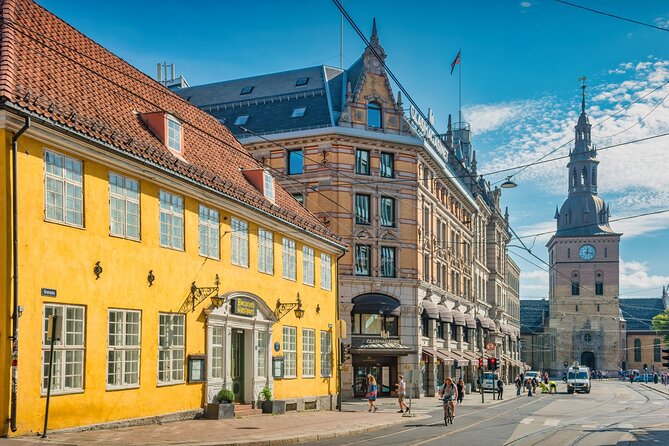
Review · NORWAY
Oslo Viking Quest: Exploration Game and Tour
Oslo’s center turns into a Viking-themed treasure hunt with this self-guided walking game. You follow clues from the Nobel Peace Center to Akershus Fortress, using what you see around you to solve puzzles and learn bits of Norwegian history. I like the freedom to start anytime and the way the game keeps children and adults looking up from their phones. The low $7.20 price also makes it an easy add-on to a day in town.
The main catch is that this is not a guided tour. You need to read the clues, navigate between stops, and show some patience when a puzzle is not clear. Rain and cold can also take the shine off an outdoor game, so check the forecast and allow extra time if you want to pause for museums, photos, or side trips.
Key points to know before you play
- Eleven interactive puzzles turn a central Oslo walk into a small Viking adventure.
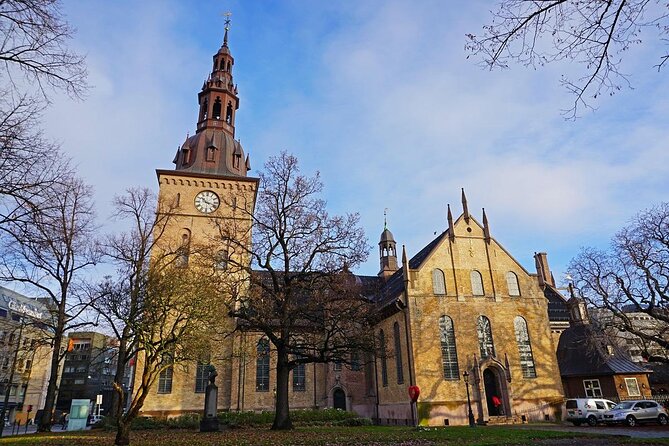
- Major sights appear along the route, including City Hall, the Royal Palace, the Storting, Oslo Cathedral, and Akershus Fortress.
- You control the schedule, with access from 5:00 AM to 9:00 PM and the option to pause and resume.
- The activity is private for your group, with no guide or strangers joining you.
- The $7.20 price is unusually modest for an activity that can fill about 75 minutes, or longer with stops.
- The route ends near Akershusstranda, while it begins at Rådhusgata 30B in central Oslo.
A Viking game through Oslo’s central sights
This experience works best as a walking introduction to central Oslo, not as a formal history tour. Your phone supplies the access code, story, and puzzles. At each location, you look for a detail in the surroundings, enter the answer, and move on to the next challenge.
The Viking theme gives the walk a bit of purpose. Instead of simply checking off monuments, you have a reason to inspect a building, statue, or public space. I like that structure for families and groups who lose interest during long explanations. It also suits anyone who wants to see Oslo without committing to a guide at a fixed hour.
The advertised playing time is about one hour and 15 minutes. That is a brisk estimate if you keep moving and solve the challenges without delay. In practice, you can make it a longer outing by stopping for photographs, visiting nearby sights, or taking a break for coffee. One participant extended the game to several hours with side trips, which tells you something useful: the route can be a framework for exploring rather than a strict race.
You receive confirmation at booking and play through your mobile device. There is no physical guide, so make sure everyone in your group knows that the phone is part of the experience. A charged battery and a willingness to read carefully will help.
More City Exploration Games in the world:
- Half Day Bangkok Old Town City Quest – GOLDEN MOUTAIN’S ECLIPSE
★ 5.0 · 118 reviews - Malaga city game: Operation Mindfall
★ 5.0 · 111 reviews - Romantic Montmartre: Paris Lost Lovers Exploration Game and Tour
★ 4.5 · 107 reviews
Starting at the Nobel Peace Center
The route begins near the Nobel Peace Center, at Rådhusgata 30B. The center focuses on the Nobel Peace Prize and related ideas such as war, peace, conflict, and public debate. Even if you do not enter the museum, the location gives the game a serious opening point.
Your first task asks you to look around for an answer before the story sends you onward. This is the basic rhythm for the rest of the game. You are not simply handed facts. You find a visual clue, work out what the game wants, and then receive the next piece of information.
That approach can make a familiar square or building more interesting. It can also slow you down if the wording feels vague. The game depends on careful reading and observation, so do not rush through the first puzzle. Once you understand how the clues work, the route should feel easier to follow.
Oslo City Hall and the city’s public face
Next comes Oslo City Hall, the large municipal building that houses the city council, city administration, and other public offices. The current building was constructed between 1931 and 1950, with work interrupted during the Second World War.
This is a useful stop because it connects Oslo’s present-day civic life with the city’s past. The game asks you to inspect the building and solve another challenge. You get more from the stop if you take a moment to look at the exterior rather than treating it as a waypoint.
City Hall is also a practical early landmark. It helps you understand where you are in central Oslo and gives the route a clear public square before it moves toward royal and national institutions. The challenge is not a substitute for a full architectural explanation, but it adds a reason to pay attention.
Nils Sigurd Aas and a Norwegian sculptor
One stop focuses on Nils Sigurd Aas, a Norwegian sculptor born in 1933 and active until his death in 2004. He is known for modern Norwegian sculpture, including the statue of King Haakon VII in June Seventh Square. He also designed Norwegian coins, including the 10 krone and 20 krone pieces.
This is one of the more distinctive stops because it introduces an artist rather than another major government building. The game asks you to find the answer by looking around, so the sculpture or nearby public art becomes part of the puzzle.
I like this kind of detour. It shows that Oslo’s identity is not limited to palaces and parliament. You get a glimpse of how art appears in everyday public spaces, and the coin connection gives the stop a detail you can remember after the game ends.
More Self-Guided Tours in the world:
- Hamburg: Scavenger Hunt Self-Guided Tour for Children
★ 4.5 · 319 reviews - Dresden: Old Town Self-Guided Scavenger Hunt Tour
★ 4.5 · 151 reviews - Berlin: Self-Guided Family and School Class Scavenger Hunt
★ 4.6 · 128 reviews - Düsseldorf: Scavenger Hunt Self-Guided Tour
★ 4.6 · 127 reviews
The Royal Palace and Norway’s monarchy
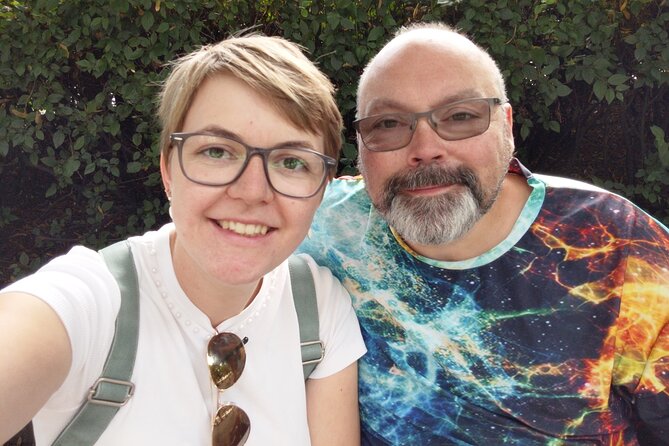
The Royal Palace is the route’s grandest landmark. It was built in the first half of the 19th century as the Norwegian residence of the French-born King Charles III John, who ruled Norway and Sweden.
The game uses the palace as another outdoor puzzle location. You look for the detail needed to advance, then receive more information about the site. The format encourages you to notice the building and its setting, but it does not provide the depth of a palace tour or an interior visit.
This is a good place to slow down for photographs. If your group includes children, the royal setting also helps the story feel more like an adventure. Keep in mind that the game’s main value here is the combination of location and puzzle, not access to the palace itself.
The University of Oslo and the Storting
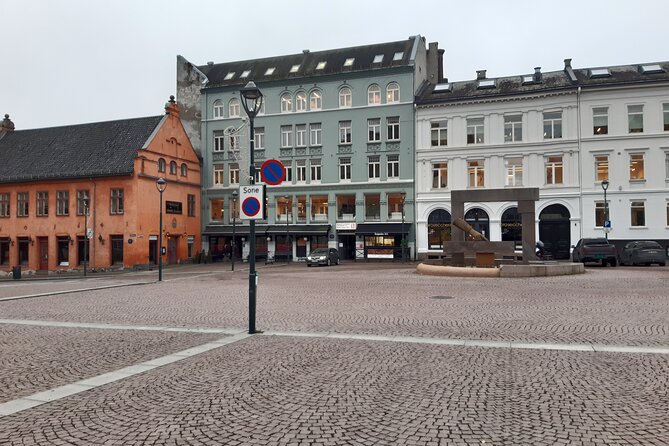
The route continues to the University of Oslo, Norway’s oldest university. Until 1939, it was called the Royal Frederick University. This stop adds an academic note to a walk otherwise focused on peace, government, royalty, and military history.
The university is a useful reminder that central Oslo is compact and varied. You can move from a royal institution to a place of learning within the same self-guided route. The puzzle gives you a reason to examine the setting instead of walking past it.
The Storting building follows. This is the seat of Norway’s parliament at 22 Karl Johans gate. The building opened in 1866 and was designed by Swedish architect Emil Victor Langlet.
The Storting is a particularly helpful stop for anyone trying to understand Norway’s political center. The game does not turn you into a constitutional expert, but it places the parliament in the city’s main sequence of landmarks. You see how the route links political power with royal history and civic life.
Oslo Cathedral and an active city center
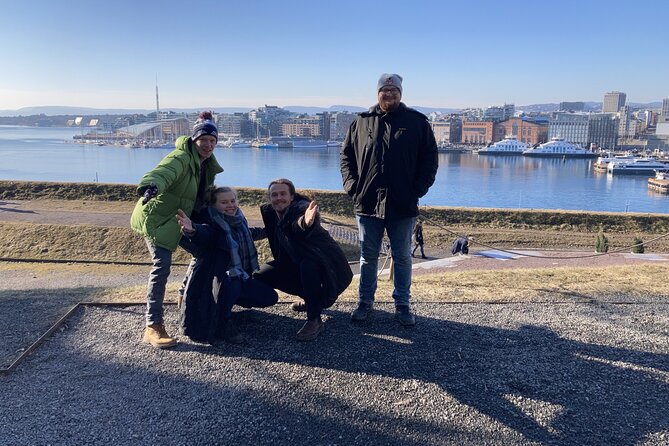
Oslo Cathedral, formerly Our Savior’s Church, serves as the main church for the Church of Norway Diocese of Oslo and as the parish church for central Oslo. The present building dates from 1694 to 1697. The Norwegian Royal Family and government also use it for public events.
This stop adds a religious and ceremonial layer to the walk. It is another place where the game asks you to look around and find an answer, so you should expect an outdoor observation task rather than a guided explanation inside the church.
The cathedral is also a natural point for a short pause. The route contains several significant sites close together, and you may want to stop taking puzzles for a few minutes to orient yourself. The ability to pause and resume is valuable here. You do not have to choose between playing and taking time to see the city properly.
Akershus Fortress and Norway’s wartime story
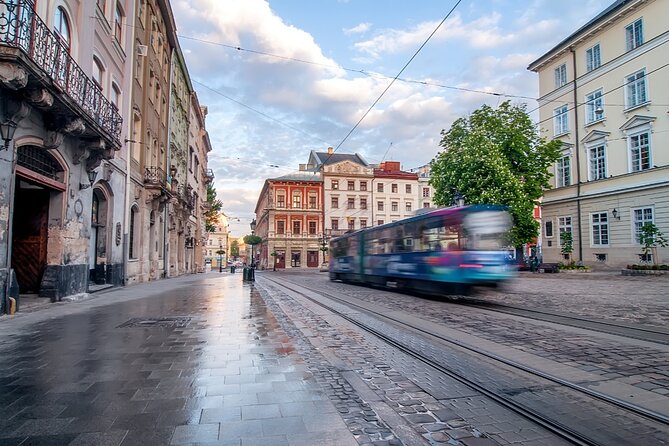
The final section brings you toward Akershus Fortress, a medieval castle built to protect Oslo and provide a royal residence. The fortress gives the route a strong ending because it feels different from the modern civic buildings and central streets earlier in the game.
Near the fortress, you encounter Norway’s Resistance Museum, also called the Norwegian Home Front Museum. Its collection focuses on Norwegian resistance during the German occupation from 1940 to 1945, with equipment, photographs, and documents from the war years.
The game asks you to look around at both the museum area and the fortress to solve further challenges. You should not confuse this with admission to the museum. The supplied experience includes the mobile game, not a museum ticket or a guided fortress visit.
This part of the route may appeal most to history-minded adults. It also gives the walk more weight than a simple sightseeing game. The fortress connects medieval defense, royal power, and the difficult story of Norway during the Second World War.
The stated end point is the Scandinavian Star Memorial at Akershusstranda. That means you finish by the waterfront side of the fortress area rather than returning to the starting point. Plan your next move before you begin. You may want to continue walking, use public transportation, or head back toward central Oslo.
What the flexible format gets right
The best feature is control. You can start at any time during the stated operating window, from 5:00 AM to 9:00 PM. You can pause, resume, and set your own pace instead of following a guide who needs to keep a whole group moving.
That flexibility helps in several situations:
- You arrive in Oslo between other plans.
- You have children who need breaks.
- You want to stop for food or photographs.
- You prefer a private activity rather than a shared tour.
- You want to turn a 75-minute walk into a larger afternoon outing.
The experience is private, so only your own group participates. That makes it easier to discuss answers openly and work at your own speed. Group discounts are also available, which can improve the value for families or friends traveling together.
The tradeoff is that nobody is there to explain a clue in person. If an answer seems hard to understand, you must reread the wording and inspect the surroundings again. Some people will enjoy that independence. Others will prefer a guide who can provide context and keep the route moving.
Is $7.20 good value?
At $7.20 per person, this is one of the cheaper organized activities you can add to an Oslo visit. The price is especially fair if you use it as an introduction to central Oslo and spend extra time at the stops.
You are paying for mobile access, 11 puzzle challenges, and the Viking-themed history content. You are not paying for a guide, entry to the Resistance Museum, entry to the Nobel Peace Center, transport, food, or a private vehicle. That distinction matters when comparing it with a traditional walking tour.
The value depends on how you play. If you race through the route in exactly 75 minutes, the experience is a low-cost puzzle walk. If you pause at the sights and add your own visits, it becomes a useful outline for several hours in central Oslo.
I would not book it as your only source of historical interpretation. I would book it as a playful way to get your bearings, especially if your group likes solving problems together.
Weather, walking, and practical planning
This is an outdoor activity through central Oslo, so weather matters. A cold or rainy day can make it harder to concentrate on clues and less pleasant to stop at each location. Dress for the conditions and allow time to pause indoors if needed.
The route is near public transportation, and most people can participate. Service animals are allowed. Since the activity uses a mobile access code, keep your phone ready and make sure the person who booked can access the confirmation.
Start at Rådhusgata 30B, not at the end point near Akershusstranda. The finish is not described as a return transfer, so plan your onward route from the fortress area.
Free cancellation is available if you cancel at least 24 hours before the local start time. Cancellations or changes within 24 hours are not eligible for a refund.
Who should book the Oslo Viking Quest?
I would choose this for families, couples, friends, and independent visitors who like a bit of competition with their sightseeing. It is also a smart option if you want a private activity without paying for a full guide.
The game suits you less if you want detailed architectural commentary, a fixed narrative from a local expert, or guaranteed clarity at every puzzle. It also may not be the right pick in poor weather, since the fun depends on stopping outdoors and examining the surroundings.
Book it early if your schedule is fixed, since it is often reserved several weeks ahead. Still, the flexible start window means you can fit it around a museum visit, meal, or other Oslo plans.
Should you book it?
Yes, if you want an inexpensive and active way to see central Oslo. The route links the Nobel Peace Center, City Hall, public art, Royal Palace, University of Oslo, Storting, Cathedral, and Akershus Fortress in one connected game.
Choose it with realistic expectations. You get a phone-based puzzle walk, not a live tour guide or museum admission. If you enjoy solving clues and are willing to spend extra time at the sights, the $7.20 cost is easy to justify. If you prefer a polished lecture and instant answers, spend your money on a traditional guided walk instead.
FAQ
How long does the Oslo Viking Quest take?
The stated duration is approximately one hour and 15 minutes. You can take longer by pausing, taking photographs, visiting nearby sights, or making side trips.
Where does the game start and finish?
The game starts at Rådhusgata 30B, 0151 Oslo, Norway. It ends at the Scandinavian Star Memorial near Akershusstranda, 0150 Oslo.
Is a physical guide included?
No. The experience includes a mobile access code and the self-guided game, but no physical tour guide.
How many puzzles are included?
The experience includes 11 interactive puzzle challenges with a Viking storyline and information about Oslo.
Can I pause the game?
Yes. You can pause and resume the game whenever needed, which lets you take breaks or spend more time at the sights.
Can I cancel for a refund?
Yes, if you cancel at least 24 hours before the experience start time. Cancellations made less than 24 hours in advance are not refunded, and changes within that period are not accepted.
Just added around the world
- Digital puzzle tour with Marcus Aurelius’ order★ 5.0 · 5 reviews
- The Vienna Augmented Reality Puzzle Rally★ 5.0 · 7 reviews
- Vienna Highlights Self guided scavenger hunt and Walking Tour★ 4.0 · 5 reviews
- True Crime mobile puzzle rally Vienna★ 4.0 · 3 reviews
- Verona Scavenger Hunt and Highlights Self Guided Tour★ 4.0 · 17 reviews
- Time Travel to Ottoman Vidin: Exploration Game and Tour★ 5.0 · 2 reviews
- Historical treasure hunt in the city of Versailles★ 4.0 · 15 reviews
- Verona Scavenger Hunt and Highlights Self Guided Audio Tour★ 4.5 · 7 reviews
Norway Escape Games, compared.
e-Scavenger hunt Kristiansand: Explore the city at your own pace
Read our review →
Vigeland Alien Threat in Oslo Exploration Game and Tour
Read our review →
e-Scavenger hunt Stavanger: Explore the city at your own pace
Read our review →

Oslo Scavenger Hunt and Highlights Self Guided Audio Tour
Read our review →
Browse the lists this tour appears in