
Review · PARIS
Private Scavenger Hunt in Montmartre
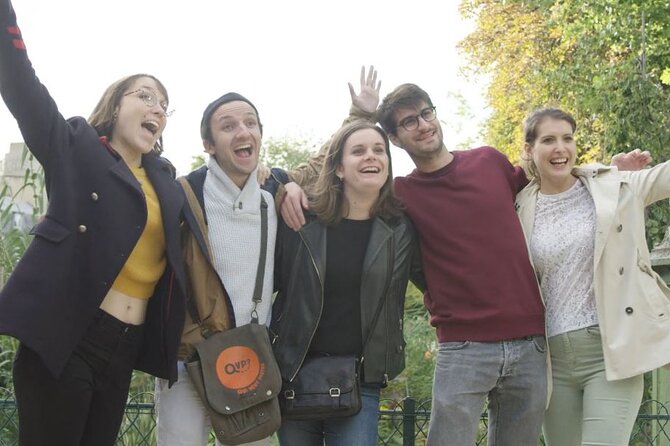
Montmartre becomes your game board on this private scavenger hunt. You split into teams, follow a detective kit through the neighborhood, solve clues, and uncover places you might otherwise walk past. I like the mix of outdoor investigation and cultural discovery, and I like that the route can work for families, friends, or a team-building outing.
The experience also gives you a reason to notice Montmartre’s lesser-known corners, not just its famous postcard sights. The main drawback is that you need a moderate level of fitness, and the game depends on good weather, so it is less dependable than a standard indoor activity.
Key points at a glance
- Start at Place Marcel Aymé: Meet at Pl. Marcel Aymé in the 18th arrondissement, then receive your team’s briefcase and instructions.
- A private game for your group: You do not join a larger mixed tour, but your own group divides into competing teams.
- Montmartre by clues: The route combines an investigation with questions about streets, monuments, and local culture.
- A two-and-a-half-hour outing: The timing gives you room to explore, but you should be ready to walk and stay focused.
- A prize adds purpose: The final result depends on answers, solving the investigation, and speed.
- Good for group occasions: Families, adventurous friends, and work teams get more from this than a passive sightseeing walk.
Montmartre turns into a detective game
This experience uses the streets of Montmartre as an open-air puzzle. Instead of following a guide from one famous stop to the next, you work through questions and clues as a team. The route takes you through known and lesser-known parts of the district, with the game giving you a reason to look closely.
That format changes the pace. You are not simply listening while someone else points out a building. You need to read the road book, compare ideas with your teammates, and decide where each clue leads. The cultural material is part of the game, so the history and local details arrive in small pieces rather than as one long talk.
I especially like this approach for people who have already seen the major Paris sights or who find traditional tours too passive. Montmartre has enough character to reward a slower look, and the puzzle format can pull your attention away from the busiest photo stops.
At the same time, this is not a quiet neighborhood walk. The competitive element matters. If your group gets caught up in racing, you may pay less attention to the surroundings. I would agree before starting that the best score is not the only goal.
More Scavenger Hunts in France
- Paris (Marais District) Scavenger Hunt and Self-Guided Tour
★ 5.0 · 16 reviews - Scavenger Hunt in Paris: Madeleine, Opéra & Place Vendôme
★ 5.0 · 16 reviews - Paris (Montmartre) Scavenger Hunt and Sights Self-Guided Tour
★ 4.5 · 11 reviews
Meeting at Place Marcel Aymé
The game begins at Place Marcel Aymé, in Paris’s 18th arrondissement. Your confirmation email gives the exact meeting time, so check it before leaving and allow enough time to reach the square by public transportation or on foot from your previous stop.
Place Marcel Aymé is a practical starting point for a Montmartre route because the activity can move straight into the district’s streets and landmarks. You are not beginning in a tour office or a classroom. The neighborhood itself is the setting from the first minutes.
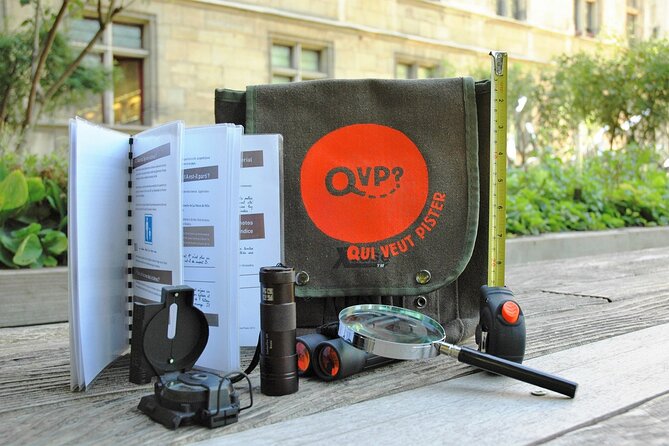
Once everyone arrives, participants divide into several teams. Each team receives a briefcase containing a road book and various accessories for the duration of the game. This detective kit is the central tool for the outing. It gives your group the material needed to work through the questions and investigation rather than requiring you to use a phone for every clue.
The exact size of each team is not specified, so the way you divide your group may depend on how many people book. For a family, that can mean mixing adults and children so younger players have help with reading and problem-solving. For a work group, it creates a simple team-building exercise without requiring a meeting room.
Following the road book through Montmartre
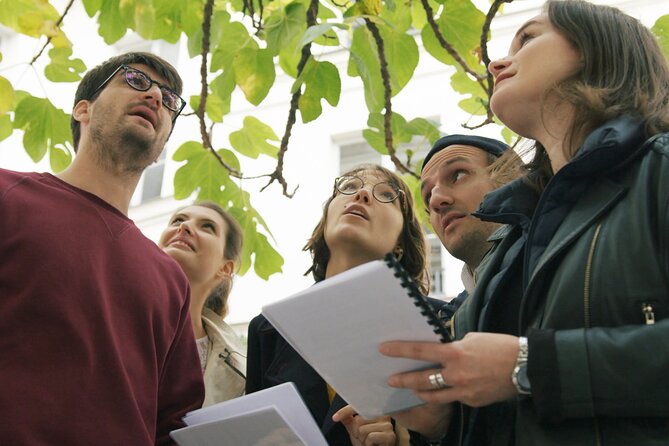
After a short briefing, the teams receive the start signal. Your task is to reach the finish point as quickly as possible while solving the questions along the course and completing the investigation.
The route is not described with a fixed list of named stops, which is useful in one way: the focus stays on discovery rather than a rigid sightseeing checklist. You can expect to move through Montmartre’s streets and past notable monuments, while also searching for less obvious places connected to the clues.
The road book should help you keep track of the investigation, but you still need to stay alert. Look at street names, building details, monuments, and the surrounding setting. A clue may require more than finding the correct location. It may ask you to connect a place with a fact or solve part of the wider mystery.
This style works well in Montmartre because the neighborhood rewards wandering. Its historic streets and connection with artists and other well-known figures give the game plenty of material. One of the strongest aspects of the experience is the chance to see the district through small details rather than only through its most famous views.
The tradeoff is that the route may not feel leisurely. You are working against the clock, and the final ranking includes your time. If you want to stop for a long coffee, shop, or take photographs at every corner, the competition may feel restrictive. You can still enjoy the streets, but the game asks you to keep moving.
What makes the investigation different from sightseeing
The experience combines three familiar ideas: an outdoor escape game, a Cluedo-style investigation, and a cultural walk through Montmartre. That combination gives the activity more substance than a simple treasure hunt based only on speed.
You are asked to solve enigmas and answer questions as you go. The investigation gives the route a story, while the cultural approach gives you a reason to care about the places you pass. The result is a sightseeing experience with a clear task attached to it.
I like that balance for groups with different interests. One person may enjoy the history, another may focus on logic, and another may want to win. Everyone has a role. That can be especially useful for special events, where a standard walking tour may leave some members of the group disengaged.
The activity also gives you a fresh way to approach a familiar Paris neighborhood. Montmartre is easy to associate with a short list of major sights, but an investigation encourages you to notice side streets and small clues. The experience is designed by tourism specialists, and the route aims to connect recognizable monuments with parts of the district that are easier to miss on your own.
You should not expect a full historical lecture at every stop. Information comes through the questions and challenges. If your main goal is detailed art or architectural instruction, a dedicated guided walk may serve you better. If you want history delivered through play, this format is a stronger match.
More Scavenger Hunts in Paris:
- Paris Scavenger Hunt and Highlights Self-Guided Tour
★ 3.5 · 5 reviews - Montmartre Scavenger Hunt and Highlights Self-Guided Tour
★ 4.0 · 2 reviews - Hamburg: Scavenger Hunt Self-Guided Tour for Children
★ 4.5 · 319 reviews - Amazing Cozumel Race: Small-Group Tour and Scavenger Hunt
★ 5.0 · 291 reviews
The finish, ranking, and prize
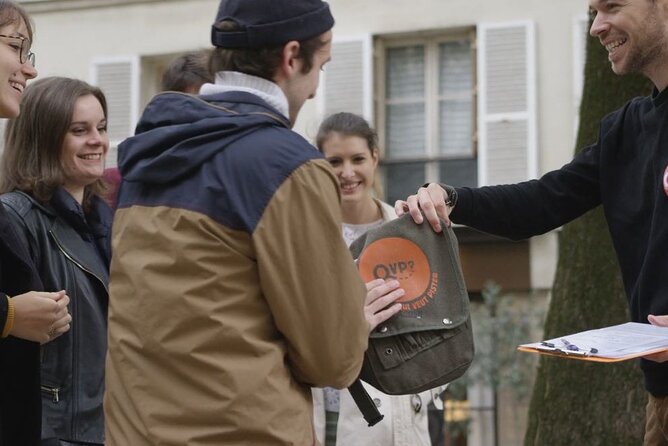
The activity ends back at the meeting point. Once the teams arrive, the answers are checked and the investigation is assessed. The final ranking considers three elements: your answers, the solution to the investigation, and the time taken along the route.
That scoring system creates a useful balance. A fast team cannot rely on speed alone if it misses key answers, while a careful team may lose ground if it takes too long. You need to manage both accuracy and pace.
A prize goes to the best-ranked team. The prize itself is not specified, so I would treat it as a fun extra rather than a major part of the value. The real payoff is the shared challenge and the chance to explore Montmartre with a purpose.
For families, the ranking can turn the final minutes into a memorable finish. For colleagues, it gives the group a clear shared result. For friends, it adds just enough competition to keep the route lively without requiring a serious athletic effort.
Still, competition can affect group dynamics. If some people dislike racing or puzzle games, the private format gives you room to keep the mood relaxed. You can compete seriously, or use the questions as prompts for a social walk.
How much walking and fitness you need
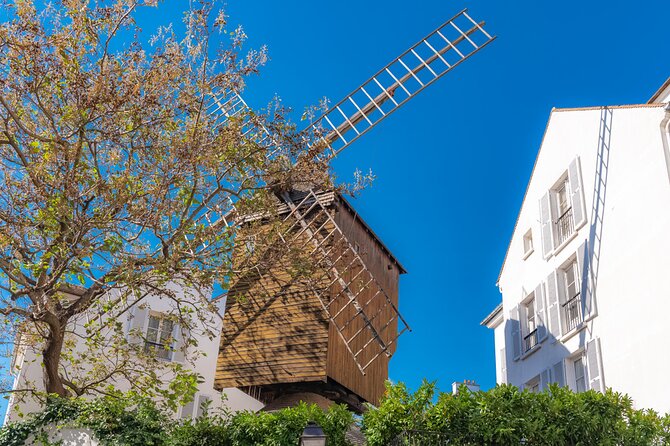
The activity lasts about two hours and 30 minutes, and you should expect to walk through Montmartre during that time. A moderate level of physical fitness is recommended. The information does not give a precise distance, number of stairs, or pace, so you should not assume the route will be effortless.
Montmartre is known for sloping streets, and the game requires you to move between clue locations. Even if you are not trying to win, you will need to keep up with the activity and remain on your feet for much of the outing.
Wear practical shoes and bring enough patience for uneven or inclined streets. That is general preparation rather than a published dress requirement, but it makes sense for any walking activity in this district.
Service animals are allowed. The activity is near public transportation, which helps with arrival and departure. The route’s exact accessibility details are not provided, so anyone with mobility concerns should confirm the conditions before booking.
Weather also matters. The experience requires good weather and may be canceled in poor conditions, with the choice of another date or a full refund. That policy protects you from spending two and a half hours solving clues in unpleasant conditions, but it means you should keep some flexibility in your Paris schedule.
Is $63.67 per person a fair price?
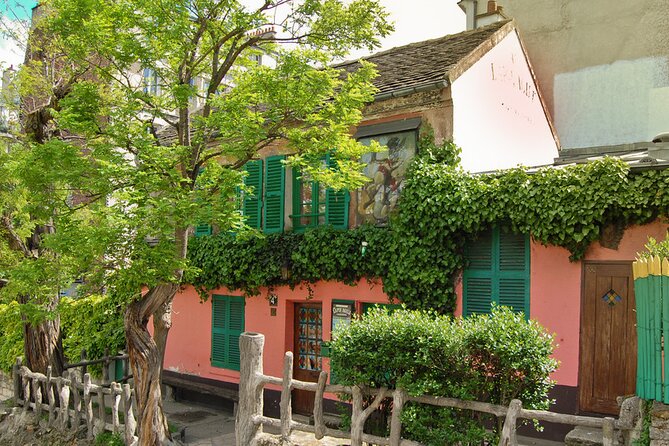
At $63.67 per person, this costs more than simply walking around Montmartre with a map. You are paying for a private activity, the prepared route, the detective briefcase, the organized investigation, and the group competition.
The value depends heavily on your group. For one or two people, the price may feel high compared with a self-guided stroll. For a larger private group, group discounts may improve the calculation. The activity is built for special occasions, team building, and group fun, so its value is not just the information you receive. You are also paying for a structured event that gives everyone something to do.
I would compare it with the cost of a conventional guided activity and with the effort of planning a similar game yourself. The operator has already designed the route and prepared the materials. You do not need to create clues, research the district, or manage a finish and scoring system.
The price makes the most sense when several people in your group genuinely want to play. If half the group would rather stroll, shop, or sit in a café, the activity may not feel worth the cost. Group discounts are available, but the exact saving is not provided, so check the final booking price for your party.
The fact that it is often booked around 49 days ahead suggests that planning early is sensible, especially if you are arranging a birthday, work event, or other fixed-date occasion. That is an average booking pattern, not a guarantee that late spaces will be unavailable.
Who will enjoy this Montmartre outing?
I would recommend it most strongly to groups that like solving problems together. Families with older children may enjoy the clues, provided everyone can manage the walking and stay involved. Friends get a built-in reason to explore beyond the usual photo stops.
It also suits work groups. A private team activity is easier to manage than a mixed public tour, and dividing into teams encourages cooperation without requiring a formal workshop. The game can also give a special celebration more shape than a standard meal or sightseeing loop.
Adventurous people who want a different view of Paris should consider it too. The activity is not a stunt or extreme challenge. Its sense of adventure comes from searching, interpreting clues, and taking an active role in the route.
I would be more cautious if you want a quiet, highly detailed history tour, if you have limited mobility, or if your group dislikes time limits. The activity is also weather-dependent, which matters if you have only one free afternoon in Paris.
Practical details before you reserve
This is a private tour, so only your group participates. That gives you more control over the tone and team setup than a public group outing. You can make it competitive, cooperative, or somewhere in between.
You receive confirmation at booking in most cases. If you book within two days of the activity, confirmation may arrive within 48 hours and remains subject to availability. The exact meeting time is listed in your confirmation email, and you should arrive at Place Marcel Aymé at that time.
Cancellation is free up to 24 hours before the start time for a full refund. Changes or cancellations inside that 24-hour window are not accepted for a refund. The cut-off follows Paris local time, so check the clock carefully if you are booking from another time zone.
Should you book the Montmartre scavenger hunt?
Book it if you want to make Montmartre an active part of your day. The best features are the private setup, the detective kit, the cultural questions, and the way the game leads you through both familiar and less obvious parts of the district.
I would choose it for a family outing, a group celebration, or a work event where a normal walking tour might feel too passive. The experience gives you a shared goal and a clear finish, with a prize adding a light competitive edge.
Skip it if you want a relaxed walk with long stops, a detailed art lecture, or a fully weather-proof plan. At $63.67 per person, it earns its price when your group takes part in the game rather than treating it as background entertainment.
FAQ
Where does the Montmartre scavenger hunt start?
It starts at Place Marcel Aymé, Pl. Marcel Aymé, 75018 Paris, France. Your confirmation email provides the meeting time.
Where does the activity end?
The activity ends back at the meeting point.
How long does the experience last?
The scavenger hunt lasts approximately two hours and 30 minutes.
Is this a private tour?
Yes. Only your group participates in the activity.
What is included for each team?
Each team receives a briefcase containing a road book and various accessories to use during the game.
What happens if the weather is poor?
The activity requires good weather. If it is canceled because of poor conditions, you can choose another date or receive a full refund.
Just added around Paris
- Treasure Hunt in Paris – From the Panthéon to the Louvre★ 5.0 · 17 reviews
- Paris Treasure Hunt – Explore the Seine from Louvre to Eiffel★ 5.0 · 18 reviews
- Paris Treasure Hunt to the Auction Rooms★ 5.0 · 2 reviews
- Paris Covered Passages Treasure Hunt — Self-guided Game★ 5.0 · 5 reviews
- Self-guided Mystery Walk by the Notre Dame★ 4.0 · 2 reviews
- Marais Treasure Hunt & Discovery — Self-guided Paris Game★ 5.0 · 3 reviews
- Paris WWII: Occupation & Liberation Exploration Game and Tour★ 5.0 · 2 reviews
- Montmartre Treasure Hunt — Fun and Cultural Investigation★ 5.0 · 6 reviews
Paris Escape Games, compared.
Who Killed Victor ? Escape Game at Père Lachaise Cemetery
Read our review →


Romantic Montmartre: Paris Lost Lovers Exploration Game and Tour
Read our review →

Browse the lists this tour appears in