
Review · PARIS
Paris Treasure Hunt – Explore the Seine from Louvre to Eiffel
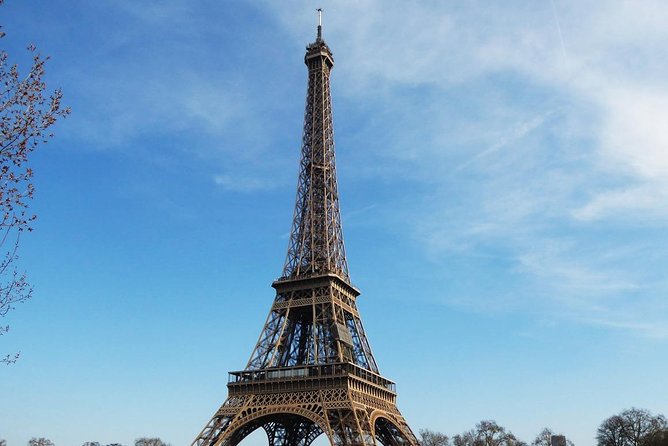
Paris Treasure Hunt turns a classic Seine walk into a shared puzzle. Starting in front of the Louvre, you follow clues toward the Eiffel Tower, passing the Musée d’Orsay, Pont Alexandre III, Les Invalides, and le Grand Palais along the way. The sights are familiar, but the riddles make you stop, look, and think.
I like the self-guided format, since you can move at your own pace and pause for photos or a café break. I also like the way it gives children a job to do instead of asking them to endure one monument after another. The main drawback is the three-hour limit: a relaxed lunch or long museum stop could leave you short on time.
Key points
- A 4.5-kilometer route: Walk from the Louvre area along the Seine toward the Eiffel Tower.
- Paper-based and simple: Your booklet includes riddles, a map, cultural notes, answer sheets, and the needed materials.
- Good for mixed-age groups: The puzzles are designed to keep children and adults involved together.
- No traditional guide: You investigate independently, with assistance available if you need a hint.
- Allow at least 2.5 hours: The activity ends automatically after three hours, wherever you are on the route.
- Best for curious families and small groups: The maximum group size is 20 people, and children under 5 join free.
A Seine walk with a purpose
Many Paris walks ask you to admire the view and keep moving. This one asks you to pay attention. A statue, bridge, façade, or monument becomes part of a clue, and the route gives you a reason to look closely rather than simply pass by with a camera.
The activity covers about 4.5 kilometers and takes an average of 2.5 hours. You begin at 19 Place du Carrousel, in front of the Louvre, then follow the Seine toward the Eiffel Tower. The route gathers several of central Paris’s most recognizable sights into one outing, but it does so through questions and small challenges rather than a standard talk.
I see this as a useful middle ground between a formal walking tour and exploring alone. You get a planned route and cultural context, but you are not tied to a guide’s pace or a fixed schedule at every stop.
The activity is available in English and French. It uses a booklet, not a phone application, so you do not need to download anything or worry about a group staring at screens throughout the walk.
More Treasure Hunts in France
- Louvre Museum Guided Family Treasure Hunt
★ 5.0 · 78 reviews - Louvre Museum – Private Family Tour with Da Vinci Treasure Hunt
★ 5.0 · 38 reviews - Paris Sweet & Chocolate Family Treasure Hunt
★ 5.0 · 37 reviews
Starting at the Louvre and Place du Carrousel
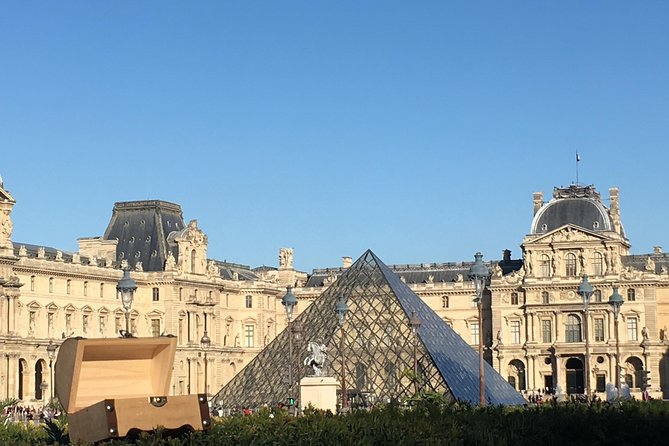
The meeting point is 19 Place du Carrousel, 75001 Paris, in front of the Louvre. This is a practical place to begin because you are immediately surrounded by some of Paris’s grandest architecture, open spaces, and famous museum views.
The Louvre itself is not part of an interior museum visit here. You are using its setting as the starting point for an outdoor investigation. That distinction matters. If you expect timed entry to the galleries, this experience does not include it. If you already have a separate Louvre visit planned, the treasure hunt can work well as an outdoor activity before or after that appointment, as long as you protect enough time for the route.
The first clues help set the tone. Instead of simply pointing at a building, the booklet gives you a question to solve and a cultural detail to notice. Adults can read the notes and help younger children connect the answer to what they see around them.
I would arrive ready to begin rather than treating the first part as a casual orientation. The clock is part of the plan, and the full activity automatically ends after three hours.
From the Louvre toward the Musée d’Orsay
As the route moves along the Seine, the Musée d’Orsay becomes one of the major points of interest. From outside, its former railway-station architecture gives the walk a strong visual change from the Louvre’s palace setting.
The treasure hunt uses this kind of contrast well. You are not only collecting famous names. You are asked to observe details and use them to solve the next part of the game. That makes the setting useful even if you are not planning to enter the museum.
The Musée d’Orsay stop also shows why this activity can suit a mixed-age family. A child who might not want a long explanation of art history can still help with a clue. An adult who wants more context can use the cultural notes in the booklet. The group has something to discuss, and everyone can contribute at a different level.
The tradeoff is that the booklet cannot replace a full museum visit or a professional art explanation. If you want detailed interpretation of the collections, book a museum visit separately. Here, the goal is active sightseeing outdoors.
Solving clues near Pont Alexandre III
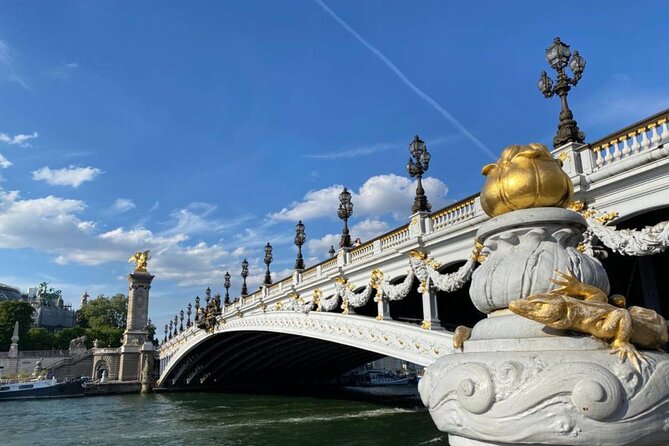
Pont Alexandre III is one of the route’s most photogenic points. Its ornate decoration, broad views, and position over the Seine make it a natural place for a clue and a pause.
This is where the activity’s visual side comes through clearly. You may stop to take pictures, but the puzzle asks you to examine the bridge instead of rushing across it. That small change in attention can make a familiar postcard sight feel more personal.
The route is not a race. You can pause when a view deserves it, and assistance is available if you need a hint. Still, the flexible pace has a limit. A short photo stop is easy to absorb, but repeated long breaks will reduce the time available to complete the investigation.
For that reason, I would plan snack and café stops with care. The experience allows breaks, but it does not add time for them. If your group includes young children, a quick planned pause is more realistic than stopping whenever someone gets tired.
More Treasure Hunts in Paris
- Paris Kids Louvre Treasure Hunt Private Tour
★ 5.0 · 28 reviews - Treasure Hunt in Paris – From the Panthéon to the Louvre
★ 5.0 · 17 reviews - Paris: Treasure Hunt & Walking Tour “Secret Weapon X”
★ 4.8 · 17 reviews - Paris Louvre : Private Treasure Hunt for Families or groups
★ 3.9 · 14 reviews
Les Invalides and the value of cultural notes
Les Invalides adds another major Paris landmark to the walk. Its large complex and distinctive dome give you a different kind of setting from the river, bridges, and museums.
The booklet’s cultural notes are important here. A self-guided activity needs enough background to make the clues meaningful, and these notes give you a starting point without turning the walk into a lecture. You can read them together, discuss the possible answer, and then look for the details that confirm it.
I like this approach for families because it gives adults a simple way to keep the conversation going. Instead of saying only that a building is important, you can ask the children what they notice and let the clue guide the discussion.
The experience does require some participation from the group. You will need to read, observe, think, and collaborate. If your ideal sightseeing day means following a guide while someone else handles all the planning, this may feel like work. If you enjoy solving a problem together, it adds purpose to the walk.
Grand Palais and the grand Paris view
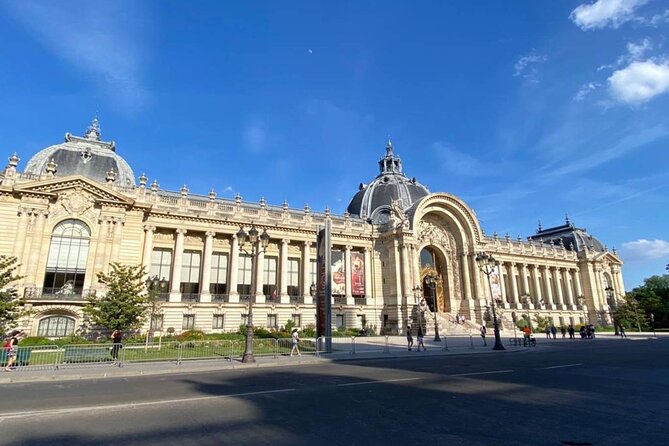
Le Grand Palais brings another architectural highlight to the route. Like the other stops, it is not presented as an isolated attraction. It forms part of a chain of clues leading you closer to the Eiffel Tower.
That sequence is one of the strongest parts of the activity. You are not simply checking monuments off a list. Each stop gives you a reason to continue, and the city itself supplies the material for the game.
The route also gives you a broad look at Paris’s postcard side. You see major monuments, river views, bridges, and formal public spaces in one continuous outing. This is useful early in a Paris stay, when you want to understand how several central sights fit together.
The limitation is physical. The walk covers about 4.5 kilometers, and the activity lasts for around 2.5 hours. The information asks for a moderate level of fitness, so it is not designed as a short, seated attraction. Service animals are allowed, and the route is near public transportation, but you should still consider your group’s walking ability.
Finishing near the Eiffel Tower
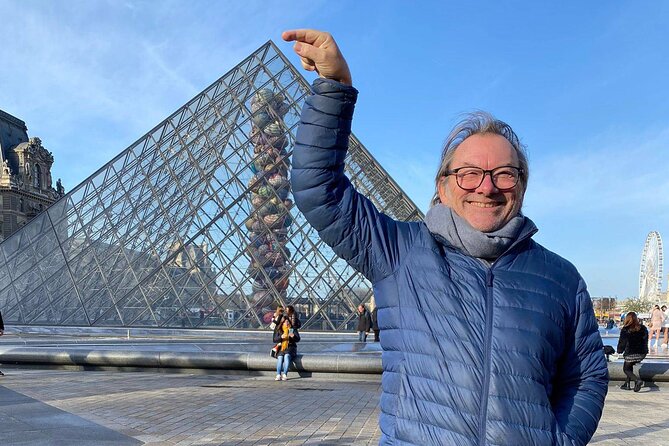
The route is designed to finish in front of the Eiffel Tower, giving the activity a satisfying visual ending. Reaching the tower after solving clues along the Seine feels different from arriving only for a photo. You have spent the previous hours working toward it as the final landmark.
There is a small point to clarify before booking. The meeting information says the activity ends back at the meeting point, while the additional details describe the route as starting at the Louvre and ending in front of the Eiffel Tower. Since the route description clearly identifies the Eiffel Tower as the finish, check the final meeting instructions when you book so you know exactly where your group will conclude.
The Eiffel Tower is also a useful place to continue your day. The activity itself does not include food, drinks, or a guided visit, so any meal, café stop, or tower entry must be arranged separately.
What the booklet actually gives you
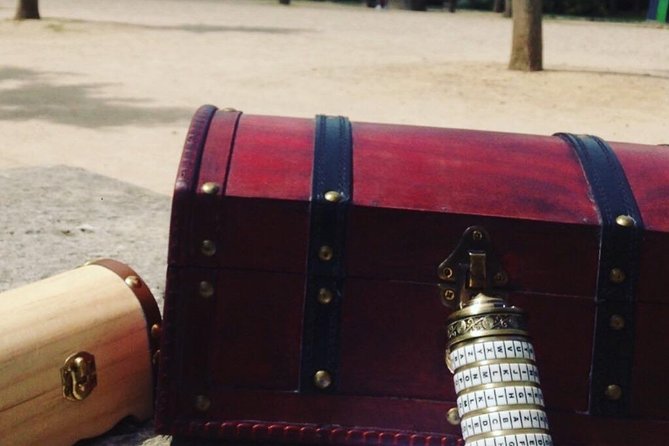
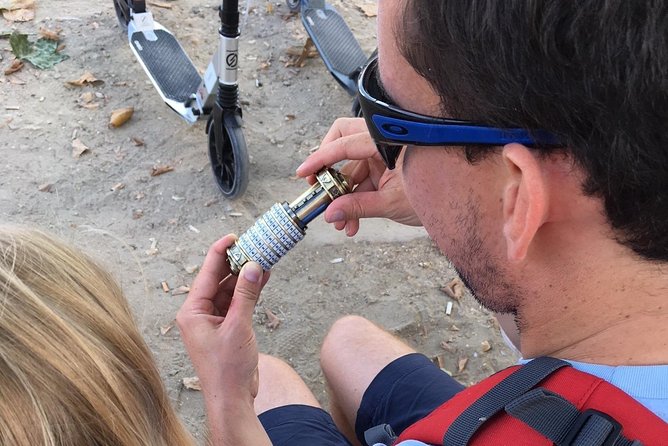
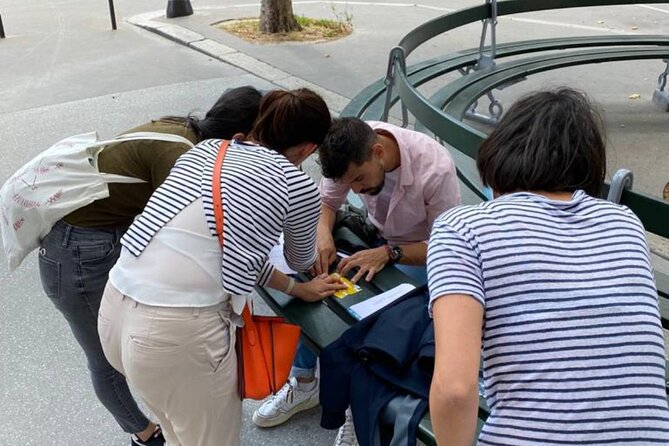
You receive a game booklet with riddles, a map, and cultural notes. Answer sheets and the necessary materials are included, so the activity does not depend on an app or a personal device.
That simplicity is a real advantage. Everyone can look at the same page, and children can hold the clues while adults help with reading or navigation. It also makes the activity easier for a group with different levels of phone access or battery life.
The clues are meant to be challenging enough for both children and adults. The recommended minimum age is 8, which seems sensible if you want children to stay engaged with the questions. Younger children can still join, and children under 5 participate free, but they may need help from older members of the group.
You also have access to assistance during the game if you need it. This is not a guided tour, but you are not completely on your own if a clue causes trouble. That balance keeps the activity independent without making it frustrating.
How the pace works in real life
The average playing time is 2.5 hours, but the activity automatically ends after three hours, wherever you are on the route. That gives you a little breathing room, but not enough for a very slow day.
I would treat 2.5 hours as the working schedule and the extra 30 minutes as a cushion. Use the cushion for photos, a short rest, or a quick snack, not for a long meal or a major detour.
A family with young children should think about the route before starting. The clues can keep children interested, but the walk is still long enough to be tiring. Comfortable walking shoes and a realistic attitude toward breaks will make the experience easier.
The weather also matters. The activity requires good weather, and poor conditions can lead to a different date or a full refund. Since the route is outdoors, that policy is practical rather than surprising.
Who gets the best value for $42.05
At $42.05 per person, this costs more than simply walking beside the Seine with a free map. The price makes more sense if you value the prepared clues, cultural notes, planned route, answer sheets, and assistance available during the game.
You are also paying for an activity that gives your group a shared goal. That can be worthwhile for families who find traditional sightseeing tiring, especially when children lose interest after the second or third monument.
I would not choose it solely as a way to save money. A free walk will show you many of the same views. The value comes from the structure and the interaction. You are paying to turn sightseeing into a cooperative game.
The price can work particularly well for a small family group because the experience is designed for up to 20 people, while children under 5 join free. Couples and friends may also enjoy it, but the activity’s strongest use is with people who like solving things together.
What the strongest praise tells you
The most consistently praised feature is the way the clues keep children involved. The activity is not passive. Children read, observe, suggest answers, and help the group move forward.
The puzzles are also built for mixed ages. A college student and an elementary-age child can work on the same challenge at different levels, with adults adding support when needed. That is useful when a family includes children with very different attention spans.
The second major strength is exercise with a purpose. You cover a substantial distance, but the next clue gives you a reason to continue. One family described the experience as tiring but very fun, which is a fair warning and a useful recommendation at the same time.
If your group dislikes traditional guided tours, this offers a clear alternative. You still receive cultural information, but you control the pace and do the thinking yourselves.
Booking, cancellation, and practical details
Confirmation is normally sent at booking. If you book within 12 hours of the start time, confirmation is sent as soon as possible, subject to availability.
You can cancel for a full refund up to 24 hours before the scheduled start. Changes or cancellations made less than 24 hours in advance are not accepted for a refund. The experience also requires a minimum number of participants, so if it is canceled for that reason, you are offered another date or experience, or a full refund.
The activity is offered in English and French. It is near public transportation, service animals are allowed, and the maximum group size is 20 people.
I would confirm the finishing point and check the weather before setting the day around this outing. Those two details matter more here than they would on an indoor museum visit.
Should you book the Paris Treasure Hunt?
I would book this if you want a structured Seine walk that gives children and adults a reason to work together. It is especially useful for families whose children grow bored with standard sightseeing, and for anyone who prefers a puzzle to a lecture.
I would skip it if you want a quiet stroll, a detailed guided history tour, or a relaxed afternoon with no clock. The three-hour limit and 4.5-kilometer route require some planning.
For the right group, the $42.05 price buys more than a list of monuments. It gives you a shared activity from the Louvre to the Eiffel Tower, with enough cultural context to make the walk feel purposeful. Bring comfortable shoes, keep café stops short, and let the clues set the pace.
FAQ
Where does the Paris Treasure Hunt start?
It starts at 19 Place du Carrousel, 75001 Paris, in front of the Louvre.
Where does the activity finish?
The route information describes the finish as being in front of the Eiffel Tower. The meeting information also says the activity ends back at the meeting point, so check the final instructions when booking to confirm the exact end location.
How long does the treasure hunt last?
It takes about 2.5 hours and covers approximately 4.5 kilometers. The activity automatically ends after three hours, wherever you are on the route.
Is this a guided tour?
No. It is a self-guided activity using a booklet of riddles, a map, cultural notes, and answer sheets. Assistance is available if you need a hint.
Does the activity require an app?
No. You do not need to download an app or use a mobile application. A mobile ticket is provided for the booking, while the game itself uses printed materials.
What age is recommended for children?
A minimum age of 8 is recommended so children can stay engaged with the clues. Younger children are welcome, and children under 5 join free.
What happens if the weather is poor?
The experience requires good weather. If it is canceled because of poor conditions, you are offered a different date or a full refund.
Just added around Paris
- Treasure Hunt in Paris – From the Panthéon to the Louvre★ 5.0 · 17 reviews
- Paris Treasure Hunt to the Auction Rooms★ 5.0 · 2 reviews
- Self-guided Mystery Walk by the Notre Dame★ 4.0 · 2 reviews
- Marais Treasure Hunt & Discovery — Self-guided Paris Game★ 5.0 · 3 reviews
- Paris Covered Passages Treasure Hunt — Self-guided Game★ 5.0 · 5 reviews
- Paris WWII: Occupation & Liberation Exploration Game and Tour★ 5.0 · 2 reviews
- Montmartre Treasure Hunt — Fun and Cultural Investigation★ 5.0 · 6 reviews
- Private Scavenger Hunt in Montmartre★ 5.0 · 2 reviews
Paris Escape Games, compared.
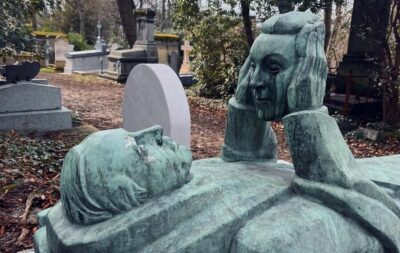
Who Killed Victor ? Escape Game at Père Lachaise Cemetery
Read our review →
Romantic Montmartre: Paris Lost Lovers Exploration Game and Tour
Read our review →
Browse the lists this tour appears in