
Review · PARIS
Treasure Hunt in Le Marais, Historic Paris
Le Marais turns a simple neighborhood walk into a detective game here. You follow clues from the Saint-Paul church area through medieval streets, grand mansions, Place des Vosges, Rue des Rosiers, and the Stravinsky Fountain. The route gives children and adults a reason to look closely instead of simply walking from one sight to the next.
I like the mix of riddles and cultural facts, since the game keeps the route lively while still giving you useful context. I also like the choice between a host-led outing and a self-guided booklet, which makes this easier to fit into a Paris schedule. The main consideration is that the clues require solid reading skills, so younger children may need plenty of adult help.
Key points at a glance
- A detective story in Le Marais: Solve clues as you move between historic streets, squares, museums, and gardens.
- Two ways to play: Join a host on weekday mornings or use the printed booklet independently any day.
- A useful two-hour route: See Place des Vosges, the Carnavalet Museum exterior, Rue des Rosiers, and the Stravinsky Fountain.
- No app or museum ticket required: All game materials are supplied, and the activity stays outdoors.
- Best for school-age children and adults: The activity is recommended from age eight, with age ten and up a better fit for independent clue solving.
- Strong practical value: At $35 per person, the price covers a structured cultural activity, printed materials, and help from an English or French-speaking host when you choose the guided option.
Why Le Marais works so well for a treasure hunt
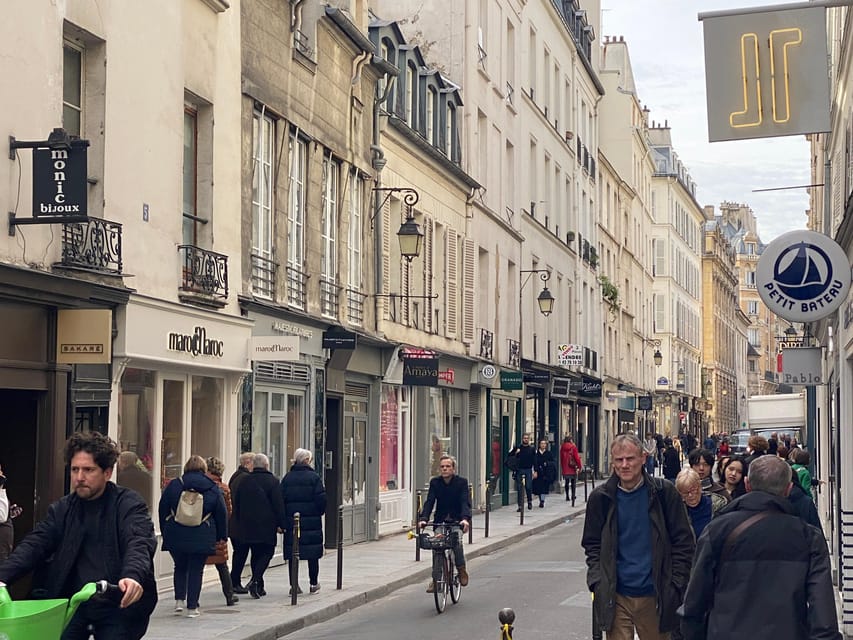
Le Marais is one of the best parts of Paris for a walking game because the sights arrive close together, yet the streets keep changing character. You move from the church of Saint-Paul Saint-Louis to a formal royal square, then through older lanes, museum gardens, and lively shopping streets.
That variety matters when you have children in tow. A standard historical walk can lose younger attention once the dates begin to pile up. Here, each stop gives you a task. You are looking for a detail, working out a riddle, or following the detective plot to the next point.
The activity takes place fully outdoors. That keeps the experience simple and flexible, but it also means you see only the exteriors of the monuments and landmarks. There is no museum admission or indoor tour included. If you want to visit the Carnavalet Museum or another site along the way, plan that separately.
At about two to two and a half hours, the route is long enough to feel like a real Paris outing without taking up your whole day. Your pace depends on how quickly your group reads, discusses, and solves each clue.
More Treasure Hunts in France
- Louvre Museum Guided Family Treasure Hunt
★ 5.0 · 78 reviews - Louvre Museum – Private Family Tour with Da Vinci Treasure Hunt
★ 5.0 · 38 reviews - Paris Sweet & Chocolate Family Treasure Hunt
★ 5.0 · 37 reviews
Starting at Saint-Paul Saint-Louis
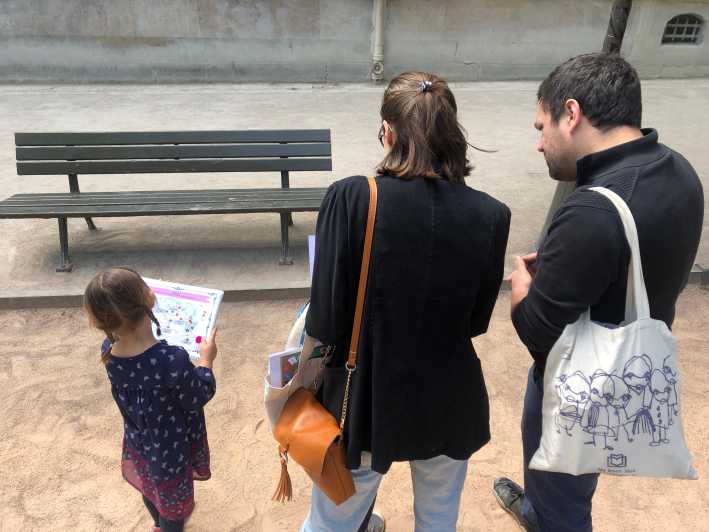
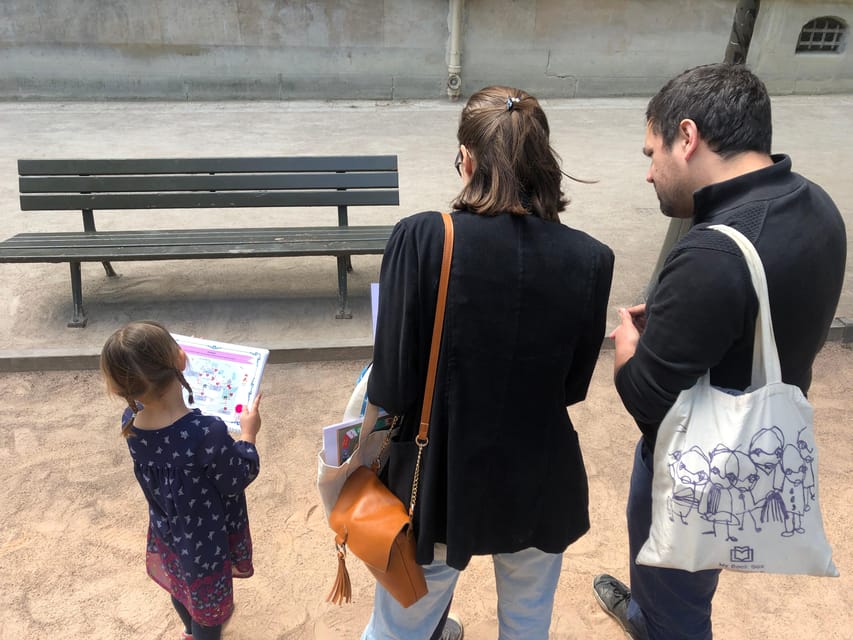
The meeting point is on the steps of Paroisse Saint-Paul Saint-Louis at 97 Rue Saint-Antoine. Look for a host holding a From Paris with Fun sign. If you miss the sign, look for a white bag or tote bag decorated with Paris monuments.
This is a sensible place to begin. The church gives you an immediate historic reference point, while Rue Saint-Antoine places you right in the middle of Le Marais. You are not wasting the first part of the activity reaching the neighborhood from a distant meeting point.
The opening stop lasts about five minutes as a sightseeing point. Expect to orient yourself, receive the game material if you are using the guided format, and begin the first clues. The host speaks French or English, and the printed booklet contains the riddles and explanations.
For the self-guided version, you receive the roadbook and handle the route on your own. That gives you control over pauses and pace, though you will not have a host on hand to offer hints or add anecdotes. If your group enjoys solving puzzles without help, this can be the more relaxed choice.
Place des Vosges and the royal side of Le Marais
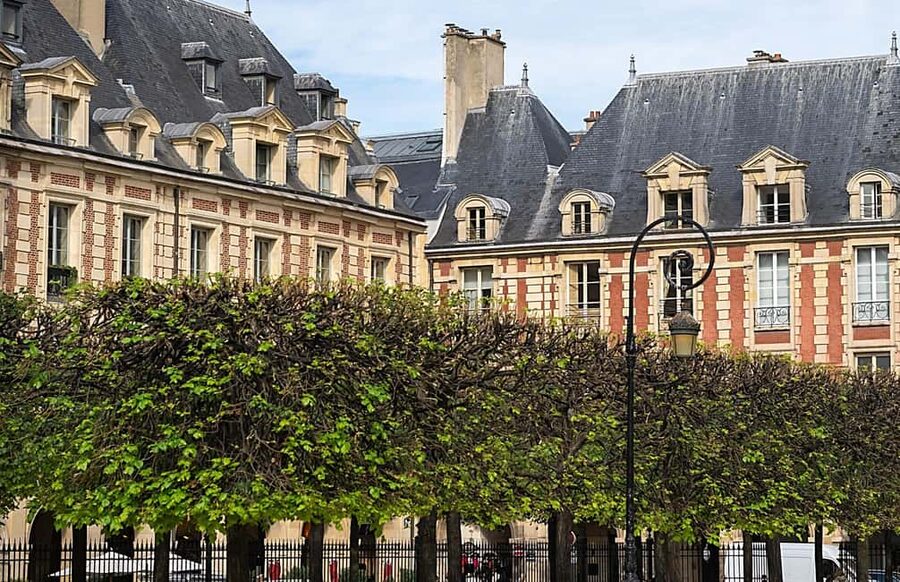
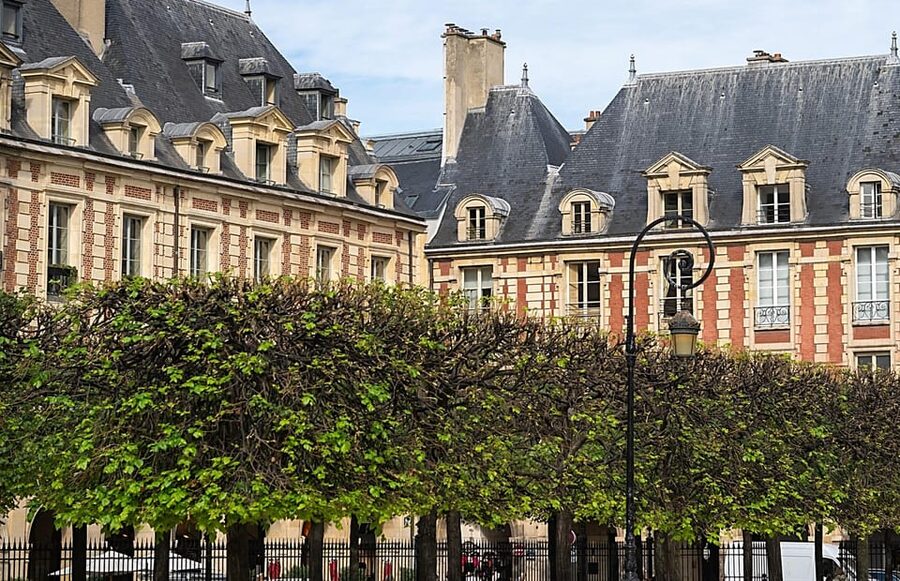
Place des Vosges is one of the key stops, with about 20 minutes set aside for passing through and solving clues. Its regular arcades and red-brick façades offer plenty to observe, making it a good place for a visual puzzle.
This square also changes the feel of the walk. The streets around Saint-Paul can feel tightly packed and urban, while Place des Vosges opens into a carefully planned public space. The contrast helps you see why Le Marais is more than a collection of pretty lanes. Its streets and buildings reflect different periods and different kinds of city life.
The game format encourages you to notice features you might otherwise walk past. You may be looking at an arch, a façade, a layout, or another small detail that connects to the next answer. The supplied information does not reveal the exact riddles, which is better for the game itself, but you should expect some clues to require real thought.
One verified booking described the riddles as fun and sometimes quite difficult. That is useful advice. This is not simply a children’s walk with obvious questions. Older children, teenagers, and adults will probably get more out of the deduction. If younger children join, let them search and contribute, but be ready to read and explain the clues.
The Carnavalet Museum and Le Marais in context
The route then passes the Carnavalet Museum for about 15 minutes. The activity focuses on the exterior, so you will not enter the museum as part of the hunt.
Even from outside, this stop adds a useful cultural layer. The museum is closely tied to the history of Paris, and its presence fits the route’s aim: you are not merely chasing answers but learning why this neighborhood matters. The booklet or host provides historical information and anecdotes as the game moves along.
I would resist trying to rush this section. The pleasure of the activity comes from giving each group time to inspect the surroundings and discuss the clue. A family that wants a brisk walk may finish closer to two hours. A group that stops for photographs or debates every answer may need closer to two and a half.
The museum stop also shows the limit of the format. If your main goal is to see museum collections, this is not the right tour. It works best as an outdoor introduction to the district, followed by a separate museum visit if your schedule allows.
More Treasure Hunts in Paris
- Paris Kids Louvre Treasure Hunt Private Tour
★ 5.0 · 28 reviews - Paris Treasure Hunt – Explore the Seine from Louvre to Eiffel
★ 5.0 · 18 reviews - Treasure Hunt in Paris – From the Panthéon to the Louvre
★ 5.0 · 17 reviews - Paris: Treasure Hunt & Walking Tour “Secret Weapon X”
★ 4.8 · 17 reviews
A quieter route through older streets and gardens
After the museum, the activity includes about 20 minutes of walking through a less obvious part of the neighborhood. The route description identifies this as a place to uncover details rather than a named major sight, which is exactly where the treasure hunt format earns its keep.
You are asked to observe the streets, buildings, and surroundings while following the detective plot. The stop may appeal most to adults who enjoy small architectural clues and local anecdotes, while children get the satisfaction of finding something that is easy to miss during an ordinary walk.
The route also includes the gardens of the National Archives. These gardens provide a change of pace from the street sections and give the game another setting for its clues. You remain outside, so do not expect a formal visit to the archives themselves.
Because the activity is self-contained, you do not need a mobile app, data connection, or special equipment. That is a real advantage for families. The printed roadbook keeps everyone focused on the same material, and it avoids the familiar problem of one person holding the phone while everyone else trails behind.
Rue des Rosiers and the human side of the neighborhood
Rue des Rosiers receives about 20 minutes of walking, passing through, and free time. This is one of Le Marais’s liveliest streets and gives the route a more everyday feel after the formal square and museum section.
The stop is useful because it lets you see the neighborhood as a place where people shop, eat, and spend time, not only as an open-air history lesson. The activity provides cultural facts and surprising stories along the way, while the free time gives you a chance to look around at your own speed.
Food is not included, so this is a possible place to arrange your own snack or meal before or after the activity. Keep the schedule in mind, though. A long stop on Rue des Rosiers could push the total outing beyond the advertised two hours.
You should also wear comfortable shoes. The route involves continuous walking, and the game depends on moving between several stops. Large bags and luggage are not allowed, so arrive with only what you need for the walk.
Finishing at the Stravinsky Fountain
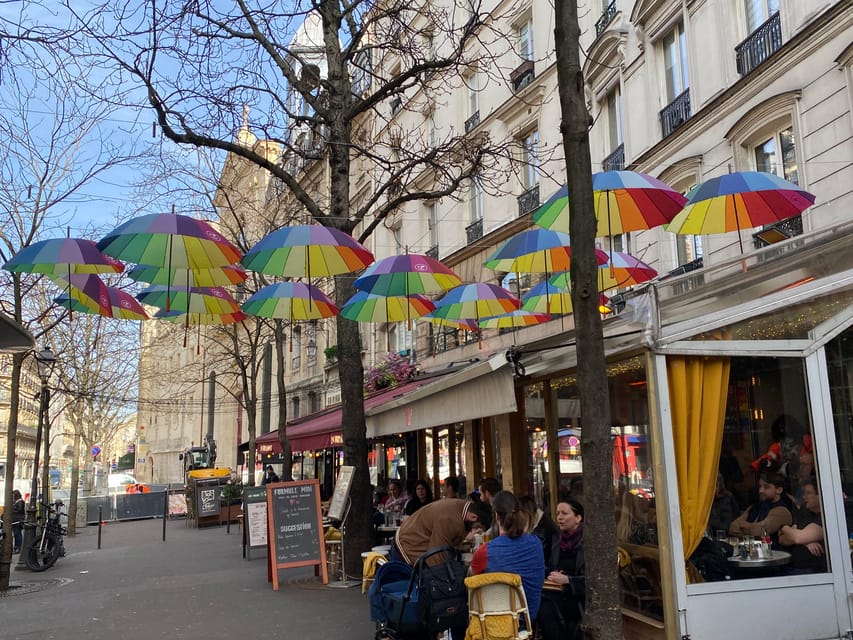
The route finishes around Fontaine Stravinsky at 1 Place Igor Stravinsky. Its playful public art makes a fitting final stop for a game built around observation and clues.
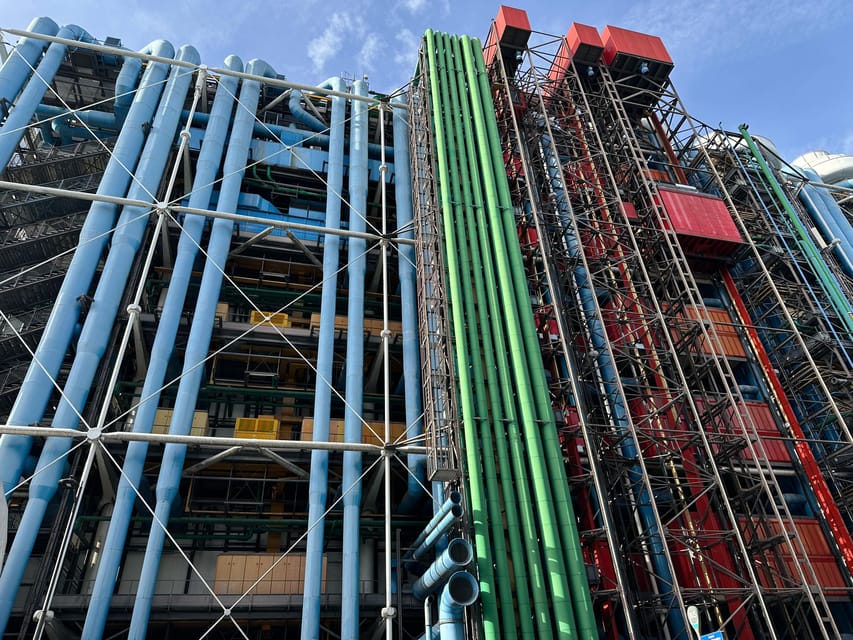
By this point, you will have crossed several different sections of Le Marais and reached the area near the Centre Pompidou. The fountain gives the ending a clear visual marker rather than leaving you uncertain about where the activity finishes.
The information provided lists two possible drop-off locations but names the Stravinsky Fountain as one of them. If your plans depend on the exact ending point, confirm the final arrangement when you book. Either way, the route is designed as a one-way neighborhood walk rather than a loop back to the church.
Guided or self-guided: which format suits you?
The guided option is available Monday through Friday in the morning. A host accompanies you, offers hints, and adds anecdotes as you work through the clues. This is the safer choice if you want help keeping a group moving or if you prefer explanations from a person rather than a booklet.
Marion is specifically praised for being kind and available, and she also leads other guided activities. That gives you a useful contact point if you enjoy the experience and want to arrange another Paris activity with the same provider.
The self-guided option runs every day, including weekends. It uses a printed booklet with riddles, clues, and cultural explanations. Choose this if your sightseeing plans do not fit a weekday morning or if your family likes to solve puzzles independently.
The trade-off is simple. Guided gives you support and live anecdotes. Self-guided gives you more freedom. Neither option requires an app, and both keep the focus on the streets of Le Marais.
Is $35 per person a fair price?
At $35 per person, this is not the cheapest way to walk through Le Marais, since the neighborhood itself is free to explore. The value comes from the structure: you get a prepared route, printed game materials, cultural information, and, with the guided version, a host who helps your group solve the clues.
For a family that might otherwise struggle to keep everyone interested during a historic district walk, that structure can be worth paying for. The activity turns sightseeing into a shared task, and it removes the work of planning a route between the main stops.
The price is less compelling if you want a conventional museum visit, a long food tasting, or a detailed architectural lecture. None of those are included. You are paying for a playful outdoor activity that combines light education with problem solving.
Children under six do not pay, but the activity is not recommended for children under eight. The guidance also suggests that age ten and older is the best match for children who can read the clues and solve them with less help.
Who should book this activity?
I would choose this for families with school-age children, friends who enjoy puzzles, and small groups wanting a cultural activity that does not feel like a formal lecture. It is also a useful first introduction to Le Marais if you want an organized route before returning later to explore individual museums, cafés, or shops.
It suits you less if you dislike group problem solving or prefer to wander without a plan. The riddles are part of the point, and some can be difficult. If your group becomes frustrated by puzzles, the host-led option should help, but it will not turn the activity into a standard sightseeing tour.
The activity is listed as wheelchair accessible. Since the route runs through historic streets and outdoor public areas, anyone with specific mobility needs should confirm the exact route and surfaces before booking. The supplied information does not give further details about each section.
Final verdict: a smart family walk with a puzzle at its center
Book this if you want to see several important parts of Le Marais while keeping children involved. The strongest features are the well-chosen route, the mix of famous places and less obvious details, and the choice of a host or independent booklet.
The main limits are just as clear: no interiors, no food, and no guarantee that every riddle will be easy. At $35, the activity makes the most sense when you value a planned cultural game rather than a free-form stroll. For a reading-age child who enjoys clues, it can turn two hours of Paris sightseeing into a shared family story.
FAQ
How long does the treasure hunt last?
It lasts about two hours, though some groups may take two to two and a half hours depending on walking speed and time spent solving clues.
Where does the activity begin?
It begins on the steps of Paroisse Saint-Paul Saint-Louis at 97 Rue Saint-Antoine. Look for a host holding a From Paris with Fun sign, or a white bag or tote bag with Paris monuments on it.
Where does the route finish?
One listed ending point is Fontaine Stravinsky at 1 Place Igor Stravinsky. The activity information also mentions two possible drop-off locations.
Is the activity guided?
You can choose a guided or self-guided format. The guided option includes a host who gives hints and anecdotes. The self-guided option uses a printed game booklet.
When is the guided option available?
The guided option is available Monday through Friday in the morning.
Can I take the self-guided version on a weekend?
Yes. The self-guided option is available every day, including weekends.
Is entry to any museum or monument included?
No. The activity takes place outdoors and covers the exteriors of landmarks only. No entrance tickets are required or included.
What age is best for this activity?
It is recommended for children aged eight and older, with ten and up likely to manage the reading and riddles more independently. Children under six do not pay, but younger children may need substantial adult help.
More Heritage Tours in Paris
- The Anatomist – Award Winning Historical Escape Room Experience
★ 5.0 · 151 reviews - Private city discovery tour – A Historical Treasure Hunt
★ 5.0 · 146 reviews - Queer Lisbon – A Treasure Hunt in LGBT History
★ 5.0 · 71 reviews - Fort Worth Stockyards History, Food, and Puzzle Tour
★ 5.0 · 38 reviews
Just added around Paris
- Treasure Hunt in Paris – From the Panthéon to the Louvre★ 5.0 · 17 reviews
- Paris Treasure Hunt to the Auction Rooms★ 5.0 · 2 reviews
- Paris Treasure Hunt – Explore the Seine from Louvre to Eiffel★ 5.0 · 18 reviews
- Self-guided Mystery Walk by the Notre Dame★ 4.0 · 2 reviews
- Marais Treasure Hunt & Discovery — Self-guided Paris Game★ 5.0 · 3 reviews
- Paris Covered Passages Treasure Hunt — Self-guided Game★ 5.0 · 5 reviews
- Paris WWII: Occupation & Liberation Exploration Game and Tour★ 5.0 · 2 reviews
- Montmartre Treasure Hunt — Fun and Cultural Investigation★ 5.0 · 6 reviews
Paris Escape Games, compared.

Who Killed Victor ? Escape Game at Père Lachaise Cemetery
Read our review →


Romantic Montmartre: Paris Lost Lovers Exploration Game and Tour
Read our review →

Browse the lists this tour appears in